
At DelightedCooking, we're committed to delivering accurate, trustworthy information. Our expert-authored content is rigorously fact-checked and sourced from credible authorities. Discover how we uphold the highest standards in providing you with reliable knowledge.
What is Kamut® Flour?
 Tricia Christensen
Tricia Christensen
Tricia Christensen
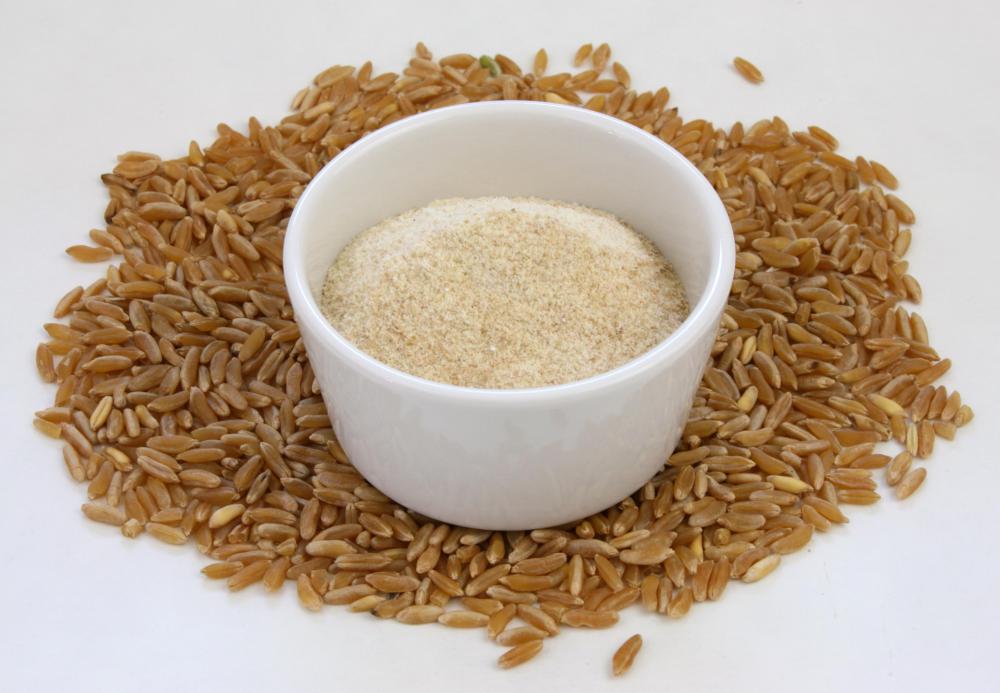
Kamut® flour is a wheat flour, made from the ancient durum wheat relative. Consumers will generally not find this flour in a local grocery store, but it can be found in many natural foods and specialty stores, where it is sold by a variety of companies. This flour is generally considered to be an excellent option, since the grain is hardy and pest-resistant and can, in many cases, be grown organically with greater ease than traditional wheat.
Bakers can substitute this flour for any recipe calling for wheat flour. When he does so, he’ll be adding lots of extra protein, amino acids, and a higher lipid content. It’s a less starchy flour and also drier. When stored in the refrigerator, it has less tendency to turn rancid and usually outlasts the shelf life of traditional wheat.

The protein content of Kamut® flour attracts bakers and food manufacturers. On average, this flour has 40% more protein than does regular wheat flour, and most people find it more satisfying and filling in baked goods because of its higher lipid to carbohydrate ratio. It’s healthier in many other ways, and its taste is sweeter.
Most wheat flour has at least a bitter aftertaste, which Kamut® lacks. Cooks can therefore reduce or completely eliminate sugar in recipes calling for flour, which provides overall healthier baked goods. It can be used in waffles or pancakes, for instance, and diners may get to add a little extra syrup to them, because these recipes won’t require sugar to mask the taste of the wheat.

Another benefit of this flour is that it can often be tolerated by people who are sensitive to wheat or who have wheat allergies — although it's not appropriate for people with allergies or sensitivities are severe. Consumers who have concerns should should check with a medical professional before trying it. Surprisingly, about 70% of people with allergies to wheat tolerate Kamut® flour well.
Since Kamut® is still considered a specialty grain, it is more expensive than traditional wheat flour, even organic varieties. Consumers who purchase non-organic flour may save a little money, but it is still a pricier alternative.

Cost is clearly not the only incentive toward purchasing this flour, and most users say that the nutritional value of the flour and its delicious taste make a little extra cost far worth it. Bakers who want to save a little money could even try a 50/50 split between Kamut® and traditional wheat. This blend will still add more protein and greater vitamin content to baked goods.
Tricia Christensen
Tricia has a Literature degree from Sonoma State University and has been a frequent DelightedCooking contributor for many years. She is especially passionate about reading and writing, although her other interests include medicine, art, film, history, politics, ethics, and religion. Tricia lives in Northern California and is currently working on her first novel.
Learn more...
Tricia Christensen
Tricia has a Literature degree from Sonoma State University and has been a frequent DelightedCooking contributor for many years. She is especially passionate about reading and writing, although her other interests include medicine, art, film, history, politics, ethics, and religion. Tricia lives in Northern California and is currently working on her first novel.
Learn more...AS FEATURED ON:
AS FEATURED ON:


-
![Kamut® flour offers more protein and vitamins than traditional wheat flour.]() By: alexskopjeKamut® flour offers more protein and vitamins than traditional wheat flour.
By: alexskopjeKamut® flour offers more protein and vitamins than traditional wheat flour. -
![While not always available at major grocery chains, Kamut® flour can be found in health food stores or specialty stores.]() By: Monkey BusinessWhile not always available at major grocery chains, Kamut® flour can be found in health food stores or specialty stores.
By: Monkey BusinessWhile not always available at major grocery chains, Kamut® flour can be found in health food stores or specialty stores. -
![Kamut® flour is made from the ancient durum wheat relative.]() By: m.u.ozmenKamut® flour is made from the ancient durum wheat relative.
By: m.u.ozmenKamut® flour is made from the ancient durum wheat relative. -
![Kamut grains are high in B vitamins.]() By: IdeenkochKamut grains are high in B vitamins.
By: IdeenkochKamut grains are high in B vitamins. -
![Kamut flour can be used in any recipe calling for wheat flour.]() By: Ljupco SmokovskiKamut flour can be used in any recipe calling for wheat flour.
By: Ljupco SmokovskiKamut flour can be used in any recipe calling for wheat flour.




Discussion Comments
Kamut flour rises slowly? I have always found that it rises much faster than wheat or spelt. I have a maple buttermilk bread recipe that always takes 1.5 hours for the first rise, and 45 minutes for the second. When I use Kamut flour, that is cut to 55 minutes for first rise and 25 for the second, with no changes to the recipe other than the type of flour. It makes amazing bread, light and fluffy.
I always use 100 percent whole grain in baking, with one tablespoon of gluten per cup of flour, and grind it no more than a week before use, so maybe this is the reason for the difference?
Aside from kamut flour, another option for wheat sensitive individuals is sorghum flour. It has high nutritional value just like kamut flour and there is no risk of allergies because its completely gluten free. My sister has been using it for years for my nephew who is allergic to gluten. She has an amazing blueberry scone recipe for it, its the best scones I've ever tasted.
Kamut flour is fantastic. I just checked my bag of kamut flour to get the numbers right-it has 12 grams of dietary fiber and 12 grams of protein in one cup of flour and a good amount of iron too. I highly recommend moms to use kamut flour in their baked goods. My kids have always been picky about food and I used to worry about their nutrition, how much protein, fiber and vitamins they were getting. Ever since I discovered this flour, I am so happy. You can put it in pretty much everything: breads, biscuits, muffins, cookies, pancakes, waffles- the stuff kids like!
It might take a few tries to get used to cooking with it. The only major difference I can think of is that it rises kind of slowly, so you might want to experiment with the heat and cooking time until you get it right. I also mix it with regular white baking flour and spelt flour sometimes for breads so that its not so sweet. Raisin bread made with kamut flour and butter spread is just delish.
is this kamut flour OK to substitute for common white flour.
Post your comments