
At DelightedCooking, we're committed to delivering accurate, trustworthy information. Our expert-authored content is rigorously fact-checked and sourced from credible authorities. Discover how we uphold the highest standards in providing you with reliable knowledge.
What is Kale?
 Mary McMahon
Mary McMahon
Mary McMahon
Kale is an archaic type of cabbage that grows loosely furled leaves, rather than forming a head. The leaves have a distinctive ruffly appearance that distinguishes the plant from a close relative, collard greens. This vegetable tends to be a little bit bitter in flavor, although this bitterness is tempered by washing, cooking, and using younger leaves. It is also extraordinarily nutritionally rich, even among the leafy green vegetables.
People have cultivated this plant for over 3,000 years; and it was extremely popular in ancient Greece and Rome. In medieval times, kale was sometimes the only vegetable eaten, because it was easy to grow, tolerant to cool climates, and delicious. While it is less popular than headed cabbage, Brussels sprouts, and other relatives, the plant has numerous merits that are beginning to endear it to consumers again.

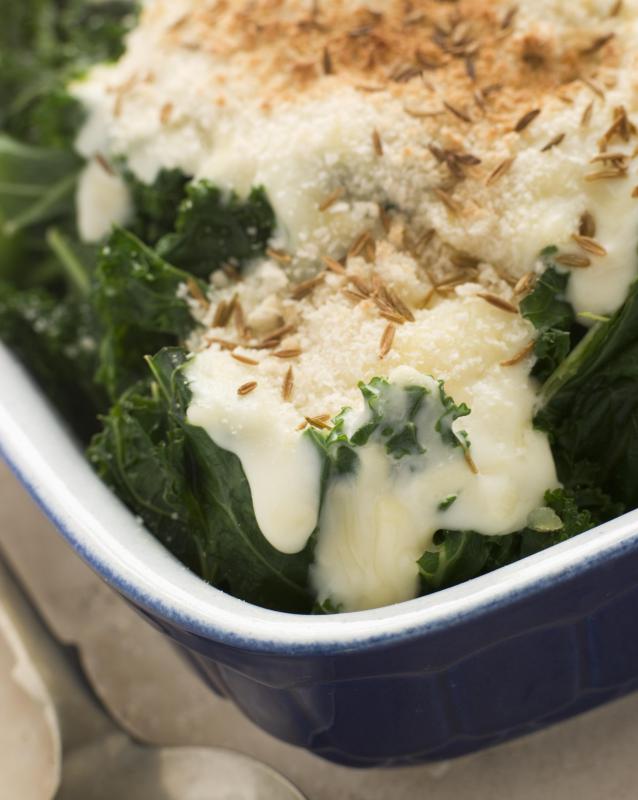
Most kale is eaten cooked, although very young leaves may be trimmed from the stalks and used raw in salads. When cooked, it can be mixed in with soups, used in mashed potatoes, roasted on pizza, and eaten plain as a side dish. It's important to be aware that the stems take more time to cook than the more delicate leaves. Some cooks trim out the largest stems to be cooked longer or discarded, to avoid soggy leaves and woody stems.

Kale is rich in calcium, vitamin K, folic acid, magnesium, and beta carotene. It lends itself to a wide variety of recipes and is delicious sauteed, steamed, grilled, or fried, plain or ornamented with olive oil, salt, lemon, or butter. It can be used as a stand in for other leafy greens, such as spinach in quiche, or added to stir fries and soups.

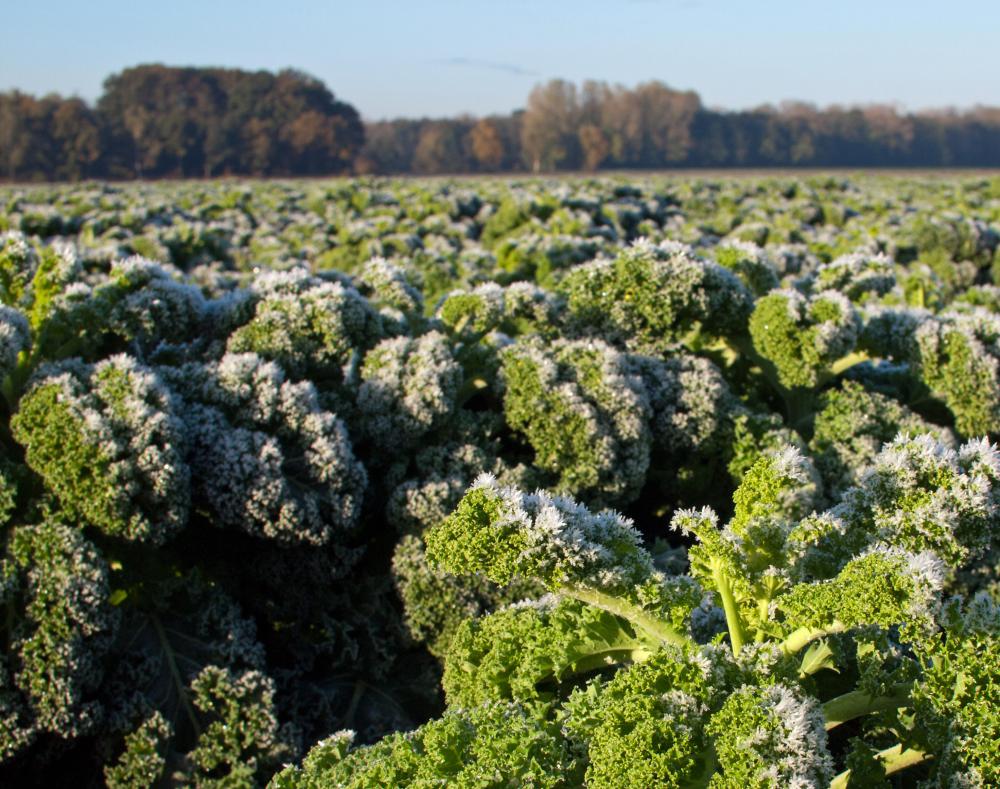
These vegetables are extremely hardy, suited to gardening in almost any part of the world. Kale is one of the few greens that takes well to frost, actually tasting sweeter after it has been frost kissed. It should not be planted in the summer, because hot weather makes the leaves woody and more bitter. It's best to plant it in moist, well composted soil approximately 10 inches (25 centimeters) apart, and keep the soil moist so that the leaves stay tender and flavorful. Kale will keep for 14 to 21 days if refrigerated and separated from apples, pears, and other fruits that contain the ripening agent ethylene gas.
Mary McMahon
Ever since she began contributing to the site several years ago, Mary has embraced the exciting challenge of being a DelightedCooking researcher and writer. Mary has a liberal arts degree from Goddard College and spends her free time reading, cooking, and exploring the great outdoors.
Learn more...
Mary McMahon
Ever since she began contributing to the site several years ago, Mary has embraced the exciting challenge of being a DelightedCooking researcher and writer. Mary has a liberal arts degree from Goddard College and spends her free time reading, cooking, and exploring the great outdoors.
Learn more...AS FEATURED ON:
AS FEATURED ON:


-
![Kale tastes sweeter after it has been frost kissed and is ideally grown during wet and cool seasons.]() By: lohner63Kale tastes sweeter after it has been frost kissed and is ideally grown during wet and cool seasons.
By: lohner63Kale tastes sweeter after it has been frost kissed and is ideally grown during wet and cool seasons. -
![Kale can be differentiated from regular cabbage by its ruffly appearance and loosely furled leaves.]() By: silencefotoKale can be differentiated from regular cabbage by its ruffly appearance and loosely furled leaves.
By: silencefotoKale can be differentiated from regular cabbage by its ruffly appearance and loosely furled leaves. -
![Kale should be stored separate from pears.]() By: epanthaKale should be stored separate from pears.
By: epanthaKale should be stored separate from pears. -
![Kale is a substitute for spinach in quiche.]() By: MIGUEL GARCIA SAAVEDKale is a substitute for spinach in quiche.
By: MIGUEL GARCIA SAAVEDKale is a substitute for spinach in quiche. -
![Most kale is eaten cooked.]() By: Monkey BusinessMost kale is eaten cooked.
By: Monkey BusinessMost kale is eaten cooked. -
![Kale is rich in calcium, vitamin K, folic acid, magnesium, and beta carotene.]() By: GVictoriaKale is rich in calcium, vitamin K, folic acid, magnesium, and beta carotene.
By: GVictoriaKale is rich in calcium, vitamin K, folic acid, magnesium, and beta carotene.



Discussion Comments
Where is kale grown in South Africa?
What is kale known as in Hindi? And in Tamil too?
One of the things I love about kale is that it seems really structured and filling compared with some other kinds of green leafy vegetables, which collapse when you cook them.
It's really good to try and have a variety of different kinds of leafy vegetables. I read up a lot on nutrition recently and they seem to have the very best "superfood" reputation.
I've even heard that there might be beneficial bacteria that you can get through eating green leaves that you can't get any other way, that can help to settle your stomach and help with other conditions as well. I don't know if that's true, but I definitely try to have as much green food, including kale, as I can.
@croydon - You never know. I've seen some vegetable kale plants grown as ornamentals. Personally I think the best policy is to combine the two functions and make your vegetable garden something beautiful as well as functional.
You can have a look at seed catalogs online, which will tell you what kind of kale seeds they sell and what you can do with them.
Generally the pink and other color kales are only ornamental, I think.
Kale is often grown as an ornamental plant around here. I've even seen it in local town displays and it always makes me want to steal a few leaves for the dinner!
I don't know if the ornamental varieties can been eaten the same way as the vegetable varieties though, so I guess I should keep my hands to myself.
Kale grown in the U.S. is mostly grown in the western U.S. away from the genetically modified crops and Monsanto controlled farmland of the central plains, midwest, and eastern U.S.
what is it known as in hindi in india?
where do you get kale in india?
Where in the U.S. is kale grown? thank you
Kale is one of the most delicious vegetables in Thai food - don't miss "pakana nam min oui" (roughly) - it is sauteed in oyster sauce with cloves of garlic ... amazing!
Post your comments