
At WiseGEEK, we're committed to delivering accurate, trustworthy information. Our expert-authored content is rigorously fact-checked and sourced from credible authorities. Discover how we uphold the highest standards in providing you with reliable knowledge.
What is Jock Itch?
 Tricia Christensen
Tricia Christensen
Tricia Christensen
Jock itch is an uncomfortable subject and an equally uncomfortable condition. Known by the medical field as tinea cruris, it is a persistent reddish, flaky, itchy rash in the groin and around the anus caused by a fungal imbalance on the skin. It is most common in men, though it can certainly occur in women, and is most likely to occur in humid weather or among people who are very active. The condition is contagious, and a person suffering from it should not share towels or clothing with others.
All people have a certain amount of fungus on their bodies, and under certain conditions, it can begin to spread. The warm and humid groin area is often ideal for its growth. The most common fungus that causes jock itch is Trichophytum rubrum. The condition may first be noticed when areas in the folds of the groin look red or irritated and the redness continues to advance and becomes uncomfortable over the next few days.

People who have not had jock itch before should see a medical professional for a diagnosis, since the rash could be caused by something else. Intertrigo, essentially the male yeast infection, may require a different treatment. A condition called erythrasma is a bacterial infection that mimics the symptoms, and treating it with antifungal cream will only make the problem worse. Instead, erythrasma requires treatment with oral or topical antibiotics.

Once the condition has been verified, a patient can treat it with one of several over-the-counter anti-fungal creams. Steroidal creams should not be used to relieve itching, however, since they can make the condition worse. Patients should not apply steroids to the groin area at all unless prescribed by a medical professional. Anti-fungal creams should be used until a week after the rash has disappeared, and most cases of jock itch resolve about two weeks after treatment begins. If the cream is not working, stronger prescription antifungals may be used.

It’s important for patients to keep the groin area dry during treatment. People with this condition should change their underwear at least once a day, and they may find that it's better not to wear underwear at night. After any activity, patients should gently pat the groin area dry with a towel. They may also want to make sure the entire affected area is completely dry after using the bathroom, especially if warm weather is causing extra sweating.

People with jock itch should abstain from sexual activity, since it can be passed to other people. They should avoid sharing towels too, as this is another means of transmission. Once the condition has cleared, patients may still want to observe precautions like toweling the groin area after activities, not sharing towels or clothes with others, and choosing underwear styles that are loose fitting and made of breathable fabric to reduce the chances of developing the problem again.
Tricia Christensen
Tricia has a Literature degree from Sonoma State University and has been a frequent WiseGEEK contributor for many years. She is especially passionate about reading and writing, although her other interests include medicine, art, film, history, politics, ethics, and religion. Tricia lives in Northern California and is currently working on her first novel.
Learn more...
Tricia Christensen
Tricia has a Literature degree from Sonoma State University and has been a frequent WiseGEEK contributor for many years. She is especially passionate about reading and writing, although her other interests include medicine, art, film, history, politics, ethics, and religion. Tricia lives in Northern California and is currently working on her first novel.
Learn more...AS FEATURED ON:
AS FEATURED ON:









-
![Jock itch is most likely to occur in men who are active in humid weather.]() By: evgenyatamanenkoJock itch is most likely to occur in men who are active in humid weather.
By: evgenyatamanenkoJock itch is most likely to occur in men who are active in humid weather. -
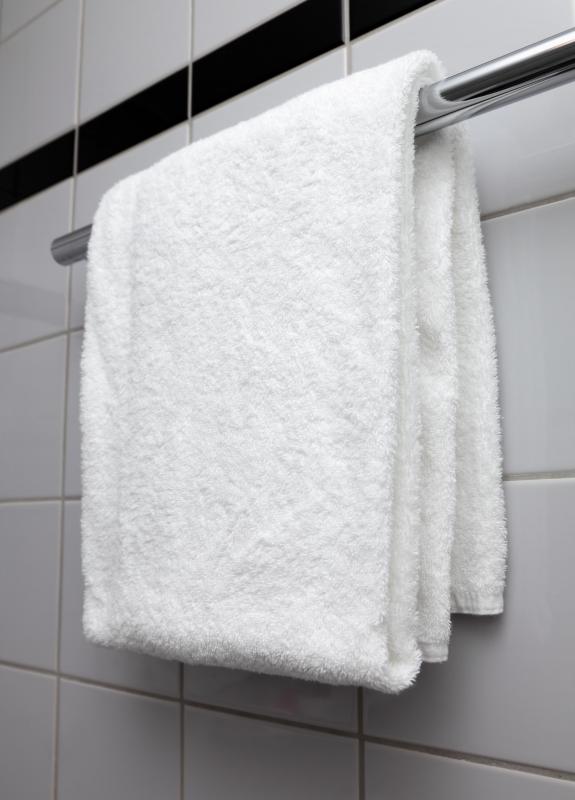
![People with jock itch should not share towels.]() By: OffscreenPeople with jock itch should not share towels.
By: OffscreenPeople with jock itch should not share towels. -
![People with jock itch should refrain from sexual activity.]() By: Andrey KiselevPeople with jock itch should refrain from sexual activity.
By: Andrey KiselevPeople with jock itch should refrain from sexual activity. -
![Cranberry pills can help with jock itch.]()
Cranberry pills can help with jock itch. -
![Those with jock itch should change their underwear daily.]() By: Artistic EndeavorThose with jock itch should change their underwear daily.
By: Artistic EndeavorThose with jock itch should change their underwear daily. -
![People who have not had jock itch before should see a medical professional for diagnosis.]() By: BurlinghamPeople who have not had jock itch before should see a medical professional for diagnosis.
By: BurlinghamPeople who have not had jock itch before should see a medical professional for diagnosis. -
![Antifungal creams such as clotrimazole can be applied to the groin to kill fungus such as Candida.]() By: agephotographyAntifungal creams such as clotrimazole can be applied to the groin to kill fungus such as Candida.
By: agephotographyAntifungal creams such as clotrimazole can be applied to the groin to kill fungus such as Candida.



Discussion Comments
Post no. 2: This is probably interigo. It is very common in overweight people (I know from personal experience). Here's how to deal with it: Get some Sea Breeze for sensitive skin and some Aveeno oatmeal soap or body wash. Generic brands are fine. Wash with the Aveeno, dry completely and apply Sea Breeze. Caution: it will *burn* like a sonfagun, but wait it out. You should notice almost immediate relief.
Something else: interigo can also be a symptom of high blood sugar, so if it continues, do see your doctor for some bloodwork.
I started working out at the local gym. Gradually I noticed I got great pleasure out of scratching the fold between thigh and groin.(Being 70 pounds overweight added another roll of "thigh" as well). After repeated scratching I noticed a slimy sweat in the fold which smelled really gross.
Thinking it to be jock itch I got an OTC remedy (small tube, large price) which barely worked but got expensive. Then I tried antiperspirant (obvious reasons). This seems to be effective. If not, I guess I'll have to break down and see my doctor for yeast or other infection.
can the jock itch germs/spores live on in clothing? do you have to throw away all your underwear or can you just wash them to get the fungus out?
Post your comments