
At DelightedCooking, we're committed to delivering accurate, trustworthy information. Our expert-authored content is rigorously fact-checked and sourced from credible authorities. Discover how we uphold the highest standards in providing you with reliable knowledge.
What is Jicama?
 Mary McMahon
Mary McMahon
Mary McMahon
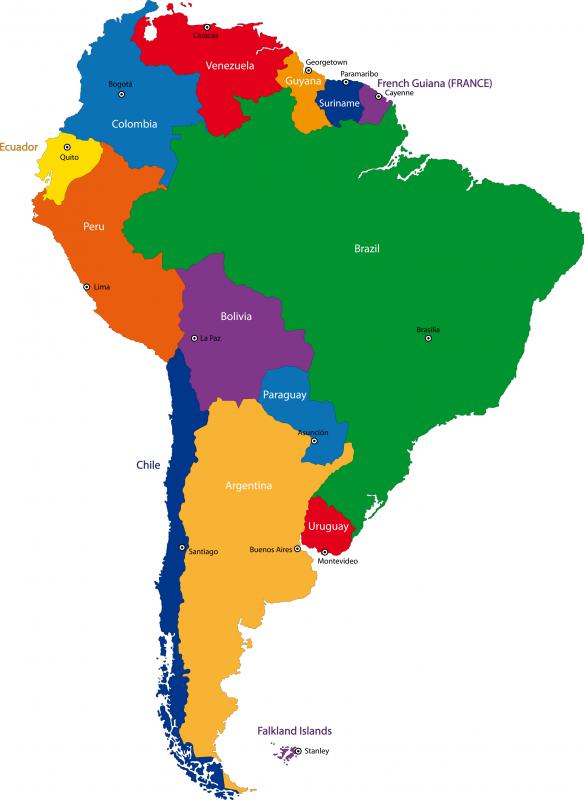
Jicama is a crispy, sweet, edible tuber that resembles a turnip in physical appearance, although the plants are not related. It has been cultivated in South America for centuries, and the vegetable is quite popular in Mexican cuisine. Jicama's unique flavor lends itself well to salads, salsas, and vegetable platters. The tubers can sometimes grow to be quite large, although when they exceed the size of two fists, they begin to convert the sugars that give them their sweet flavor into starches, making them somewhat woody to the taste.
Actually the tuberous root of a legume plant, jicama grows on vines that may reach 20 feet (6 meters) in length. The vines tend to hug the ground, ending in tubers that may grow up to 50 pounds (22 kilograms) in size, although the majority of those sent to market are approximately 3 to 4 pounds (1.3 to 2 kilograms) in weight. Before eating, the coarse brown outer layer should be peeled to reveal the white inside.

When choosing jicama at the store, shoppers should look for medium sized, firm tubers with dry roots. Wet or soft spots may indicate rot, and shoppers should not be drawn to overlarge ones, because they may not be as flavorful. They should not be refrigerated, as temperatures of less than around 50° F (10° C) will damage them..
Jicama is excellent raw and is sometimes eaten plain. It can also be used as a substitute for water chestnut in Chinese dishes, in which case it should be thrown in right before serving. The roots also appear in stews, juiced drinks, stuffings, and a variety of other recipes. In addition to having a unique flavor and texture, jicama takes flavor well, making it well suited to culinary experimentation. It's a great source of vitamin C and is fat free — making it a great on-the-go snack.

The plants grow best in warm, dry climates. They can be planted and grown year round, although tubers form better during the winter time. Jicama plants sprouted in the late spring tend to produce extremely robust tubers by the winter, while those planted in the summer produce the most flavorful ones, although they are typically somewhat smaller. The plant prefers full sun and moderate rainfall, and it is subject to frost damage, making it a poor choice for northern climates. In addition, jicama produces a natural insecticide in the above ground vine, meaning that the plant protects itself from harmful pests.
Mary McMahon
Ever since she began contributing to the site several years ago, Mary has embraced the exciting challenge of being a DelightedCooking researcher and writer. Mary has a liberal arts degree from Goddard College and spends her free time reading, cooking, and exploring the great outdoors.
Learn more...
Mary McMahon
Ever since she began contributing to the site several years ago, Mary has embraced the exciting challenge of being a DelightedCooking researcher and writer. Mary has a liberal arts degree from Goddard College and spends her free time reading, cooking, and exploring the great outdoors.
Learn more...AS FEATURED ON:
AS FEATURED ON:


-
![Sliced Jicama.]()
Sliced Jicama. -
![Jicama adds flavor to salsa.]() By: Lorraine KourafasJicama adds flavor to salsa.
By: Lorraine KourafasJicama adds flavor to salsa. -
![Jicama has long been a dietary staple in South America, where it has been cultivated for hundreds of years.]() By: Iryna VolinaJicama has long been a dietary staple in South America, where it has been cultivated for hundreds of years.
By: Iryna VolinaJicama has long been a dietary staple in South America, where it has been cultivated for hundreds of years. -
![Jicama can be a good addition to a salad.]() By: Gennadiy PoznyakovJicama can be a good addition to a salad.
By: Gennadiy PoznyakovJicama can be a good addition to a salad.


Discussion Comments
I just bought one at WalMart for the first time. I peeled it and cut it up, but the inside is dark. Is it still good? I am afraid to eat it now. All the pictures show it nice and white all the way through. Help!
100 g jicama contains 150 mg potassium.
Please don't believe Jicama has "zero calories". I saw that in some posts, on here. That is false information. I've checked several sites, all with similar information about them, including nutritional information.
A medium sized one (imagine a large orange) has approximately 250 calories, 58g carbs, 32g fiber,12g protein and 21g of sugar. Just do the research for yourself, and don't believe everything on the internet, (including me; I am not offended) and make an intelligent decision for yourself.
I eat them raw, and cook them just like any root vegetable. They can be baked, broiled, boiled, mashed, pureed, and sautéed. I presume they could be fried like potatoes, but haven't tried them that way, so i can't endorse that style of preparation/presentation. Whatever you decide, experiment until you find what you like. Good luck to everyone!
My stepdaughter and her husband have a juicery here in Salt Lake City,Utah, which uses jicama quite successfully. It's actually one of their most popular and best sellers. If you haven't tried to juice it, try it with some of their combinations and I think you'll be very pleasantly surprised.
Carrot, jicama, orange, pear and ginger is my favorite!
When was jicama discovered?
If you live in Canada, Superstore sells jicama. It is delicious.
I found the jicama at my local grocery store -- Ralph's in southern California.
I would love to know how to store jimaca after you peel it. I can't eat the whole thing at one sitting.
All I can say is to eat it. It's delicious, good for your body and filling.
We just tried jicama and Mexico. My daughter, age 10, husband and I all loved it.
We just ate it plain, as other posters said it is refreshing. We hoped and prayed that it would be on the buffet every day!
I heard about jicama in a forum and looked for it at Walmart and they were out of it. Found some at the Piggly Wiggly for .89 a pound. I loved it. A few days later I was in Walmart again and checked to see if they had some and it was 1.58 a pound. Went back to the Pig for some more.
I eat them raw all the time with lemon, salt, and chile. Even though I eat everything with lemon salt and chile. They are sold in any grocery store. They are not rare; they are all over the U.S.
For the person looking for jicama in Woodbridge, look in asian markets. They carry it.
Jicama tastes like a cross between an apple and a potato. A little sweet and starchy. Pleasant, but as an American, I'm clueless what to do with it other than eat it raw.
I love Jicama. I cut it up like french fries, season them with salt and eat it with salsa. I get the bigger ones - perfect if you don't want them to be sweet. Wonderful diet food. One cup has zero calories and it's very filling.
I just had jicama for the first time yesterday. It was served raw and cut into french fry shapes, served with hummus. Wonderful taste and texture!
In NJ (Plainsboro) I find it at Asian Food Markers under the name Sigamas.
I have a Jicama that has been in my refrigerator for probably three weeks and it has some mold growing on the skin. Is it safe to peel and eat it or should I toss it?
I keep reading that jicama is a legume so those with allergies to legumes like peanuts should be wary.
It tastes wonderful with guacamole! Makes my mouth water for more!
I work in the produce department of a small town grocery store abd we sell jicama. I haven't tried it, but after reading all these posts I'm very excited about getting one. I'm even thinking of having a sampling of it for our customers! Thanks for everyone's input!
Has anyone bought this in New Hampshire? I'm very excited to try it!
Jicama is absolutely amazing!
Jicama is awesome! I like it plain and with ranch dressing!
I think jicama is fine for dogs. My two dogs love it!
Yes, jicama is usually sold in regular stores. We get ours from the grocery section at our walmart, and I think mexican markets also sell them. I know ours does!
Peace, love and jicama!
Cut jicama, watermelon, cucumber, orange, mango, pineapple,(or any other fruit you want). Then add lime, salt and hot sauce(tapatio or velentina hot sauce). Mix it all together and enjoy!
Jicama is "singkamas" in tagalog here in the Philippines. It is the season now for this fruit. In our local market, it is available with the fresh leaves still attached. This is a great thirst buster as it is so watery and very cool to the mouth! Yes, it is a very good substitute for water chestnuts.
It is also good to mix with vegetable spring rolls. We Filipinos love chilled jicama, peeled and sliced, with sauteed shrimp paste or simply dipped in vinegar seasoned with salt, a little sugar and some ground pepper! So yummy! Or make it pickled!
I was served jicama with guacamole today. Tasted like an apple to me, but awesome nonetheless!
RE post 105: At the Farmer's market on New Bridge Road in Bergenfield.
where exactly can you find jicama in bergen county, nj?
To heck with large grocery stores. I just saw jicama at Hy-Vee, a regional grocery, in Peru, Ill. I love it too.
I must say that the Jicama is an extremely disastrous thing to eat. Just for the simple fact that once you take one bite, you cannot go without eating the rest. We cut ours up in a mandoline like they're french fries.
I tried jicama for the first time today. It's awesome.
In CT, I have found it in some grocery stores and Asian markets, as it very popular in some areas of Asia. This article suggests storing it in the refrigerator, yet every other claims temps below 56° can harm it. I say keep it out, as that's the way they store it in Mexico.
Someone asked about the potassium content in jicama.
I also would like to know if it is a low-potassium vegetable. I have to keep my potassium low. --czhk
Jicama can be purchased in Baltimore, Md at the Giant grocery store in the Golden Ring Shopping Center. Just bought one last night.
Jicama is usually in the sweet pepper section of the grocery. Our small grocers carry it, so should be plentiful in larger chains. We just peel and eat like an apple. My grandchildren choose new fruits/veggies on shopping trips. Parsnips are great/sweet too. And of course, our mainstay is eating peeled raw sweet potatoes too. Substitute many different but great veggies in place of the regular ones, they will beg for them!
I learned about jicama in 1990 at weight watchers. It's becoming easier to find in new york. i just love it. it takes the place of potato chips while watching television.
Can I find jicama in Miami, Florida?
jicama is usually found in the ethnic section among the veg. I call this sinkamas in tagalog. I normally eat this just plain, refrigerated taste better. Norma
Just had a salad of jicama, mangoes, pomegranates, blueberries with lime juice as dressing. Oh my soul!
i have an amazing thing to tell you all!
This is my recipe for sugared jicama.
First, peel the skin off until you have the meat of the fruit. After that, get a potato peeler and slice the jicama meat with it. the product should look like a pile of jicama "chips" then you should get out a big plate or cutting board and lay the jicama chips on it(don't overlap them). Then, grab a handful of sugar and shake it evenly onto the jicama chips, and now you have yourself a beautiful plate of sugared jicama chips.
Thanks for reading my recipe!
Just got one here in Galveston Tx at kroger. The things are awesome. I have read all your posts: bacon wrapped Jicama, in salads, in soups. It's an amazing Fruit -- vegetable? lol. The possibilities are endless. i urge you all to try it. we peeled and ate it raw, yum
I live in Los Angeles and buy it at my local market. I eat Jicama all the time, adding lemon juice and some powdered chile for seasoning. It is great.
I like jicama a lot and wondered if I can use it in my Thanksgiving turkey stuffing as a substitute for celery? I would sautee it first. Has anyone done this?
We tried jicama for the first time today. It's delicious!
Go to any asian supermarket. Grandmart or Lotte Plaze in the DC area will have it. Veggies are cheaper there anyway.
How do you pronounce the name?
I found some at the Martin's in Eldersburg, MD.
I live in Wisconsin and bought jicama at Sendik's. It is wonderful eaten raw with a little ranch dip. I really like it!
I tasted jicama in a Kroger in Cincinnati over a year ago. The larger stores: Kroger, Bigg's, Walmart and Remke stores as well as Findlay Market (the local farmer's market that is opened all year long) has jicama.
How to identify jicama: I had looked at Wal-Mart and couldn't find jicama. Out of curiosity, I looked it up on the Internet to see what one looked like. I went back to Wal-Mart and found them but the only identification on the produce tag said "Discover the Mexican Fruit Treasure."
So you just need to know what it looks like: shaped like a turnip root but colored like a potato. It has a brown/tan bumpy textured skin.
If you find some in Baltimore - let me know. I have been looking at stores in the middle river area and even stopped at Trader Joes in Towson and can't find it.
I tried it for the first time today, my supervisor brought it in for us to try. It kind of tastes like fresh garden peas. He bought it at Sobeys here in western Alberta, Canada.
I live in northern New Jersey, and you can get it at certain Stop and Shop and Shop Rite stores.
This vegetable is also a natural blood thinner and may explain the low proportion of MS sufferers in Mexico and South America.
Just wondering if jicama is available in Australia, specifically, Western Australia?
I picked some up at Highland Farms (Dufferin and Finch location) - it's at the back near the onions!
Oh, by the way. it is pronounced 'Hick-a-ma' when you ask for it. Mexico street vendors serve it raw, cut like french fries with a splash of lime juice and a sprinkling of chili powder.
To Gerald in Baton Rouge. Try Kroger. I just completed a weekend of sampling at my local Kroger, and people really liked the jicama in the salad presentation. A lot of customers had heard of the jicama, but didn't know how it looked.
I live in Canada, in Woodbridge near Toronto. I went to Walmart to find jicama but they never heard of it. Does anyone know where to buy it here in
this area? Thanks Ria;I
I just bought jicama in Baltimore at Whole Foods downtown.
We thought it was a fruit because it was in the fruit section at Wal-Mart. False advertisement. We had to look up Mexican potato to find out what it was.
I would also like to know where I can buy jicama. I live in Baton Rouge, LA. Best regards, TW Gerald
Vietnamese jicama salad with sweet fish sauce dressing and grilled steak. Perfect!
I haven't yet, but plan to try to grow jicama when I move south. I live in the north close to Canada. I researched "Jicama Seeds" and found lots of sites. One I will try is the Kitchen Garden Seeds.
Good luck!
I read (several articles actually) that if they are allowed to grow larger than your fist, they begin to lose their sweetness. Keep them small and firm for best flavor!
Jicama is best in egg omelettes with goat cheese and sweet or hot cherry peppers. Yummy.
I just bought my first jicama, peeled and cut into strips served in a green salad with pineapple and apple, almonds. Served with a balsamic lime vinaigrette. Delicious!
I am so addicted to Jicama, just plain (raw) as a snack. In Canada you can quite often buy good ones at Super Store. Funny because every time I go to the checkout they always ask what it is! If you haven't tried it, do! Great in any salad if you like the crunch.
I love jicamas! I get mine at the regular grocery store. They are great with hummus!
I just bought my first Jicama today and everybody is talking about lime juice, salt, and chili powder but how much of all of this do you use.
I grew up in El Salvador and I love eating this thing with lime/lemon and salt. It makes an awesome snack. I hope I can find it at the grocery store around here. I had forgotten about jicama until I saw a cooking show that mentioned it.
Your best bets in Montreal are Loblaw's and Costco. I'd assume most IGA locations would be jicama stockists as well.
I have just heard of Jicama. Never had it. Would like to know where I can buy it in Canada. I'm from Montreal, Quebec. We have Walmart but they don't sell vegetables here like your Walmart. Does anyone out there know what grocery store would sell it in Montreal, Quebec?
Even though I'm nearly 60 years old, I never heard of jicama until I worked in southern Mexico
recently. I can buy it at several stores near me in Utah, probably because we have folks from Mexico in our area. I love it! It's cool to discover new yummy things!
Walmart usually always has it.
Where can you buy jicama?
Can anyone tell me what Jicama is called in Thailand - if it is grown there?
My experience today was as an addition to Waldorf Salad. Great. My recipe said to soak it in pineapple juice to keep it from turning brown. Worked like a charm. Glad I tried it.
I love jicama too.
I just bought my first jicama and am anxious to try it. I found it at Wal Mart in North Ga.
I just finished eating my jicama with lime for a midday stack. The crispiness is delightful and the clean sparkling taste so satisfying.
I challenge those who have not had the courage to try something new (veggies) this is the one. You won't regret it. - Therese
My wife ate some and had a very bad reaction and had to go to the hospital as her throat closed up and breathing became hard.
I first tried jicama in Palm Springs, California and was sold on it right away. I live just outside Vancouver, BC and found it quite readily.
I eat this raw, tossed in coconut oil, with yogurt. This stuff is amazing and even more amazing for people trying to lose weight. It is healthy and keeps you feeling full.
Can you get Jicama in new zealand?
Bought one today at Wal-mart in upstate NY. Had it julienned raw in a mixed green, pecan and cut beet salad with small amount (2 tsps) of olive oil, (1 tsp)balsamic vinegar. Wonderful flavor and super easy
Are you guys serious! maybe because I'm mexican but we eat it all the time with lemon, salt and fruit seasoning. it is the best!
I grew up in El Salvador as a kid and Jicama is grown everywhere there. being a tropical country we have a large amount of tropical fruits and legumes such as the Jicama. it is great to eat during hot summers or as a snack and is one of those snacks you can eat without a guilty conscience.
I live in South Africa - East London to be precise.We have never heard of Jicama and would very much like to know where we can get some or even a plant. We live 200 metres from the Indian ocean and never have frost but a reasonable rainfall. Any help or suggestions would be appreciated.
I didn't read all these comments, but I just have to say, it is great when sliced and soaked with lime juice, salt and a bit of red pepper, the kind used on corn on the cob.
I bought one at Walmart. We first heard about it online on a Cookie Monster game. We were very curious about what it was so we bought one. Haven't tried it yet!
I've never heard of jicama until today when I saw it in a rachel ray programme here in the UK. Is it on sale here?
Deenie (anon1527): Jicama is sometimes called a "Mexican potato." Actually, finding jicama hasn't been my problem. Finding it in good shape has been an issue. I live in nearby Columbia, Md. I've found it in the Ft. Meade military commissary and at Bloom grocery store in Scaggsville, Md.
But it seems every time I find it, if I look closely, I see that the vegetable has a bit of mold on it. I mentioned this to the guy in the produce department, and he says the jicama is a very slow mover. It comes in damp and sits for a time.
So, visually inspect them up close when you do find them would be my advice. They are said to be very good cut up and dipped into hummus, etc. Much healthier than potato chips!
I live in Southington, CT., went to Stop and Shop. they never heard of them.
I had jicama at my high school for our food of the month. i grow it in my backyard and i have to say that the size of them are huge! i weighed one at 10 pounds and another at 20 pounds. I use it in sandwiches with a turkey and wheat bread. it tastes so good.
I had jicama years ago in a school cooking class. My aunt just brought it over tonight as part of our veggie tray at our BBQ and it brought back my love for it. It's so darn tasty and healthy!
We tried Jicama for the first time today and thought it was super and plus it is on our diet plan which makes it even better.
In Minnesota we find it in nearly all grocery stores near the fresh herbs. Jicama tastes more like fresh sugar snap peas or sweet green beans than turnips or potatoes, which people had asked above. We use it instead of water chestnuts, have used strips in oriental salads, but our favorite Jicama use is in fresh salsa. Add about as much chopped Jicama as you do onion. It will absorb some of the salt and other seasoning, so make sure you add the Jicama, stir it up well, let it sit for a little (we usually plan an our of refrigeration - *then* taste for spice.
I bought jicama for the first time today without knowing what I bought. At Weight Watchers they challenged us to try something we knew nothing about. So I brought it home from Kroger and tried it. So good just plain. I did not add anything to it. A little sweet and pretty moist. Will be great in salads or with fruit or just by itself. So glad WW had the challenge.
I keep jicama cut up in to small cubes placed in water in the ridge. It makes a great item to just for a quick bite. Fills me up and tastes great
Bought a small one for the first time in a Chinese grocery store to try. doing this with different veggies...no cooking needed...suits me fine....my wife must watch her potassium intake so, please, what is the level of potassium??
Thanks for the info that jicama is grown in bihar, one of the states in india. I shall get in touch with agricultural university in bihar to know more about cultivation of jicama. --Trs mani1
trasmani, Plenty of Jicama is grown in the Indian state of Bihar, mostly in the Northern Bihar, where it is known as misrikand. In fact, misrikand is smaller with average weight of about one pound, and is sweeter and juicier than jicama.
One serving of Jicama (a mere 1 cup) is 49.5 calories. What really makes it great though is the incredible amount of fiber in it. 1 cup contains 6.4 grams of dietary fiber, (25%) so eating four servings (just under 200 calories)
gives your body all the fiber it needs for a day. Try saying that about any other food so tasty. These little guys are so versatile! You can prepare them just about any way you could imagine and serve them in accompaniment with almost any entree. A fantastic food, all the way around.
Just wanted to know if there is a substitute for Jicama if it can't be found in the local stores?
How many calories in Jicama?
Where can I find jicama vines or seeds and will it grow in West Texas? I use it in place of lettuce for salads and love it that way!
Essie
I am interested in jicama roots. I just wish to know whether jicama can be cultivated in kerala, india. From the description of jicama, I assume it is like sweet potato, which is readily grown here.
If jicama can be grwon in kerala, I would like to know how to propagate this root, through its vines, fruits/seeds and/or roots?
Thanks.
I tried a jicama for the first time in my Spanish class after using this site to write a paper on it. We tried it plain, with lime juice, and with both lime juice and chili powder. My favorite way is with the lime and chili powder.
I had jicama for the first time in Fl last week. I live in NC and I ordered some seeds. Do you think I can grow it here and does anyone know I plant the seeds?
I think there is some confusion about carbohydrates. Jicama is high in carbohydrates in the form of fiber. Sugar is only one type of carbohydrate and jicama is low in sugar. 100 grams of jicama is about 9 grams of carbs, of which 7 grams are fiber and 2 grams are sugar.
My husband and I first tasted jicamas at a Souper Salad restaurant in the Dallas area. We have since been buying them regularly to add to our salads. We purchase jicamas at Terry's, a Mexican grocery store in our area.
In order to answer some questions by other users:
Jicamas and coconuts are NOT similar in taste.
Jicamas are almost 90% water, you can compare them to watermelons as they are crunchy and juicy, but the flavor is very different, jicamas are very very soft in flavor, a little bit sweet, so you can mix them with other fruits or veggies in salads.
They will not alterate the flavor of other ingredients in a recipe, as the flavor is very very soft, almost unnoticeable. I've seen it in many chinese recipes as well.
Jicamas are very low in carbs and have no fat, so it's an excellent snack when you're on a diet.
Try them raw, in cubes (1 or 2 inches is OK), with lime juice, salt, and chili powder, that's the best!!! You can add pineaple, cantaloupe, watermelon and mangos if you like. Erik
Are jicamas and cocunuts similar in taste?
I would also like to try and grow it. I live in the south.
I tried jicama for the first time in Cozumel last week and love it. My question is, is it harmful to dogs. My 2 daschunds love it.
does a white yam taste the same as a Jicama?
I just bought a jicama for the first time at Walmart. It looked interesting and I found this site to learn exactly what it was I had bought.
Jícama is high in carbohydrates in the form of dietary fiber. It is composed of 86-90% water; it contains only trace amounts of protein and lipids. Its sweet flavor comes from the oligofructose inulin (also called fructo-oligosaccharide).
i was pleasantly surprised by how light and refreshing jicamas taste! i wonder, though, how starchy jicamas are, and if they're bad for low carb diets?
Do mexican grocery stores sell jicamas? What about Walmart?
Deenie in MD,
I just bought my first jicama here in CT. You'd probably be able to get one in any large supermarket, esp. in a large urban area such as Baltimore.
I would like to know where I can buy jicama. I live in baltimore, maryland, and I was wondering if jicama is sold in regular grocery stores? Thank you, Deenie
Post your comments