
At TheHealthBoard, we're committed to delivering accurate, trustworthy information. Our expert-authored content is rigorously fact-checked and sourced from credible authorities. Discover how we uphold the highest standards in providing you with reliable knowledge.
What is Jaundice?
Jaundice is a condition easily recognized by its symptoms of yellowed skin and sclera (the whites of the eyes), due to an accumulation of bilirubin in the body. It is not dangerous in itself but can indicate potentially serious underlying conditions that should be diagnosed and treated by a medical professional.
Red blood cells live about 120 days, then die and are flushed through the body. In this process, bilirubin is produced when the hemoglobin of red blood cells is broken down in the spleen, then carried to the liver by albumin in the blood. Here, most of the substance combines with glucuronide to form conjugated or direct bilirubin, which then is absorbed in bile and excreted in the feces. If a disorder prevents this process from completing itself, the yellow-colored bilirubin builds up in the system until it becomes noticeable in the mucous membranes and skin.
Knowing how bilirubin is processed, the causes for accumulation can be narrowed to one of three key possibilities, which create the three basic classes of jaundice:
- Pre-hepatic or hemolytic: Too many red blood cells are broken down.
- Hepatic: Liver does not process the bilirubin correctly.
- Post-hepatic or extrahepatic: Bile is unable to pass properly.
Pre-hepatic (hemolytic) jaundice is caused by any condition or disease that accelerates the breakdown of red blood cells. Malaria is one example, and certain genetic deficiencies can create the conditions that lead to this condition, as can anemia.

The causes of hepatic jaundice range from acute viral hepatitis to liver disease resulting from alcoholism. Neonatal jaundice, common in newborns, is usually brief, lasting only a week or so, and is thought to be a result of the still-developing physiology. Though it is usually harmless and in most cases passes on its own, any infant displaying the signs should be seen by a pediatrician. In newborns, the liver sometimes requires a week or so to work properly, and although the resulting yellow color is not due to disease, it is still considered hepatic because liver function is at the root of the condition.

Post-hepatic (obstructive) jaundice occurs when bile cannot drain properly to the feces. Gallstones obstructing the bile duct, other ductal obstructions and certain cancers can cause this condition, which is also marked by pale stools lacking the normal pigment contained in bile.
Anyone with yellow skin or eyes should seek medical attention so that the underlying condition can be diagnosed and treated.
AS FEATURED ON:
AS FEATURED ON:


-
![Alcoholism can lead to jaundice.]() By: jedi-masterAlcoholism can lead to jaundice.
By: jedi-masterAlcoholism can lead to jaundice. -
![Doctors check newborns for signs of jaundice.]() By: gekaskrDoctors check newborns for signs of jaundice.
By: gekaskrDoctors check newborns for signs of jaundice. -
![Gallstones obstructing the bile duct can cause jaundice.]() By: designuaGallstones obstructing the bile duct can cause jaundice.
By: designuaGallstones obstructing the bile duct can cause jaundice. -
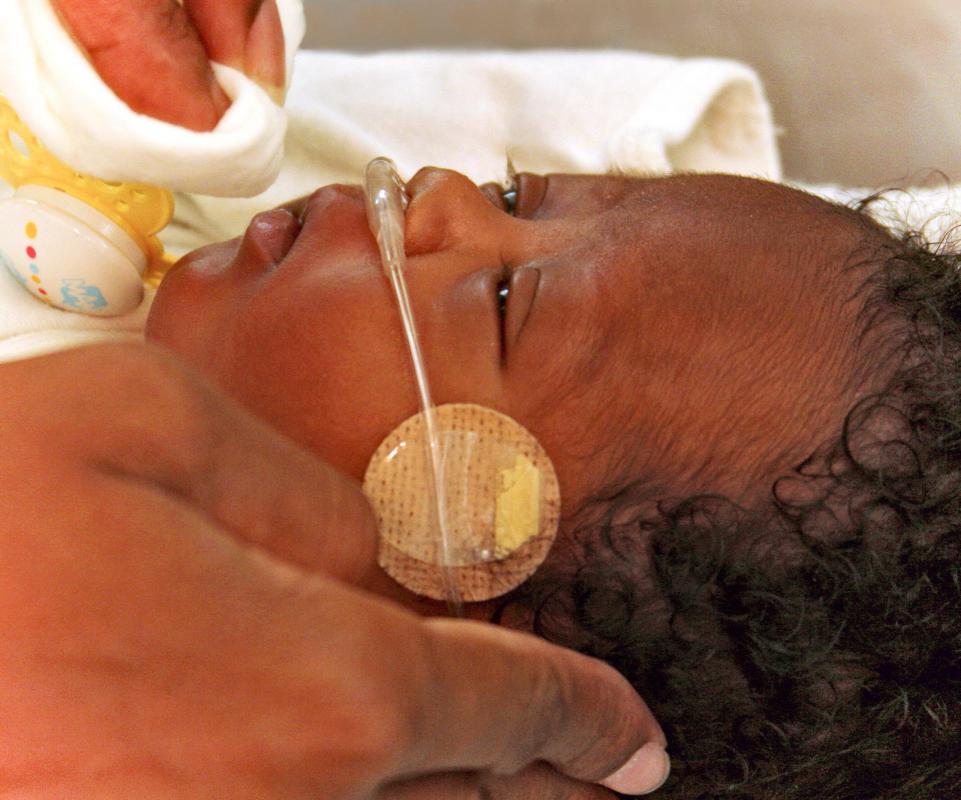
![Mild neonatal jaundice typically goes away on its own as the baby's liver matures.]() By: Sabryna WashingtonMild neonatal jaundice typically goes away on its own as the baby's liver matures.
By: Sabryna WashingtonMild neonatal jaundice typically goes away on its own as the baby's liver matures.



Discussion Comments
I notice my skin goes yellowy after I have been on a night out and been drinking alcohol. Is this something I should worry about?
can you get infected if someone has jaundice and you eat from the same plate?
@wesley91: Typically, our liver produces a liter of bile each day. The bile is secreted into the bile duct and then to the gallbladder. When we eat, the bile empties into the duct system and then the upper intestine. This is what aids in food digestion. If there is a blockage anywhere in the bile duct system, a backup of bile juices forms. That then overflows into the blood and raises the bilirubin in the blood. This causes obstructive jaundice.
@Dinoleash: I read where your post said that a CT scan can diagnose obstructive jaundice. What exactly is obstructive jaundice?
@anon10388: Other than the outward symptoms of jaundice, there are tests that can be performed to see if you actually have it. A blood test can be done to check your bilirubin level. A raised bilirubin level is a sign of jaundice. You can also get an ultrasound done to check your liver and bile ducts for any sign of obstruction. A CT scan can also help diagnose obstructive jaundice.
how do i know that i have jaundice?
Post your comments