
At DelightedCooking, we're committed to delivering accurate, trustworthy information. Our expert-authored content is rigorously fact-checked and sourced from credible authorities. Discover how we uphold the highest standards in providing you with reliable knowledge.
What is Italian Parsley?
 Tricia Christensen
Tricia Christensen
Tricia Christensen
Italian parsley, known scientifically as P. neapolitanum, is an herb in the Apiaceae family that is commonly used to flavor or garnish food. It is similar in appearance to curly leafed parsley, but has a stronger, more robust taste as well as a flatter leaf. As its name implies, Italian parsley is indigenous to Italy and most of Mediterranean Europe, though it is cultivated with great success in many parts of the world.
Differences From Curly Leafed Parsley

Most grocery stores and markets stock both Italian, or flat leafed, parsley and curly leafed parsley. Many people consider curly varieties to be more standard, with Italian versions playing a more gourmet or specialty role. This distinction is mainly due to the differences in taste, and sometimes in price.
Curly parsley, which is frequently the less expensive of the two, has only a very subtle flavor. Sometimes cooking will make the taste more pronounced, but not always. It is typically used only as a garnish, as a means of livening up the look of a dish without altering its taste.

Italian parsley, on the other hand, often has a robust peppery flavor. It has a much higher concentration of essential oils, which gives it a distinctive taste. Cooks often use flat leaf parsley as a garnish because of its vibrant green color, but also use it to flavor a number of dishes.
Culinary Uses
Flat leafed parsley is a common addition to soups and stews, and may also be cooked alongside poultry or meat. The parsley tends to release its oils more completely when exposed to heat.
It also has a taste many find pleasing when eaten raw. Cooks often add the herb to pasta dishes, salads, and even some sandwiches.
Storage Techniques

Once cut, Italian parsley will typically last anywhere from three to five days. Cooks can often prolong the herb’s freshness by storing it in the refrigerator or standing the stalks upright in a glass of water. Leaves that have been soaked in oil will often keep for a month or more, though the soaking will impact their flavor. Parsley stored this way is often best used in pastas or as a garnish in order for it to keep its consistency.
Dried Italian parsley typically lasts a lot longer than fresh, but has a diminished flavor. Most of the dried parsley purchased in commercial markets comes from curly leaves, unless otherwise noted. Cooks can dry out the leaves of Italian varieties themselves, often on racks or in a warm oven. Professional dehydration machines are also an option for those who do a lot of herb drying.
Growing Tips
Many nurseries sell potted Italian parsley, and it can also be grown quite successfully from seed. Like most herbs, it is somewhat delicate, particularly when it is first getting started. Success typically requires a regular temperature and plenty of water. Once stalks have reached a height of about 5 inches (approximately 13 cm), they can be transplanted outdoors, preferably to a flat surface with consistent sunlight.
Related Plants and Common Confusion
Flat leafed parsley is related to a range of herbs aside from the standard curly parsley. Cilantro, Chinese parsley, and Hamburg root parsley all share a number of attributes, and can often be substituted for each other with some success.
Some food scholars believe that Italian parsley was avoided by many cooks in earlier times because of how closely it resembles hemlock, a deadly plant that grows wild throughout much of Southern Europe. While the plants do look alike, they are not related. Grocers and herbalists today rarely ever confuse the two, and the risk of inadvertent poisoning is no longer a concern with consumption.
Tricia Christensen
Tricia has a Literature degree from Sonoma State University and has been a frequent DelightedCooking contributor for many years. She is especially passionate about reading and writing, although her other interests include medicine, art, film, history, politics, ethics, and religion. Tricia lives in Northern California and is currently working on her first novel.
Learn more...
Tricia Christensen
Tricia has a Literature degree from Sonoma State University and has been a frequent DelightedCooking contributor for many years. She is especially passionate about reading and writing, although her other interests include medicine, art, film, history, politics, ethics, and religion. Tricia lives in Northern California and is currently working on her first novel.
Learn more...AS FEATURED ON:
AS FEATURED ON:


-
![Italian parsley is commonly used to garnish food.]() By: alex555Italian parsley is commonly used to garnish food.
By: alex555Italian parsley is commonly used to garnish food. -
![Chicken Marsala is flavored with Italian parsley and other fresh herbs.]() By: annie1961Chicken Marsala is flavored with Italian parsley and other fresh herbs.
By: annie1961Chicken Marsala is flavored with Italian parsley and other fresh herbs. -
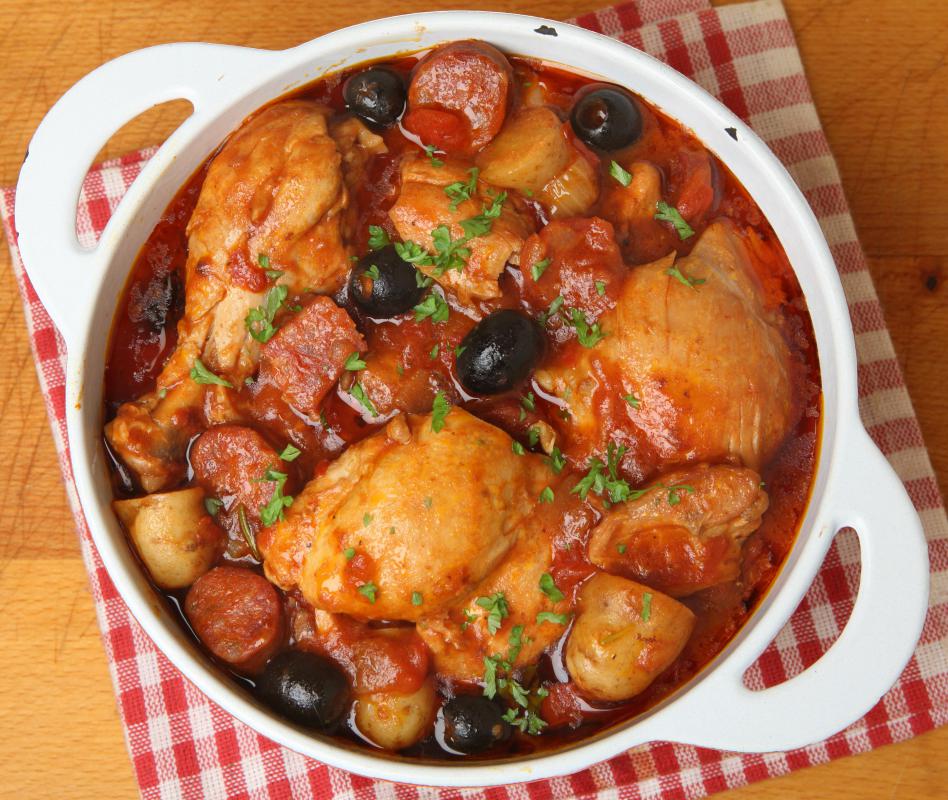
![Chicken cacciatore sprinkled with Italian parsley.]() By: Joe GoughChicken cacciatore sprinkled with Italian parsley.
By: Joe GoughChicken cacciatore sprinkled with Italian parsley.


Discussion Comments
Another good way of preserving parsley is by storing it in olive oil. On my trip to Europe I discovered this little parsley saving tip.
Wash, dry and chop the parsley when you first bring it home from the store. Put the parsley in a clean jar and cover with olive oil.
It will keep like that much longer and it comes in handy when you want to use it in your fish, meat or creamy pasta sauce recipes, or any pasta recipes for that matter.
@sputnik - That is definitely a great thing to know! I use parsley, literally, all the time and it never seems to last long for me. I'm only lucky that I use it in pretty much everything otherwise buying it fresh would be a big waste of money for my family... my husband would be so mad, but I probably wouldn't tell him.
@Kamchatka - I know which episode you're talking about, too, and I love that show.
@Pimiento - I absolutely love fresh parsley and you should try incorporating it more in your recipes. An authentic pasta sauce recipe will usually call for fresh parsley and there simply is nothing better (I think).
@Kamchatka - I know which scene you're talking about!I only use dried parsley if my recipe calls for the herb within the actual product I'm making. For example, I use it in my simple pasta sauce recipes I have. I use fresh parsley when I'm using it for a garnish as I don't really see any point. I don't get a lot of flavor from parsley, but that might just be me.
This article reminds me so much of Desperate Housewives. In the scene Bree and Catherine are arguing over a recipe in Bree's book that called for minced flat leaf parsley... I won't go anymore into detail, but I will say that I find convenience in dried parsley quite often.
When only a small amount of parsley is needed, less then the store bought bunch, the best way to preserve the remainder is by folding it in wet paper towels. Placing both in a plastic bag in the refrigerator will keep it fresh for a number of days, possibly even a week.
Rinse the parsley only before use. By rinsing before storage, it will reduce it's shelf life.
Post your comments