
At TheHealthBoard, we're committed to delivering accurate, trustworthy information. Our expert-authored content is rigorously fact-checked and sourced from credible authorities. Discover how we uphold the highest standards in providing you with reliable knowledge.
What is Isopropyl Alcohol?
 Karyn Maier
Karyn Maier
Karyn Maier
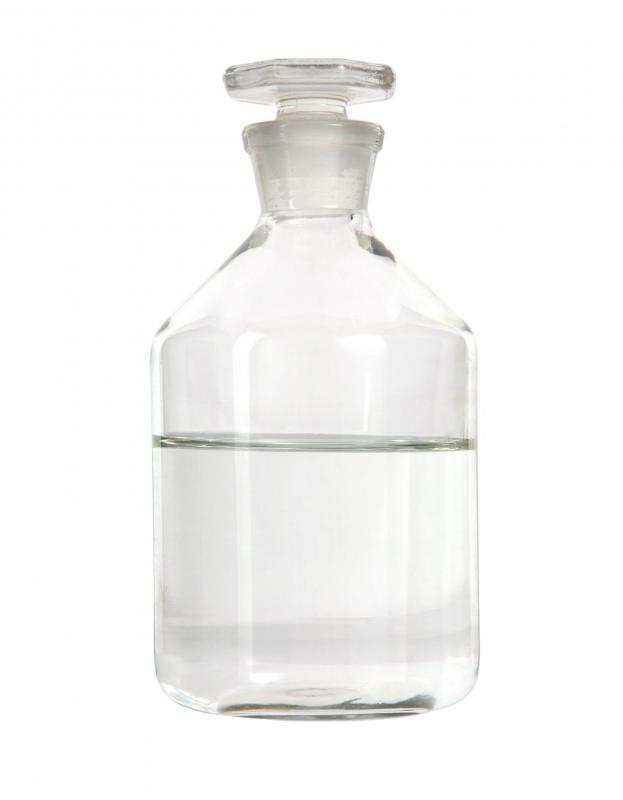
Isopropyl alcohol is a colorless, combustible liquid with a wide variety of uses. It has a wide range of uses in the home and is used in laboratories, in medicine, and in many manufacturing industries. Two of its most popular uses are as a solvent and a cleaning fluid. This alcohol does have some toxic properties, however, so people should be careful when they use it.
Rubbing Alcohol

Along with ethanol, isopropyl is one of the types of alcohol commonly used as the primary ingredient of rubbing alcohol. Rubbing alcohol is known as surgical spirit in some countries, including the UK and Ireland. Under both names, the solution is typically 70% isopropyl or ethanol and 30% distilled water. The alcohol in the liquid is denatured.
In this context, denatured does not mean the substance is no longer alcoholic. It means that the alcohol has been mixed with other chemicals to make it undrinkable, by making it poisonous or nauseating, or by making it taste or smell extremely unpleasant. This is done to discourage people from drinking it.
Medical Uses

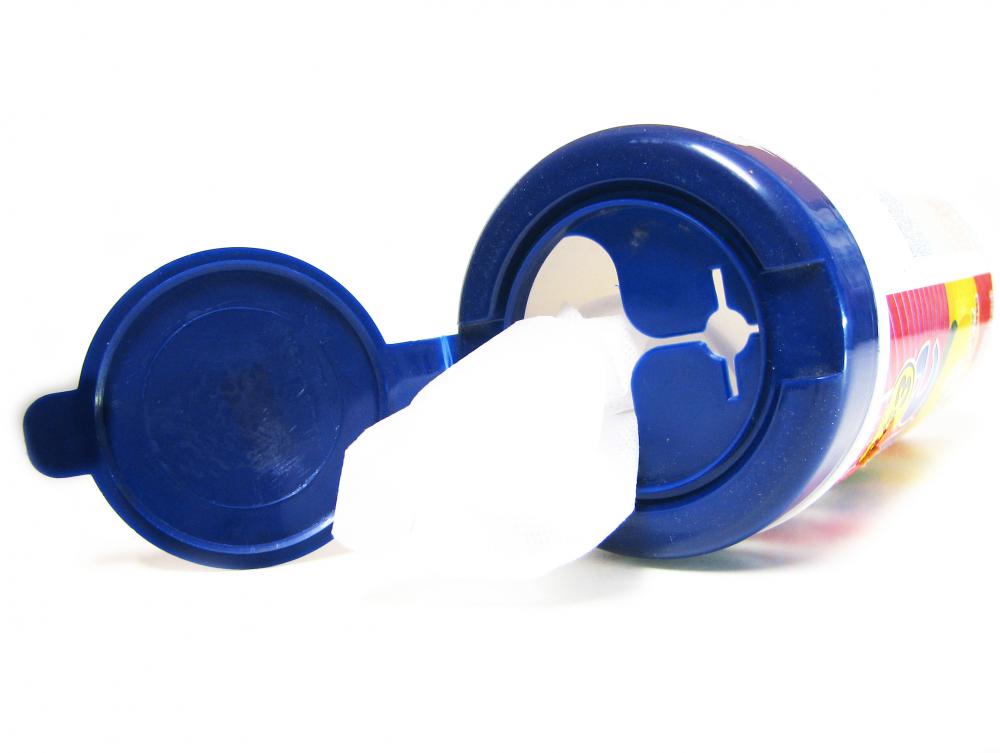
In medicine, isopropyl alcohol is often used in disinfecting pads, which are usually cotton or gauze moistened with a solution of 60% to 70% alcohol diluted in water. These pads are used by medical professionals for tasks such as sanitizing small instruments, wiping down surfaces, and cleaning a patient’s skin before an injection. Many home medicine cabinets contain a small bottle of rubbing alcohol that's used as an antiseptic for cuts and scrapes.

This alcohol was once the popular choice for medicinal rubdowns, which is why it came to be known as rubbing alcohol. When applied to the skin, the water in the liquid quickly evaporates, cooling the skin and rapidly reducing body temperature. It was once regularly used for reducing fever in children, but the rapid temperature decrease is no longer considered beneficial, so health care professionals no longer recommend it for this purpose.
Cleaning Uses

Since isopropyl alcohol is a solvent, it has many uses as a home cleaning agent. It is often used to clean dirt from hard-to-reach areas, such as between keys on keyboards and on mouse wheels. Since it evaporates almost immediately, there is little risk of shock or damage to electrical components, and it can even be used to clean the lasers in CD and DVD drives. The alcohol also removes stubborn glue residue and dried ink, and it can remove stains from most natural fibers, including cotton, silk, and wood.
Automotive

Isopropyl alcohol is a common component of fuel additives intended to prevent the accumulation of water in fuel lines, and to prevent any water in the fuel from separating and turning to ice. For the same reason, it can be sprayed onto windshields to melt any icy buildup, and it can also be used to clean the glass. Diluted in water, it's often used to remove wax or polish residue.
Laboratory Uses
One of the most common uses of isopropyl in the laboratory is as a disinfectant to clean equipment and work surfaces. When used properly, it kills a significant number of bacteria and other potential contaminants, which is why it's also used as a hand sanitizer in labs and hospitals.
Isopropyl alcohol can be used as a preserving agent for biological specimens. It's often used as a way to dilute test samples, and can be used as a reaction medium for a number of chemical reactions. It can also be used in place of ethanol, another type of alcohol, to extract DNA from a cell.
In the laboratory, this type of alcohol may be labeled isopropanol, isopropyl, isopro, iso, or with the acronym IPA, for isopropanol alcohol. It is also sometimes called 2-propanol, in reference to being an isomer of a compound called propanol. An isomer is a molecule that has the same chemical formula as another molecule, but a different physical arrangement of atoms. This means that the molecules are different shapes and have different chemical properties.
Industrial
Isopropyl has a wide range of industrial uses. It is widely used in printing industries as a solvent and for cleaning delicate equipment. The manufacture of most computer components involves the use of isopropyl as a solvent, and it is used in the manufacture of paint, as well as being used as a paint stripper. Even in industries that don’t use this alcohol in manufacturing, it is often used to clean and degrease machinery.
Safety Concerns
Although isopropyl alcohol is used in many homes, it is not a harmless substance. Preparations sold for home use typically have a concentration of 70% at most, and they are therefore less toxic than the industry-standard versions, but care should still be taken when handling them. As an alcohol, it's extremely flammable in the presence of high heat, sparks, or an open flame, and can be harmful if ingested or inhaled.
Pure isopropyl is considered a toxic substance, because it is known to readily absorb through the skin. Possible effects include headache, dizziness, vomiting, nausea, unconsciousness, and coma. Without prompt medical treatment, death can occur due to central nervous system depression. Swallowing or inhaling it can also cause these effects, so the alcohol should be handled with protective clothing, including gloves and goggles, in a well-ventilated area.
The long-term effects of working with or around this alcohol are not well understood. Chronic exposure to many solvents is known to increase the risk of liver and kidney dysfunction, and in extreme cases cause brain or nerve damage, but similar links have not been established for isopropyl. Some researchers and medical professionals believe there might be cancer risks associated with long-term exposure, but no definitive link has been established.
Karyn Maier
Contributing articles to TheHealthBoard is just one of Karyn’s many professional endeavors. She is also a magazine writer and columnist, mainly for health-related publications, as well as the author of four books. Karyn lives in New York’s Catskill Mountain region and specializes in topics about green living and botanical medicine.
Learn more...
Karyn Maier
Contributing articles to TheHealthBoard is just one of Karyn’s many professional endeavors. She is also a magazine writer and columnist, mainly for health-related publications, as well as the author of four books. Karyn lives in New York’s Catskill Mountain region and specializes in topics about green living and botanical medicine.
Learn more...AS FEATURED ON:
AS FEATURED ON:


-
![A bottle of isopropyl alcohol.]() By: tungphotoA bottle of isopropyl alcohol.
By: tungphotoA bottle of isopropyl alcohol. -
![A glass bottle of isopropyl alcohol.]() By: Gordana SermekA glass bottle of isopropyl alcohol.
By: Gordana SermekA glass bottle of isopropyl alcohol. -
![Medical wipes soaked in isopropyl alcohol.]() By: Haris RaufMedical wipes soaked in isopropyl alcohol.
By: Haris RaufMedical wipes soaked in isopropyl alcohol. -
![Isopropyl alcohol is a main ingredient in most hand sanitizers.]() By: Michael FlippoIsopropyl alcohol is a main ingredient in most hand sanitizers.
By: Michael FlippoIsopropyl alcohol is a main ingredient in most hand sanitizers. -
![Isopropyl alchohol can be used to clean the lasers in CD and DVD drives.]() By: imagedb.comIsopropyl alchohol can be used to clean the lasers in CD and DVD drives.
By: imagedb.comIsopropyl alchohol can be used to clean the lasers in CD and DVD drives.



Discussion Comments
Can Isopropyl alcohol be added to mouthwash (not to be swallowed) to improve anti-bacterial properties of mouthwash?
Wow. This helped me a lot with my science project that has to do with leaf pigments.
What organisms does it kill? TB, HBV, HCV, HIV, MRSA and VRE?
I have heard that isopropyl alcohol is linked to cancer formation. Is this a fair observation? Considering that it has been used widely since it was invented, and cancer has, as we all know,
dramatically increased over the last 100 years.
Methanol (methyl alcohol, wood alcohol) is a deadly poison. Even in small amounts it can cause blindness. It is used to "denature" industrial ethanol (beverage type). A small amount of methanol is mixed in to make it unfit for drinking.
Most alcohols mix readily with water, enabling them to scoop up small amounts of water in, say, gasoline. Alcohol and gasoline mix readily. Water and gasoline do not.
My vet put isopropyl alcohol on my dog's paw pads when she had fever. She said that it was to keep her cool.
I have been known to put alcohol on my dog's wounds, but she hates it. I understand why. I put it on my wounds, too, and it burns like fire!
I always keep a bottle of it in my cabinet. I just feel safer after I have disinfected a wound with alcohol. I wash it with soap and water first, but the alcohol is what really gets it clean.
One of the many uses of isopropyl alcohol is to prevent pimples from getting worse. Every time I see a red bump starting to form on my face, I dab it with alcohol.
Sometimes, it will disappear by the next day. If it's still there, I keep dabbing it with alcohol once or twice a day until it departs.
@feasting – Yes, you can. I mix my isopropyl alcohol with distilled water first, though.
I use a lint-free rag to apply the alcohol. I dip the rag in the solution and start at the center hole. I wipe outward from the middle.
This gets rid of things like fingerprints and other greasy spots. A CD that would previously skip or stop altogether in a certain spot almost always plays straight on through after a good cleaning with alcohol.
Is isopropyl alcohol a good cleaner for CDs? It seems I remember reading it in the ingredient list on the label of an old bottle of CD cleaner. I'm all out of cleaner, so is it safe for me to use alcohol instead?
Is isopropyl alcohol safe to use to help start a barbecue fire? Or are the fumes dangerous to health when in contact with the food?
Can you use isopropyl alcohol as an air line freeze prevention?
Yes, there is always something mysterious about isopropyl alcohol. I think it's because you can substitute it for ethanol. If ethanol boils off at 172 degrees f, and propanol at 181, I expect we drink a lot of it, if you drink or distill.
How dose Isopropyl Alcohol react with the ethanol in the gas today?
how can I make odorless isopropyl alcohol?
Why is Rapigel only sold for horses or dogs in Australia? I've got some from a friend to rub on myself for a sore foot where I've fractured it. I don't know if it's doing any good, but the ingredients in the gel doesn't suggest anything dangerous to humans so I am wondering why we can only buy it at a Vet shop?
Isopropyl alcohol is sold for home use and antiseptic mostly in the USA. In most of the rest of the world common ethanol is used for the same purposes.
Nice job describing what it is for, but still waiting to know what it is. Is it derived from petroleum, wood, grain, silly putty? What is it.
this helped me a lot. this is the first website that actually helped me with my science fair project!
Can you please discuss the differences between isopropyl alcohol and methanol?
Also, can you discuss the hygroscopic nature of IPA?
Thank you, ed
Post your comments