
At DelightedCooking, we're committed to delivering accurate, trustworthy information. Our expert-authored content is rigorously fact-checked and sourced from credible authorities. Discover how we uphold the highest standards in providing you with reliable knowledge.
What is Isomalt?
 Tricia Christensen
Tricia Christensen
Tricia Christensen
Isomalt is a sugar substitute and a sugar alcohol made from beets. Despite its natural origins, the compound is generally considered artificial, at least in so far as it has been extensively chemically manipulated. It is most commonly used in commercial food manufacturing, and items that contain it can be labeled “sugar free.” It has also been shown to extend the shelf-life of certain products, which has led to its widespread use as a preservative.
Creation and Production

The compound was first engineered by the German company BENEO-Palatinit in the early 1980s. It became popular throughout Europe at that time, but was not approved for use in the United States until 1990. Most countries around the world have also approved it for human consumption, and it remains a popular additive to a number of foods, particularly sweets.

Creating isomalt is somewhat complicated. Chemists first isolate the natural sugar compounds from beets, then convert them — usually with heat — into a reducing disaccharide. This product is then hydrogenated using a catalytic converter. The end result is a sugar-like substance that has many of the characteristics of a natural sweetener but contains only low levels of glucose. Accordingly, it has only a very minor impact on blood sugar levels, and is generally considered “safe” for diabetics and others with blood sugar concerns. Isomalt is also gluten free.
Chemical Composition
The compound has a much more complex chemical composition than does natural sugar. Its official molecular formula is C12H24O11, and it is a bonding of two independent disaccharides with a crystalline structure.
Uses as a Sweetener

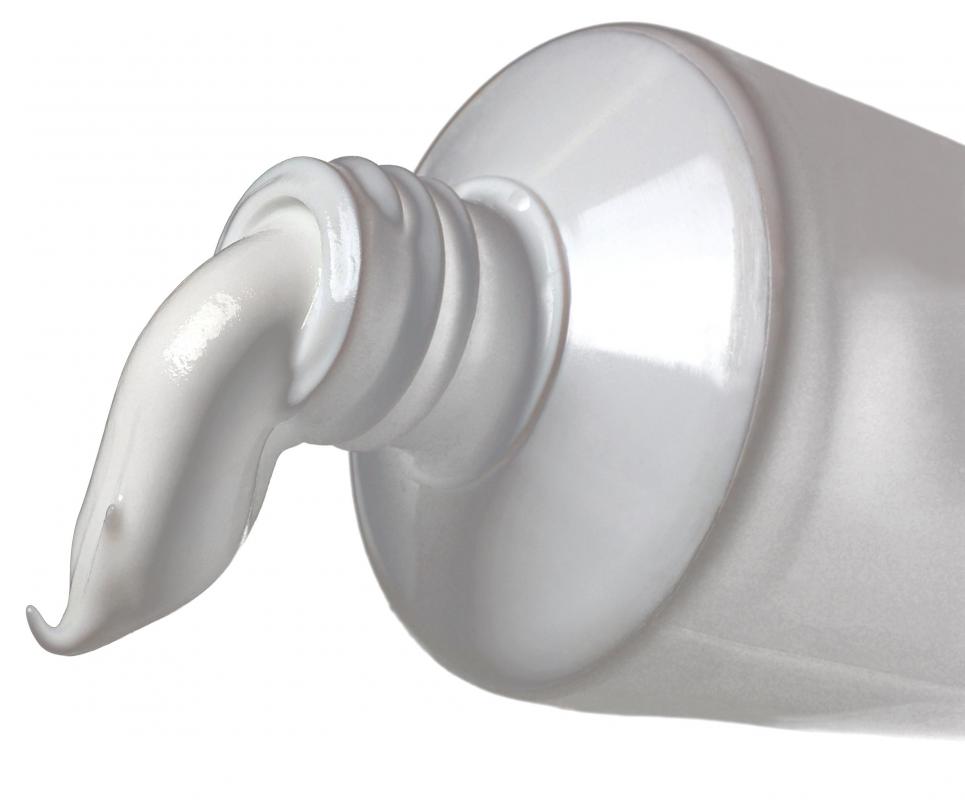
By far the most common use of isomalt is as a sweetener in “sugar free” candies, cough drops, and other commercially-prepared foods. Food manufactures can often achieve the same sweetness with the compound as they could with sugar, but without the blood sugar and caloric concerns. This is not to say that the substitute is completely without calories — it contains roughly half the calories of sugar. As a result, it's not used in zero calorie products. It doesn't cause tooth decay in the way that regular sugar does, though, and some toothpastes use it to improve taste without promoting cavities.

It is sometimes blended with other non-sugar sweeteners like sucralose to give it approximately the same sweetness as sugar, though it does not bake or react as sugar would. It does not caramelize as quickly, for example, nor does it look or taste quite the same. Some forms that are sold for baking are actually quite bitter. The compound is often treated with a chemical known as acesulfame potassium to granulate it, which can give it an undesirable taste when consumed on its own.
Uses as a Preservative

The substance has also been shown to prolong shelf life and is sometimes used in breakfast cereals, crackers, and bakery products like breads and muffins. It tends to stabilize other ingredients, and can stave off mold and spoilage; it may also help keep dry goods fresh and crisp for longer.
Aesthetic Uses
Many chefs and professional food decorators use isomalt for aesthetic purposes. It is very popular in cake garnishes and food molds — most of the confections made for television competitions, wedding shows, and other public displays use the substitute because of how glossy it looks and how quickly it sets up. It is highly resistant to humidity, and is typically very easy to work with and mold.
Digestive Concerns and Stomach Upset
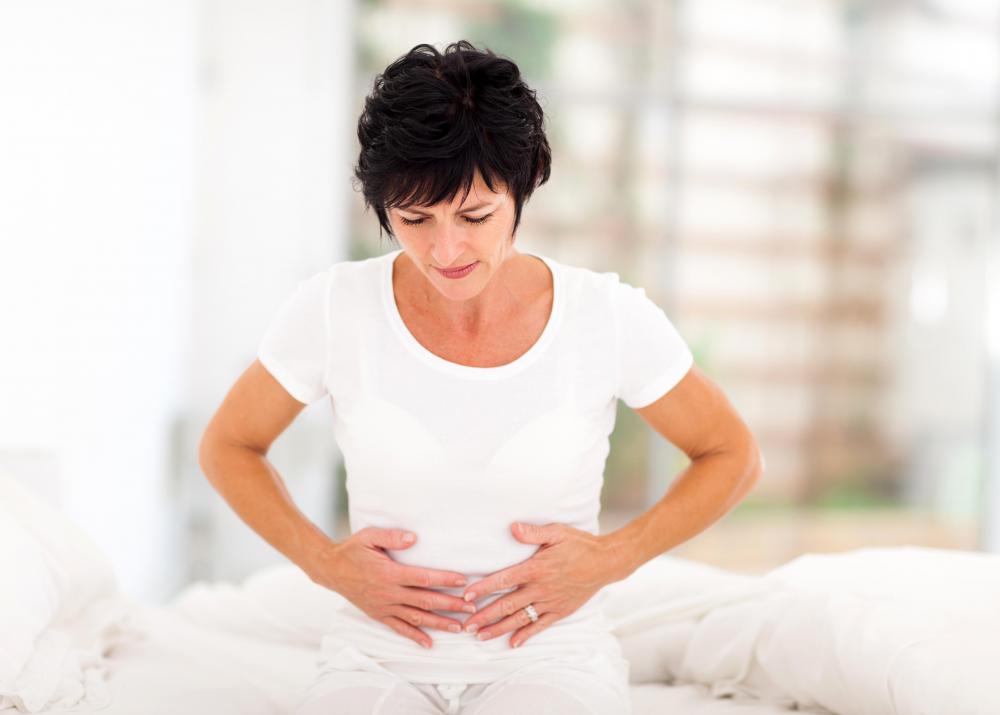
Excessive consumption of isomalt-containing foods can lead to serious stomach upset, bloating, and gas. A number of people also report these symptoms even after minimal exposure. In most cases, this is because the compound is not easily digestible. While the human body typically treats regular sugars as carbohydrates, it considers isomalt a fiber.
Consumption tends to increase bowel movements and can also cause painful bloating, diaherra, and flatulence. To minimize these negative effects, most medical professionals recommend that people limit their daily intake to about 1.7 ounces (50g) for adults, and about 0.88 ounces (25g) for children. Some studies have also suggested that eating small amounts of isomalt over time can build up a slow tolerance.
Tricia Christensen
Tricia has a Literature degree from Sonoma State University and has been a frequent DelightedCooking contributor for many years. She is especially passionate about reading and writing, although her other interests include medicine, art, film, history, politics, ethics, and religion. Tricia lives in Northern California and is currently working on her first novel.
Learn more...
Tricia Christensen
Tricia has a Literature degree from Sonoma State University and has been a frequent DelightedCooking contributor for many years. She is especially passionate about reading and writing, although her other interests include medicine, art, film, history, politics, ethics, and religion. Tricia lives in Northern California and is currently working on her first novel.
Learn more...AS FEATURED ON:
AS FEATURED ON:


-
![A spoon of isomalt, a sugar substitute made from beet sugar.]() By: stasuraA spoon of isomalt, a sugar substitute made from beet sugar.
By: stasuraA spoon of isomalt, a sugar substitute made from beet sugar. -
![Toothpaste containing isomalt.]() By: Laurin RinderToothpaste containing isomalt.
By: Laurin RinderToothpaste containing isomalt. -
![Beets provide the source of isomalt.]() By: matesBeets provide the source of isomalt.
By: matesBeets provide the source of isomalt. -
![Isomalt is a sweetener used in some sugar free cough drops.]() By: Mark HerreidIsomalt is a sweetener used in some sugar free cough drops.
By: Mark HerreidIsomalt is a sweetener used in some sugar free cough drops. -
![Excessive consumption of isomalt-containing foods can lead to serious stomach upset, bloating, and gas.]() By: michaeljungExcessive consumption of isomalt-containing foods can lead to serious stomach upset, bloating, and gas.
By: michaeljungExcessive consumption of isomalt-containing foods can lead to serious stomach upset, bloating, and gas.



Discussion Comments
I ate half a bar of Frey milk chocolate, and threw the rest away as I just didn't fancy eating the rest. This is very unlike me as I love chocolate!
I didn't realize that the chocolate contained isomalt and got a very bloated, very painful stomach and diarrhea. I checked the package and knew straight away the cause of my symptoms. Thank goodness I only ate half! Never again!
Isomalt is a natural laxative. One or two candies will not affect your stomach but a whole box full will. It draws water from your intestine as pharmaceutical laxatives would that relieve constipation. Just be careful how much isomalt you consume.
Thank you all very much for your posts. I'm supposed to be doing a food arts presentation class tomorrow with isomalt, and I'm so glad that I found this page to warn me about the effects of isomalt. I will be sure to share this page with my colleagues.
My father bought some sugar-free lemon fizzbombs and wondered what they were made of. Before I looked it up, I had already taken one of the sweets and he had eaten over ten in a day. I forgot to tell him about the side-effects of diarrhea and gas. Meanwhile, we were shopping, and he made the car very smelly on the way home. We opened the door of our house and rushed to the toilets! We suffered a smelly house for the rest of the night!
I bought Olba lozenges to counteract a horrible cough. They contain isomalt. Although I've been sucking on them all day, I have not had any of the problems mentioned above. Plus, thanks to the lozenges, I am getting better for the first time in a week (before today I tried acupuncture and homeopathy).
I'm so glad I found this site. As a type 2 diabetic, I have been consuming sugar free lollies, however I have now been able to make the link between my severe bloating, excessive gas and stomach pain - no laxative effect thankfully.
I am now not game to eat anything with isomalt in it due to the severe reaction that it has caused me. The lollies that gave the worst reaction contained 97.5 percent isomalt, while others had 60 percent malitol with 29 percent isomalt - much better as far as adverse reactions. It pays to read the labels.
I've been having sugar free eucalyptus lollies (used instead of breath mints, reckon they're nicer) made with isomalt and haven't had any problems.
Stomach of steel, probably, as I love my spicy food.
I was recently traveling round New Zealand and had a sore throat and cough. I bought some lozenges. These were 'sugar free' and as I'm type 2 diabetic I thought this a good idea. But they did seem to relieve the symptoms. However, I had not even taken the recommended daily dose when I had a really bad stomach upset. I visited the toilet at least six times. Not good when traveling.
I re-read the packaging and in small print it mentioned that as the lozenges contain isomalt they could have a laxative effect - so do not exceed recommended dose. I hadn't! My advice would be don't take any. I won't in future.
I just ate hard candy with Isomalt as the first ingredient. I did not realize this candy was even sugar free until I looked this morning. I was up most of the night with horrible gas, pains and diarrhea. This stuff is poison; stay away from it!
Glad I found this site. I'm type 2 diabetic and been chewing on Double D's, chewy caramel toffee like items, and buttered candy drops in Australia,
I have been having the worst stomach problems ever, bloated, full of gas, and constipated. I'm assuming this could be the reason after reading all the symptoms here. They have a mixture of Sodium, Maltitol, and isomalt. After looking on websites, I see these are not as good as made out to be and cause the symptoms I have, as well as others here.
I have celiac disease and ate some sweets yesterday -- about six sugar-free candies -- not realizing that they were sweetened with isomalt. The word malt alone would have warned me off it since malt is often cereal-based.
The whole of my gut blew up almost instantly, with gas, diarrhea and very bad celiac-type pain right up to my ribs. I shall make very sure I avoid that product in future.
I am having ongoing problems with my parotid gland being inflamed and blocked. One of the things you have to do with this problem is suck on lemon candy, like lemon drops or Lemonheads; the citric acid helps promote saliva and keeps the gland draining so you don't get infection.
I went to the store to get some, and all they had were Brach's sugar-free. The front of bag said "made with Splenda", so I assumed they would be fine. Only much later, when the gas hit, did I look at the back of the bag and saw isomalt as the first ingredient, with a star next to it. In small print at the bottom of the back it said “May cause a laxative effect.” Sorry, but that made me so mad. That should be on the front of the package, not “Made with Splenda.”
I've been having a terrible reaction to the isomalt even hours after stopping the candies. I woke up repeatedly in the night with shivers and sweats, and perhaps worse, a tingling painful feeling all over my skin as if I had fire ants crawling all over me. Just the light touch of my pajamas hurt like all heck.
It was definitely the isomalt. That was the only change in my regular diet in the last week, probably longer than that.
Perhaps many people have lesser reactions to this, but it seems from my reading this morning as if a lot of people have problems of varying degrees with this sweetener, especially diabetics, whom this sweetener was apparently released in the US to help.
It's most definitely not safe, and should be reevaluated by the FDA. Consider carefully before you eat anything made with it.
I have been a professional chef for 13 years. Isomalt will caramelize. It is not as sweet as sugar (try it). It will cause distress in the digestive system, to a greater or lesser extent, in some individuals. My husband is a Type 2 diabetic and has become partially desensitized. (Please keep in mind that he eats 20 ounces by weight of isomalt ice cream at a time. Far too much for most people.)
I reacted to some sweets with isomalt and sucralose with a very bad diarrhea. A couple of days later I developed mouth and tongue ulcers. I first thought it may be caused by other food intolerance, but my son sucked the same sweets and he developed mouth ulcers too. Has anyone else experienced the same?
@Diane: My wife used isomalt last week in baking a sugar-free cookie for me. Minutes after eating three cookies, I experienced an unusual hyper-acidity. I took medications for hyper-acidity and my rumbling stomach relaxed a bit.
The worse was yet to come. Ten hours after my intake or around 12:30 in the morning, I was awakened by extreme itches in my entire body. At first I thought I was just dreaming, but it dawned on me after I fully woke up, that the itching was really real. I awakened my wife and we drove to the hospital for emergency treatment. The doctor gave me an anti-allergy drug and the itching was gone. Isomalt definitely triggers allergic reactions. Please warn others.
I am allergic to some glutens (barley and barley malt), although I don't test as a celiac. I get a very itchy rash that's almost impossible to get rid of. I started getting a rash again after taking ricola cough drops with isomalt. Could it be the isomalt that is causing my rash?
Can Isomalt cause your temples and eyes to ache and feel very heavy? I have had this problem after eating Ricola Menthol Drops. I am Coeliac - and also intolerant of lactose.
I recently purchased Riccola Swiss Herb Drops to ease a sore throat which appeared to work, however, I quickly became affected by the most vicious stomach upset.
I note this seemingly pure sugar free product with a mix of 13 Swiss mountain herbs has Isomalt added as a sweetener. Why the manufacturer would ruin an apparently pure Swiss product with a dangerous poison is beyond my comprehension. I have no doubt Isomalt was responsible for the extremely vicious stomach upset.
I guess it's cheaper than getting a colonic? If you're using it as a weight-loss aid, I don't see how it would be bad, albeit inconvenient in public situations!
Oh my, I now know where the most awful gas I have ever had in my life is coming from! Along with not being able to trust whether it's gas or a burst of diarrhea!
I have type II diabetes and am trying to quit smoking so I bought a mix of hard candies made with Isomalt! No, no no is all I can say. --Denise
I've been eating Double D Sugar Free candy (which contains Isomalt) for a few weeks now, as I'm stopping smoking. I haven't had any adverse reactions to the candy, and they taste just the same a normal candy. I guess you need to be careful, if you're inclined to having a sensitive stomach, the same as anything. These are made in Australia and taste nice.
Isomalt is an ingredient in Cold-eeze Zinc Tablets - Sugar-Free, and since you are supposed to take several (up to six per day), you can think your sore throat is going into stomach flu, when you are reacting to the isomalt.
The company was very nice, and replaced my sugar-free version with the regular (sugar) version when I alerted them to this problem. But be aware if you are using zinc to ward off a cold (it's very effective, by the way).
I found isomalt in hard candies, in Werther's Original sugar free in Australia so giving it a try to see if it helps you go, instead of tablets.
You make up a nice gift of hard candies with isomalt in it to a friend you don't like and if they eat enough, who knows?
Do not eat isomalt! I had one small hard candy, about the size of a nickel, and had the worst stomach aches and diarrhea I have ever had. (and I've had food poisoning from McDonald's twice!) stay away from isomalt!
where do you get isomalt from? within Australia.
can we use isomalt (after grinding) in cream directly with fat, milk powder and flavors for the application on a biscuit or wafer.
I ate "hard candies" that contained isomalt and it was the number one ingredient. today i ate these candies for the first time ever. I had an immediate reaction. My stomach hurt so bad, and the gas -- was as if sulphur was coming out of my bottom. Sorry, but be careful with this stuff, it gives you a colon cleansing whether you want it or not.
Has anyone else had a screaming angry five-year-old old after consuming sugar free sweets with isomalt in it. Beyond reasoning with tending towards violent.
isomalt DOES affect people with type 2 diabetes
as i found out with having type 2 and eating double d sugar free lollies and it sure did push my levels up a lot.
Hi Diane,
Thanks for your question, which is a really good one. Isomalt is gluten free, but, a lot of people who have trouble digesting gluten have trouble with Isomalt. Actually a lot of people have stomach problems with isomalt no matter whether they have issues with gluten, especially if you eat a lot of it.
But if you can tolerate it otherwise, it does not contain gluten, according to every account I have read.
Thanks again for asking such a great question. I bet a lot of people were wondering.
Is isomalt gluten free? I know regular malt contains gluten. Thanks, Diane Williams
Post your comments