
At DelightedCooking, we're committed to delivering accurate, trustworthy information. Our expert-authored content is rigorously fact-checked and sourced from credible authorities. Discover how we uphold the highest standards in providing you with reliable knowledge.
What is Iodized Salt?
 Mary McMahon
Mary McMahon
Mary McMahon
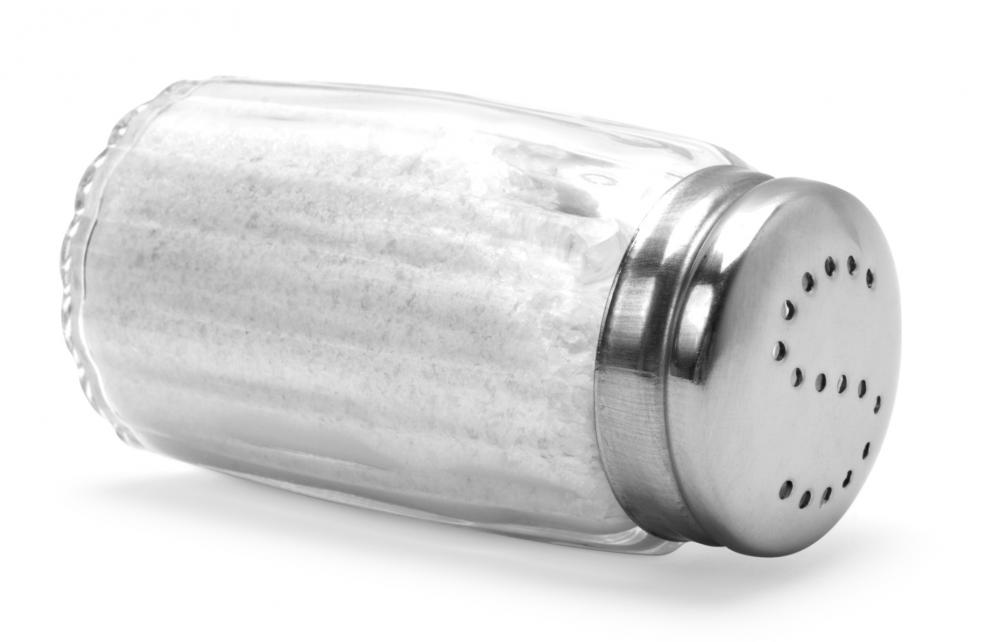
Iodized salt is salt which has been fortified with the essential trace mineral iodine. A package of it will always be clearly marked, indicating that it contains dietary iodine. Salt which does not contain iodine may also be carefully labeled, especially when iodized salt is very common, to ensure that the consumer knows that he or she will not receive dietary iodine from that particular package of salt.
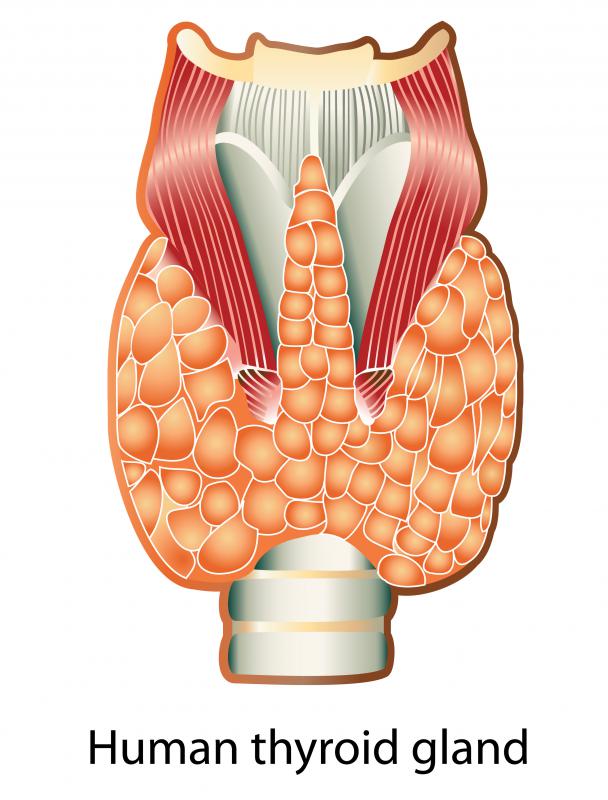
Iodine appears to have an important impact on the health of the thyroid gland. An unhealthy thyroid can lead to a number of conditions, including goiter, a swelling of the thyroid gland which manifests as a lump in the neck. A condition called cretinism, characterized by developmental and mental delays, is also caused by iodine deficiency. The role of iodine intake in both of these conditions was recognized in the 20th century, and since they are fully preventable through diet, public health advocates hope to entirely eliminate them at some point.

Many things are natural sources of iodine. Saltwater fish and sea vegetables, for example, both contain abundant amounts of iodine. The material can also be found in plants grown on soil which is rich in oceanic materials, and in animals grazed on such soils. In some regions of the world, however, access to iodine is limited, and conditions like goiter are epidemic.

In the United States, this began to be recognized during the First World War, when many young men from the Midwest were declared unfit for duty due to iodine deficiency. This led to a widespread movement to add iodine to salt. Some salt producers were initially reluctant, but by the mid-1920s, iodized salt was extremely common in many American markets. Given the success of American iodized salt, other nations began to include the additive in their salt as well, protecting their populations from fully preventable conditions caused by iodine deficiency.

Salt with iodine does not generally have a noticeably different flavor, according to taste tests. Therefore, most people are encouraged to use iodized salt, to ensure that they receive plentiful amounts of this vital element. You don't need much—about 150 micrograms a day is the recommended daily allowance, and one teaspoon of iodized salt typically offers around 400 micrograms. Some countries also make flourinated salt to promote dental health, and salt may be supplemented with other dietary minerals as well.
Mary McMahon
Ever since she began contributing to the site several years ago, Mary has embraced the exciting challenge of being a DelightedCooking researcher and writer. Mary has a liberal arts degree from Goddard College and spends her free time reading, cooking, and exploring the great outdoors.
Learn more...
Mary McMahon
Ever since she began contributing to the site several years ago, Mary has embraced the exciting challenge of being a DelightedCooking researcher and writer. Mary has a liberal arts degree from Goddard College and spends her free time reading, cooking, and exploring the great outdoors.
Learn more...AS FEATURED ON:
AS FEATURED ON:


-
![A shaker of iodized salt.]() By: ivantsovA shaker of iodized salt.
By: ivantsovA shaker of iodized salt. -
![Kombu, a seaweed that contains iodine, can be a source of iodine for those who don't use iodized salt.]() By: Jovan NikolicKombu, a seaweed that contains iodine, can be a source of iodine for those who don't use iodized salt.
By: Jovan NikolicKombu, a seaweed that contains iodine, can be a source of iodine for those who don't use iodized salt. -
![Iodine is important for healthy thyroid functioning.]() By: ksena32Iodine is important for healthy thyroid functioning.
By: ksena32Iodine is important for healthy thyroid functioning. -
![An iodine deficiency can affect the functioning of the thyroid gland, which produces hormones that regulate blood pressure, body temperature, heart rate, and the body's metabolism.]() By: p6m5An iodine deficiency can affect the functioning of the thyroid gland, which produces hormones that regulate blood pressure, body temperature, heart rate, and the body's metabolism.
By: p6m5An iodine deficiency can affect the functioning of the thyroid gland, which produces hormones that regulate blood pressure, body temperature, heart rate, and the body's metabolism. -
![In the U.S., many table salts have added iodine.]() By: bit24In the U.S., many table salts have added iodine.
By: bit24In the U.S., many table salts have added iodine.


Discussion Comments
What is iodized?
Can iodized raise your blood pressure like ordinary salt do?
This is a good site to learn about iodized salt, especially since I have to do a science fair project on it, and how it affects crystal growth compared to non iodized salt.
Is it true, that if I live by the ocean, my need for iodine in my diet isn't a great as it is if I live in the plains?
I want to know how I can prepare iodized salt. for example for 1kg salt.
is sea salt better than iodized salt?
which is better for you -- iodized salt or regular salt?
I understand that all chemists in UK do not stock iodised salt. Are there any restrictions on its sale?
Dear god that word is difficult to say!
Should a person who is allergic to seafood use iodized salt? What about using sea salt?
Lolly, I don't think it should affect you, but please consult your doctor.
The Salt Institute says that most salt used in processed foods is not iodized.
In the United States, from the outset, salt producers cooperated with public health authorities and made both iodized and plain salt available to consumers at the same price. Even so, the Salt Institute estimates that only about 70% of the table salt sold in the United States is iodized. Salt used in processed foods is not iodized. Given that people are cooking less at home and buying either restaurant or processed foods, iodine intakes in the U.S. have declined from about 250 μg/day to 157 micrograms/day. Public health authorities recommend 150 μg or more and the need is particularly acute for expectant mothers. Daily Iodine intakes of 1,000 - 1,100 μg are safe for adults and children over 4 years of age.
Is the salt in processed food iodized?
I was allergic to iodine intravenously about 40 years ago, is it the same today with the same amount of iodine?
I am allergic to iodine intravenously. If i'm allergic to this should i not eat iodized salt?
Is iodized salt natural?
Post your comments