
At SmartCapitalMind, we're committed to delivering accurate, trustworthy information. Our expert-authored content is rigorously fact-checked and sourced from credible authorities. Discover how we uphold the highest standards in providing you with reliable knowledge.
What is Inventory?
 Michael Pollick
Michael Pollick
Michael Pollick
Inventory is the total amount of goods and/or materials contained in a store or factory at any given time. Store owners need to know the precise number of items on their shelves and storage areas in order to place orders or control losses. Factory managers need to know how many units of their products are available for customer orders. Restaurants need to order more food based on their current supplies and menu needs. All of these business rely on an inventory count to provide answers.
The word 'inventory' can refer to both the total amount of goods and the act of counting them. Many companies take an inventory of their supplies on a regular basis in order to avoid running out of popular items. Others take an inventory to ensure the number of items ordered matches the actual number of items counted physically. Shortages or overages after an inventory can indicate a problem with theft (called 'shrinkage' in retail circles) or inaccurate accounting practices.

Restaurants and other retail businesses which take frequent inventories may use a 'par' system based on the results. The inventory itself may reveal 10 apples, 12 oranges and 8 bananas on the produce shelf, for example. The preferred number of each item is listed on a 'par sheet', a master list of all the items in the restaurant. If the par sheet calls for 20 apples, 15 oranges and 10 bananas, then the manager knows to place an order for 10 apples, 3 oranges and 2 bananas to reach the par number. This same principle holds true for any other retail business with a number of different product lines.

Companies also take an inventory every quarter in order to generate numbers for financial reports and tax records. Ideally, most companies want to have just enough inventory to meet current orders. Having too many products languishing in a warehouse can make a company look less appealing to investors and potential customers. Quite often a company will offer significant discounts if the inventory numbers are high and sales are low. This is commonly seen in new car dealerships as the manufacturers release the next year's models before the current vehicles on the lot have been sold. Furniture companies may also offer 'inventory reduction sales' in order to clear out their showrooms for newer merchandise.
Michael Pollick
A regular SmartCapitalMind contributor, Michael enjoys doing research in order to satisfy his wide-ranging curiosity about a variety of arcane topics. Before becoming a professional writer, Michael worked as an English tutor, poet, voice-over artist, and DJ.
Learn more...
Michael Pollick
A regular SmartCapitalMind contributor, Michael enjoys doing research in order to satisfy his wide-ranging curiosity about a variety of arcane topics. Before becoming a professional writer, Michael worked as an English tutor, poet, voice-over artist, and DJ.
Learn more...AS FEATURED ON:
AS FEATURED ON:









-
![Portable devices can be used to track inventory.]() By: endostockPortable devices can be used to track inventory.
By: endostockPortable devices can be used to track inventory. -
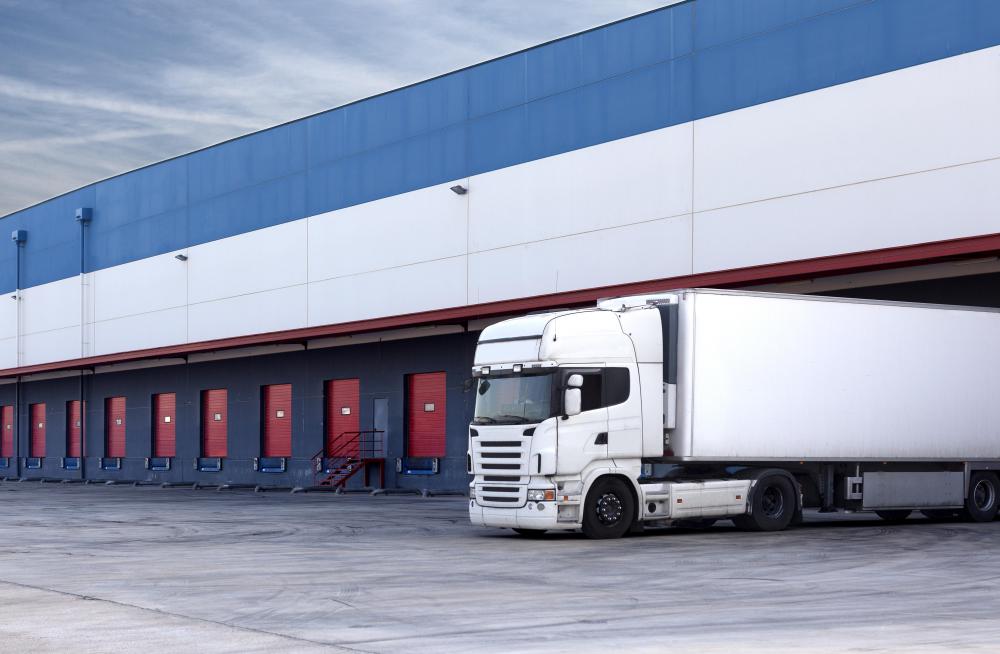
![Inventory can be stocked at central distribution sites.]() By: carloscastillaInventory can be stocked at central distribution sites.
By: carloscastillaInventory can be stocked at central distribution sites. -
![Car lots are often interested in clearing out their older inventory to make room for newer stock.]() By: Michael ShakeCar lots are often interested in clearing out their older inventory to make room for newer stock.
By: Michael ShakeCar lots are often interested in clearing out their older inventory to make room for newer stock. -
![Many companies take an inventory on a regular basis.]() By: Monkey BusinessMany companies take an inventory on a regular basis.
By: Monkey BusinessMany companies take an inventory on a regular basis.



Discussion Comments
Inventory management is the total quantity of finishing, raw, non finishing, material store and warehouse and the cost and total quantity of material.
describe the meaning of the category of inventory and explain why it is critical to manage each element.
You should record 200 tires as your inventory. Though you have assembled 50 tires but you have not sold it. And still it's on your cost, as long if it's not sold. Thanks, Jillu
how to create an inventory without using a database?
Can the system stand without a database? how important is the database?
You should write 3 Kilo as your inventory. Though you have processed 2 Kg of chicken but you have not sold it. And still it's on your shelf. Thanks, Chandra
let me know any formula to keep the best inventory system in automobile spare parts.
How can we calculate the depreciation for all assets and our organization’s inventory?
regards, Ahmad Shah.B
for the second question above, 200 tires are to be recorded as because none of the bikes are sold.
I would like to know how to compute the safety stock quantity? Do you have any formula for it?
If so, then i would appreciate it if you can help me?
My bicycle shop has 200 tyres. I used 50 to assemble 25 bikes. None are sold yet so how many tires should I record in my inventory: 200 or 150?
describe the meaning of the category of inventory and explain why it is critical to manage each element.
what is tedious and time consuming in tracking inventory?
How does a person maintain inventory details?
what are the main reasons that an organization has inventory?
i am first timer doing a system. how do i start a system and where i can build it?
How often do you think an inventory is to be taken?
So an inventory means a group of articles is that right? --Chris
is it really worth it to have an inventory system? Most organizations can tell you an item is there in the inventory systems but physically it doesn't exist.
why it is used and how it is used........ if it is not used what happens and what are the benefits of the client server computing: inventory tracking system
how can we program the inventory? can you give examples?
i am working with MS NAVISION. in purchase module v have got inventory. so can anybody get me an idea about usage of inventory in purchase department?
why valuation of inventory is required at the end of the each accounting period?
What is Master Data Management and why it is being used?
Advantages & disadvantages of inventory. Is inventory good or bad?
Closing Stock would be opening stock, plus purchases, less goods sold.
If in the opening inventory of my restaurant I had 5 kilograms of fillet chicken breast, and I've sold 2 kilograms and during operation I prepare another 2 kilo, at the ending inventory I should write 1 kilo or 3 kilo? Thanks for your help. STH
Post your comments