
At TheHealthBoard, we're committed to delivering accurate, trustworthy information. Our expert-authored content is rigorously fact-checked and sourced from credible authorities. Discover how we uphold the highest standards in providing you with reliable knowledge.
What is Interstitial Fluid?
Interstitial fluid, also known as tissue fluid, is a liquid — made mostly of water — that fills up the space between the cells of most organisms, including human beings. It plays an important role in helping cells stay healthy, both by bringing them nutrition and by flushing away their waste, and is one of the main ways the body promotes a stable environment at the tissue level. The fluid also helps the capillaries move fluids across their surfaces, which is an important part of proper blood circulation. Problems with consistency or volume can profoundly impact a person’s health, too. Edemas, or large swellings, often happen when the fluid builds up in places it shouldn’t, for example, and dehydration can cause levels to drop, leading to cellular damage throughout a person’s body.
Where It’s Found

This liquid acts as a sort of cushioning for nearly all of the cells in a person or animal’s body, and as a result it occurs almost everywhere, from the cells of the blood vessels to those in muscular tissue. It is an important element of the body’s extracellular fluid (ECF), and typically makes up about 16% of an adult humans’ total body weight.
What It’s Made Of

Space between cells is mostly water, but it also contains small amounts of salt, sugar, fats, and enzymes. The exact composition tends to vary, both based on cellular needs and overall health. In most cases it closely resembles blood plasma, although plasma contains far more proteins; it is also nearly identical to lymph fluid. Sodium and chloride are the two most abundant ions, along with calcium, magnesium, potassium, bicarbonate, phosphate, sulfate, carbonic acid, some nonelectrolytes, and very small amounts of proteins. It generally must have a salt concentration of about 0.9% in order to maintain homeostasis, which is the cellular equilibrium that is required for proper functioning.
Main Purpose

The primary purpose of ECF and, by analogy, intercellular fluid, is to provide a more or less constant environment for cells and to transport materials to and from them. It acts as cushioning, nutrition, and waste management, and generally contains about 37% of the total water in the human adult body, though this percentage tends to be larger in infants and children.

Depending on where it is in the body, it may have slightly different roles to play. It can carry either red and white blood cells, for instance, as well as lymph, a fluid found in lymphatic vessels. Specialized transcellular fluids that include synovial fluid in joint cavities, cerebrospinal fluid, aqueous and vitreous humor in the eye, serous fluid in body cavities, and fluid secreted by glands also travel through and mingle with the interstitial fluid in many places.
Role in Fluid Exchange

Intercellular fluid is constantly moving through the body and, at various points, is filtered through the capillaries, which are tiny blood cells. Various pressures regulate the exchange of water between blood plasma and the fluid between cells, though hydrostatic and osmotic pressures are two of the most important. Blood hydrostatic pressure forces water out of the capillaries into fluid, while colloid osmotic pressure pulls water back into the capillaries. At the same time, though, interstitial fluid hydrostatic pressure pushes water out of the fluid into the capillaries, and a phenomenon know as interstitial fluid colloid osmotic pressure draws it back in. These exchanges occur through intercellular clefts in the walls of capillaries, known as capillary epithelium, and are one of the most important ways in which the fluid circulates.
Water Retention and Other Problems
Proper fluid levels have a pretty significant bearing on many aspects of health, and when they get out of balance many different problems can arise. Edema, which is a swelling caused by fluid buildup, often occurs when the relationship between blood plasma and cellular fluid is disturbed. A number of different things can cause this, including retention of electrolytes, especially sodium; an increase in capillary blood pressure; and a decrease in the concentration of plasma proteins, often as a result of increased capillary permeability because of infection, burns or shock. People who are suffering from extreme dehydration often have a reduced volume of ECF, as well, which can impair cell function.
AS FEATURED ON:
AS FEATURED ON:


-
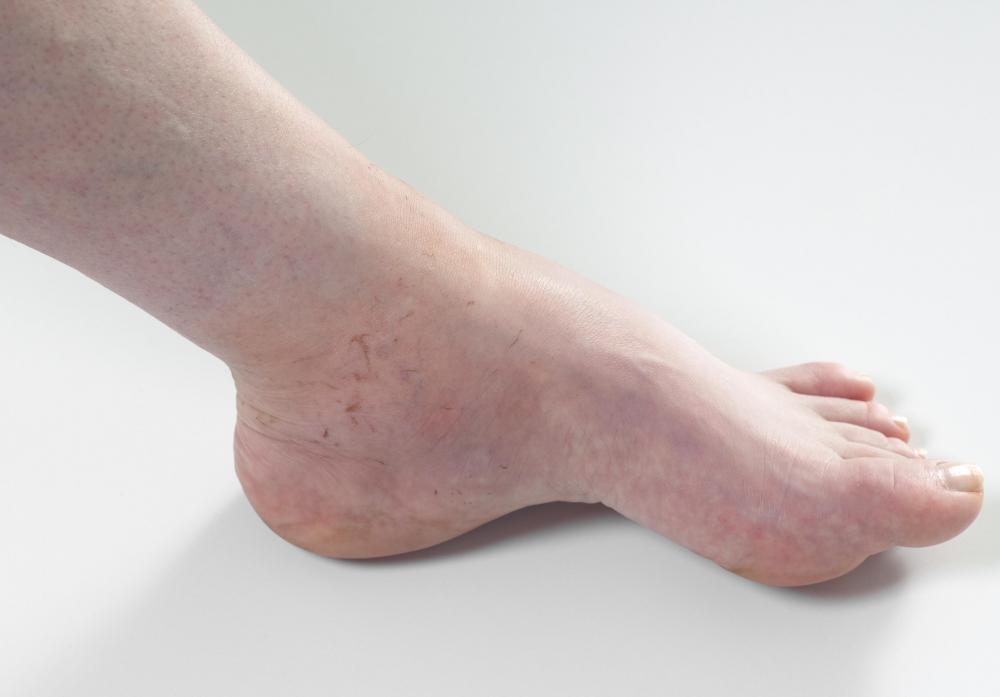
![Edema, or swelling from fluid retention.]() By: Dusan KosticEdema, or swelling from fluid retention.
By: Dusan KosticEdema, or swelling from fluid retention. -
![An extensive network of tiny vein-like structures, lymphatic vessels are organs of the lymphatic system responsible for carrying the interstitial fluid, also referred to as lymph.]() By: designuaAn extensive network of tiny vein-like structures, lymphatic vessels are organs of the lymphatic system responsible for carrying the interstitial fluid, also referred to as lymph.
By: designuaAn extensive network of tiny vein-like structures, lymphatic vessels are organs of the lymphatic system responsible for carrying the interstitial fluid, also referred to as lymph. -
![Dehydration can cause interstitial fluid levels to drop, making proper intake of fluids essential for cell health.]() By: ShakzuDehydration can cause interstitial fluid levels to drop, making proper intake of fluids essential for cell health.
By: ShakzuDehydration can cause interstitial fluid levels to drop, making proper intake of fluids essential for cell health. -
![A buildup of cerebrospinal fluid may cause pressure on the brain and severe headaches.]() By: BlueSkyImagesA buildup of cerebrospinal fluid may cause pressure on the brain and severe headaches.
By: BlueSkyImagesA buildup of cerebrospinal fluid may cause pressure on the brain and severe headaches. -
![A stiff neck may indicate an abnormally high level of cerebrospinal fluid.]() By: Laurin RinderA stiff neck may indicate an abnormally high level of cerebrospinal fluid.
By: Laurin RinderA stiff neck may indicate an abnormally high level of cerebrospinal fluid.




Discussion Comments
Did you know that there are multiple types of edemas? Edemas can be pitting or non-pitting. Pitting edema is when an identation or "pit" results if you poke it with a finger. Non-pitting edema is the opposite - no indentation results when pressure is applied to the swollen area. Both types of edema are a result of too much interstitial fluid.
Many illnesses can be caused or at least exacerbated by a problem with interstitial fluid; if people are too dehydrated or severely lacking in nutrients, their bodies will not be able to produce this fluid to the extent tha tis needed, causing other problems.
Post your comments