
At TheHealthBoard, we're committed to delivering accurate, trustworthy information. Our expert-authored content is rigorously fact-checked and sourced from credible authorities. Discover how we uphold the highest standards in providing you with reliable knowledge.
What is Influenza?
Influenza, or the flu, is a viral infection affecting the respiratory tract. Symptoms include fever, runny nose, stuffed up sinuses, fatigue, headache, cough, sore throat, vomiting, diarrhea, and achy muscles and joints. These are considered to be flu-like symptoms, however, and people who have one or more of them doesn't necessarily have this infection. Someone who suspects that he or she has the flu should see a medical professional since, not only is the virus contagious, but if not treated, it could become severe and even fatal.
When an infected person sneezes or coughs around other people, he or she can spread the influenza virus. Particles are passed through the air, where they will infect those with whom they come in contact. If an infected person uses a telephone, the virus can also be passed on to the next person to use the phone. Since the infected person may not know she has the illness, he she can touch many items without realizing she has passed the virus along to others.

There's no cure for influenza, but a flu shot is available every year. The elderly, pregnant, and children are especially urged to protect themselves in this manner. Those with compromised immune systems or chronic ailments, such as asthma, should also get the shot each year.
Infected people need to take care not to pass on the virus to others. In addition to covering the mouth and nose when they cough or sneeze, they should frequently wash their hands and do their best not to come in contact with other people. Anyone suffering from the virus is urged to stay home from work or school. Even the busiest employer would usually much rather an infected person stay home than start a work-place epidemic. A large number of people can become sick if just one infected person rides a crowded subway or goes to a movie theater.

The best thing that a person who is suffering from the flu can do is stay home, drink plenty of fluids and rest. If a doctor's visit is required, a prescription for an anti-viral may be issued. Alcohol and cigarettes or other tobacco products can lower a person's immunity, so people should avoid these products at least until after recovery.
If symptoms persist or the influenza gets worse, a sufferer should see a medical professional. There's no cure for the flu, but at least people can take measures to prevent spreading the virus.
AS FEATURED ON:
AS FEATURED ON:


-
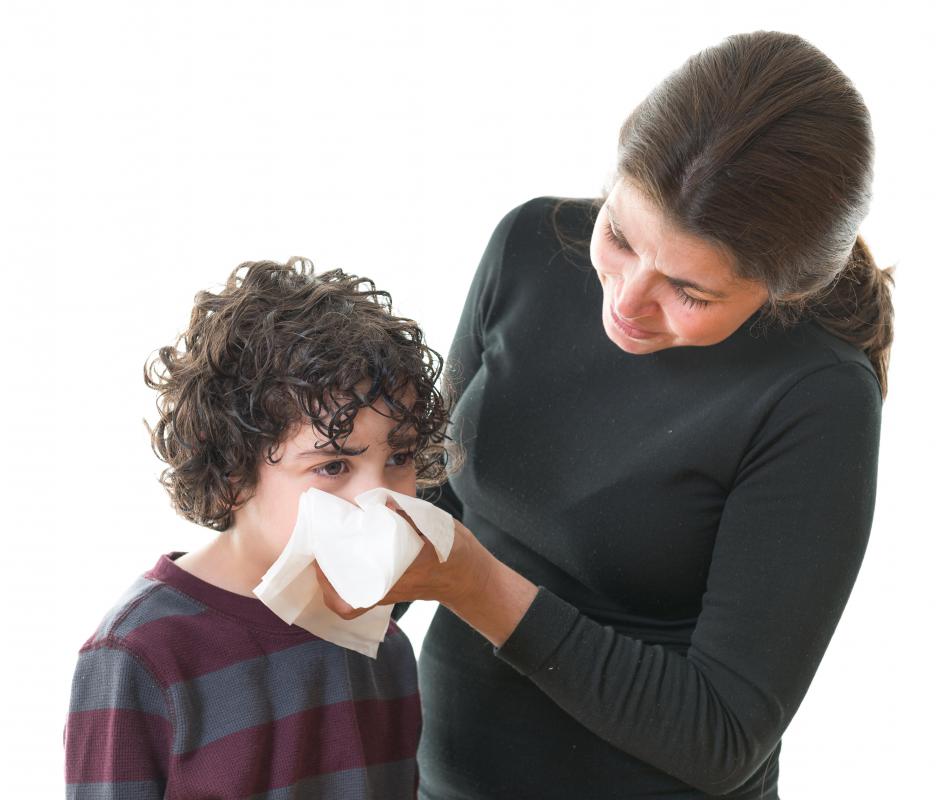
![The flu is a viral infection that affects the respiratory tract.]() By: emde71The flu is a viral infection that affects the respiratory tract.
By: emde71The flu is a viral infection that affects the respiratory tract. -
![Fever is one of many symptoms of the viral infection known as the flu.]() By: kmiragayaFever is one of many symptoms of the viral infection known as the flu.
By: kmiragayaFever is one of many symptoms of the viral infection known as the flu. -
![The elderly are urged to get a flu vaccine every year.]() By: Lisa F. YoungThe elderly are urged to get a flu vaccine every year.
By: Lisa F. YoungThe elderly are urged to get a flu vaccine every year. -
![Coughing is a common symptom of the flu.]() By: Ljupco SmokovskiCoughing is a common symptom of the flu.
By: Ljupco SmokovskiCoughing is a common symptom of the flu. -
![Cigarettes and other tobacco products can lower a person's immunity.]() By: Mr Korn FlakesCigarettes and other tobacco products can lower a person's immunity.
By: Mr Korn FlakesCigarettes and other tobacco products can lower a person's immunity. -
![Fatigue, headache, and runny nose are symptoms of influenza.]() By: Graça VictoriaFatigue, headache, and runny nose are symptoms of influenza.
By: Graça VictoriaFatigue, headache, and runny nose are symptoms of influenza. -
![Children are typically advised to get flu shots every year.]() By: coldwatermanChildren are typically advised to get flu shots every year.
By: coldwatermanChildren are typically advised to get flu shots every year. -
![Parents are advised to have their young children vaccinated against the flu.]() By: Jaimie DuplassParents are advised to have their young children vaccinated against the flu.
By: Jaimie DuplassParents are advised to have their young children vaccinated against the flu. -
![A yearly shot may help prevent the flu.]() By: evgenybA yearly shot may help prevent the flu.
By: evgenybA yearly shot may help prevent the flu. -
![Exposure to the influenza virus can create partial immunity to the virus.]() By: robyelo357Exposure to the influenza virus can create partial immunity to the virus.
By: robyelo357Exposure to the influenza virus can create partial immunity to the virus. -
![Children are at greater risk of developing both the flu and its complications.]() By: Zsolt BiczóChildren are at greater risk of developing both the flu and its complications.
By: Zsolt BiczóChildren are at greater risk of developing both the flu and its complications. -
![Influenza may cause a fever and stomach ache.]() By: michaeljungInfluenza may cause a fever and stomach ache.
By: michaeljungInfluenza may cause a fever and stomach ache. -
![Some people may experience vomiting with influenza.]() By: lightwavemediaSome people may experience vomiting with influenza.
By: lightwavemediaSome people may experience vomiting with influenza. -
![The influenza virus can be spread by failing to wash hands regularly.]() By: peacebutsThe influenza virus can be spread by failing to wash hands regularly.
By: peacebutsThe influenza virus can be spread by failing to wash hands regularly.








Discussion Comments
We just found out that my niece's husband has influenza. We're not sure what type -- a or b -- or what's the differences between both. So is that a very seriously fatal disease which he can die of or is just like spreading a cold around? I did a little research and it says there no cure so is it a chronic disease because colds go away and not influenza? I am a bit confused.
@anon54383-- Fever is actually one of the natural responses to illness. The purpose is to destroy as many virus cells as possible. Viruses cannot tolerate very high temperatures and the body tries to assist the immune system by killing some virus cells this way.
Of course, a very high fever can also be detrimental and lead to organ damage. That's why fever reducing medications are part of the influenza treatment.
@anon9196-- Oh, are there different types of influenza? Is there an influenza B, C, etc?
I personally think the nurses will be all right because the very young and the elderly are more prone to being infected with influenza than others. Adults have stronger immune systems. This is why it's a must for children and the elderly to get their flu shots. This is also why hospitals and pharmacies give preference to children and elderly when the flu shots come in every year.
Why do we have to get a flu shot every year? Why isn't it enough to get it once?
Every year I always get the flu. I was so sick I did not want to leave my bed over New Years. Nowadays, you have to wait days to get in to see a doctor and the ER costs thousands of dollars. I was so grateful I had this MD247 service. All I did was pick up my phone to talk with a doctor. I didn't leave my bed until I went to CVS to pick up my prescription.
that's in addition to eating normally as once increased/decreased heart rate is determined present during fever your body will likely burn more calories. You will want virus patients to eat heartily until full. once they can handle spicier food, graduate from bread and bland foods to broth and chicken noodle soup.
vomiting can be healthy and unhealthy as it can be a sign you're not getting a sufficient caloric intake if profuse enough, hence my malnutrition and dehydration statements. regards-j
I hope someone will contact a doctor and recommend doing this, because obese people will need to eat more than a daily requirement by a hospital due to reducing calories will weaken the immune system.
people will need to eat until full and drink water, especially if sweating occurs during viral outbreak.
They can monitor the patient's heart rate and temp until it returns to normal to let them rest when it is. This will help reduce deaths related to these incidents in my opinion. fever is a sign of accelerated heart rate and is mildly induced during exercise, due to an increase of blood supply. like pouring water into a balloon makes it harder to squeeze, the increase of virus registering as an increase of blood causing the heart to pump harder/erratically.
Fever temperatures are synonymous with the temperatures at which water evaporates. i believe erratic heart rates are the cause of blood loss by the fever temp evaporating the blood supply, which is why you're seeing sweat.
Sweat = evaporated blood, as this is where water content would come from.
Make sure your patients are alert during fever. They can rest but make sure they are talkative as they will pass out if fever is severe enough. Let them rest and sleep when the fever is over and they have eaten and drink plenty of water. Bland foods will help if there is vomiting, and profuse vomiting means they are not getting calories they need.
Foods like bread, noodles without broth and unsalted crackers should help reduce acid levels in blood and settle their stomach. at the very least it will help their immune system.
I believe many viral deaths are being caused by malnutrition and dehydration. Sweating is a sign you're losing water. fever and sweating can be beneficial in states like exercise and dangerous under prolonged conditions.
I have detected a medical error involving fever. It states a fever is a beneficial part of a disease outbreak. I believe this is not true. A fever is the result of a rapid heart rate, it's a sign of dehydration and that your body is overheating.
I'm hoping a medical doctor treating a fever patient will humor me and take their pulse. Low fever you should see dangerously high heart rate, high fever (103+) dangerously slow heart rate. I believe this is caused by the virus registering as an increase of blood causing the heart to pump harder and faster until it cannot pump depending on how fast the virus grows.
Its essential that you feed your patients food and water during a fever because it will help cool them down and prevent dehydration.
I have tested positive for influenza A (nasal swab). My symptoms are: Fluctuating temperature, shakes, nasal and throat congestion, coughing, ear ache.
I am 67 years old, and a diabetic. there are approximately 4 out of 32 residents in this (nursing home) ward who have exhibited symptoms. We have 6 wards altogether. All of the residents showing symptoms were isolated as was the ward from the rest of the home.
However, staff have been allowed to work in other wards, whether they exhibited symptoms or not. Im not sure of the wisdom or is influenza A not to be feared.
Post your comments