
At TheHealthBoard, we're committed to delivering accurate, trustworthy information. Our expert-authored content is rigorously fact-checked and sourced from credible authorities. Discover how we uphold the highest standards in providing you with reliable knowledge.
What is Hypertonicity?
Hypertonicity is an increased tension of the muscles, meaning the muscle tone is abnormally rigid, hampering proper movement. This condition is the opposite of hypotonicity. Hypotonicity is a decreased tension in muscle tone. A lack of muscle tone inhibits proper movement as the muscle is not developed or is too soft to support the body.
Neonatal or congenital hypotonia is fairly common and causal factors include infections, effects of drugs, brain hemorrhage, or chromosomal or cerebral pathologies. An infant diagnosed with generalized hypotonia has abnormally decreased muscle tone affecting posture for at least the first month of life.

Neonatal or congenital hypertonia, on the other hand, is usually a result of severe brain damage. Infants experiencing hypertonicity often have joint contractures and general discomfort as well as difficulty feeding. This condition is managed with neurodevelopmental techniques in the positioning and handling of the infant. The presence of neonatal hypertonicity with an exaggerated startle reflex is often associated with the neuropediatric disease Hyperekplexia. Hyperekplexia is treatable, but must be caught early or death from apnea may result.

Chronic back pain is often associated with hypertonicity. Physical causes of this condition in back muscles may be due to either physical damage or emotional stress. Hypertonicity in back muscles may cause joint compression and an excess of lactic acid as well as a decrease in movement.
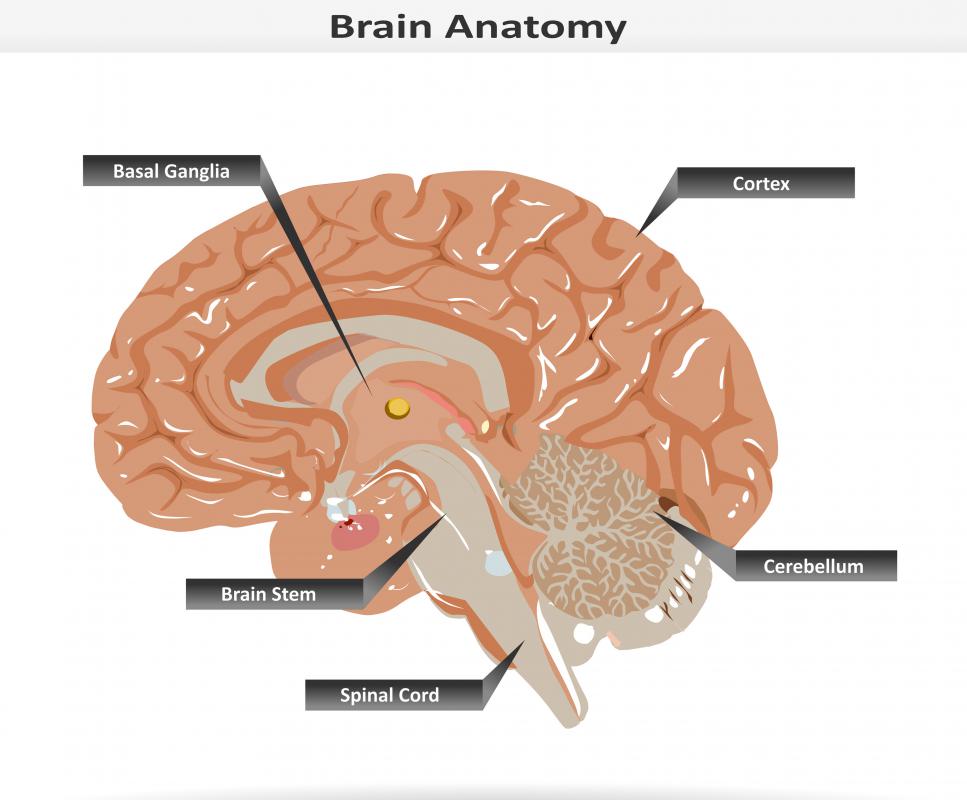
Hypertonicity is also linked to neurologic disorders of the basal ganglia such as Parkinson's and Huntington's diseases. The basal ganglia, at the brain's base, is made up of the caudate nucleus, putamen, and globus pallidus. These three neuron clusters work together to control voluntary movements.

Parkinson's disease is caused by degeneration of the basal ganglia as well as low amounts of the neurotransmitter dopamine. Parkinson's disease slows voluntary movements. Hypertonicity from Parkinson's often presents as short, stiff leg movements and overall muscle weakness. Postural abnormality is also a result of damage from Parkinson's disease. Surgery on the globus pallidus section of the basal ganglia may reduce some of the muscle changes associated with Parkinson's disease in some cases.

Huntington's disease is mostly caused by a genetic inheritance to the disorder. The Huntington's gene protein is called huntingtin and only one gene copy has to be inherited to cause Huntington's disease. Damage from Huntington's disease often results in a smaller putamen area of the basal ganglia. Severe mood abnormalities such as mania or psychosis are often the first sign of Huntington's disease, but rigid or spastic hypertonicity of muscles is often quite pronounced in the late stages.
AS FEATURED ON:
AS FEATURED ON:


-
![Chronic back pain is associated with with hypertonicity.]() By: mangostockChronic back pain is associated with with hypertonicity.
By: mangostockChronic back pain is associated with with hypertonicity. -
![Neonatal hypertonicity is usually the result of brain damage.]() By: Sabryna WashingtonNeonatal hypertonicity is usually the result of brain damage.
By: Sabryna WashingtonNeonatal hypertonicity is usually the result of brain damage. -
![Hypertonicity is linked to neurological disorders of the basal ganglia.]() By: atulvermabhaiHypertonicity is linked to neurological disorders of the basal ganglia.
By: atulvermabhaiHypertonicity is linked to neurological disorders of the basal ganglia. -
![Hypertonicity is characterized by increased tension of the muscles.]() By: goodluzHypertonicity is characterized by increased tension of the muscles.
By: goodluzHypertonicity is characterized by increased tension of the muscles.



Discussion Comments
Hypertonicity can also be caused by Arnold Chiari Malformation, a congenital anomaly where the brain presses against the skull and herniates into the spinal canal.
"Lithium" likely isn't reading this, but somebody with those symptoms should absolutely not seek out chiropractic treatments. While they are potentially helpful for people with normal/healthy spines, going to one when you show signs of serious spine or neurological problems can make matters much worse.
Chronic pain is very commonly under-treated in the US, according to the AMA. If someone is given pain medication but not getting relief, request different medication/treatment, and switch doctors (ask around online for recommendation) if you have to.
I switched doctors three or four times while relatively healthy before finding one that I knew would listen to me, and I'm glad I did. My Chiari causes enough muscle pain that only a drug used for end-stage cancer patients (fentanyl) lets me be comfortable, so I would have killed myself had my doctor not listened.
Ever thought of using chiropractic treatment? It can help with all disc bulges/occipital/jaw problems. Hypertonicity is a strong possibility as the upper trapezius muscle fibers are based around your neck and occiput. Massage and stretching can greatly aid this condition also.
If you have a problem with your jaw and tingling in the lips sounds as though it could be a form of trigeminal neuralgia - also treated by chiropractic care - may not be the cause but has proven results to help with fibromyalgia also!
Read about Thomas Griner and his neuro muscular massage (neurosoma) therapy. Griner has done the research on hypertonic muscles or muscles in spasm.
He is a genius who has taken the time to understand the intricacies of why muscles spasm and how to get the muscles from stop spasming.
Concentrated lactic acid interferes with the feedback nerves in the muscle spindle fibers so that the cerebellum gets the wrong signal. Concentrated lactic acid enables the feedback nerves to only send a weak signal to the cerebellum. A weak sign is interpreted by the cerebellum to contract the muscle. Thus, a bad or defective signal loop is created and the muscle never gets the strong signal that would tell the muscle to relax. This is what causes hypertonic muscle spasm that never releases.
I am also living proof that his technique works! Don't take my word for it. Read it for yourself. --Sam
Read about Thomas Griner and his neurosoma therapy. Griner has done the research on hypertonic muscles or muscles in spasm.
He is a genius who has taken the time to understand the intricacies of why muscles spasm and how to get the muscles from stop spasming.
You need to try massage therapy and chiropractic care. Heat therapy and trigger point therapy should help.
Since my hospitalization for lithium toxicity, my occipital, sub-occipital and neck to C67 where I have a bulging disk, have been in constant pain. I get only temporary relief with flexeril and acupuncture. Every jaw motion, head tilt and neck turn exacerbates the pain. Anything touching the occiput increases the pain. After reading a website on lithium toxicity I saw hypertonicity as a possible complication - what do you think? I've had chronic fatigue for 22 years and fibromyalgia for 18 years - but this level of pain is at least 20 times greater! All of my pain [including hypertrophic vulvar dystrophy, bulging disks at C67, T45, L12, L34 and pins & needles in the lips and from the hips down] have all greatly increased since the hospitalization for moderate to severe lithium toxicity.
Post your comments