
At WiseGEEK, we're committed to delivering accurate, trustworthy information. Our expert-authored content is rigorously fact-checked and sourced from credible authorities. Discover how we uphold the highest standards in providing you with reliable knowledge.
What is Hydronephrosis of Pregnancy?
The growing uterus of a pregnant woman can sometimes press on one or both ureters, the tubes that move urine from the kidneys to the bladder, and obstruct the flow of urine. When this happens, urine flows back towards the affected kidney and causes distention of the renal pelvis, which is the part of the kidney that connects with the ureter. This condition is called hydronephrosis of pregnancy. Aside from the compression of the growing womb of the pregnant woman, hormonal changes may also contribute to this problem.
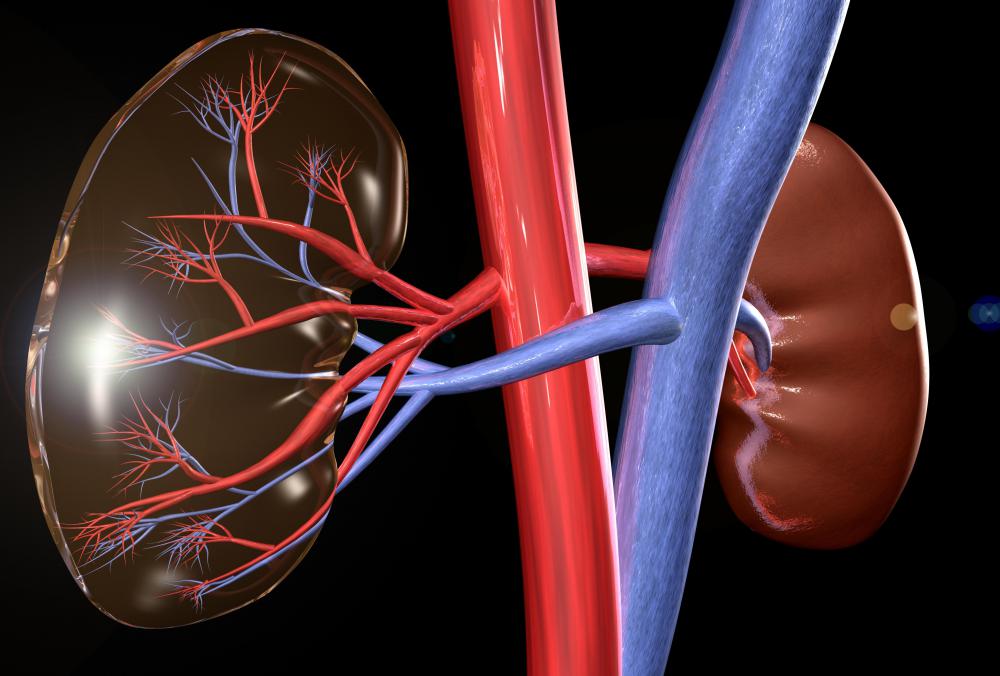
Hydronephrosis of pregnancy usually affects the right kidney due to the tendency of the growing uterus to rotate to this side. There are cases, however, where both kidneys are affected. When this happens, and the problem is not treated, kidney failure can occur. Symptoms include weakness, swelling of the feet and hands, and decreased urine output, among many others.

Urine normally flows out of the kidneys under low pressure. When there is an obstruction at a certain area of the ureter, the urine cannot flow normally and tends to back up into the kidney, causing the kidney distention and increasing the pressure in the area. Without proper treatment, this increase in pressure can sometimes cause a renal rupture, which can be a life-threatening situation. Important signs that usually precede a renal rupture include pain between the hips and the ribs, the presence of blood in urine, and low blood pressure.

Common complications of hydronephrosis of pregnancy include infection, kidney stone formation, and damage to the affected kidney due to the pooling of urine in the area. Symptoms of infection include fever, abdominal discomfort, and presence of white blood cells in the urine. Patients may also experience nausea and vomiting.
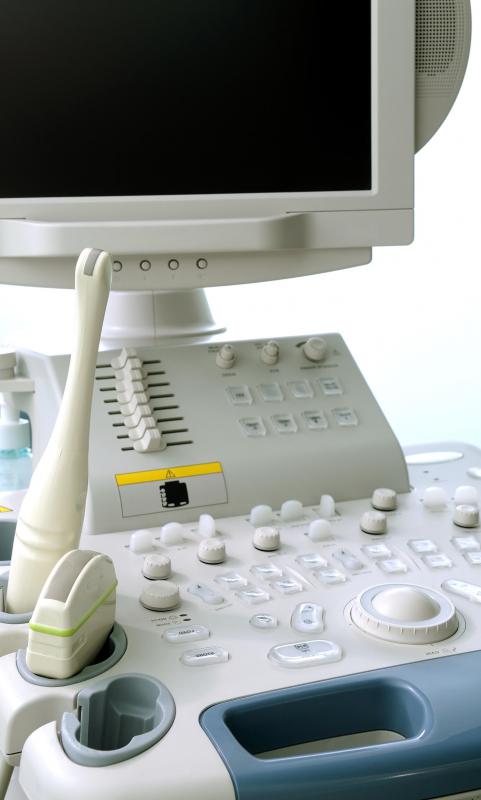
An abdominal ultrasound is generally used to diagnosis this condition because it does not expose the pregnant woman and her fetus to radiation. Treatment usually includes antibiotics, if there is an infection, and other medications for pain. When these medications do not provide relief to patients, invasive procedures may be required. These include placing a stent in the ureter to keep it open or using a catheter to drain urine out of the kidneys. Some pregnant women may be given a cesarean section or have labor induced if the fetus is already at near term.
During treatment, a medical professional will typically advise the pregnant woman to drink plenty of fluids. She may also be put on bed rest and instructed to lie on the side of the kidney that is not affected.
AS FEATURED ON:
AS FEATURED ON:









-
![An abdominal ultra sound is used to diagnose hydronephrosis in pregnant women.]() By: photo 5000An abdominal ultra sound is used to diagnose hydronephrosis in pregnant women.
By: photo 5000An abdominal ultra sound is used to diagnose hydronephrosis in pregnant women. -
![An ultrasound can be done to diagnose a woman with hydronephrosis.]() By: Andrey ChmelyovAn ultrasound can be done to diagnose a woman with hydronephrosis.
By: Andrey ChmelyovAn ultrasound can be done to diagnose a woman with hydronephrosis. -
![Hydronephrosis of pregnancy usually affects the right kidney; however, there are cases in which both kidneys are affected.]() By: London_EnglandHydronephrosis of pregnancy usually affects the right kidney; however, there are cases in which both kidneys are affected.
By: London_EnglandHydronephrosis of pregnancy usually affects the right kidney; however, there are cases in which both kidneys are affected. -
![Common complications of hydronephrosis of pregnancy include kidney stone formation.]() By: airborne77Common complications of hydronephrosis of pregnancy include kidney stone formation.
By: airborne77Common complications of hydronephrosis of pregnancy include kidney stone formation. -
![A pregnant woman with hydronephrosis may be prescribed bed rest.]() By: MilissentaA pregnant woman with hydronephrosis may be prescribed bed rest.
By: MilissentaA pregnant woman with hydronephrosis may be prescribed bed rest. -
![Some women with hydronephrosis may need a catheter to drain urine from the bladder.]() By: sudok1Some women with hydronephrosis may need a catheter to drain urine from the bladder.
By: sudok1Some women with hydronephrosis may need a catheter to drain urine from the bladder.




Discussion Comments
@MikeMason-- Did your wife have to get a stent or have early birth because of the hydronephrosis of the kidney?
I'm six months pregnant and in the same situation. My doctor has prescribed pain relievers and said that if things get worse, I can get a stent. I might also have to give birth earlier if the pressure becomes life threatening. I'm very scared.
@simrin-- I've been trying to learn more about hydronephrosis and pregnancy because my wife developed this during our first child. Her right kidney was very strained and she had a lot of pain during birth.
We're thinking about another child but will probably wait until we figure out if she will go through this again during a second pregnancy.
From what I understand, this is not very common. But I've also read some reports which suggest that women who experience hyronephrosis during pregnancy often have undiagnosed kidney issues before their pregnancy like kidney infections or kidney reflux.
Exactly how common is hydronephrosis in pregnancy?
I've heard of hydronephrosis due to kidney stones before but not pregnancy.
Post your comments