
At DelightedCooking, we're committed to delivering accurate, trustworthy information. Our expert-authored content is rigorously fact-checked and sourced from credible authorities. Discover how we uphold the highest standards in providing you with reliable knowledge.
What Is Hydrogenated Lard and Partially Hydrogenated Lard?
 Malcolm Tatum
Malcolm Tatum
Malcolm Tatum
Understanding the nuances between hydrogenated lard and partially hydrogenated lard is crucial for both health-conscious consumers and culinary professionals. According to the American Heart Association, trans fats—often found in partially hydrogenated oils—can increase the risk of heart disease.
Hydrogenated lard is fully saturated, making it solid at room temperature and free from trans fats. In contrast, partially hydrogenated lard contains trans fats due to incomplete hydrogenation.

Despite health concerns, trends suggest that lard consumption has seen a resurgence in recent years, with a notable increase in domestic use (source: https://www.usda.gov). This resurgence underlines the importance of understanding these fats' composition, as they continue to play a role in culinary traditions worldwide.
Lard in all forms is simply pig fat. For centuries, lard was the cooking fat of choice for many different types of cuisine. In some instances, lard was also served and used as a topping for hot sections of bread, in a manner very similar to butter or margarine. During the 20th century, the use of lard began to decrease as scientific research uncovered the health risks associated with the consumption of saturated fats such as lard products. However, the rich flavor that lard often brings to a recipe continues to make it the cooking fat of choice for many people in different cultures.

Today, lard is usually made available as both partially hydrogenated and hydrogenated products. Both types of lard have been infused with hydrogen. The key difference has to do with the amount of hydrogen that is added to the pig fat. Depending on the amount of hydrogen that is introduced into the lard, the consistency and appearance of the lard will be impacted.

With partially hydrogenated lard, the pig fat only achieves a degree of firmness that provides a texture that is somewhat like whipped shortening. This makes the use of this type of lard in packaged foods a relatively easy process. For a number of years, there was some thought that since partially hydrogenated lard is less saturated, it was less of a health risk. Currently, many healthcare professionals think otherwise.
Hydrogenated lard contains more hydrogen and other chemicals, and often has an appearance that is solid. This type of lard is often sold in units that somewhat resemble a masonry brick, and are intended to be cut into sections in a manner similar to cutting a pat of butter. Hydrogenated lard is also used in processed foods, but is mainly utilized by chefs when preparing meals from scratch.
FAQ on Hydrogenated Lard
What is hydrogenated lard?
Hydrogenated lard is a form of lard that has undergone a chemical process called hydrogenation, which involves adding hydrogen atoms to the fat molecules. This process converts liquid unsaturated fats into a semi-solid or solid state, increasing the lard's stability and shelf life. Hydrogenated lard is often used in baking and cooking for its desirable texture and flavor properties.
What is the difference between hydrogenated and partially hydrogenated lard?
Hydrogenated lard has been fully processed to become solid at room temperature, while partially hydrogenated lard has undergone the hydrogenation process to a lesser extent, resulting in a semi-solid state. Partially hydrogenated lard may still contain trans fats, which have been linked to negative health effects, such as an increased risk of heart disease, according to the American Heart Association.
Why is hydrogenated lard used in food production?
Hydrogenated lard is used in food production for its extended shelf life, stability at high temperatures, and ability to provide a desirable texture to baked goods. It also has a higher melting point than non-hydrogenated lard, making it suitable for pastries and pie crusts where a flaky texture is desired. Additionally, it can enhance the flavor of food products without the need for refrigeration.
Are there health concerns associated with consuming hydrogenated lard?
Yes, there are health concerns associated with consuming hydrogenated lard, particularly due to its trans fat content. Trans fats can raise bad cholesterol levels (LDL) and lower good cholesterol levels (HDL), increasing the risk of heart disease. The U.S. Food and Drug Administration (FDA) has taken steps to remove artificial trans fats from processed foods, recognizing the health risks they pose.
How can I identify hydrogenated lard in food products?
To identify hydrogenated lard in food products, check the ingredients list on the packaging. Look for terms like "hydrogenated lard" or "partially hydrogenated lard." Be aware that even if a product claims to have "0 grams of trans fat per serving," it can still contain small amounts of trans fats if partially hydrogenated oils are listed in the ingredients, as the FDA allows products with less than 0.5 grams of trans fat per serving to be labeled as having 0 grams.
Malcolm Tatum
After many years in the teleconferencing industry, Michael decided to embrace his passion for trivia, research, and writing by becoming a full-time freelance writer. Since then, he has contributed articles to a variety of print and online publications, including DelightedCooking, and his work has also appeared in poetry collections, devotional anthologies, and several newspapers. Malcolm’s other interests include collecting vinyl records, minor league baseball, and cycling.
Learn more...
Malcolm Tatum
After many years in the teleconferencing industry, Michael decided to embrace his passion for trivia, research, and writing by becoming a full-time freelance writer. Since then, he has contributed articles to a variety of print and online publications, including DelightedCooking, and his work has also appeared in poetry collections, devotional anthologies, and several newspapers. Malcolm’s other interests include collecting vinyl records, minor league baseball, and cycling.
Learn more...AS FEATURED ON:
AS FEATURED ON:


-
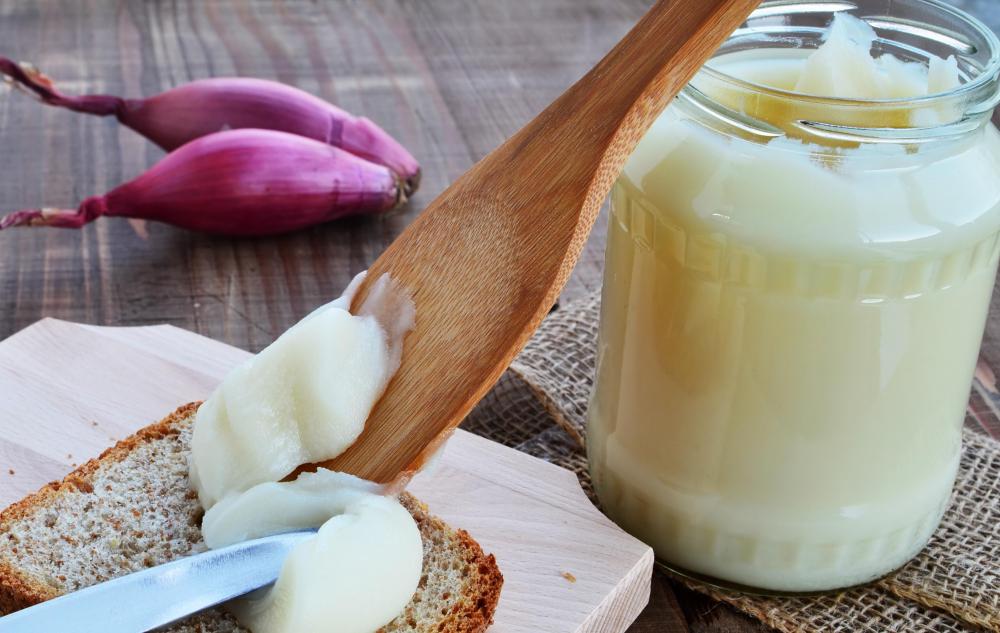
![All forms of lard are pig fat.]() By: AnatoliiAll forms of lard are pig fat.
By: AnatoliiAll forms of lard are pig fat. -
![Lard has been widely replaced by products considered healthier.]() By: ProMotionLard has been widely replaced by products considered healthier.
By: ProMotionLard has been widely replaced by products considered healthier. -
![Both forms of commercial lard are infused with hydrogen.]() By: whiteasterBoth forms of commercial lard are infused with hydrogen.
By: whiteasterBoth forms of commercial lard are infused with hydrogen.


Discussion Comments
You need to watch "The Oiling of America," a documentary online.
Also online: "Fat Chance: Fructose 2.0," by Dr. Robert Lustig, a pediatric endocrinologist and board member of the American Heart Association is turning the medical community on its head.
It's not true that, "There is a tremendous amount of research available regarding saturated fats." No one ever presents any references to verifiable exhaustive research. Stop repeating the falsehood that has been echoed for decades. There has never been any exhaustive verifiable scientific research until recently which turned out that saturated fats are good for you. Saturated fat keeps our blood flowing free and clear, and makes us lose weight.
Medical students have been drilled in how fat was bad and that bread and cereal is good without conducting any research -- just like they are trained to hand out prescriptions for everything. Added sugar or refined sucrose and fructose causes the body to produce insulin, but does not metabolize unless it is sent to the liver, which converts it into dense fat that invades our organs. Glucose is produced by the body and metabolized from protein. Glucose is converted to energy with insulin and feeds the cells and the brain.
Fat is hard to digest. We burn more energy than what we get from it. The body metabolizes fat into ketones. But energy from ketones lasts longer and is more efficient than glucose. So when we eat sugar with our fat, the body chooses sugar because it is much easier. This is why added sugar remains in the bloodstream; insulin cannot metabolize it. The liver converts it into fat and we still have insulin in the bloodstream which makes us even hungrier. The problem is not glucose; it is the acquired insensitivity to insulin at the cellular level known as Type 2 diabetes.
When we drop the sugar and consume fat, the body learns to rely on ketones goes into ketosis--not ketoacidosis--which is a more efficient metabolism. The pancreas gets a break from sensing sugar in the blood and slowly recovers to the point of reversing pre-diabetes and some cases of diabetes.
The corn and soybean industry never conducted any verifiable research. They did what is called observational research or used logical assumptions that have been wrong since the 1920s when Coca-Cola and other sugary beverages became the rage. The logic was, "fatty arteries must come from fat, so remove the fat from the diet and heart attacks will disappear." Observational research is not science; it's creative writing.
It was an experiment gone terribly wrong. No one expected the culprit to be sugar, cheap poly-unsaturated oils and refined carbohydrates or white flour to be the enemy. I personally have an issue with meat and find fat disgusting because of my upbringing, but I am making the change to save my life and the life of my parents to reverse pre-diabetes.
Saturated fat was studied for 60 years and is now officially very good for your health. Anyone saying otherwise is using obsolete information. I am concerned about making a saturated fat into a transfat. I prefer unpolluted lard, butter, and virgin coconut oil for cooking purposes. I have zero shortening, margarine or vegetable oil in my house.
It is truly silly to hydrogenate lard, which can be purchased from a reliable source as firm and not liquidy. As soon as foods start moving through factories for "improvements", they are usually worse off health-wise.
As to the person who is disturbed by pig fat, my suggestion would be not to consume it and you may rest easy. Your vegetarianism probably disturbs those that consume animal flesh so don't worry your pretty head over such things. Live and let live.
I found a supermarket variety of lard that, although in the form of a white brick, does not contain hydrogenated fats. I'm very lucky!
There is a tremendous amount of research available regarding saturated fats. The latest thinking is that saturated fats are actually not harmful to your health as long as they are not trans fats. There are many books on this subject that outline this research. I say get out there educate yourself and start questioning conventional wisdom.
What is common knowledge now is under a lot of scrutiny and I believe the common knowledge regarding nutrition is in the first stages of passing away, so to speak. Twenty years from now, I think a more traditional diet based on meats, lots of healthy fats and vegetables will be considered very healthy. A diet based on low fat and grains will be considered the bad old way of thinking. This tide is already starting to turn in parts of Europe and in North America, as well. People are not only normalizing weight, but also getting rid of scores of health problems on these diets.
I would say do some real research before you simply say that the human body can't handle saturated fats. Oh, how unbelievably wrong that is.
Your not knowing that lard is pig fat is very disturbing.
The purpose of hydrogenating oils is to change the degree of saturation which changes the melting point and viscosity. Unsaturated portions of a fatty acid are where double bonds are located. This is termed unsaturated because every place a double bond occurs has two less hydrogens than a place that has a single bond.
This has a big advantage for vegetable fats where you can use a press and get out a liquid which is easy to move and process and then hydrogenate it to make "cakes" that are the right consistency (margarine and shortening). I think they mix in hydrogenated lard to make it harder to melt which is handy for hotter climates.
Most unsaturated fats come in two varieties (called isomers): cis and trans. The type of isomer is important for biological processes because enzymes and channels are shaped dependent and trying to fit a trans fat into an enzyme designed for cis fat is like trying to put a right boot on a left foot. Most biological organisms can only cope with the cis isomers which is why trans fats clog your arteries.
Industrial processes are blind to which isomer they make, so when you reduce the amount of saturation industrially there's a chance for producing trans fats depending on how far apart the double bonds are. If the double bonds were right next to each other the chance for cis and trans would be 50/50.
Most biological poly-unsaturated fatty acids are conjugated which means that they alternate double-single-double. This lowers the chance of getting trans fats some, but you'll still get a substantial amount.
If you completely saturate the oils then there aren't any trans fats because there aren't any double bonds left. Since there's only one isomer of this type for saturated fats you don't have the issue with them not fitting the enzymes and channels.
However, humans aren't equipped to deal with large amounts of saturated fats, so you want to use animal fats in moderation since they contain high amounts of saturated fats. This is why people used to think margarine was better for you than butter (not the case!) because it had less saturated fats.
Don't trust labels that say "0g trans fats" because this is per serving and serving sizes are typically low or the amount of shortening used in a product. Check the ingredients for "partially hydrogenated" oil. Any amount is likely to be bad for you due to the way our bodies handle fats. Fully hydrogenated oils are chemically and biologically the same as any saturated fats and are therefore not as toxic as trans fats.
Companies can say "0g Trans Fat" or "No trans fat" as long as there is less than 0.5g per serving of it. A serving of lard is not very big, and may be the maximum before having to say so.
The lard brick I bought from the grocery which contains lard and partially hydrogenated lard, says 0g trans fats on the nutrition label. How can this be?
According to the Harvard Public Health Review ("HPHR"), partially hydrogenated oils contain trans fatty acids (trans fats), which increase the likelihood of heart disease. Interestingly, according to HPHR, when oil is fully hydrogenated, trans fats are not present in the oil. Thus, partially hydrogenated products will really harm your health, but fully hydrogenated oils do not contain trans fats.
Regretfully, the article did not contain a discussion of partially or fully hydrogenated lard.
However, in a scientific paper on another web site, the authors did confirm that partially hydrogenated lard contains significant amounts of trans fat. Thus, the writing on the wall is: Avoid partially hydrated vegetable oil and partially hydrated lard.
Kind regards, One Worthy Fellow
Any food that is hydrogenated is an extremely bad choice, because when it is eaten it causes the pores on the surface of your cells to be blocked and hardened, causing vital nutrients needed to be unprocessed.
Which could cause inflammation and cell death. And ultimately speed up the aging process, not to mention poor heart and circulation in the body. If you are a true vegetarian, lard in any form is a bad choice.
It seems oxymoronic to [partially] hydrogenate a saturated fat, unless it is to make the lard spoilage-proof at room temperature. Yet, does [partially] hydrogenated lard contain toxic trans fatty acids?
I've heard vegetable shortening referred to as "vegetable lard" before. But I am not aware of any true lard product that does not contain some type of animal product.
Is all lard made from pig fat? As a vegetarian this very disturbing.
Post your comments