
At TheHealthBoard, we're committed to delivering accurate, trustworthy information. Our expert-authored content is rigorously fact-checked and sourced from credible authorities. Discover how we uphold the highest standards in providing you with reliable knowledge.
What is Hospital Psychosis?
 Michael Pollick
Michael Pollick
Michael Pollick
During their stay in the hospital, patients often confront more than just their physical ailments. According to a study published in the British Medical Journal, delirium affects approximately 20% of all hospitalized adults, with higher rates in intensive care units (ICU). This state of confusion, known as hospital psychosis or ICU syndrome, can be exacerbated by factors such as constant pain, anxiety, and the disorienting hospital environment.
The National Institutes of Health reports that lack of sleep and sensory input, including reduced exposure to natural light, significantly contribute to the onset of this condition. Patients with hospital psychosis may experience disturbing hallucinations, disordered speech, and memory disturbances, signaling a profound disruption in their mental well-being. Addressing this issue is crucial for patient recovery, as it not only affects their mental state but can also impede their overall healing process.
Symptoms

Disorientation, paranoia, anxiety, and restlessness can all be signs of hospital psychosis. The patient may also suffer from hallucinations, confusion, and nightmares. Sometimes people behave in uncharacteristic ways; for example, a sociable and talkative person may withdraw from others, or a kind, well-mannered individual could become difficult, irrationally angry, and even combative. Patients may also pull out catheters or intravenous (IV) lines, struggle with nurses and other caregivers, and try to leave the hospital. In severe cases, the sufferer may even believe that his medical team is trying to hurt, rather than help, him or other patients.
Risk Factors and Outlook

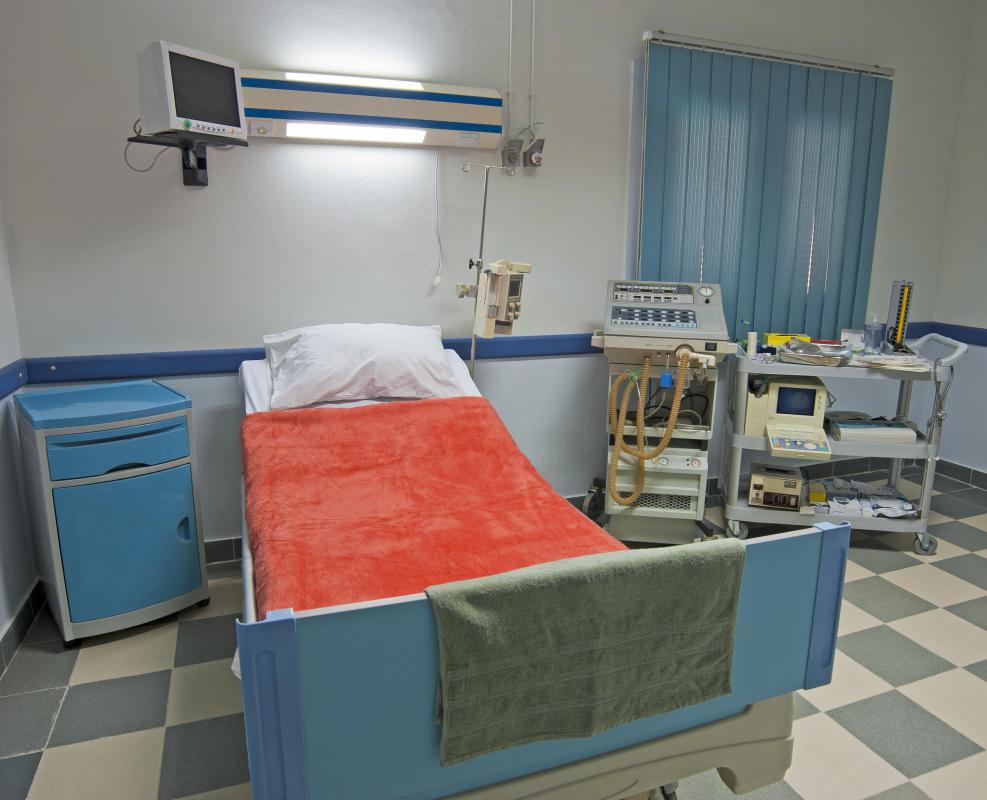
Critically ill patients, especially those who are in an intensive care unit (ICU), are more likely to develop hospital psychosis, as are older patients. Research indicates that more than 80% of patients on a ventilator, which helps them breathe, may experience delirium, and people with acute respiratory distress syndrome (ARDS) seem particularly susceptible. Patients who develop delirium may also have a lower recovery rate; they often have to stay in the hospital longer, and have higher mortality rates after six months.
Diagnosis

Hospital psychosis may be diagnosed when a patient's symptoms cannot be explained by other medical causes. It is possible that some or all of the symptoms could be caused by the effects of medications or anesthesia, or by medical conditions like blood infections, dehydration, and reduced heart activity. Low oxygen levels can also bring on disorientation and slurred speech. Physicians are sometimes uncomfortable saying that a patient has hospital psychosis, since it means that other possible causes — some of which could be life threatening — might not be fully explored.
A Link to Sleep Disruptions

While in the hospital, many patients complain that they do not get adequate restful sleep due to the unfamiliarity of the setting and the constant activity in the environment. Periodic bed-checks by nurses to monitor vital signs or to administer medication can also impede a patient's ability to get enough rest. Lack of restful sleep can lead to hallucinations or confused speech that appear more like early Alzheimer's disease than an actual psychotic break.

People who do not receive normal day and night light cues — due to being in a windowless room for days — may develop another condition called sundowners syndrome. It is especially common in elderly individuals. As its name suggests, it is caused by abnormal sleep and waking cycles, and is reportedly common not only in hospitals but also nursing homes and long-term care facilities. Its symptoms include agitation, anxiety, and even delirium.
Hospital Psychosis Is not a Mental Illness

Medical professionals generally agree that hospital psychosis is not necessarily evidence of a more serious psychiatric condition. It is better described as a mental state triggered primarily by the act of being in the hospital environment over time, not a mental illness. Visitors and caregivers may notice a significant change in the patient's demeanor after a few days; in rare cases, it can take even less time for symptoms to develop.

It may be frightening to see a loved one act irrationally or completely disconnected from reality, but it is important for family members to know that sufferers cannot control their behavior. Many sleep-deprived or anxious patients may not realize that they are confused or delusional, much less why. During more lucid moments, however, they may regret what they did or said while experiencing an episode.
Management and Treatment

Sometimes, the presence of familiar people and even things can help someone with this condition focus on the "real world" for a few minutes. Visits from friends and family members may help patients stay in touch with the world outside of the hospital, and feel less isolated and anxious. For some sufferers, regular contact like this can keep them connected to reality, but others may require more intervention.
If medications or treatments are contributing to the psychosis, it may be possible to change them to reduce some of the symptoms. Many times, the specific treatment is medically necessary, however, and cannot be altered. Keeping the patient well hydrated and pain levels under control can also help alleviate delirium. In some cases, a patient may be given anti-psychotic drugs to counteract his or her disconnection with reality. Sedatives may also be given, although their use should be carefully monitored since such medications may only cause the patient more confusion.
Reducing noise and disruptions during the night may help patients with sleep problems. Establishing a regular day and night schedule may also reduce the symptoms; this can include making sure the patient is aware of the day of the week and the time of day, along with visual cues like having the lights coordinated with the day and night cycle. In some cases, simply moving the patient to a room with windows can cause the symptoms to lessen or even disappear.
A Temporary State
Even without treatment, most symptoms of hospital psychosis disappear and the sufferer's personality returns to normal soon after he or she goes home. One-third or more of ICU patients do report some long-term cognitive impairment after leaving the hospital, including problems with attention and memory, and many people experience depression. After a hospital stay that included episodes of delirium, visits from family and friends may help a sufferer to feel calm and back to normal.
Any changes in a patient's demeanor or cognitive skills during a hospital stay should be reported to his or her health care team. These changes could be caused by a serious medical condition, and should not be attributed to hospital psychosis until all other causes are ruled out. Even if a doctor diagnoses a patient as having this condition, he may opt not to treat mild to medium cases in order to not over-medicate the sufferer.
FAQ on Hospital Psychosis
What is hospital psychosis and who is most at risk?
Hospital psychosis, also known as ICU delirium or acute confusional state, is a condition characterized by cognitive disturbances that can occur in patients during hospitalization. Symptoms include confusion, disorientation, and hallucinations. Patients most at risk include the elderly, those with pre-existing cognitive impairments, individuals undergoing major surgery, and patients in intensive care units, particularly if they are mechanically ventilated or sedated for long periods.
What causes hospital psychosis?
Hospital psychosis can be triggered by a combination of factors such as the unfamiliar hospital environment, sleep deprivation, medication side effects, prolonged stress, pain, infection, or withdrawal from alcohol or drugs. According to the American Delirium Society, up to 80% of ventilated ICU patients may experience some form of delirium, which is a key component of hospital psychosis (https://americandeliriumsociety.org/delirium).
How is hospital psychosis diagnosed?
Diagnosis of hospital psychosis involves clinical assessment by healthcare professionals. They may use tools like the Confusion Assessment Method for the ICU (CAM-ICU) or the Intensive Care Delirium Screening Checklist (ICDSC) to evaluate symptoms. Diagnosis is based on the presence of features such as acute onset of symptoms, fluctuating course, inattention, and either disorganized thinking or altered level of consciousness.
What are the treatments for hospital psychosis?
Treatment for hospital psychosis focuses on addressing the underlying causes and may include adjusting medications, managing pain, ensuring proper hydration and nutrition, and providing a calm and reorienting environment. Non-pharmacological interventions are preferred, but in some cases, antipsychotic medications may be used. Early mobilization and physical therapy can also help in recovery.
Can hospital psychosis be prevented?
Prevention of hospital psychosis involves a multi-faceted approach that includes minimizing the use of sedatives, providing adequate pain management, promoting sleep hygiene, and ensuring early mobilization. Environmental modifications such as maintaining a day-night cycle with natural light and reducing noise can also help. Family involvement and reorientation techniques are crucial in helping to prevent and manage the condition.
Michael Pollick
A regular TheHealthBoard contributor, Michael enjoys doing research in order to satisfy his wide-ranging curiosity about a variety of arcane topics. Before becoming a professional writer, Michael worked as an English tutor, poet, voice-over artist, and DJ.
Learn more...
Michael Pollick
A regular TheHealthBoard contributor, Michael enjoys doing research in order to satisfy his wide-ranging curiosity about a variety of arcane topics. Before becoming a professional writer, Michael worked as an English tutor, poet, voice-over artist, and DJ.
Learn more...AS FEATURED ON:
AS FEATURED ON:


-
![Patients in intensive care units are often more at risk for hospital psychosis.]() By: Paul VintenPatients in intensive care units are often more at risk for hospital psychosis.
By: Paul VintenPatients in intensive care units are often more at risk for hospital psychosis. -
![Prescription medication from a hospital.]() By: Andrew S.Prescription medication from a hospital.
By: Andrew S.Prescription medication from a hospital. -
![A lack of sunlight contributes to hospital psychosis.]() By: miikoA lack of sunlight contributes to hospital psychosis.
By: miikoA lack of sunlight contributes to hospital psychosis. -
![Severe mental confusion can be seen in people with a hospital psychosis.]() By: chuugoSevere mental confusion can be seen in people with a hospital psychosis.
By: chuugoSevere mental confusion can be seen in people with a hospital psychosis. -
![Keeping patients hydrated can help to prevent delirium.]() By: anyaivanovaKeeping patients hydrated can help to prevent delirium.
By: anyaivanovaKeeping patients hydrated can help to prevent delirium. -
![Hospital psychosis is common among elderly patients.]() By: Andres RodriguezHospital psychosis is common among elderly patients.
By: Andres RodriguezHospital psychosis is common among elderly patients. -
![Research indicates that more than 80% of patients on a ventilator, which helps them breathe, may experience delirium.]() By: sudok1Research indicates that more than 80% of patients on a ventilator, which helps them breathe, may experience delirium.
By: sudok1Research indicates that more than 80% of patients on a ventilator, which helps them breathe, may experience delirium. -
![Experts agree that hospital psychosis should not be classified as a mental disorder.]() By: sudok1Experts agree that hospital psychosis should not be classified as a mental disorder.
By: sudok1Experts agree that hospital psychosis should not be classified as a mental disorder.






Discussion Comments
I had it bad after 6 weeks in intensive care.
I imagined I was in India in a temple on a mountaintop, also three different local hospitals, a local grocery store, the place I used to work, a train station, a subway station... I imagined so many weird, fantastic, paranoid delusional situations, it was like a living dream, or nightmare mostly. I was always helpless and could never seem to go home which is where I really wanted to be. It was so weird. Astral plane or delusions? I still have a hard time sorting out what was real. PTSD.
I was told I would need a year of rehab, but I was out in 2 months. It's been a year now and I still deal with 'being back in the hospital'. I continue to heal and learn and it all does seem to be getting better.
Having been through hospital psychosis with my husband several times, I feel profound sympathy with all patients and family members who are struggling to deal with it.
My husband suddenly began to "reject" knowledge of where he was and why in 2000, when he was admitted for gall bladder surgery while I was out of town, several hours away. To my horror, they proceeded without me, and by the time he was out of surgery and I was with him, he was absolutely gone -- didn't know where he was or why. This has been a constant occurrence ever since. He has suffered lingering memory loss and confusion between hospital admissions. His doctors have diagnosed Alzheimer's, utterly ignoring his long-time, severe headaches, which, meantime, have increased in frequency, duration, and severity, disturbing his sleep and his circadian rhythms, and eventually affecting his ability to walk (ataxia).
Next he developed tremors, first only in his hands, now affecting his arms; these, too, have increased in frequency, yet his doctors have never even acknowledged either his ataxia or his tremors. Last week he had an anomalous seizure, which means no one knows what caused it. (I think it was unrelenting severe pain.) He was admitted to the hospital through the ER on Saturday. Today, on Friday, after waiting 45 minutes for pain medicine, 25 minutes to be assisted to the bathroom, and 1-1/2 hours for his breakfast (no food from 5:30 p.m. until 9:15 a.m., more than 15-1/2 hours), he announced he was coming home. Although the hospitalists (in-house hospital physicians) and his nurses all had been saying for days that he would need to go to a rehab facility until pain from muscle spasms in his back (caused by rigor during the seizure) and ataxia (which causes veering and tipping while walking) were under control, for his safety, while I was out of his room they all agreed that since he insisted on going home, he should be discharged. However, they issued no discharge papers, no statement of his diagnosis or in-hospital treatment, no recommendations or appointments for subsequent care, only a prescription for seizure medicine (without any directions on how to take it or when to start it) -- no pain reliever or muscle relaxer, even though they had been pumping him full of both, including morphine, less than two hours earlier. Not only are we without medicines he needs, guidance on how to proceed at home, or arrangements for his subsequent care, we now will have a struggle to obtain orders for any future care that our insurance will cover.
The recommendations in the article above are spot on and absolutely critical. Fight with all your might to protect your loved one from developing hospital psychosis. ("He" and "him" refer to a patient of any gender.)
1. Never leave him alone for a single second, not even to go out for meals. If you need to use a bathroom, use the one in his room, no matter what hospital rules say. Arrange for people he knows well, likes, and is accustomed to seeing to spell you so he is not alone even at night.
2. Keep a log of everything that happens, noting the time and date it happens, including that he used the bathroom and the result; what and how much he drank; when medications, especially pain meds, were dispensed and by whom; the result of any checks, such as blood pressure, temp, etc.; when meals arrived and how much of them he ate; how long it took for staff to respond to a call for assistance. Create an accurate record of the care he's received, his meals, and when doctors and nurses attended him. You will need that record if you want to dispute anything.
3. Safeguard him from everything that is strange or disturbing that you possibly can alleviate: no beeping monitors; no alarms that go off in his room; no lights in his eyes for any "checks" while he is sleeping. Keep the door to his room closed at all times; put a sign on it, or you'll be worn out trying to keep it shut. Consistent with his safety and medical condition, introduce as much familiarity as you can: Bring his own razor, shaving cream, aftershave, toothbrush, toothpaste, mouthwash, comb and brush, coffee made the way he likes it, his preferred soft drinks.
4. Investigate sliding scale insulin, and have your own family physician determine whether it should be used on him, but check it out for yourself, too. If he is a diabetic, let him continue to manage his diabetes himself to the greatest extent possible, if he usually does so, or continue to manage it yourself if he cannot or if you usually do so. (My husband's type 2 diabetes is under perfect control. His A1c is 6. Type 2 diabetics produce insulin, but lack whatever it is that enables a body to use insulin. Therefore, pumping them full of insulin is useless. In my husband's case, it more than triples his blood sugar level, which makes him delirious.) Remember: Not many years ago, the medical profession insisted that diabetics should eat nothing but carbohydrates!
5. Investigate, too, constant carb hospital diets; they are much higher in carbs and much lower in protein than the diet my husband follows at home, and contribute to jacking up his blood sugar level. Don't let his glucose control meds be withheld so that imaging with contrast can be performed unless someone can convince you that using contrast is absolutely critical; insist that the imaging be done without contrast. (Combining Metformin and contrast presents a dire danger to kidney function, but I prefer to risk that scans might not be quite as good without contrast so that he can continue to take Metformin and keep his blood sugar within bounds.)
4. Insist on food that suits him. If he's a vegan, eats no salt, keeps a diet at home that successfully controls diabetes, or eats mostly protein, and he and his primary physician have been satisfied that his diet has maintained or advanced his health, stick to his regime, even if that means you must bring in food. Repeat: if his home diet has been working, stick to it unless you have verified for yourself, independently, that a recommended or ordered change really will be beneficial to him. Make sure meals arrive on his usual schedule. (my husband's hospital feeds at 8:00 a.m., 12:30 p.m., and 5:30 p.m., leaving patients to starve for 14 hours! Some diabetics must eat every four hours; my husband eats about every 6 hours except at night.) Resist orders that he go without food or liquid for more than 8 hours because of some scheduled test; demand competent justification, with a thorough explanation. ("that's our protocol" is not good enough!) Insist that liquid and food be available immediately when the test is completed, without waiting for the next scheduled meal.
5. Make sure he can sleep comfortably. At our hospital, the fairly comfortable mattresses are made into torture chambers by being encased in a thick, stiff plastic that feels as if one were lying upon metal shards. It makes whatever part of the torso is in full contact with the mattress, over which only a thin flannel sheet is stretched, feel both poked and scratched, and burning hot from the nearness of the plastic. Bring in a good, thick, twin bed mattress pad that won't wrinkle and be prepared to change it, if necessary, as many as three times each day. Fasten it and the bottom sheet snugly with elastic bed garters, available at Bed, Bath and Beyond and similar stores, to eliminate as many wrinkles as possible. Bring his own pillow, or any other one or combination that will make him comfortable, each slipped into a single layer of thin plastic bag such as a dry cleaner's garment bag to keep it clean, then into a pillow cover to cover the plastic, then into a pillow case, which can be changed several times a day. Take him a blanket or afghan he uses at home, if it is unlikely to be soiled by blood, vomit, etc. Anything familiar will help him to feel less alienated and to sleep restfully.
6. Experiment with all the lights in his room. Our hospital has night lights under the bed, which are great. A light in the wall at the foot of the bed that shines right into my husband's eyes if his head is even slightly elevated above level. I put a piece of tape over that switch! There is a sort of vestibule light which doesn't seem to disturb him yet still provides adequate light for most nursing duties, even with the privacy curtain drawn between it and the part of the room where the bed is. There also is a ceiling light that doesn't disturb him unless he is lying nearly flat. There is a computer screen (used by nurses and doctors) that can be darkened when not in use. There also is a light above his sink, which, even thought it is reflected by a large wall mirror behind the sink, does not seem to disturb him unduly. Insist that lights are used for his comfort, not for the convenience of nurses, and are not used at all if he is sleeping or lying down unless absolutely necessary. Cover light switches or post notes to help enforce restrictions.
7. Insist that all possible checks, tests, etc., be conducted outside of normal nighttime hours. Last night, just as my husband fell asleep, a nursing tech showed up with a scale--at midnight! She insisted he had to be weighed either then or at 4:00 a.m. Mercifully, he awoke because he wanted to use the bathroom, and stepped onto the scale on his way back to bed. Yet that scale had been standing in the hall outside his room all day long; surely his weight could have been obtained during his waking hours.
8. Post a large, easily readable sign where he can see it from his bed that gives the day of the week, the date, month, and year, and something like this: "You are a patient in Baptist Hospital. You had a seizure Saturday morning, but you are safe. You are staying here so your blood pressure can be monitored until it returns to normal." Don't say when he will be released, because that information seems to change constantly. You might add a line to indicate that you have "gone home to sleep" (or feed the cat, get the kids to bed, whatever), but that he can call you at (give the phone number). If you can, you might add a photo of the family, including pet members, a simple map showing where the hospital is in relation to home, or a brief description of the weather. If there isn't a clock in the room that he can see from his bed, provide one!
9. Once he is even slightly stable, have him repeat after you, one line at a time, and as often as necessary, a litany of what's up, as, "I am a patient at Baptist Hospital. I had a seizure on Saturday. Today is Tuesday. I am staying in the hospital until my heart slows down and my blood pressure returns to normal."
10. Whenever any of the staff comes into the room, tell him, "Here's Sally, your nurse, with your medicines", giving him the person's name and the reason they are in the room. Insist that they speak to his, even if you must interpret or correct his replies, even when they are answering a question you have asked.
11. Unless you absolutely cannot manage, you assist him in getting to and from the bathroom; don't wait for a nurse or tech to show up.
12. As soon as possible, get him out of that room for at least a brief time. Put him in a wheelchair if he cannot walk steadily, and roll him around the "ward" where his room is. If he does not absolutely need to be attached to life support equipment, roll him to an area where he can at least look outside. Our hospital has many small gardens, easily accessible from one of several entrances, although it might take an act of congress to get the nursing staff to agree to my rolling him outside for 15 minutes.
13. Be as patient as you can with the hospital staff. Find out how many other patients his nurse is assigned to care for. Remember that she may be helping another patient in dire circumstances when she does not come immediately to answer a call for her assistance. Don't assume that she is primping, filing her nails, or gabbing with the rest of the staff just because she's not in his room taking care of his needs. I doubt that any hospital has enough nursing staff, outside of their ICU, to provide a full-time attendant for your loved one. If you have no one to help you keep a continuous watch on him, you may need to hire someone to do it. Try for an experienced nursing tech or CNA, if you can afford to do so. Expect to spend at least a few hours with such a person, to familiarize them with all the things that concern you and how you have been dealing with them. If possible, write out as much information as possible for their use.
14. If you must lodge a complaint, start with the Charge Nurse, who is responsible for the entire team that is caring for him. If that doesn't work, talk to the Director of Nursing. If that doesn't work, speak to the Director of Clinical (medical) service. If there's a problem with hospital food, ask to speak with the dietitian. If something is not working properly, ask for someone from building maintenance or engineering. If the room is not clean, ask to speak to the head housekeeper. Try to be polite and calm and reasonable, which is sometimes a very tall order!
15. Be sure your are eating on schedule, drinking plenty of liquids, taking your medications on time, and getting at least 6 hours of unbroken sleep each 24 hours, so you can keep going and will be in good shape when he comes home and you wll become his primary caregiver. You cannot afford to wind up in the hospital, too!
Before the next hospital session, have an attorney draw up a Durable Family Power of Attorney for you, which gives to absolute power to speak as him. Also have drawn a document that names you as primary Surrogate Caregiver, and others as your surrogates, and enumerates all the things you have power to handle.
Add a statement, if appropriate, that no clinical assessments are to be made unless you are present, since clinical information collected from him alone might not be an accurate or complete basis upon which to formulate clinical assessments, decisions, or plans. Have him sign it, if possible; otherwise, sign it yourself, as his attorney-in-fact, and have it signed by an attorney-at-law. (If this statement is appropriate, hand one to every doctor who sees him, and insist upon being present all the time when he is seeing a doctor or having a test made. Accurate and compete information is absolutely critical, and if he can't provide it himself, you must be present to do so.)
All three of the foregoing should be drawn on an attorney's letterhead, because that helps them to be taken seriously.
Prepare a dated list of all meds he takes – everything, even over-the-counter and occasionally-taken prescriptions. Indicate the name of the medicine, its exact form (tab, ER, whatever--it should be on prescription labels, or your pharmacist can tell you), its dosage (how much), the schedule on which it's taken (morn, noon, eve, bedtime), the reason it's prescribed (to control high blood pressure, heal a rash, relieve a specific pain, etc.), and the full name and title of the prescriber. For something he takes voluntarily, prescriber is "self".
At the bottom of the mediation list, in large print, indicate allergies (to latex, adhesives on tapes and the patches for electrodes, penicillin or any of its kin, medications--anything that doesn't agree with him). If he is taking any blood thinner, he should never be given aspirin or any NSAID!) Below that, in large print, indicate critical conditions such as Type 2 diabetes, atrial fibrillation, that he has only one lung or only one kidney, etc.).
Also indicate any preferences, such as no IVs in the arm he uses most, or no IVs in hands. My husband has a severely damaged ankle which has mended well enough but is exquisitely tender. Note something like that.
Then prepare a medical history, beginning at the bottom of the page with childhood diseases or injuries and ending at the top with the latest diagnosis, the date of onset and resolution if it has been resolved, the name of the diagnosing and treating doctor, if it still is being treated. I separated my husband's list into resolved conditions (bottom of page) and those still unresolved.
Next, make up a "hospital bag", like the one expectant mothers prepare against the day they go into labor. Put it some place handy to the door you'd be most likely to go out if he must go suddenly to a hospital. Include:
At least one copy of the papers above. (You should make several, and have at least one on you at all times.)
The things discussed above: comfort items, bed linens, pajamas, if he would be comfortable in them, nonskid slippers, compression hose if he normally wears them, at least two pair of clean undershorts, a roomy and comfortable shirt with at least one pocket for the gizmo to which all the chest monitoring devices are attached, a pair of shorts or loose, soft slacks he can don to walk around outside his room. Keep the walker he uses handy, even if he doesn't uses it all the time, at least two cans of his favorite soft drink, a coupe of his preferred teabags, if he's a tea-drinker, and if he uses a sugar substitute, at least a dozen packets of his usual brand.
Add some comfort items for yourself, especially comb, brush, toothbrush, sanitary items, truly comfortable shoes for those concrete floors, and some short of sweater or light jacket.
At least $100 in cash.
Don't forget eyeglasses for both of you.
Make and carry a list of phone numbers for doctors, family, neighbors, who can support you and him, or be called upon to feed the cat or turn off the coffee pot you dashed out and left on. Make certain that someone has a set of keys to your house.
Don't forget: Never leave your loved one alone. Try to remain calm and civil, whatever the provocation. Ask all the questions you want answered, but pick your time carefully. If you can't get anywhere, ask at an information desk whether there is a patient advocate or a problem resolver available. If more than one person accompanies your loved one, only one should speak for the patient at a time, and without shouting, if possible.
Never forget what you're trying to do:
First, obtain the best possible care for the patient.
Second, ward off hospital psychosis by making him as comfortable, relaxed, and confident as possible.
Third, get him as quickly as possible into shape to return home safely.
Nothing that you discuss should be about you. Try to speak about care, medical concerns, comfort. Try not to refer to others' personalities or appearances. Try very hard to acknowledge that the hospital staffs have protocols they are compelled to follow. Although patients can refuse anything they want to refuse, and using your power-of-attorney or surrogate-caregiver status, so can you, refuse only after calm, rational deliberation and with intelligent justification.
Good luck
I had hospital psychosis after a hysterectomy. I was in a hospital I'd never been in before and it was mid-January and so dark. I forbade my family and friends to visit me because the roads were so bad. I woke in the middle of the night gasping for air and realized I hadn't been breathing. I became convinced that I had been there for weeks, instead of only one day. I called 911 and told them I was being held against my will. I then tried to escape, not realizing I was on the third floor, and after a chase, was caught by the security guards. I was lucky when I woke the next morning my doctor told me what had happened-afterwards I read that most hospital personnel won't tell you. They decided to release me early, and I was just fine. It's kind of a funny story now but I don't think the hospital staff was amused at the time
My Father was admitted three weeks ago for a bleeding hemorrhoid. He is now in a rehab center, claiming to be paralyzed. He has the slurred speech and is very paranoid. He has said his goodbyes and believes he will die soon. He cries and begs to come home so he can die in his own bed. We thought a stroke was to blame, but the doctors say he is in perfect health and tell me he is suicidal.
I have no cooperation from staff to bring him home as a hospice patient, because they say my incontinent, crazy bedridden Father is just fine. He weighs 200 pounds. How will I even get him in a wheelchair? I am terrified that his insurance will run out and I will be left with an uncontrollable invalid to care for.
I went into hospital for three months with lupus and had really bad psychosis. That was three years ago and I still feel really shaken by my experience and self conscious. I have virtually become a social recluse and don't go out and have lost all my confidence.
@anon344481: Hope your dad is improving! An older, experienced nurse told us about hospital psychosis when my mom went bonkers after surgery. It's a combination of things, and just seems to bother older people more. They really depend on that routine and their light cues, etc. You were doing all the right things for your dad to help keep him alert and oriented and that helps so much.
I keep telling people to hang in there, that getting their loved ones home almost always sets them to rights and this too, shall pass. But I so sympathize with everyone who has gone through this. It's so scary and as suddenly as it tends to happen, you wonder if your loved one has just lost it. Fortunately, that's rarely the case, and they do improve, thank the Lord!
Prayers for all families who are dealing with this. It does get better.
Holy crap. Is this hospital psychosis ever scary when you have no idea it can happen. My dad, 79, and very alert mentally (here in Sydney, Australia) was rushed to hospital two weeks ago with kidney failure. While sorting that out, they also found pelvic cancer.
In the process of getting him fit enough to start chemotherapy, he suddenly crashed into a state of not being able to stay awake for 24 hours and then when he did wake up, was experiencing hallucinations and telling me the most bizarre stories. He was getting nurses to ring me up and telling me strange things on the phone he was basically off the planet!
Now it's three days later and he is starting to come out of the fog. I'd say he's about 80 percent back with us in reality, so we are improving.
Now that I have experienced this and I have read up on the causes and signs, I can see that my dad was headed for this days before it happened. Dad had been complaining to me the whole first week in hospital that he had no idea if it was day or night, what time it was, they kept taking his teeth away from him, giving him numerous medical tests and procedures, wheeling him here and there, gave him two anesthetics and administered tramadol that just finally sent him crashing and his mind just shut down. It's very frightening for all involved.
Thankfully for us, when my dad crashed, the cancer doctors took him immediately to their area and put him in a private room, which was quiet and near the nurse's station, with a full window for him to see the view and get natural sunlight during the day. He can also see the sun go down at night, and there is a large clock on the wall. We visit him every day and talk to him about current day things and take his newspaper to read. He also has some familiar things from home around him. His teeth are always back in, his glasses are on and every nurse or doctor who attends, introduces themselves and takes time to talk to him about things.
They get him up into a chair, oxygen into him and help him to walk around and get his body moving. Hopefully, we have turned the corner and are coming out of this terrible thing. Good luck to everyone else.
@anon334943: Bless your heart. I know how scary it can be. If she goes to a rehab facility to get back on her feet, interacting with people and being on a regular schedule will really help her. Surgery and/or infection seem to make this situation much worse.
Hang in there and keep reminding yourself that this is temporary. She should get better very quickly once she gets home. Good luck and God bless!
I'm so glad I've found this post. My almost 88 year-old grandma has been in this situation for one week now. She had severe infection (necrotizing fasciitis) and was sedated and put on a ventilator for two weeks straight in ICU. She had multiple surgeries, with only 24/48h breaks.
After everything started to improve, the medical team interrupted sedation and removed the ventilator gradually. Since she's been awake, her behavior has totally changed. She doesn't know my name (I'm her grandchild, we're very close), or any other family member's name. She has really scary hallucinations, she's paranoid about the nurses, says they treat her bad, she has strange and complicated conversations with herself, etc., etc.
Today she told me she was on a plane to France and that my hair is completely grey (?). She also says the milk is boiling over and she needs to buy bread. But after reading this I'm relieved. It's clear to me that she's suffering from ICU psychosis.
Dear people, would you consider the age old possibility of spiritual possession? Picture this: you're in an environment where there is constant death and sorrow. Departed souls linger on after death,occupying the same space as the living. Patients enter in a vastly weakened state, susceptible to disease and possession. It's like being in shark infested water; you're bound to get bit.
We are also talking about demons who feed off the massive pain, confusion and mental chaos. My advice is minimal meds and a spiritually enhanced home. Thank you for reading and good luck.
My 88 year old mom just got out of the hospital from a fall and dehydration. They gave her so much IV fluid, she had to get up six times during one eight hour night to go to the bathroom. (I know, because I stayed in the room with her.) She was only in for three days total.
She acted really nutty, and saying strange things, and I was so afraid she was suddenly getting Alzheimer's or dementia. When she got home, she slept for 17 hours straight, and was totally normal mentally the very next day. She's been in the hospital several times over the last five years and I am only now learning about this condition, although she has had it each and every time. She was not necessarily combative, but paranoid about the nurses, and telling me she has been on trips to other places and seen people she hasn't really seen, not remembering things that happened the day before, etc.
I am so happy to learn there is an actual condition called HP. I'm also sorry to hear that most doctors and nurses have never heard of it. I hope more people find this article who are looking for answers.
It's the anesthetic. Hospital psychosis cannot offer rational reason for 90 percent of these cases. The first time I took notice of this was when my son has surgery and was in recovery. Soon after, they had him strapped down.
We happen to know one of the nurses and she explained anesthetic causes all kinds of behaviors in many patients. It may not be right away and can show up several days later.
Over the years, having been around friends and relatives through their hospital stays, you see this from time to time. It does affect older adults more so --that is clear enough. It can take six months for anesthetic to be out of ones system, and the longer the surgery, the harder it can be on a older patient. You have to be on top of all medications given to your loved one. Nurses often give a patient medication to keep the patient sleeping without speaking to the doctor or family. We have had to remove some nurses from our loved ones' care because of their free hand in medicating our loved ones, which turned out to have a negative reaction on the patient.
You need to know what a medication is used for and consider the patient's age. You must learn to protect your loved one.
@anon312163: Don't give up hope! The ICU and hospital, etc., will really wreak havoc on some people. He will probably improve once you get him to rehab, but the biggest improvement will be when you get him home, in his familiar environment. Then, just a day or two will set him right. My mom has gone completely bonkers in the hospital, but when she got home, she straightened up right away.
When he goes to rehab, any time you can get him out of his room is good. If it's not too cold where you are, take him outside for a few minutes to sit in the sunshine. It does help. Play his favorite music, give him good stuff to read -- it all helps.
It will get better, but I know how extremely difficult it is to deal with in the present. Just remember, that to him, everything he is seeing or hearing is completely real to him. Start from that point, and it will help reduce the frustration level for both of you.
Good luck, and remember: this is only temporary.
It is both great and sad to see others going through what I am right now. My father is 73 and was suffering respiratory failure. He was incubated and on the ventilator for 11 days in the ICU. When he had his tubes outm he was doing well physically, but it was clear right away that something is wrong. He has moments of lucidity, but overall he is very detached from the reality of his situation. It is terrifying to watch because two short weeks ago he was literally brilliant.
Now, he is not violent or aggressive but he is not the same man I knew as my father either. I am just living in hope that he normalizes when he goes to the cardiac rehab facility in two days.
I had this last year when I was in hospital. I was 37 years old and I was in hospital with a severe bone infection in my knee. At one point I became very paranoid that one nurse may try to kill me by tampering with my antibiotic drip. The experience was horrific but thankfully I got better once I left the hospital. My heart goes out to those of you affected by this. I think nurses need training in this as none of them had ever heard of it.
I had been through this with an aunt and then my father a few years back, but just about two months ago, my mother had a massive heart attack. She is 75 and was in what we thought was great health. We were lucky they got her to a hospital in time to save her life.
She started having all the symptoms of delusions, and I mean to tell you this was the worst I had ever seen. She was completely unaware of anything except she wanted out of this place and she was going home. My problem was that, after talking to several of the nurses on staff that night, not one nurse even acted like they knew what was going on or even knew about this condition. How can a whole crew of nurses not know about this? I know they must go through this every single day. I begged them to call her doctor and give her something, but instead they asked her her name and because she knew her name, they let her sign an AMA. That's a form you can sign to check yourself out of the hospital against medical advice. They put her in a wheelchair in her hospital gown and were just about ready to take her and put her in the car. My dad and I were at a complete loss. She still had to have another surgery in two days for an artery that needed repaired and instead of the staff believing me that she was delusional and didn't even know where she was, they refused to call her doctor.
They told us if we wanted her readmitted we would have to take her down to the ER and go through readmitting her in the condition she was in. We couldn't take her home because we were out of town, about six hours away from where she lives or I would have taken her to another hospital. But for nurses who have worked in ICU step down units, it is beyond me that they don't know what is happening. Finally, she tried to put her clothes on and she passed out in the bathroom. Two large male nurses picked her up off the floor and put her back in bed. They decided they would let her stay and they hooked everything back up. They never called her doctor for orders and just left the room.
I think nurses and doctors should be taught about this syndrome. I am a lay person and even I know what it's about, but it doesn't help you when you're going through it with someone you love and you can't get any help from the people who are supposed to be helping you.
My mother was 76 when she had to have emergency neurosurgery. She had a host of other problems--heart disease, rheumatoid arthritis, and asthma. The surgeon was elated that that everything went great during the operation. She seemed fine after coming out of the anesthesia. She even wanted me to go out of the hospital and get her something special to eat.
I was gone about thirty minutes, and when I returned, all hell had broken loose. She was combative, angry, and talking out of her head. It went on and on and got worse and worse. This particular hospital did not know how to cope with it. The doctors and nurses were like "Is she a mental patient?" They were completely worthless. They discharged her with pneumonia because they couldn't deal with her abnormal behavior. We then got her to a small rural hospital whose nurses said they were quite used to it. This was in 1990 before it was given a name. They just said that it was quite common. She eventually came out of it but it was unbelievable how frightening it was.
This happened to me. I am 42 years old and a woman. I was in a coma and had heart surgery due to an overdose of my blood pressure medication. I had very lucid dreams that seemed so lifelike. I thought the male nurse had kept me locked up for a week and wanted to have him arrested. Thankfully, my family was honest with me and told me that I was hallucinating.
It was scary to think something is real and have it not be. The best thing my family did was to be there constantly and to keep talking to me. This made me aware of the fact that if something seemed to bizarre to be real, then I probably was hallucinating. I had a dry erase board in my room and it helped to see the date every day and the nurses name. I ended up having a bowel rupture and having emergency surgery and stayed in the hospital six weeks. I came home and processed all the information and the stuff I had been through and it helped me separate truth from fiction (hallucinations).
I am a 72 year old man who has been hospitalized several times in the past year. During one stay I began hearing about 4 bars of Auld Lang Syne sung over and over. I called my nurse to put an end to it and she called two others including the head nurse. No one else could hear the music.
During a subsequent stay, I began hearing all sorts of music, a lot of which I hadn't thought of in year and some of it World War II music. The same bars play over and over. This is not a case of a little ditty that I think of in the morning and stays with me during the day. This is something I can't stop. I was told I had hospital psychosis.
I've been out of the hospital a couple months now and recuperating very nicely but the music continues. Right now, Auld Lang Syne has been playing for at least an hour. I can change the song by thinking of another and then the new song will play repetitively. Fortunately, it's not bad music and it's not very loud so I can put up with it.
My ex-wife turned to me for emotional support after feeling abandoned by her immediate family. I live several hundred miles away and it has been difficult to assess the situation accurately. She has been on morphine for weeks and freely admitted to hallucinations. Then she became increasingly agitated about poor quality care and being ignored by the doctors and nurses. She is in a very good long-term acute care hospital.
Although she is nice to me by phone, I anticipate that she will lash out unexpectedly when the time is ripe. Her daughter has stepped up to the plate and has moved her to a new facility. This may help since she won’t be 50 miles away from any family member and the extra contact this will engender may help “ground” her in reality.
If the morphine isn’t to blame, then I expect hospital psychosis is the culprit. I know she isn’t sleeping and complains about screaming from other patients night and day. (Yet I know she has been one of the screamers.)
She feels that her doctors are not giving her any answers, and her condition is deteriorating. While she has been experiencing new complications, it is also clear that the initial underlying problem is slowly getting better.
I have been at my wit’s end for a week, and these postings fit me to a “T.” You start going a little nuts when you are trying to deal with a “nut” and don’t realize their reality is badly flawed. I think the best you can do is treat them kindly, and yourself too. It is important that caregivers learn that they must take care of themselves, so you can be there effectively for loved ones.
My grandad had to have a hip operation due to falling on a bus. He had the operation and when I saw him last Tuesday, he looked O.K. and was pulling himself up. A few days later, I went to the ward and they said he had been taken into ICU. I said, “Why? He was fine. When I saw him saw him on Friday, I thought, “My God! What have they done to him? He looked like a baby. He was curled up at a 45-degree angle on the bed, hooked up to god knows what.
He's 81 and fit as a top. They were saying he has pancreatitis and gallstones. Now he keeps waking up totally confused and with bugged-out eyes. He's so yellow, as well. They're pumping him full of morphine and now he's experiencing hospital psychosis. Why aren't they treating him and getting rid of the gallstones and getting him to speak? Eleven questions need to be asked here. My family is convinced they're trying to kill him.
Drugs! I think it is important to discuss what medications were given in all of the aforementioned situations. Ativan caused dementia-like symptoms in my aunt but they continued to give it to her for anxiety. Ultimately, she ended up on haldol for the "dementia" and it went downhill rapidly from there.
I hope people will share info on what drugs they or their loved ones were given because there may be a common denominator here. Ativan reactions/side effects make people act crazy. Other similar drugs may do the same. I can't emphasize it enough: ask about the drugs.
@anon276135: I totally sympathize with you. This can be extremely difficult to deal with.
If there is space on the wall of his room, put up a small dry-erase board, if there isn't one in there already. Have the nurse on shift write his or her name on it, and when the shift changes, change the name.
Also, when you go to see him, update the board. Draw a little sun with a smiley face and put "daytime" on it. At night, draw a moon and put "night time" on it. Also include the temperature and the date: Wednesday, June 27, 2012.
These are called "orientation boards" and can be very helpful. I suggested this elsewhere, but if there's any way to get him into a wheelchair and get him outside in the sunshine, for just a few minutes, that could go a long way in helping him get re-oriented. I don't know why it works, but frequently, it does.
Good luck and hope your husband is on the mend very soon!
My husband is only 49 and going through this right now. He has a bone infection in his leg and actually started acting a little goofy at home the day before he was admitted. He's been in the hospital for 12 days now and has had two surgeries. In three days, the docs will decide whether or not this last surgery was successful. If not, he'll need another.
His biggest problem right now is that he never knows if it's day or night or what day it is. He has a window, but that doesn't seem to help keep him oriented. He keeps talking about things that never happened. I wonder if he dreams these things and then thinks they really happened? I wish I could just bring him home, but he's got a wound vac and a PICC line, so that's just not possible at the moment.
He knows that he's not totally with it and worries that he is going crazy. I keep trying to tell him that it's a temporary problem caused by a combo of the infection, pain meds, and just being in the hospital. He doesn't remember what I've told him most of the time. It's very, very difficult to deal with.
My mother is three weeks shy of her 50th birthday and has been in the hospital for just over a month. She is an alcoholic who has been in the hospital several times for infections (usually pancreatitis) coupled with general self-neglect. This time she went to the hospital where it was found she had a severe urinary tract infection and her condition was aggravated due to malnutrition and being in such a state of self neglect. From day one, she was completely delirious.
After a week or so, she was discharged to physical rehab. A few days later she went to the ER for a blood transfusion, was sent to physical rehab again, and was sent back to the hospital after spiking a fever. She was given antibiotics, which paved the way for C. Diff to wreak havoc on her intestine. A couple days after she was moved back to the hospital, she was transferred to CCU/ICU.
For the first couple of days she was in CCU, she was actually lucid. She went in for surgery six days ago, on a Tuesday, and was totally lucid the whole time we were with her before the surgery. The day after she was sleeping when I visited so I didn't wake her, but the day after that she was awake and lucid. The third day she was sleeping. On the fourth day - Saturday, two days ago - she was moved out of CCU and was delirious again. My aunt and godmother had gone to visit her two hours before my father and I did. She didn't remember they'd been there.
She also seemed to think she was going to London to go to school. Not just any school, mind you, but Hogwarts. Yes. The school from the Harry Potter books.
The CCU nurse we spoke to seemed convinced it was ICU psychosis. She said she's seen it so many times, as an effect of the constant light and sleep deprivation and general sensory deprivation, patients often exhibit symptoms like my mom. She said give it a few days, maybe she'll improve with sleep. Well, today, Monday, she has not improved. Spoke to a different nurse who agreed with the ICU/hospital psychosis, said it was fairly common, should be a temporary thing and should go away when she leaves the hospital.
The only other explanation -- since every test they did came up clean -- was an effect of long term heavy drinking. I guess time will tell.
@anon244208: Believe me, I've been there! I think I posted before that anesthesia seems to be a predisposing factor. When my mom had a hip replacement, she was fairly OK the first night, and then the next, was literally talking gibberish. She got over that, then was paranoid and hallucinating. She was asking for her parents, who have been dead over 40 years, and crying that she would never walk again. She said the nurses had been inside her house and were talking about how dirty it was and how she was a terrible housekeeper.
When she had a terrible UTI, she was in rehab and for the first several weeks, thought she was in rehab at her church! And later on, even after she got out of rehab, said something about how she had been at the church for rehab, and we had to remind her she was never at the church. But she's fine, now.
It's so scary and so awful, seeing a loved one go completely out of their heads, especially when they were fully functioning before. The good news is that it really does almost always resolve itself when the person is back in the familiar environment.
Personally, I think it has a lot to do with how an elderly person's brain chemistry works, and that anesthesia and related issues really screw up their brain chemistry. I don't know that there's any medical basis for this; that's just a personal opinion I have.
Good luck and hope your dad improves very soon.
Thank you so much for helping me understand what is happening with my 83-year old dad, who is in hospital after surgery for replacement of the hip joint.
Now I understand he has developed hospital psychosis. I will share this with his physicians tomorrow.
What I found to be a pattern with this psychosis is that it does not start right after surgery - this was the most bewildering thing for me: how come he was so OK, moving his leg, talking about how great a job the surgeons do these days and the first night four nurses could not hold him in bed?
The next days were the most horrible experience for me. My Dad adores me, I am the light of his eyes and has always been. On the third evening, he became fully psychotic and for thirteen hours (during the night) kept talking about how "they" want to kill him, meaning the nurses and the doctors, forgetting where he was, telling me I should be ashamed of myself for not helping him, calling my mum names and at times crying "Help! Help!" when nurses had to give him his medicines.
The burden on the family is enormous! Mainly by not knowing what is happening and why he is deteriorating after being well. I am a medical doctor and was thinking all the time the way they teach us in medical school. Definitely during my time, there was no such condition as hospital psychosis. It is so good now there is an understanding about it in the medical community.
The problem with my dad now is that, due to his mental condition, he is very weak and feels poor and going home is still impossible. But at least now I have a plan in time and some positive expectation about the outcome of this condition.
My 94 year old mother was admitted to the hospital for chest discomfort. She is normally as sharp as a 70 year old! She was extremely annoyed by the constant beeping of the machines, but I dismissed it.
After the fifth day in the hospital, she woke up not knowing where she was, who I was, thinking my dad was in the room (he passed away two years earlier) not knowing her birthdate or the year, and seeing imaginary people. They told us it was hospital induced psychosis. They were discharging her immediately, and after being in her home surroundings she would recover completely.
After about four hours at home, she was back to normal, not really remembering the experience at all! I'm so happy we took her home. Had she remained in any longer, I think the delirium would have continued. This was a very frightening experience for us. So glad they recognized what was happening and discharged her back to familiar surroundings.
My 72 year old mom is going through the same thing. One day after having knee replacement surgery, she has become very disoriented, seeing ants on her food, common things like the television or phone she does not know what they are or how to use them. It's a very frightening thing to see your mom like this. She was fine before surgery, with no early dementia or alzheimers. Doctors are now trying to tweak her drugs, believing this is the cause. Another cause could be a mix up on what medications she was taking somewhere. the drug depakote and lamitical were given to her and she has never been on these drugs. I hope and pray this is temporary and my mom returns to us.
My father has been in the hospital now going on 18 days. He went in for chest pains after falling. Discovered he has gout in his knee which was killing him and then found out he needed his gallbladder taken out. They were giving him morphine and phenergan for the pain which caused him to hallucinate.
Well, first they could not do the surgery because his kidneys were not functioning well enough. Then after 8 days in the hospital they decided to do the surgery once his kidneys had improved. The surgery went well but an hour after the surgery he went into congestive heart failure. He was on a ventilator for five days.
Once off the ventilator he has not been the same. He is having severe hallucinations and this has been six days off the ventilator. He is seeing space aliens, bugs everywhere and all kinds of other things. We are going on three weeks of this and he is still in the hospital. I wonder if coming home will help but I am also scared to bring him home. Anyone have any suggestions?
Twenty years ago, my mother had emergency surgery on a ruptured disc. She was in poor health to begin with, and at 70 years old she was in horrible pain the night before the surgery. The surgeon told us she had made it through the surgery beautifully. The following day she asked me to leave and get her something to eat at a fast food place. She was her old self, or so I thought.
When I got back, thirty minutes later, the nightmare began. She acted as if she didn't know what I was talking about when I gave her the food. It escalated into a full fledged psychotic episode. She hated me and cursed me so badly, I couldn't stay in the room with her. I hired a private nurse who only made it through one night. I would hunker outside her room at night so she wouldn't see me, but I stayed in the hospital because she was so critical and because of rheumatoid arthritis could not walk or even buzz for a nurse. It never resolved.
The surgeon was horrible to us--he was young and apparently had never seen anything like this. He called in psychiatrists--they figured we must have had a terrible relationship and she was just acting like herself. The nurses were afraid to administer her medicine so they would just give it to me to give to her. Roommates were taken out of her room. She was in severe pain so she was screaming a lot. The hospital was in a city of 100,000 and catholic but you would have never known it by how they treated us. The doctor finally said he was washing his hands of us and getting her out of their hair.
When we took her home, she got physically so bad we immediately took her to the tiny hospital in our area. They were not surprised and said that in the elderly, this was not uncommon. It must have been uncommon at St. Mary's in Indiana because I will never forget the hell we went through--the shock of someone you love more than anything screaming and telling you to get out and calling you vile names. Then the hospital staff looking at you like you were criminals.
I am glad this phenomenon finally has a name and doctors are taking it seriously. In the end she was hospitalized, nursing home, and rehab for nearly three months before she could come home. While in the nursing home and rehab, she never spoke a word and would not eat. Finally, when they put her on elavil, she did start eating. Only after she was home, did she start improving. Guess they don't teach that stuff in medical school.
My mom has been hospitalized several times over the past year. She was healthy and active until the start of her hospitalizations. The last stay she was in for 10 days.
By the seventh day she was slurring words, couldn't finish a sentence and looked at a fork as if she had never seen one before. I thought she had a nervous breakdown but the doctor assured me it was hospital psychosis, and that she would get better once she got home. She has been home for 24 hours and seems to be getting a bit better but has a long way to go. Wish me luck!
My husband is 71 and in November 2010, had two major surgeries on the same day. He is now on day 83 of this hospitalization. He is certainly not himself, does not even try to talk to us (he has a tracheostomy which impairs his speech). He did not recognize his daughter last week - although he looked her over carefully, he insisted that was not she.
I have begun to believe he has had a stroke. He is now in a long term acute care hospital with no end in sight to this hospital stay. Will he just keep getting worse? Some docs have referred to ICU psychosis or hospital psychosis but none has tried to explain it to us at all - we are all worried about him and whether he will ever go back to being himself again.
He has a fragile perception of himself and his surroundings anyway, and now he surely does not need this to further increase his anxiety levels. Sounds like we need to address this issue with him up front and see if he agrees with us as to what is going on. He is a very intelligent man, well read and highly educated. Very out of character for him.
My father had an open heart surgery and he was all right till two days after the surgery. I'm his only daughter and i had to be there day and night. Seeing me there every day he asked me to leave home one afternoon and told me he was completely fine and the doctors and nurses would take good care. I was assured by the staff there and hence i left for home after a long time.
That very night, i got a call saying my father is calling for help. When i went to visit him he shouted on me and said "why have you come here? i don't want you here." he called for his sister and when my aunt came he said that one of the male nurses wanted to marry his daughter (me) and she rejected the boy therefore now he is trying to kill him (my father).
his heart rate increased and he made up his mind not to see me in the hospital. As a daughter, I'm very upset, but as a research scholar, I'm well aware of the icu psychosis, but I'm not able to digest the unusual behavior where my father thinks i have been hiding all these things from him. I hope he will recover soon. i hope this experience helps other not to worry and accept as it's just a temporary phase.
Oh my goodness! It's 2:45 AM and my husband just drove to the hospital to be with my dad. He's very delusional and had insulted a nurse. He said to me on the phone, "I just don't know why my family is putting me away." He's 79 and had open-heart surgery two days ago. The weird comments started about 30 hours after surgery -his fifth day in the hospital. Nothing in my life has scared me this badly. He keeps talking about getting a lawyer and suing all of us.
My Dad has always been in excellent health. He still skis and went skiing twice last week. Then on Monday started having chest pains. I will say as an encouragement to all of us, that my Dad is a creature of habit. He's always liked his "routines." He's been that way his whole life, so it makes sense that this could be throwing him off. He has not had any pain medication for over 24 hours and still things have gotten worse. According to the info here, we just need to get him home.
Thanks for sharing everyone. I feel better!
-VeeVee in Flagstaff
P.S. Our doctor did warn us, but I brushed the warning off pretty quickly. (We were receiving so much info surgery anyway. It was a little overwhelming.) I'm also thankful that he (the surgeon) also told us that this is called hospital psychosis so that I could google the name and find you guys.
@anon143228: So glad to hear your dad is back to his old self! I really wish doctors and nurses were more aware of this syndrome and could give scared, bewildered family members some comfort when it happens.
I don't think it necessarily happens to every older person. Some, I believe, are more prone to it than others, and it doesn't happen every time they are hospitalized. My mother, who has had it numerous times, had a mild stroke in August, was in the hospital a week, and was fine the whole time. It all just depends.
Conditions like a UTI or kidney infection, or any time they get anesthesia, seem to predispose them to it happening.
In any case, I'm glad your dad is better.
My 91 year old father, who is as sharp as a tack, was in the hospital for internal bleeding, and 12 hours after a routine scope, he started acting odd, and said the nurses held him against his will and were doing illegal activities, word slurring, not knowing his wife died, where he lived, etc.
Fortunately, this was on a Wed., we brought him home Friday, and today, Saturday, he is completely back to normal mentally. He had not gotten enough sleep in the hospital, and the stress of surgery/anesthesia seemed to trigger the HP. The great news is that he returned to his old ways within 24 hours home.
My husband had spinal surgery five days ago and remains in ICU. Today was the first day that he was aware and awake, but suddenly he plunged into a crazy psychosis. He got very combative and tried to pull out his catheter and neck brace. He got secretive about it, too, trying to distract our attention so he could work at the catheter/brace.
He is normally a very kind, funny man and now he goes from mean and angry to childlike and pleading for help. He's restrained in the bed and they have him on Haldol. It's not working. I read that getting out of ICU and home is the best solution. But that won't happen until he becomes lucid and able to get out of bed. It's a nightmare with no end.
Reading others' experience with it has been helpful, though. It's nice to not feel so alone.
My 73 year old father is going through this right now, after open heart surgery. It's been two weeks and there is no improvement. He is extremely violent so therefore has been restrained to his bed. There is no way my mother could take him home in this condition, there is no doubt he would hurt her. Doctors have no explanation. This is a total nightmare.
My dad is currently on his 10th day in the hospital for radiation cystitis. He is 76 years old and has been getting a little forgetful over past year. The cystitis started 6 weeks ago. I can't count the number of times he has been in the ER during these weeks. He has been admitted three times. This is the longest amount of time he's been kept in. Three weeks ago he first experienced HP. The nurses told me he was speaking another language.
When I got to the hospital, he had bitten his tongue and was bleeding. He was also tied down. He had no idea who I was and spoke of things that made no sense. When he returned home, he got back to his old normal self. Now that he's back in, the disorientation has returned. He is so confused, talking about visitors who haven't been to see him, thinking he is on vacation or at a hotel, thinking he is in Macy's or Sears. He has also been agitated and combative. Several times he has tried to pull out his urine catheter. He wants to use the bathroom and can't understand that his urine comes out through the catheter. The doctors and nurses have described his delirium as "hospitalitis" which is same as HP. We are told it will go away when he returns home.
I pray it will since this man in the hospital is not the dad I know. I feel terrible for him as he does have lucid moments when he knows he's been acting abnormally. This is the most frightening experience for our family. Now I know from all these other posts that we are not alone. Thank you.
My father sustained a skull fracture in March and was in ICU for three weeks and rehab for three weeks.
During his rehab stay, he was given many psych meds such as Xanax, Ativan, Seroquel, Dilantin, Depakote, and was issued a standing order for Haldol in case he tried to hit someone.
He did exhibit the psychotic symptoms of agitation, anger, and repeatedly and loudly expressed a desire to go home. I believe the meds interacted badly, and taken together with the nature of his injury and the sometimes callous treatment he received, he was labeled "difficult".
Four days after discharge, resting at home, he was normal. No meds. No violence, anger, swearing. He still has left side weakness from the injury, but no sundowning, no irrational ideas. The hospital stay was deeply traumatizing for him, and as I've seen in many posts, doctors and health care professionals do not want to address this.
They do not want to "give up" their meds.
Post no. 23: Please take heart. Did you know that kidney infections in older people can cause this kind of confusion? They sure can. Sometimes, the confusion is the only symptom an older person will have. Also, being out of the familiar environment can be a real shock to the system.
My mother had a severe kidney infection and was in the hospital for a week, then had five weeks in rehab. She was completely out of her mind the whole time she was in the hospital and for part of the time she was in rehab. However, she is back at home now and doing well. The confusion has cleared up completely.
Your husband's memory of this time will probably be spotty, but there's a good chance he will recover all his faculties once the kidney infection clears up and he gets home and back in his familiar environment.
I understand what you're going through. You and your husband are in my prayers.
My 76 year old husband was admitted to hospital two weeks ago, after pulling a muscle and thinking he had broken his hip. There was no fracture, but he developed a kidney infection. Since then he has been seeing things in his enclosed room and saying he has been lying on the floor for hours. He has had high doses of morphine etc., which I thought had caused it, but that have been reduced and it's still happening.
Prior to going in, although disabled he could cope well with things. I come home in tears every evening.
My mom, a recovering alcoholic was put in the hospital for several medical conditions that could not be treated at home.
She was admitted on a thursday and on the sunday following was transferred into the Cardiac Care Unit. In less than 24 hours she was pulling out her IVs and catheters trying to leave saying her mom was home alone and has alzheimer's.
I in fact was taking care of my Grandmother who, at 93, is in much better shape that my mom. Anyway, the following day mom thought she was in Tokyo for a wedding. She's never been there, knows no one there, no idea where that came from.
The nurse asked if she had a drinking problem, I told her she has reportedly been sober since April 2009, but she stated they started her on the detox cocktail on monday and on Wednesday she was much more lucid. I was then told it looks like she had been drinking or the meds wouldn't have worked.
I don't know if this HP or not but it is very scary for all involved and unfortunately it looks like she will have to be readmitted for her physical health issues again.
This time I will request a drug to keep her calm yet lucid.
My daughter has developmental disabilities; she went to have cataract surgeries at age 19 due to her years of medication.
She was a high functioning person going to community college and independent in most activities. In 2003, two hours after her second surgery, she became psychotic, and regressed to a nervous breakdown. She is now back to daily function, but at 50 percent of her previous level.
She cannot read, write or concentrate at her previous level, which had been a third or fourth grade level at best, but now not even close. She played piano for five years and sang in a choir at high school, but now she hears voices, and had horrible, violent mood swings for years.
She finally has her emotions under better control, but suffers paranoid schizophrenia. My wife, friends, and i did all the research, but her eye surgeon, neurologist, three psychiatrists and psychologist had no clue what happened.
In 2003, 2004, and 2007 she was hospitalized in a neuropsych unit, and they had no clue what was going on. She is now 26, and still suffering. Our biggest mistake was not bringing her right back to the same hospital where she had the surgery.
Instead we brought her to a psych unit closer to our home. If anyone has any similar experiences, i will be monitoring this site.
I'm going through this now with my Mom - it is devastating to watch. Hospital staff keep asking me if she is like this all the time - no, she is as sharp as a tack - her only problem is her pain.
I am so grateful to see that others have had this experience and that she will be back to her normal self. Why can't staff be more forthcoming and help families deal with this issue?
My mom has been in the hospital and rehab since Thanksgiving 2009. Since that time she has only been home about 10 days total since then.
Now here we are in mid February and she has hospital psychosis. Calling out names of unknown people, yelling "help me!" over exaggerating pain when touched, thinking the hospital staff is trying to kill her, etc.
I have noticed that she is a little better when home, however, we haven't had the chance to keep her home more than five days straight. I can't believe how badly long hospital stays have affected her mentally.
My 88 year old mother is in skilled nursing (3 months now) after several stints in the hospital following a fall because of infections. They had to put a "pic line" in for the antibiotics.
She was a very sweet, soft talking lady who is now totally incoherent as far as making any sense when she talks. She is from time to time, usually after 5 p.m., combative, vulgar and very agitated. She is due to be released within a week but I don't know what to do.
I have rented an assisted living unit in the same facility at $4000-plus a month but no one has lived in it as since the last infection (now MRSA) she is worse. She is able to stand and take one or two steps. Before she was on her own sometimes for two or three weeks with a walker or cane.
The mental and downhill slide in such a short time is such an emotional thing to go through. She has seven living children and a lot of attention but nothing seems to work.
I told them no antipsychotic drugs but after she bit a staff member and spit food in my face I gave in. It hasn't helped but seems to be lingering on for longer periods of time.
It is very, very difficult to carry on a conversation with her. I'm at my wit's end as to what to do with her now.
My dad is currently in hospital and experiencing all the things above. It is so distressing for my mum and myself as he is terrified of what he thinks is going on around him.
Yesterday he told us that diggers had come into the ward and tore all the walls down and removed all the beds, but that he hid in the corner and they missed him. He also said that the nurses were saying that things had to be done for Christmas and he asked, "What's Christmas?"
We would love to bring him home, but he has managed to fall and break his hip while in hospital so we have to wait for that to mend first. This article and everyone else's experience is very reassuring. I will show my mum.
My dear friend has been hospitalized with a broken leg and arm. She is a dialysis patient and has been totally bedridden for the last four months. She told me she was upset when her nurse told her she was an invalid. I asked her what upset her about this statement and she told me she had just gone out for breakfast that morning.
I tried to bring her back to reality and mentioned that the drugs are giving her vivid dreams and sometimes, it is hard to get a grasp on where you are. She told me, in her lucid moments, that it's called "Hospital psychosis" and she has frightened her children with some of her statements.
She is really struggling with this and I don't know if she'll be getting out of the long term care facility any time soon. She is an incredibly intelligent writer and avid reader but now she is desperately holding on to her sanity.
Thank you all for the acknowledgement and for talking about this awful condition.
My father has been in the hospital this past week and is going through the hospital psychosis. He was in the hospital earlier this year and we saw it then and were horrified to say the least.
He is seeing things: "Is that a mouse in the corner?" and it is the most devastating experience I have had in my life. The doctors and nurses do not talk about it and don't have any solutions.
I had to explain this psychosis to one of the doctors, but she didn't understand. The therapist didn't know about it.
It is totally crazy that this goes on and there is no discussion about it at all!
When my father came home from the hospital the last time, poof! It was all gone.
Good luck to you all and I know what you are going through.
Anon48133, you have my sympathies. My mom has been through that. However, once your husband gets his meds regulated and such, he will improve. This is not permanent. Can you take him outside, even briefly? You might be surprised how much just a short trip outside in the sun might do for him.
Good luck and I hope your husband gets better very soon.
My husband is in the hospital now on IVs and has been in the hospital for two months. He has lost touch with reality. He has not slept in three days is not eating and grasping at air talking to people who are not in the room. The doctors just told me it could be hospital psychosis. I had not heard of this. My husband has never experienced this before even though he has had a lot of surgeries and many hospital stays. I am very concerned because he is not near ready to go home and he is begging to come home. I hope he snaps out of this soon as it is very scary.
My father has been in the ICU for 2 weeks for respiratory failure. He has been hallucinating and being combative at night. He was on Versed and Morphine but has been off those for four days. I'm thinking he could have sundowners or maybe even anoxic brain injury. He oxygen sat went down to 69 percent. Anyone have any clues?
MY husband had a motocross accident over two months ago. He has only been home for three weeks. He was in the hospital 10 weeks, due to various set backs. He has currently been in the hospital for 3 1/2 weeks. Family had been staying with him until the last week and all of the sudden he started experiencing slight confusion. We didn't think much about it as they were getting him ready to move to another hospital for long term IV antibiotic treatment, and thought it was due to this. As the evening wore on and he kept calling me more and more confused and wild, I became very concerned and called his nurse. We live about two hours from the hospital so I couldn't just run up there to check on him myself. It was 11 p.m. then and by 3 a.m. he was "over the edge" and the nurses were calling me asking us to get down to the hospital as soon as possible. For the next 14 hours, he showed all the signs and symptoms of HP. He was hallucinating, seeing people that weren't there, picking bugs off himself and everyone else, became very aggressive hitting nurses and had to be restrained with straps on every possible place on his body just to hold him down. As quickly as it started though after 14 hours, he began to come back to us. What an exhausting and frightening time.
wonderful article,thanks to all who have contributed..
My mum has been in hospital now for over seven weeks. she origionally went in for an operation to remove a colon tumour. this was a success, but the night before she was due to be discharged, she got an infection at the site of her internal wound, causing six more trips to the O/R,and numerous procedures, anesthesia, drugs etc..
this has i believe led to an episode of H/P...where my mother would pick at imaginary objects...see people and things that weren't there,and in general behave nothing like her usual self...
I know she too has been frightened it meant she has the start of alzheimers (my nan..her mum had this)....the doctors, as well as her family (us),have reassured her that this is not the case....even testing her for such conditions..
having read your posts, i feel a lot calmer and reassured myself, that this should subside....the doctors have offered her anti depressants to help with the dreams and frightening symptoms...they have reassured her she will return to her usual sprightly self...
I`m so grateful to have the opportunity to read of others' experiences...it does leave you feeling helpless and worried... many thanks...sharon...
My father is going on his 7th day in the hospital and has exhibited all of the above mentioned behaviors. This is the 3rd time that it's happened to him in 2 years (a few surgeries, strokes, etc.). The first time we were taken completely by surprise and were given almost no answers at all. Fortunately, a kind-hearted nurse told us what he suspected the issue was, so the 2nd time that it happened, we were more prepared, but horrified nonetheless. Two days ago was his latest and he was given haldol--big mistake! It sent him over the edge. Horrific to witness. We're hoping to get him out asap and into a more "home-like" environment.
Why are medical people so afraid to talk about this? It happened to me and no one including the surgeon would talk to or help my family understand.
My cardiologist acted as tho' I had insulted his mother when I asked about anesthesia psychosis I had experienced for a week after open heart surgery.
"You mean ICU Psychosis", was his all too quick reply. Garbage in, Garbage out.
I had been given a dose of anesthesia that kept me in ICU for three days. Seven weeks later I can close my eyes and slip back into that horror.
Are there any specific medications that are known to induce sundowners or increased restlessness and agitation? Thank you.
I went a little nuts while coming out of a twilight anesthesia; I received some sedative, but no verbal intervention. I was told about it a week later and the doctor lied about why (it was a very obvious lie) it happened but on my record he said it was due to my own psychological problems (but I don't ordinarily go psychotic ever!) I think I should have been told immediately, and not lied to. And I should have been offered a legitimate explanation. Can some anesthesia cause this? How about IV antibiotics? Where can I get more info?
Does Hospital Psychosis affect pediatric patients also and if so, are there any differences in the symptoms displayed?
My mom recently experienced hospital psychosis due to multiple hospital stays in a short time period. The symptoms such as hallicinations, no sleep, picking in the air at imaginary things, bugs, snakes, people in the room, talking to deceased people, etc. were all very frightening. My mom is 89 years old. 3 days after we brought her home and stayed round the clock with her, she started to improve. By day 6, she was lucid without any recurrence of the hallucinations, picking or strange conversations. It took round the clock care from her children and being in her own home and bed to return her to normal.
Post your comments