
At DelightedCooking, we're committed to delivering accurate, trustworthy information. Our expert-authored content is rigorously fact-checked and sourced from credible authorities. Discover how we uphold the highest standards in providing you with reliable knowledge.
What is High Fructose Corn Syrup?
 Michael Pollick
Michael Pollick
Michael Pollick
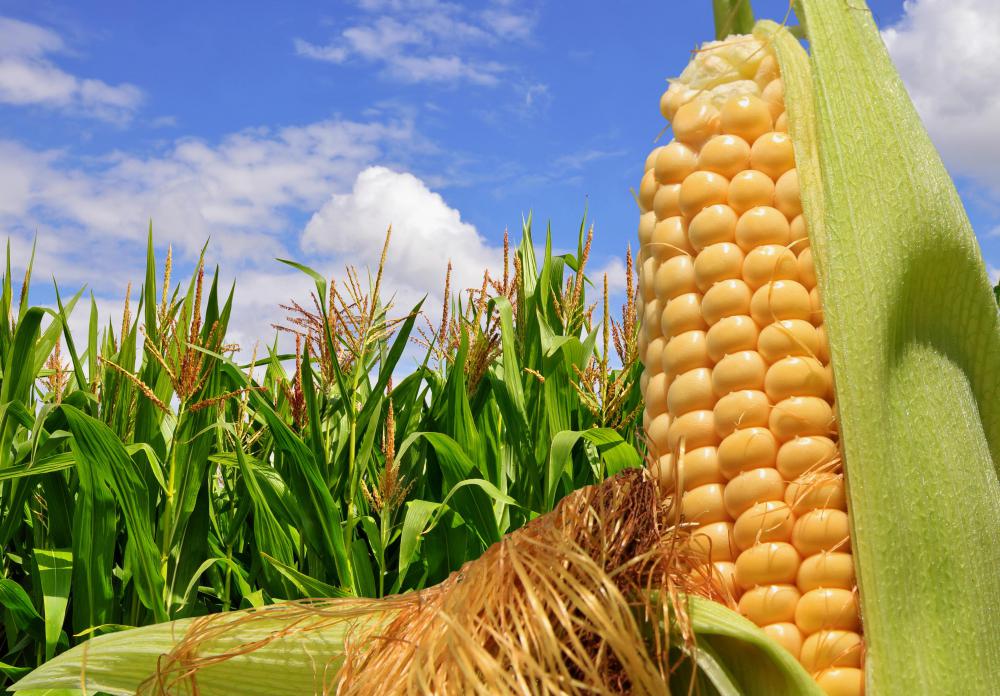
There was a time when manufacturers of processed foods used common table sugar, or sucrose, as their default sweetener. In the 1970s, however, Japanese scientists discovered a process which could convert cornstarch into an alternative sweetener called high fructose corn syrup. This type of sweetener contains 55% fructose and 45% glucose, which makes it virtually as sweet as sucrose or natural honey. When imported sugar became prohibitively expensive, many processed food and beverage manufacturers began using high fructose corn syrup exclusively.
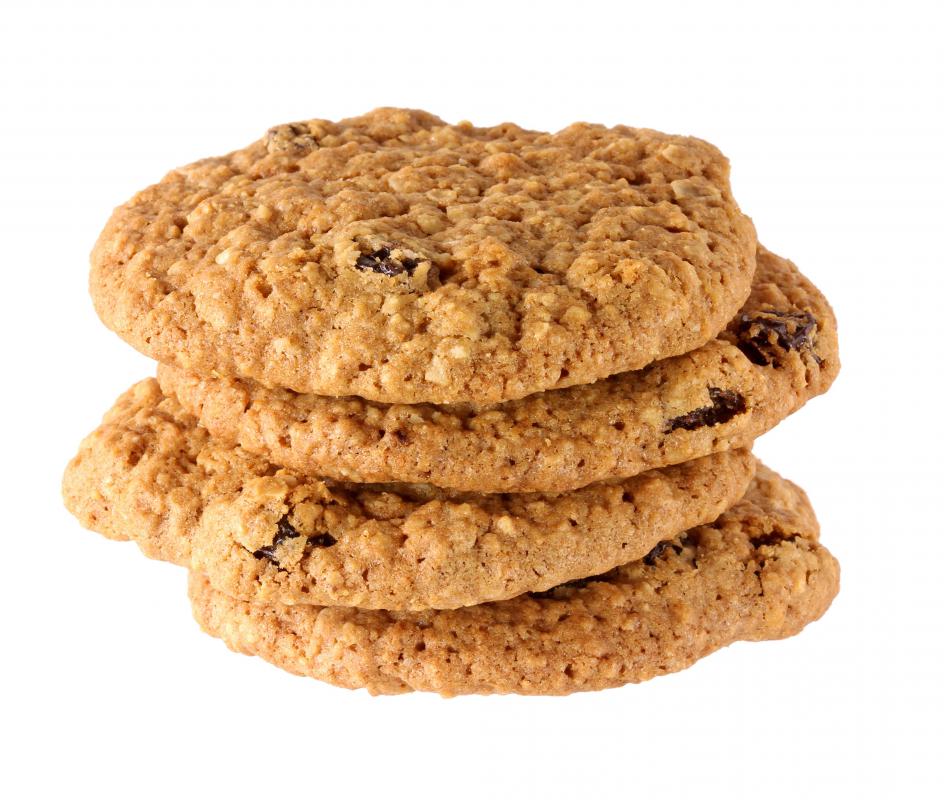
Today, high fructose corn syrup has prevalent use in the United States. It has replaced pure sugar as the main sweetener in most carbonated beverages, including Coca Cola and Pepsi products. It can also be found in cake mixes, cookies, sauces, breakfast cereals and commercial baked goods. Some companies still use pure cane sugar when feasible, but because the US government subsidizes much of the corn industry, high fructose corn syrup is often a cheaper alternative. In the United States, it's processed in specialized factories.

Production is a bit complex. Cornstarch originally contains very long chemical chains of pure glucose, which must first be broken down into shorter chains called polysaccharides. This is accomplished by adding an enzyme called alpha-amylase, which is derived from a bacteria.
Once the cornstarch has been broken down, a second enzyme called glucoamylase is added to the vat. Glucoamylase is derived from a fungus called Aspergillus. The continued fermentation converts the slurry into almost pure glucose.

The third processing step is the most expensive. An enzyme called glucose-isomerase is stored in tall columns and the glucose slurry is poured across the top of those columns. The enzyme converts the pure glucose into a combination of fructose and glucose, but not at the final percentages desired. A process called liquid chromatography essentially distills the syrup into 90% fructose. This concentrated fructose product is then blended back into the original mix to create the final 55% fructose, 45% glucose product also known as high fructose corn syrup.

Amazingly enough, all of this processing does not significantly add to the cost of production. Partially because of high tariffs placed on imported cane sugar, high fructose corn syrup is still cheaper than sugar and can be inexpensively shipped in tanker trucks.
Not everyone, however, is sold on the benefits of high fructose corn syrup. Some health experts express concern over the level of genetic modification and processing used to create the finished product. Even though consumers associate fructose with natural fruit sugars, the concentration of fructose found in high fructose corn syrup is not necessarily natural. Diabetics and others who must monitor their blood sugar levels may not get accurate glycemic readings after ingesting fructose. Others point out the association with processed foods and obesity.

There are those who say that products made exclusively with high fructose corn syrup do not taste as good as those made with pure cane sugar or other sweeteners. Chemically, it is exactly as sweet as cane sugar or honey, but a number of consumers seem to prefer the use of more natural sweeteners. If avoiding is an issue, one might want to consider shopping in ethnic grocery stores which import their products. Many Mexican food and beverage producers, for example, still use pure cane sugar in their products.
Michael Pollick
A regular DelightedCooking contributor, Michael enjoys doing research in order to satisfy his wide-ranging curiosity about a variety of arcane topics. Before becoming a professional writer, Michael worked as an English tutor, poet, voice-over artist, and DJ.
Learn more...
Michael Pollick
A regular DelightedCooking contributor, Michael enjoys doing research in order to satisfy his wide-ranging curiosity about a variety of arcane topics. Before becoming a professional writer, Michael worked as an English tutor, poet, voice-over artist, and DJ.
Learn more...AS FEATURED ON:
AS FEATURED ON:


-
![High fructose corn syrup.]() By: design56High fructose corn syrup.
By: design56High fructose corn syrup. -
![High fructose corn syrup.]() By: Wladimir TolstichHigh fructose corn syrup.
By: Wladimir TolstichHigh fructose corn syrup. -
![Cake mix containing high fructose corn syrup.]() By: HamsterManCake mix containing high fructose corn syrup.
By: HamsterManCake mix containing high fructose corn syrup. -
![High fructose corn syrup is often used in store-bought cookies.]() By: sassyphotosHigh fructose corn syrup is often used in store-bought cookies.
By: sassyphotosHigh fructose corn syrup is often used in store-bought cookies. -
![Much of the corn grown in the United States goes toward making high fructose corn syrup.]() By: smerekaMuch of the corn grown in the United States goes toward making high fructose corn syrup.
By: smerekaMuch of the corn grown in the United States goes toward making high fructose corn syrup. -
![Both Coke and Pepsi use high fructose corn syrup.]() By: RTimagesBoth Coke and Pepsi use high fructose corn syrup.
By: RTimagesBoth Coke and Pepsi use high fructose corn syrup.



Discussion Comments
High fructose corn syrup is probably used to control population growth. Babies ingest what the mother ingests. Remember the thalidomide babies!
I am allergic to hfc. I don't really have a problem with it. I have a problem with how hard the manufacturers are trying to hide their use of it. Every time some company hides it behind a different name I spend a week of my life puking my guts out. Just tell them to pick a name and make sure that all foods are appropriately labeled.
As a scientist, I am concerned that there is no discussion about how much enzyme contamination there in in any HFCS product. I can guarantee that it isn't zero.
The problem with an enzyme is that it acts like a catalyst until the body breaks it down. A catalyst is a chemical that causes chemical reactions to take place without itself being consumed in the process.
So a catalyst continues to cause reactions until another different chemical reaction takes place to destroy the catalyst. The questions one needs to ask in a chemical process used for food products are: how pure are the enzymes that are used, How much of the enzymes and their contaminants are in the final product, and how toxic is the product when considering long term exposure.
The long term exposure needs to think about these chemicals as drugs not as a direct poison. So do you want natural sugar or sugar created with complex chemicals? It's your body.
After almost 30 years of suffering with fibromyalgia and trying a myriad of medical and psychological treatments, I discovered that my problems result two to four days after ingestion of HFCS. Not at digestion, but when my metabolism is interrupted with the foreign substance and then attempts to rid the body of it through the intestine and pores.
No more pain, fatigue, IBS and confusion. The lull between ingestion and physical problems in the central nervous system, etc. have masked the true cause of fibromyalgia.
Fructose isn't a protein. Thanks for the reminder why it is becoming increasingly impossible to teach logic/common sense and basic chemistry to most members of this society. Considering many entities now have to find funding by prostituting themselves out to the companies who benefit from these substances being put into most foods, intelligent people would raise question the above article. Real science in America is a rarity.
The Clinical Journal of Nutrition did an investigation into high fructose corn syrup last December and could find no proof that it is any worse than sucrose. All the studies about high triglycerides and leptin resistance are a result of a diet high in fructose. Anon19795's post about a 50/50 ratio is interesting. I will have to look into it more, but I have heard that fructose can also be absorbed with other proteins.
High fructose corn syrup has an unfortunate name but it is one of the most amazing and successful food science products of our time.
Fructose malabsorption is a common dietary caused ailment. If the proportion of fructose to glucose exceeds a 50/50 ratio the excess fructose is not absorbed in the small intestine and travels to the large intestine causing painful symptoms similar to lactose intolerance or irritable bowel syndrome. It is estimated that 15-20% of the population may suffer from this at only moderate levels of fructose ingestion.
Although most high fructose corn syrup is the 55-45 fructose-glucose ratio, I think some products use the more concentrated 90-10 fructose-glucose ratio. I know high fructose corn syrup is unhealthy, but I wonder if the 90-10 ratio worse than the 55-45? Maybe it's the fructose that's worse than the glucose?
Post your comments