
At TheHealthBoard, we're committed to delivering accurate, trustworthy information. Our expert-authored content is rigorously fact-checked and sourced from credible authorities. Discover how we uphold the highest standards in providing you with reliable knowledge.
What is Heterotopic Ossification?
 Mary McMahon
Mary McMahon
Mary McMahon
The term "heterotopic ossification" refers to the growth of bone material in the soft tissues of the body, including muscles, tendons and fascia. The severity of the condition varies; some patients have only small nodules of excess bone that can be noted on X-rays, but others suffer severe and debilitating pain. The cause of this condition is not fully understood, and the most effective treatment for the condition is aggressive surgery, although some doctors have had success with radiation.
The word "heterotopic" essentially means "wrong place," and "ossification" refers to the formation of bone. Originally, heterotopic ossification was grouped under the heading "myositis ossificans," along with an assortment of similar conditions. This term is no longer widely used in reference to heterotopic ossification, because the problem is not confined to the muscles. A related condition, ossifying fibromyopathy, usually confines itself to the fibrous tissue of the body, and periarticular ossification can be found in the region around the joints.
Causes

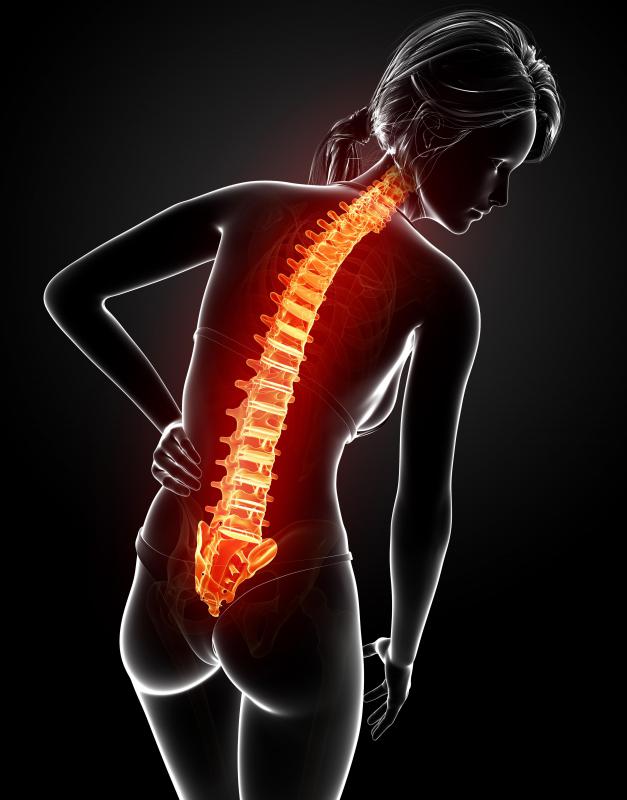
Research has suggested that heterotopic ossification might be linked to injuries to the spinal cord, along with neurological conditions. It appears that mixed signals in the body stimulate normally dormant osteoprogenitor cells, causing them to start growing bone. When these cells are in the soft tissues of the body, it results in heterotopic ossification. The condition often appears in the form of periarticular ossification, especially around the site of hip injuries.

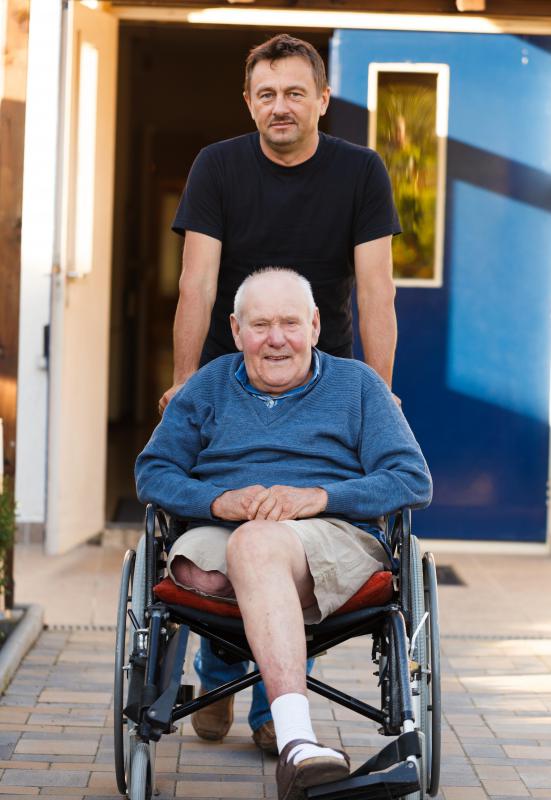
When heterotopic ossification is caused by trauma or an injury, it is known as heterotopic ossification traumatica, and a case with no known cause is called atraumatica. Heterotopic bone formation also has been known to strike amputees, especially those who have experienced violent or traumatic amputations. In amputees, the condition can cause serious problems, because surgeons might have to amputate part of the residual limb to treat the condition, thus making the amputation even more severe.
Treatment

Although it is not inherently painful, heterotopic ossification can become painful. Severe cases might restrict the patient's movement or cause internal bruising and injury. Typically, anti-inflammatories and pain medication will be prescribed to bring the rate of soft tissue swelling down and ease the pain that is associated with the condition. If it becomes clear that the condition is spreading, the patient might have to have surgery to remove the offending bone material, in the hopes of removing the rogue osteoprogenitor cells. In some cases, a surgeon might have to replace an entire joint, if the new bone formation has surrounded or damaged the joint too extensively.
Mary McMahon
Ever since she began contributing to the site several years ago, Mary has embraced the exciting challenge of being a TheHealthBoard researcher and writer. Mary has a liberal arts degree from Goddard College and spends her free time reading, cooking, and exploring the great outdoors.
Learn more...
Mary McMahon
Ever since she began contributing to the site several years ago, Mary has embraced the exciting challenge of being a TheHealthBoard researcher and writer. Mary has a liberal arts degree from Goddard College and spends her free time reading, cooking, and exploring the great outdoors.
Learn more...AS FEATURED ON:
AS FEATURED ON:


-
![Heterotopic bone formation has been known to occur in amputees.]() By: Barabas AttilaHeterotopic bone formation has been known to occur in amputees.
By: Barabas AttilaHeterotopic bone formation has been known to occur in amputees. -
![Those with the condition may be prescribed anti-inflammatories and pain medication.]() By: Monkey BusinessThose with the condition may be prescribed anti-inflammatories and pain medication.
By: Monkey BusinessThose with the condition may be prescribed anti-inflammatories and pain medication. -
![Research suggests a connection between heterotopic ossification and spinal cord injuries.]() By: pankajstock123Research suggests a connection between heterotopic ossification and spinal cord injuries.
By: pankajstock123Research suggests a connection between heterotopic ossification and spinal cord injuries. -
![Patients recovering from hip injuries may experience heterotopic ossification.]() By: Tyler OlsonPatients recovering from hip injuries may experience heterotopic ossification.
By: Tyler OlsonPatients recovering from hip injuries may experience heterotopic ossification.

Discussion Comments
Can anyone tell of bad experiences they encountered after removal of heterotopic bone?
Who would you recommend for my son, who is almost 20 years old, has paralysis from T10 down, and very limited mobility in his right hip?
In particular, he isn't able to do any standing activities, which are so important to paraplegics. We would like to know who is the best for this type of removal? We will travel for the best!
My son had a motocross accident last July which left him paralyzed from T10 down. He developed HO in his left hip while in rehab at RIC. They didn't seem to really treat it and said movement was key.
The first signs were his left knee was very warm to the touch, then he followed with a fever, but they tested for a UTI and that came back negative. After his whole leg became very swollen -- I mean very -- they took him for an Xray. One potential treatment is ibuprofen, but because he had a spinal fusion, they could not give him that as a treatment because it limits the fusion from healing.
We felt hopeless. We wanted him to get some Hyperbaric Chamber sessions, but they did not offer it there. We found a place that would allow him to use them (Swedish Covenant) and RIC said they could not allow him to leave the facility and go to another one while he was an inpatient. After the leg seemed to just get worse, and then his right one started getting swollen, being an exasperated mom, I finally insisted we be allowed to take him for a session or two.
We were able to go three times and it seemed to do wonders for the HO. It stopped the inflammation and progress in its tracks. Unfortunately, it doesn't reverse it, but it sure did seem to stop it from getting worse. We would have gone more, but I transferred him to KKI in Baltimore, where they seemed to better understand this secondary condition. I only wish we had taken him sooner to Swedish Covenant for the chamber treatments. It was well worth it. Unfortunately, he does suffer from limited mobility in his left hip because the HO was allowed to develop. He has none in his knee nor his right hip. We are sure this is because of the hyperbaric chamber sessions.
My 11 year old grandson has been diagnosed with ossification and I live in a town where the doctors say there is nothing that can be done and he will spend his life in a wheelchair.
Can anyone direct me to someone for help? He is a passive, sweet, kind child and very strong in his faith, but is having a hard time dealing with this news. He fractures bones at least once a week.
I had an HO removed by Dr. Dickson in Houston Texas. He is well known for doing these type of surgeries and I think he did an awesome job for me!
I just want to use my elbow.
@anon153407: I have HO and did extensive research to locate a doctor. I am dealing with it by doing PT and acupuncture. In the event I need surgery my choice would be a Dr Edwin SU HSS. He is best I found and you can research him on the web. I am at stage 4.
There is a treatment in the trial stage at the University of Pennsylvania, but just starting clinical trials. Good luck.
It is my understanding that an orthopedic oncologist would be the one to perform surgery. There are only about 125 in the US.
My sister has heterotrophic ossification of the hip. she is 50 years old. she is in a nursing home in the bronx new york and is on medicaid. she is having a very hard time finding an orthopedic surgeon willing to do this surgery. was your husband's surgery done in the new york city area? can you tell me the physician's name anyway. maybe he knows someone willing to do this surgery on her. thank you so much
My husband, at age 38, had a bout with diverticulitis in 1998. While in the hospital, (roughly 6-8 months) he developed/was diagnosed with heterotopic or heterotrophic ossification in his hip and elbows. Surgery was performed in both areas and he wore braces to support his elbows. After a year in the hospital he came home with limited mobility in both arms and walked with a cane.
Not one to sit and sulk he made himself useful around the house (cutting the yard, cleaning, cooking). These activities and more, became instinctive physical therapy and today he works for the US Post Office as a "walking" (no cane required) mail carrier. He has 90 percent range of motions with 100 percent capability to do what he was told her would never be able to do again.
Post your comments