
At WiseGEEK, we're committed to delivering accurate, trustworthy information. Our expert-authored content is rigorously fact-checked and sourced from credible authorities. Discover how we uphold the highest standards in providing you with reliable knowledge.
What is Herpes 1?
 Niki Foster
Niki Foster
Niki Foster
Herpes 1, also called oral herpes or HSV-1, is a common virus often responsible for sores on the mouth and face. Though it can often be avoided, there is no cure for this condition. The symptoms can be managed through a combination of topical and oral medications. Many people confuse HSV-1 with the similar herpes 2 virus, but the two differ in terms of where they tend to show up on the body. Additionally, having oral herpes may predispose a person for other diseases, including dementia.
Symptoms

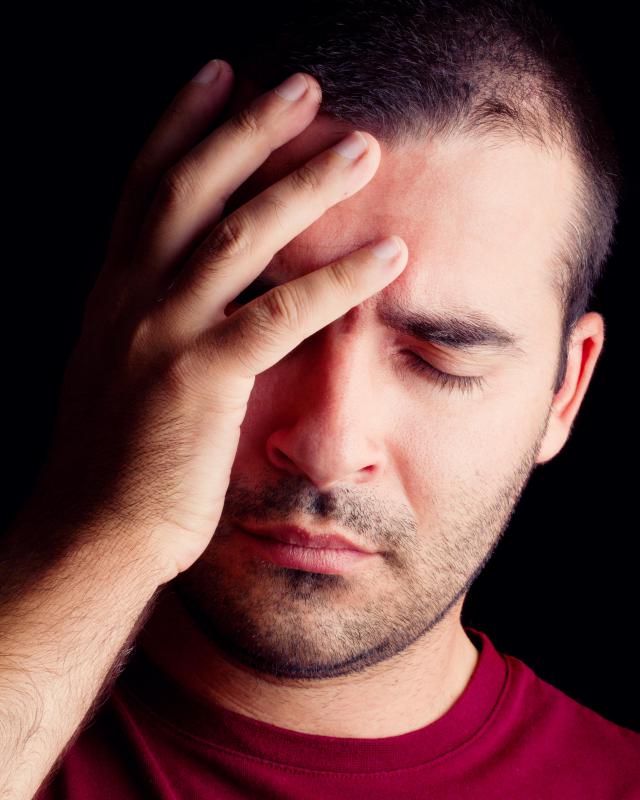
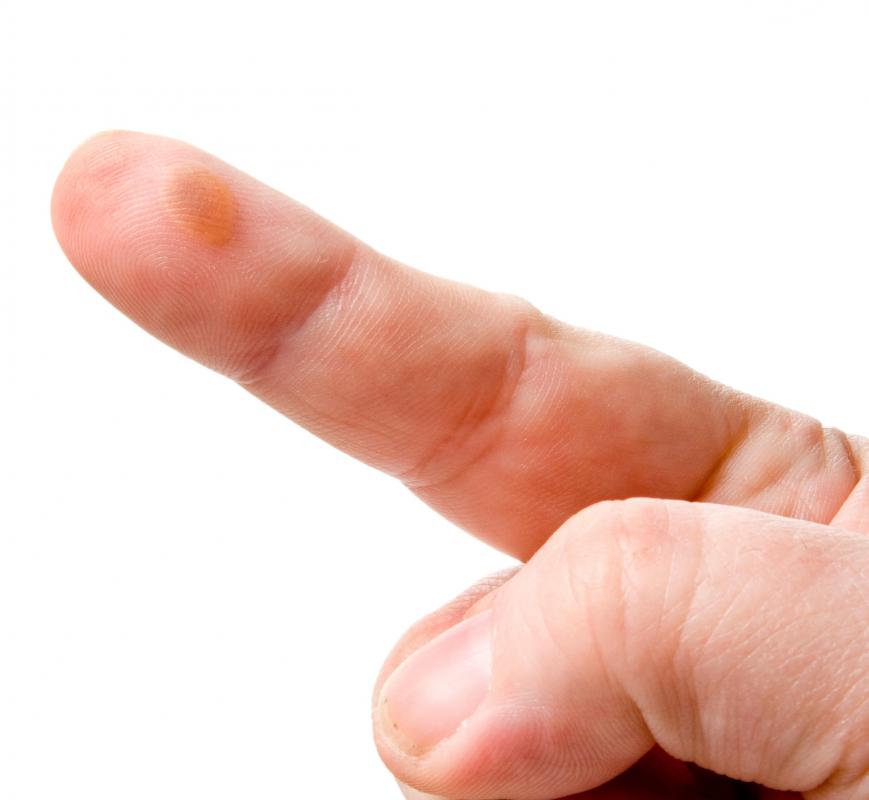
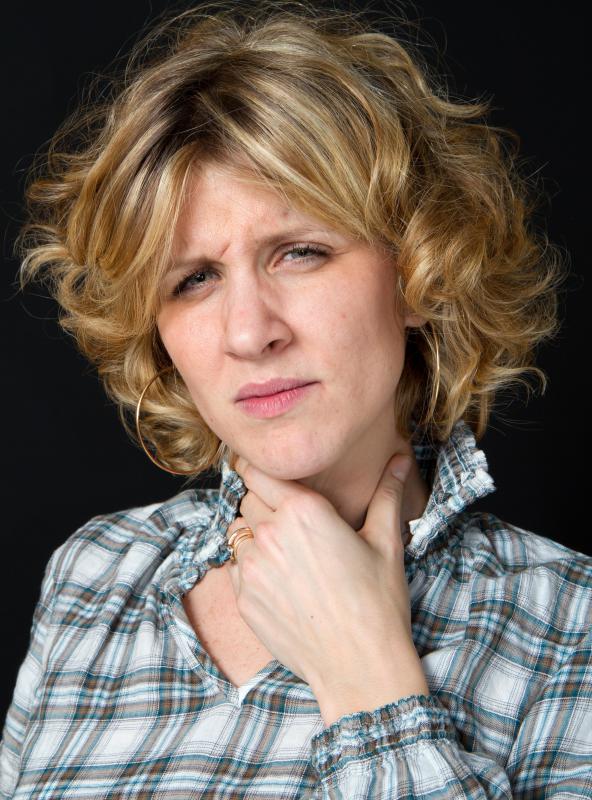
Symptoms of herpes 1 include painful, fluid-filled lesions called cold sores or fever blisters on the mucous membranes of the affected area, usually the lips and mouth. Less commonly, people get lesions on other parts of their face, including the eyes. The blisters are usually accompanied by pain, swelling, and inflammation in the affected area. Some people also get a fever, feel nauseous or dizzy, and have a sore throat, but this is much less common.
Spread and Prevalence

All types of herpes are usually spread through close physical interaction. Even when a carrier is not showing symptoms, he or she can still spread the virus to others, but transmission rates seem to increase when it is active. Though many people associate herpes with sex, it can also be spread through shared drug paraphernalia, or even childbirth. In such cases, it may be fatal to the child, because of babies' immature immune systems. Sharing personal products, like toothbrushes, can also spread herpes 1.

It's estimated over 60% of Americans carry some form of herpes by adolescence. Once a person contracts the virus they will always carry it, although symptoms won't always be present. Instead, the person will go through cycles of dormancy and outbreaks. The frequency of outbreaks depend on the person. Since dormant periods can last for years, many carriers are unaware that they have HSV-1.
Prevention and Treatment

Those with herpes 1 can take several measures to avoid spreading it to others, including washing their hands frequently with soap and warm water during an outbreak; avoiding close or sexual contact with other people when symptoms are present; and not sharing things that may have touched active areas. Having HSV-1 doesn't give a person complete immunity from HSV-2, but it can decrease the likelihood of getting it, since the immune system already recognizes one form of the virus, and can act more quickly to stop the other one. Many people get herpes 1 when they are very young, so adults with cold sores should be particularly careful when coming into contact with children.

Anyone showing symptoms should immediately consult a medical professional about the best course of action. There is no cure for herpes 1, though there are ways to avoid spreading it and to manage symptoms during outbreaks. Most people use a combination of topical and oral painkillers and antiviral medications.
Related Conditions
The herpes simplex virus comes in two forms, HSV-1 and HSV-2, also known as genital herpes. They are very similar strains of the same virus, and the primary difference is the region of the body each strain tends to affect. Though each can appear anywhere on the body; generally speaking, herpes 1 causes symptoms to appear on the face, lips, or mouth, while herpes 2 usually shows up on or around the genitals.

There is growing evidence that HSV-1 can contribute to many other diseases. Herpetic whitlow, an infection of the fingers, toes, or cuticles, is linked to it; as is keratitis, an infection of the eye. This condition has also been linked to Alzheimer's disease and senile dementia, particularly in people with a certain gene allele. The virus appears to weaken the nervous system, increasing the risk of developing these conditions.
Niki Foster
In addition to her role as a WiseGEEK editor, Niki enjoys educating herself about interesting and unusual topics in order to get ideas for her own articles. She is a graduate of UCLA, where she majored in Linguistics and Anthropology.
Learn more...
Niki Foster
In addition to her role as a WiseGEEK editor, Niki enjoys educating herself about interesting and unusual topics in order to get ideas for her own articles. She is a graduate of UCLA, where she majored in Linguistics and Anthropology.
Learn more...AS FEATURED ON:
AS FEATURED ON:









-
![Symptoms of herpes 1 may include fever and dizziness.]() By: Mauro RodriguesSymptoms of herpes 1 may include fever and dizziness.
By: Mauro RodriguesSymptoms of herpes 1 may include fever and dizziness. -
![Herpes 1 may be spread through shared drug paraphernalia.]() By: AtomazulHerpes 1 may be spread through shared drug paraphernalia.
By: AtomazulHerpes 1 may be spread through shared drug paraphernalia. -
![Herpes 1 may be spread through sexual contact.]() By: riluedaHerpes 1 may be spread through sexual contact.
By: riluedaHerpes 1 may be spread through sexual contact. -
![Individuals should wash their hands frequently with soap and warm water to prevent the spread of herpes 1.]() By: nitoIndividuals should wash their hands frequently with soap and warm water to prevent the spread of herpes 1.
By: nitoIndividuals should wash their hands frequently with soap and warm water to prevent the spread of herpes 1. -
![Antiviral medications may be prescribed to treat herpes 1.]() By: chikala01Antiviral medications may be prescribed to treat herpes 1.
By: chikala01Antiviral medications may be prescribed to treat herpes 1. -
![A blister caused by herpes 1.]() By: uwimagesA blister caused by herpes 1.
By: uwimagesA blister caused by herpes 1. -
![A herpetic whitlow.]() By: Rob ByronA herpetic whitlow.
By: Rob ByronA herpetic whitlow. -
![Cold sores are a symptom of herpes 1.]() By: uwimagesCold sores are a symptom of herpes 1.
By: uwimagesCold sores are a symptom of herpes 1. -
![Herpes blisters can cause a sore throat.]() By: LsantilliHerpes blisters can cause a sore throat.
By: LsantilliHerpes blisters can cause a sore throat. -
![When symptoms of herpes 1 are present, it's best to avoid sexual contact with other people.]() By: diego cervoWhen symptoms of herpes 1 are present, it's best to avoid sexual contact with other people.
By: diego cervoWhen symptoms of herpes 1 are present, it's best to avoid sexual contact with other people.





Discussion Comments
HSV 1 or 2 are not cankers! They are cold sores, completely different. Pay attention to what the article says.
@ellaesans - The issue you're asking about is addressed in the next to last paragraph of this article. In addition to what it says, I would like to say that testing is a key element as I have seen that all over the other herpes-related articles on this site. Without testing, you won't truly know what you do or do not have and what you will or will not contract or spread.
Close contact occurs everyday and sexual contact is shared with people whom we trust, so make sure you know all the details about someone's sexual prowess or past before you sleep with them. HSV 1 as genital herpes is not a fun thing to live with forever - even if it can be mildly suppressed.
Does anyone out there know if the herpes 1 symptoms the same as "regular" herpes symptoms? Is the herpes 1 transmission the same as other herpes transmissions as well?
@ChickenLover - You should definitely direct them to here in order for them to get a better grip on the herpes simplex virus 1 if you know what I mean. It says right in the very beginning of this article that the herpes 1 outbreaks (orofacially) are similar to canker sores, so I can definitely see where the confusion arises.
Many people are confused when it comes to the herpes simplex type 1 virus. I think the important thing to remember is that if you have (or think you have) it, to consult a doctor. I know a lot of people that get cold sores and/or canker sores and think it's herpes. Then they say they haven't had an "outbreak" in years, but they don't even have the herpes virus type 1!
Post your comments