
At WiseGEEK, we're committed to delivering accurate, trustworthy information. Our expert-authored content is rigorously fact-checked and sourced from credible authorities. Discover how we uphold the highest standards in providing you with reliable knowledge.
What is Hedonism?
Hedonism is a philosophical system that holds that people are motivated primarily by the production of pleasure and happiness and the avoidance of pain. A person chooses his or her actions on the basis of how much pleasure and pain the actions will foreseeably cause. The word's origin is in hēdonismos, the Greek word for "delight." In the discussion of this philosophy, pleasure and pain have broad meanings. Pleasure and pain refer, respectively, to all pleasurable or unpleasant feelings, experiences, states, things, properties, and events.
There are a few different types of this system. Motivational hedonism asserts that only pleasure and pain motivate people to do or to not do things. Normative hedonism, however, asserts that only pleasure and all types of pleasure have worth, while only pain and all types of pain have no worth. Egoistic hedonists believe that the happiness of the individual is paramount, while altruistic hedonists feel the happiness of all people is the most important.

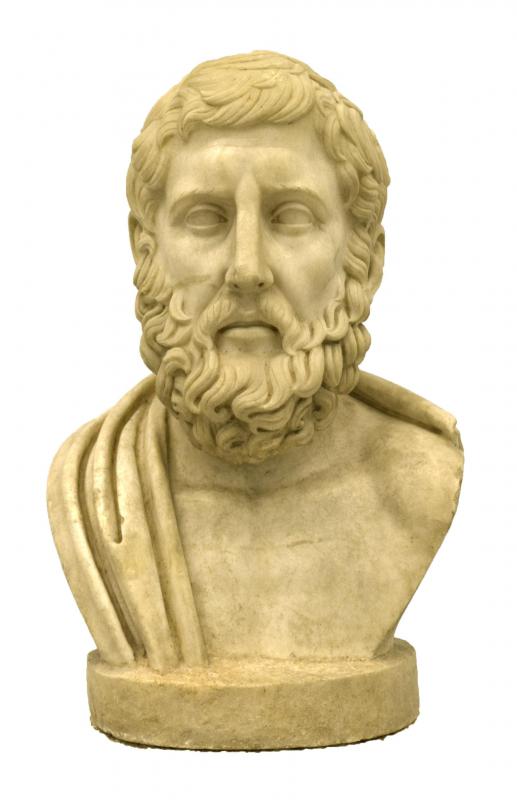
Various philosophers, such as Plato, Aristotle, Austin, Bain, Spencer, Bentham, Moore, Sidgwick, Mill, Broad, and Ross have made contributions to this philosophy, but the most influential were Aristippus and Epicurus. Hedonism originated with Aristippus of Cyrene, who believed that pleasure — which included physical pleasure, love, mental pleasure, moral happiness, and friendship — was the most important motivation for behavior. Aristippus also believed that long-term pleasures were more valuable than short-term ones. He was followed by Epicurus, who believed that mental and social pleasures were more important than physical pleasures. Epicurus also believed that pain and self-restraint had value by virtue of sometimes being necessary to health and also by providing even more pleasure through moderation.

Utilitarianism is a similar philosophy because it asserts that a person should choose his or her actions according to what is best for all people. In other words, a person should try to cause the most possible happiness for the most people possible. Most modern hedonists try to bring about pleasure, and they generally feel that the best way to do this is to make people more equal by providing more personal freedoms.
AS FEATURED ON:
AS FEATURED ON:









-
![The ancient philosopher Epicurus developed the most well known hedonistic philosophy.]() By: thirupugalThe ancient philosopher Epicurus developed the most well known hedonistic philosophy.
By: thirupugalThe ancient philosopher Epicurus developed the most well known hedonistic philosophy. -
![The pursuit of pleasure, both physical and mental, is the aim of a hedonist.]() By: apopsThe pursuit of pleasure, both physical and mental, is the aim of a hedonist.
By: apopsThe pursuit of pleasure, both physical and mental, is the aim of a hedonist. -
![Plato made contributions to Hedonism.]() By: DimitriosPlato made contributions to Hedonism.
By: DimitriosPlato made contributions to Hedonism. -
![Venetian Carnevale is a celebration of hedonism before Lent.]() By: MasterLuVenetian Carnevale is a celebration of hedonism before Lent.
By: MasterLuVenetian Carnevale is a celebration of hedonism before Lent. -
![Aristotle made contributions to hedonism.]() By: PanosAristotle made contributions to hedonism.
By: PanosAristotle made contributions to hedonism.



Discussion Comments
GiraffeEars is saying that the article's definition of hedonism is self-defeating. Completely avoiding pain decreases existing pleasures and prevents people from discovering new ones.
That makes sense, but a more practical definition of hedonism would be maximizing pleasure and minimizing pain. In other words figuring out how to get the most pleasure with the least necessary pain. That's how I try to live my life and when I'm successful I feel very happy. I don't get bored with pleasure.
You can experience high levels of pleasure with little risk and no deterioration if you're careful. But it takes time, money, and knowledge to do it right.
While we all enjoy pleasure in life, we have to realize that this philosophy is incredibly inconsistent. If you seek pleasure your entire life, you're going to come to what some have called the "hedonistic paradox." That is, if the hedonist fails to achieve the measure of pleasure that he seeks, he experiences frustration, which is painful. The more we seek pleasure and fail to achieve it, the more we bring pain into our lives.
On the other hand, if we achieve all of the pleasure that we want, we will become bored. Either way, we will never, never be satisfied.
There is also a cost to unrestrained pleasure seeking. For instance, if you overdose on drugs, you could find yourself in the hospital. If you drink yourself into oblivion, you will be nursing a hangover the next day. So, it is impossible to have some types of pleasure without experiencing pain.
A hedonistic slogan that we often hear in our modern society is, "if it feels good, then it must be right." However, we would all agree that if a serial killer gets sadistic pleasure out of torturing his victims, and this would be wrong. Just because it feels good to the killer does not mean that it is right. Also, if someone, a firefighter or police officer for instance, gives up his life in an act of self-sacrifice in order to save the life of another, I think that we would all agree that he did the right thing, even though it brought about a great deal of pain. Similarly, we honor soldiers who gave their lives in battle although they suffered a tremendous amount of pain.
I have to disagree with GiraffeEars. Too much pain, in other words, suffering or stress. is detrimental for the psyche and well-being for an individual. Also in your last paragraph, you mentioned that you seek risk taking, and this is another aspect of hedonistic tendency called adrenaline rush. In other words, your brain is conditioned to seek pleasure from pain which is purely sadistic.
@ GiraffeEars- I have never thought about hedonism beyond the resorts in Jamaica, but after reading this article and your post, I thought about the philosophy myself. I would have to agree with you on this one. I agree for a totally different reason though. I think that constantly seeking pleasurable things would make someone more of a risk taker. A purely hedonistic way of life could lead to dangerous situations as things that were once pleasurable become dull and thing that are taboo become pleasurable.
All I can think of when I analyze this philosophy is the movie Hostel. I think that a hedonistic lifestyle, especially amongst the mega rich who have accomplished everything, can definitely lead to urges that fall outside of societal norms. Just my thoughts. I would be curious to hear anyone else's opinions r ideas on philosophy.
I am no philosopher; in fact, I barely know anything about philosophy, but according to the article's definition of hedonism I have to disagree with the philosophy. I believe that you have to experience all of the painful moments of life to truly live. Those who only seek out the pleasurable moments in life are unwilling to take risks, so in my thinking; they are not truly enjoying their life. Additionally, I believe that only positive experiences would become dull after a while. You would have little to compare these experiences too, so you would tire of the monotony of life (or at least I would).
Maybe I am just a risk taker, or maybe the fact that I am an Aries makes me a look for excitement, but the hard work and pain that it takes to achieve something makes it that much more pleasurable to me. I enjoy pleasurable things, but I also enjoy the path to those things just as much.
Post your comments