
At WiseGEEK, we're committed to delivering accurate, trustworthy information. Our expert-authored content is rigorously fact-checked and sourced from credible authorities. Discover how we uphold the highest standards in providing you with reliable knowledge.
What is Gugulipid?
 Tricia Christensen
Tricia Christensen
Tricia Christensen
Gugulipid, or guggul, is a natural substance derived from the mukul myrrh tree. The mukul myrrh gives off a sticky resin, which is processed to obtain the extract. It has been used for thousands of years in Aryuvedic medicine to treat obesity and arthritis. Recently, herbalists have begun to recommend gugulipid not only for these conditions, but also to lower low density lipoprotein (LDL) forms of cholesterol and raise high density lipoprotein (HDL) levels. Herbalists and other practitioners of alternate medicine also claim it can prevent atherosclerosis, or hardening of the arteries, and reduce high levels of triglycerides.
There has been some clinical studies on gugulipid to investigate these claims. Several trials in India suggest a very small decrease in bad (LDL) levels of cholesterol, although not equal to pharmaceutical preparations made to treat the same. In the largest study, gugulipid seemed to slightly increase levels of LDL, making the claims of reducing cholesterol suspect. There is some evidence from these studies that it decreases triglycerides by about 12%. Since medications that decrease cholesterol do not usually decrease triglycerides, there may be some value in using the extract to address high triglyceride levels.

Studies in mice found that gugulipid may have anti-diabetic properties. One further study suggests that it may also reduce acne. These studies were small and need to be substantiated with larger clinical trials. Unfortunately, this research is often relied upon to market gugulipid and tend to exaggerate the nature of clinical trials and their results.

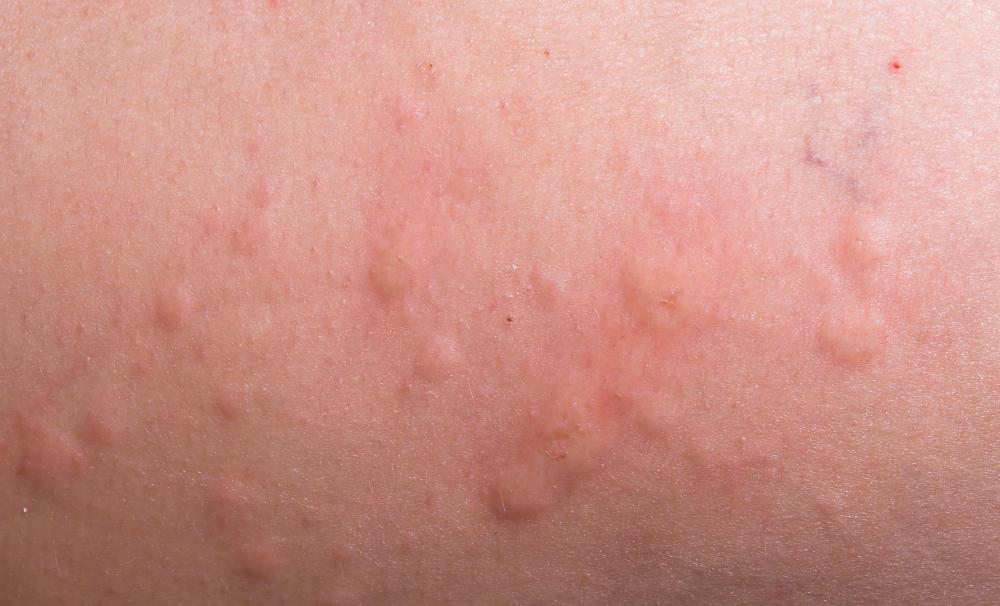
Gugulipid has not been evaluated for safety in pregnant or nursing women, and such women should probably avoid it. Some people have mild to moderate stomach complaints, such as pain, flatulence, and diarrhea, when using it. Periodically, those who use gugulipid develop allergic skin rashes. It is concerning that some websites marketing this product not only inflate evidence, but also report that there are no side effects.
The recommended dosage of gugulipid is 1,500 mg daily. Tablets and capsules are generally 500 mg, so a 60-tablet bottle does not constitute a full month’s supply.

When one is considering adding any type of herbal preparation to one’s health regimen, consulting a medical professional is an excellent course of action. Some herbs can compete with some medications, creating health problems. Some healthcare providers are more receptive to using alternative medicines than others. If one is inclined to use alternative medicines or therapies, medical professionals who use complementary medicine, the combination of traditional medicine and alternative medicine, may be the best choice for consultation on this or any other herbal product.
Tricia Christensen
Tricia has a Literature degree from Sonoma State University and has been a frequent WiseGEEK contributor for many years. She is especially passionate about reading and writing, although her other interests include medicine, art, film, history, politics, ethics, and religion. Tricia lives in Northern California and is currently working on her first novel.
Learn more...
Tricia Christensen
Tricia has a Literature degree from Sonoma State University and has been a frequent WiseGEEK contributor for many years. She is especially passionate about reading and writing, although her other interests include medicine, art, film, history, politics, ethics, and religion. Tricia lives in Northern California and is currently working on her first novel.
Learn more...AS FEATURED ON:
AS FEATURED ON:









-
![Gugulipid might prove to be a treatment for acne.]() By: Ocskay BenceGugulipid might prove to be a treatment for acne.
By: Ocskay BenceGugulipid might prove to be a treatment for acne. -
![Diabetics should speak with a physician before taking gugulipid or any other herbal supplement.]() By: dalaprodDiabetics should speak with a physician before taking gugulipid or any other herbal supplement.
By: dalaprodDiabetics should speak with a physician before taking gugulipid or any other herbal supplement. -
![Studies in mice found that gugulipid may have anti-diabetic properties.]() By: lculigStudies in mice found that gugulipid may have anti-diabetic properties.
By: lculigStudies in mice found that gugulipid may have anti-diabetic properties. -
![Pregnant women should avoid gugulipid.]() By: pedrosalaPregnant women should avoid gugulipid.
By: pedrosalaPregnant women should avoid gugulipid. -
![Herbalists have begun to recommend gugulipid as a way to lower LDL and raise HDL.]() By: blueringmediaHerbalists have begun to recommend gugulipid as a way to lower LDL and raise HDL.
By: blueringmediaHerbalists have begun to recommend gugulipid as a way to lower LDL and raise HDL. -
![People who use gugulipid may develop allergic skin rashes.]() By: Rob ByronPeople who use gugulipid may develop allergic skin rashes.
By: Rob ByronPeople who use gugulipid may develop allergic skin rashes. -
![Gugulipid has been used in Aryuvedic medicine to treat obesity.]() By: ollyGugulipid has been used in Aryuvedic medicine to treat obesity.
By: ollyGugulipid has been used in Aryuvedic medicine to treat obesity.



Discussion Comments
Funny the line that people who market gugulipid exaggerate the results of the clinical studies. Pharmaceutical companies would never do that, right? Coincidentally, prescription cholesterol meds (particularly Merck) often cause rashes, as well.
Having said all this, it is extremely important that harmful toxins are not in any herbal remedies, therefore, always buy from reputable companies with proven records that deal in certified organic and pure products.
Guggul activates the thyroid. Do a search on guggul and thyroid; many people including myself have found it significantly improves mild hypothyroid conditions. Several people commented here about neck rashes. As part of any wellness regime, you must simultaneously detox. (Pectasol Chelation Complex works well for me.)
Toxins tend to accumulate in the endocrine system. My guess is that the rashes you were seeing, esp in the neck area, were evidence of the thyroid trying to detox without a support system (i.e. a binder such as PCC) to carry out the toxins fast enough.
Guggul is a very powerful Ayurvedic medicine and does not act only on lipid levels. It's been marketed to westerners for the latter, but this is a simplification.
After a two weeks of taking Gugulipid, the only side effect I was aware of was a slight increase of fatigue.
I also am experiencing a rash from taking it. Also in the neck area. I have only taken it for two days. I have ceased taking it immediately and am grateful that I was looking around on this website. I had forgotten why I bought it, but once the rash developed, I immediately knew it was from this gugulipid supplement.
I also got a rash from gugulipid. I have only taken it about three days and this morning my face and neck were swollen and had a rash. I stopped taking it since I think that's where I got it, but I would like to try again. Is it possible if I wait a few days and try again, it might work?
empanadas, Like most herbs, if it's not going to cause weight loss without work, the general public is literally -not- interested. However, this herb has studies that show it's a great contender for lowering cholesterol among other things. As far as FDA approval, I have found nothing that neither approves or disproves the supplements use, however, all of the things I have found on it are positive. Believe me, as soon as I read this article and saw the word "obesity" associated with it, I looked it up!
leiliahrune - do you know if the herb is used often by people. I mean, if it's so great for obesity and cholesterol and all that, how come it's not some miracle drug sitting in everyone's cabinet? Is it FDA approved?
If you're looking for a Gugulipid supplement, it's important to choose one that only uses the standardized extract. This type of supplement has all the harmful and toxic substances removed from the actual herb that you will be taking. Failing to extract all the toxic resin from the herb can be very harmful.
i have expecienced neck rash which came suddenly and covers an area about the size of an orange. itchy and turned to scaley and dry
Post your comments