
At TheHealthBoard, we're committed to delivering accurate, trustworthy information. Our expert-authored content is rigorously fact-checked and sourced from credible authorities. Discover how we uphold the highest standards in providing you with reliable knowledge.
What is Graviola?
 Tricia Christensen
Tricia Christensen
Tricia Christensen
Graviola, also called Brazilian pawpaw, soursop, and guanaba, in addition to numerous other names, refers to a particular tree or its fruit. The fruit is green and heart shaped, and about six to eight inches (15.24-20.32 cm) in diameter. The tree is found in South America and on numerous tropical islands and grows best in rainforest climates.
The pulp of the fruit is popular in juices, sherbets, and smoothies, and exhibits notes of tangy and sweet. It can also be peeled and eaten, though some find the taste alone too sour. As a fruit, graviola may not prove exceptional, but it certainly has an extended history of use in ancient and now modern herbal remedies.

In early times, the leaves of this tree were used for tea to reduce swelling of the mucus membranes (catarrh) or to treat liver disease. The black seeds were often crushed and used as a vermifuge. All parts of the tree might be ground and used as a sedative or as an anti-convulsant. The fruit was used to reduce joint pain, to treat heart conditions, as a sedative, to induce labor, or to reduce coughing or flu symptoms.

In modern times, graviola has proven interesting to medical researchers because it contains chemicals called annonaceous acetogenins. These chemicals have been shown to have cytotoxic properties; in other words, they tend to attack cancer cells. Also these compounds may be a helpful insecticide, and several prominent universities like Purdue have patented their studies and work with graviola components, since they may later prove so useful.

Though the Food and Drug Administration may ultimately patent graviola or approve it as a prescribed medication for cancer treatment, studies are still early, and reveal some possible alarming side effects. Many websites on the subject, especially those selling the product as a nutritional supplement, say it has no side effects, as compared to cancer drugs. Certainly it may not cause hair loss, but known side effects exist and should be weighed carefully.

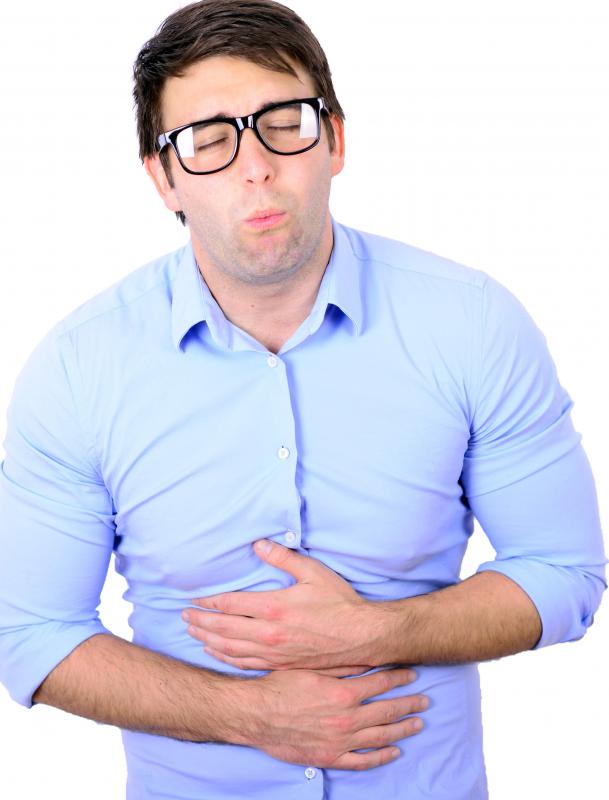
First, graviola can be an emetic. A large dose may make some people throw up, which makes it not that much different than standard chemotherapy. Second, it has a known depressant effect on the cardiovascular system and should be avoided by people with heart conditions or people taking medications for blood pressure or cardiac problems. Third, it can stimulate uterine contractions and should never be taken by pregnant women.
Another side effect is potential interaction with antidepressants. Graviola may also have antimicrobial properties, which kill off beneficial bacterial on the skin, in the vagina and in the gut. Long-term use can lead to yeast and fungal infections. The chemicals present in the fruit have also been found present in people with atypical Parkinson’s disease, though no cause and effect relationship has been firmly established.
While graviola retailers may claim the fruit and plant parts are completely safe in therapeutic dosing, the Food and Drug Administration have not yet evaluated these statements, since this product is viewed as a nutritional supplement. While the plant components have all been used in native medicines, it remains questionable whether it is actually beneficial. At the very least, it should always be used under the supervision of a physician.
Tricia Christensen
Tricia has a Literature degree from Sonoma State University and has been a frequent TheHealthBoard contributor for many years. She is especially passionate about reading and writing, although her other interests include medicine, art, film, history, politics, ethics, and religion. Tricia lives in Northern California and is currently working on her first novel.
Learn more...
Tricia Christensen
Tricia has a Literature degree from Sonoma State University and has been a frequent TheHealthBoard contributor for many years. She is especially passionate about reading and writing, although her other interests include medicine, art, film, history, politics, ethics, and religion. Tricia lives in Northern California and is currently working on her first novel.
Learn more...AS FEATURED ON:
AS FEATURED ON:


-
![The South American fruit graviola is used by some individuals in a medicinal fashion.]() By: paulmzThe South American fruit graviola is used by some individuals in a medicinal fashion.
By: paulmzThe South American fruit graviola is used by some individuals in a medicinal fashion. -
![People who take graviola should be aware of its potential interaction with some antidepressants.]() By: WynterPeople who take graviola should be aware of its potential interaction with some antidepressants.
By: WynterPeople who take graviola should be aware of its potential interaction with some antidepressants. -
![A large dose of graviola may make some people vomit.]() By: Aleksandar MijatovicA large dose of graviola may make some people vomit.
By: Aleksandar MijatovicA large dose of graviola may make some people vomit. -
![Parts of the Brazilian pawpaw have been used as a sedative.]() By: Eléonore HParts of the Brazilian pawpaw have been used as a sedative.
By: Eléonore HParts of the Brazilian pawpaw have been used as a sedative.



Discussion Comments
@Anon13464: Check with your doctor.
If you are taking a blood thinner, like coumadin, you just need to stop taking it. Everything that is good for you interacts with it. Eat what is good for you. Let the black spots all over your skin educate you. Let your common sense say, "This is killing me!"
Coumadin is a derivative of sweet clover. Back in the 50's, the University of Wisconsin Alumni Research Foundation discovered several things. They found that it was a blood thinner, so much so that the rats that were eating the clover in cattle feed were bleeding to death due to such thin blood. It has been used for years as rat and rodent poison. The rodents are becoming immune to it so we feed it to humans.
By the by, Warfarin takes its name from the Wisconsin Alumni Research Foundation. Add -rin to it and you have WARFArin. Now do you think a foundation would be happy if you stop funding them for something you can get in your backyard?
Can I take graviola if I take nadolol for hypertension? I have mitral valve prolapse.
I am from the island of Jamaica and grew up drinking soursop juice. It was just a juice that was a natural part of our diet. Many people made tea from the freshly picked leaves. The tea is said to be calming to the nerves.
I have never met or known anyone who had nausea or vomiting from eating or drinking soursop. I guess you could have that reaction if you are allergic to soursop or to natural foods. Many people will sometimes gag on foods that are new to their palate. I am thinking that this must be what the writer is talking about.
Doctors play a very important role in our society, but be aware that a part of a doctor's job is to prescribe medicine. Soursop juice is not medicine; it is a super food created by God to help to improve the immune system that God gave us. If our immune system is working as it should, it fights diseases. How long has it taken us (earth's most intelligent beings) to discover that we have an immune system and that its purpose is to fight diseases? We (doctors included) are humans, and we do not know everything. The more we explore the natural gifts of God, the more we see God's goodness and his glory. If we improve our immune system we will be a healthier people.
Medicine plays an important role in our lives when we are not well, however, we do not get ill because we are deficient in medicine. We get ill because our immune system is compromised. Wake up everyone, and choose your doctors carefully. Doctors know the science of medicine and health, but if we as patients demand a level of care that is gentle on our system, more doctors would be willing to integrate the natural gifts of God and use medicine only when absolutely necessary.
I am very thankful for doctors who are real doctors (having a genuine interest in helping patients to get healthy in a way that is least harmful to our bodies) however, be aware also that doctors get perks from pharmaceutical companies to push their products so integrity is sometimes compromised.
Doctors are generally very busy (long shifts) and do not necessarily have the time to investigate something that may be helpful you. Being busy, it is definitely easier for a doctor to stick to protocol. All the best to those of you who are battling cancer. Exercise often, laugh a lot, be thankful, drink water (some say eight glasses per day, and others say half your body weight in ounces), get restful sleep and last but in no way least, develop or improve your relationship with God because only in Him you will find the peace that passes understanding.
I find the statement about graviola being an emetic and not much different than chemotherapy to be an obvious attempt to lend credibility to chemotherapy over natural means of healing.
I have had chemotherapy, and the constant stomach pain/heartburn and feelings of wanting to throw up could not be remotely compared to throwing up from one overdose of this fruit. I personally could not stand the pain and health damaging effects of chemotherapy, therefore I stopped after just one of the six treatments they had set for me, and chose instead to use natural methods, prayer and faith in my Lord Jesus Christ.
That was in the summer of 2008. In the fall of 2009 I was tested again and no cancer was found. The doctor said that whatever I was doing seemed to be working fine. Overall, I have always been in good health, and the worst I ever felt was when the doctors tried to help me with chemotherapy. I will say this though: I am very thankful for doctors and consider them to be a blessing to many people. I also understand that one specific treatment is not the best treatment for all. Every case needs to be handled independently. That is why I did what I did, since I felt the doctors did not give me the best advice.
Each person needs to follow their own heart when it comes to care and cure. Do your research and pray.
My husband and I were led by the Lord to start taking liquid chlorophyll about a month ago. Please look up is chlorophyll good for you and read for yourselves the awesome things this drink does for the human body! Since taking it, I went to the doctor, they took my blood pressure and are shocked to see how wonderful it is: 113 over 68. My heart palpitations are gone, we have slimmed down because the internal swelling in our bodies is all but gone. There are many other things that I could say but I would be here too long, but if you have health concerns, please give this a try too, along with this soursop. God bless your endeavors in your journey.
I have not heard of this sour sop before today, but it sounds promising.
How can I get my dearest friend's husband to try this after he said he is done trying different things? He has late fourth stage prostate cancer. We (me, my husband, my friend and her husband) are all Christians. He is now waiting on the Lord and doesn't want to try anything else. Where can you get this fruit or the drink or the tea?
@anon148557, Post 31: Once the fruit harvest takes place, some producers collect the leaves and dry them in bunches in the shade. Others collect them and sell them to labs that later dry them in ovens. Once dried, the leaves are crushed and filled into tea bags or milled into a green powder to make tablets.
Tea is made of dried leaves. Nevertheless, I assume that if you take the leaves raw (fresh) you might get other results. We must remember that heat destroys some of the active components of the leaf. However it may release others.
My friend was diagnosed stage 4 of breast cancer last june 2011. She had chemotherapy. While in the process of healing and waiting to grow her hair back, she's eating graviola fruit every day, and she drinks one glass of boiled water from the leaves. Last month, february 2012, she went back to her doctor to check if her cancer had spread out, and the result is triple negative cancer free. So for those who want to take graviola, take it now with no hesitation. It's a fruit with no after effects.
where can you purchase graviola juice?
It makes me laugh when I read: talk to you doctor before using a natural treatment. When I talk to my doctor about natural medicine I quickly find out that I know more than he does. Go figure with doctors.
What good is asking your physician if they don't know jack about natural remedies/healing?
The lack of clinical double blind studies is because pharmaceutical companies usually cannot patent natural remedies so won't fund the studies.
All the money that is donated towards cancer research every year and still these studies don't get funded. It just goes to show you that these companies are in it for the money, and there is much more money in "treating" the disease then there is in curing it!
what are the procedures for making graviola tea?
and is it dry or fresh leaves and barks?
Callender said, "People be wise, when God put fruits, herbs etc. on earth did he say ask the doctor before you eat it? He said eat so that you may *live.*
Be wise with your health because others are being wise with your wealth!"
Do you trust the nature of God or will you be shouted down by the fears of greedy opportunists who have infiltrated and prostituted health and fitness issues? Trust in the Lord with all your heart, and listen to your inner person where God resides. "Experts" have proven to be lethal since they are constantly changing their conclusions about food and drugs.
I am 3/4 way through chemo for breast cancer with radiotherapy to follow. I have bought graviola tablets. Are they safe to take during my treatment?
Anytime you take herbal products such as graviola, ganoderma, etc. when you're on blood thinners or any medication, realize that if you take the herb to help your illness and it works, you'll have to lower or stop your meds.
we all have to remember that in the earlier times, treatments on humans and other mammals were from trees, grasses, even fungus thus, whatever soursop has, could be true. as to cancer treatment, we pray that pharmaceuticals who has the technology, equipments and scientists should find it in their hearts to pay back to us poor people.
if you think graviola is going to help you, then take it. Take it with whatever else you are currently taking.
In the end, your most important cure is whether you believe you have any control over your illness, and whether you intend to beat it.
If graviola helps you focus your innate healing abilities, the herb itself is not going to do much harm to you and is in fact likely to do good.
I grew up in the West Indies and drank soursop almost as much as I drank water. In fact it is a drink that we had especially on Sundays, and no one had any side effects. This is just one way to make those who do not know about this fruit to not use it or to use very little of it. As for those who are pregnant, this was a great crave, and not one baby was miscarried.
Could you please send me information that shows
Disease: Herbal Cure in a simple way. Thanks.
What I have read about paw paw says it and thyroid medications will cancel one another out. Since the two are related or similar, is this also true with graviola ?
I find it interesting reading the comments above. I am from Jamaica and I have consumed massive amounts of soursop as well. I ate it like how you would eat mangoes or oranges. For me (us) it's just another fruit and so I find it hard to see it be harmful in anyway. If it was, I would have been dead long ago. -- Sprig
I would personally like to know what was used for the high blood pressure. The current medication prescribed by my doctor is giving me arrhythmias. I only take a half of the tablet but I know that I need to eliminate the prescribed poison. I also have diverticulitis and diabetes for which I am using cinnamon and another natural medicine.
They had me in NIH next to Bethesda Naval Hospital outside of Washington D.C. They wanted cut out part of the brain that was causing the grand mal seizures!
I got rid of these spells. I got rid of asthma. I got rid of stomach ulcers and prostate problems and high blood pressure. I solved all of these problems with natural medicine. Cayenne for circulation, the heart and ulcers. It makes all natural medicines work better.
A girl from Peru said her uncle was close to death and he drank a tea from the inner bark of the pau d arco tree and it cured him of cancer. Stand up for your health and life, people in America.
The pharmaceutical companies, the FDA and American Medical Association all want to dope you up on some prescriptions that don't work, and with side effects. Since Adam and Eve, we have had natural medicine from God to cure us.
I am a registered nurse and midwife, and I am from Jamaica. My entire family has been consuming sour sap for all our lives until we came to US where it is a little bit harder to find the fresh unadulterated drink. I am, however, trying to get one.
My mother and father drank it every day. He passed at 93, She at 96. Go figure. It is used for food, and as tea for urological problems such as bed wetting or frequency. My mother thought it worked on the kidneys in some way. Makes sense!
I know of someone who is end stage cancer with mets, who reports to be feeling much better since he started drinking the leaves and bark. Personally I would make my own decision regarding this. Which doctor do you think is going to tell you to to use this fruit?
They would lose their medical license. Do what you feel in your heart is best for you. My husband and brother used a natural substance when diagnosed with cancer and never used chemo and its going on 25 years now. The decision is yours -- it is your life after all.
If you plan to use the natural remedies then reduce the chemicals the drug companies and the doctors tell you to take.
Do not stop the drugs immediately. Take more natural, less unnatural and you will do better. Don't ask the doctor, ask yourself - what 'feels' right.
I would like to try this graviola treatment for my grandfather, who has colon cancer. I bought some pills that contain the powder from the leaves. Is this form beneficial, or would the actual fruit be better? I am having a lot of trouble finding the fruit.
How much is this graviola herb effective in fourth stage esophagus cancer? Person is on gefitinib oral tablet.
I live in Jamaica and have eaten and drank (sour-Sop) all my life with absolutely no side effects. as a matter of fact I have some of the juice right now in my refrigerator. I also know of children who had a bed-wetting problem who were given the 'heart' to eat and stopped wetting their bed. I hope our authorities explore the possibilities of us making some good monies for our country from this.
Smaller countries like my native Jamaica should probably see this plant as a possible help in this financial crisis: the trees abound here and our farmers could triple that number in a jiffy then we can mount a massive ad. campaign on the plant and its benefits then export to the world!
*People!* Let's face it, money comes like oxygen, you must have it to survive in this world now. You need money for everything, even to put a website up telling you how good sour-sop is, then adding side effects to scare you from using natural cures. The money is in the problem *not the solution!*
I grew up in a tropical country where we had graviola (sour-sop) almost every day in all forms eg. juice, ice cream or just sitting out relaxing and sucking on the fruit pulp and I have never seen or heard of anyone getting side effects from the fruit. Those stories are to scare people from using natural stuff so the synthetic will sell which may help and give other side effects so another synthetic thing will sell and so on and so on until...you know what.
People be wise, when God put fruits, herbs etc. on earth did he say ask the doctor before you eat it? He said eat so that you may *live.*
*Be wise with your health because others are being wise with your wealth!*
I have known and eaten this fruit since childhood. We knew it as Soursop in the island. I consumed massive amounts of it and have never had any side effects. If it controls blood pressure, then it's reasonable to expect that if one takes it along with prescribed medication for that condition, then your B/P would decrease. Everything requires prudence.
I have lived in the islands all my life and soursop has been taken in all forms: drink, ice cream, tea with the leaves (to stop babies from vomiting and to help them sleep)and eat the fruit as it is. We have not had side effects no matter the amount eaten. Maybe the labs need to look at the testing supplies and environment.
i grew up in a tropical country where i had graviola juice all the time, especially on sundays. i've never seen or heard of anyone suffering from side effects. where are these now-a-days side effects coming from? are these made up stories to get people not to use natural stuff?
I agree with the gentleman before...growing up on an island, Soursop drink was a staple. I think the leaves were also used for some medicinal purpose although I don't remember getting any myself.
Soursop drink and soursop ice cream are favorites!!
I don't know about side effects. I have lived on an island all my life (40+) and have been eating the fruit and drinking the tea. Maybe one should say when you extract certain chemicals to use, you have to be careful of the dosage etc. Please distinguish between the use of the chemical and the use of the fruit...
Valm
My doctor has never heard of Graviola. How can I find out if it conflicts with Coumadin?
I had a radical prostectomy in Feb 2004, underwent 37 radiation treatments followed by the last 3 years of either lupron or trelstar. With the PSA beginning to climb from 1.5 in April of 2008 up to 6.1 in July, I was started on Casodex along with continued trelstar injections. This combination has not worked, and just recently, my PSA went from 10.1 in Sept, to 10.8 in Oct. I had a bone scan in August that came back clear. And to be honest, I am at my personal ropes end, not knowing what to expect. In Sept, I was referred to an oncologist who says that the next thing will be a prostascan to hopefully see if it can be determined where the cancer cells are located. But until the PSA reaches a high enough number, my next scheduled appointment is in January of 2009. If they do see something in the prostascan, then it will probably result in chemotherapy. Any advice with this situation would be appreciated. Ex: Is it advisable to add this Graviola treatment to my current treatment? ANXIOUS
To anon13464-
Though I could not find specific reference to graviola and coumadin, I can give you some general advice on coumadin/warfarin and taking any kind of herbal, prescription or over the counter medication. Coumadin is one of those medications that almost ALWAYS needs to be checked when you plan to take anything else. Even slight modifications in your diet can change how much coumadin is absorbed. I would NOT take graviola until you clear this with a physician, preferably a cardiologist if you are on coumadin. Graviola should also be taken with care if you are using any medications for high blood pressure, since combined, hypertension meds and graviola could result in blood pressure that is too low. Some herbal formulas are great, but given the lack of clinical double blind studies on most, it is very important to talk to a doctor before beginning any of them, especially if you have other health conditions, are pregnant, plan to become pregnant, are intending to give herbs to children, or are on any medications.
can you take graviola if you are taking a blood thinner like coumadin?
Post your comments