
At WiseGEEK, we're committed to delivering accurate, trustworthy information. Our expert-authored content is rigorously fact-checked and sourced from credible authorities. Discover how we uphold the highest standards in providing you with reliable knowledge.
What is Grape Seed Extract?
Grape seed, or Vitis vinifera contains many health-promoting compounds, ranging from wrinkle reduction to pain relief. Grape seed extract can be applied topically or taken internally, and is the best known source of antioxidants available.
Flavonoids, specifically oligomeric procyanidins (OPCs), are present in grape seed extract, and provide extraordinary amounts of antioxidant protection. OPCs help prevent and repair capillary damage, and contains up to 50 times more protection against oxidants than vitamin E and vitamin C. These OPCs are similar to the compound pycnogenol in pine bark, and are sometimes mistakenly listed as pycnogenol in lists of ingredients.

This extract is thought to help with some circulatory disorders, such as varicose veins, diabetic retinopathy, chronic venous insufficiency, and poor circulation. It works by promoting circulation and protecting against free radical protection. Grape seed extract remains in the body for up to three days, unlike vitamin C and vitamin E, which are quickly excreted.

Resveratrol is also present in grape seed extract, acting as an anti-inflammatory agent. The resveratrol can also lower triglyceride and cholesterol level, supply antioxidant protection, and possibly slow tumor growth. Cancer researchers are continuing to experiment with the use of the extract in cancer fighting drugs.
The compounds found in grape seeds are thought to be responsible for the "French Paradox," the fact that the French generally have a much lower rate of heart disease than would be thought from their diet. Red wine, which is ubiquitous in France, contains OPCs, promoting heart health, including preventing plaque build-up in the arteries. Grape seed extract can also help prevent senility and protect nerve and brain tissue.

To reduce the appearance of wrinkles and facial lines, this extract can be applied topically. It acts like an alpha hydroxy acid, and is a common ingredient in anti-aging creams and lotions. It is said to increase skin elasticity, although this has not been proven.
Grape seed extract has very few side effects and drug interactions. Obviously, people who have an allergy to grapes should not take the extract, and it may interfere with cholesterol lowering drugs. The side effects reported include dizziness, nausea, and bleeding for those on blood thinners.
Health food stores and alternative health care providers often carry grape seed extract. The recommended dose ranges from 40 to 300 milligrams daily. As with any herbal supplement, people should check with a medical professional before taking this extract.
AS FEATURED ON:
AS FEATURED ON:









-
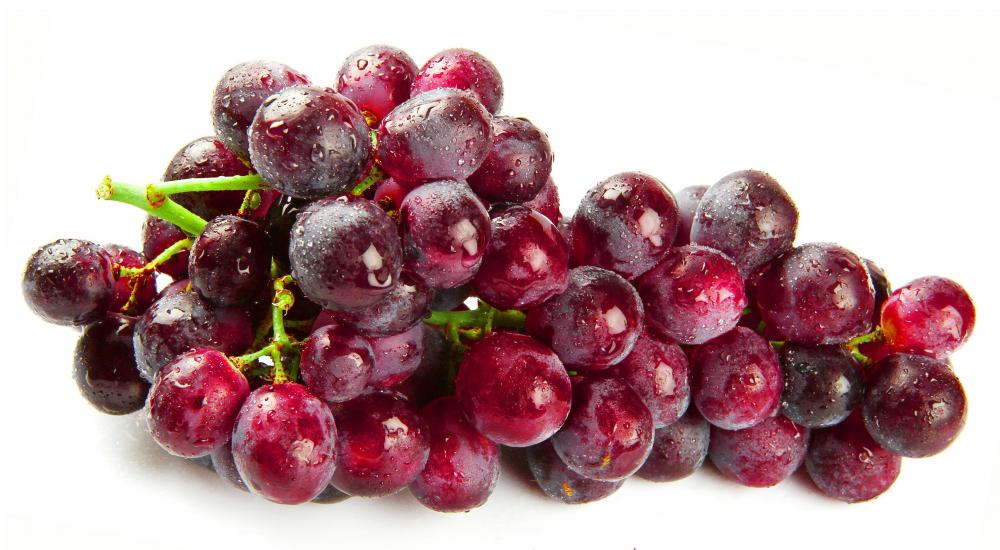
![Grapes.]() By: LsantilliGrapes.
By: LsantilliGrapes. -
![Grape seed extract is believed to reduce varicose veins.]() By: roblanGrape seed extract is believed to reduce varicose veins.
By: roblanGrape seed extract is believed to reduce varicose veins. -
![Health food stores and alternative health care providers often carry grape seed extract supplements.]() By: diego cervoHealth food stores and alternative health care providers often carry grape seed extract supplements.
By: diego cervoHealth food stores and alternative health care providers often carry grape seed extract supplements.


Discussion Comments
Nice article. I'd just like to add how very important it is not to overdo it on grape seed extract supplements, because you can seriously damage your body.
There are a few other grape seed extract side effects besides those you mentioned in the article, notably, coughing, sore throat, abdominal pain, and an itchy scalp. Besides that, some people experience severe internal bleeding, swelling of the brain, and even a coma.
Finally, women who are pregnant or who expect to become pregnant should definitely not take grape seed extract, since they are usually not standardized, and you can easily get an unhealthy dosage. Also, the effects of grape seed extract supplements during pregnancy and breastfeeding have not yet been determined, so doctors advise women to skip it all together.
Finally, grape seed extract interacts with other herbal supplements as well, notably, ginkgo bilboa and garlic, so use it with caution, and always consult a doctor or nutritionist before you start taking any herbal supplement.
Very interesting article -- I'm always interesting in finding out more information about grape seed extract and resveratrol. I only really started learning about all the grape seed extract benefits after my doctor recommended me to take grape seed extract for my blood pressure.
I also started exercising regularly at the same time that I started taking the extract, but something worked, because my blood pressure got so much better after just a month or so of taking the extract.
I would definitely recommend anybody with high blood pressure to talk to their doctor about taking a grape seed extract supplement -- I take Nutribiotic grape seed extract, but I'm sure there are other good ones out there too -- because it has really worked very well for me.
I knew that red wine was good for you, but I never knew exactly why -- but now I know it's because of all the good stuff that you can get in the grape seed extract.
I found this article just so fascinating, since I never knew that there were so many benefits to grape seed extract and grape products.
I wonder, could you tell me what the proper grape seed extract dosage would be for an average sized American woman in her 40s? I mean, the extract that you take internally, not the one you rub on your face. I really want to try this after reading this article!
Thanks!
I found this article very interesting.
Post your comments