
At TheHealthBoard, we're committed to delivering accurate, trustworthy information. Our expert-authored content is rigorously fact-checked and sourced from credible authorities. Discover how we uphold the highest standards in providing you with reliable knowledge.
What is Gliosis?
Gliosis is a process of scarring in the central nervous system. It results from the proliferation of astrocytes in an injured or diseased part of the brain, causing the formation of a fibrous glial scar. Although they are a necessary element to injury recovery, both the accumulation of glial cells and subsequent scarring are important markers of neurological damage. This scarring occurs after stroke, trauma, multiple sclerosis and Alzheimer's disease, where it contributes to the total damage done to brain tissue by these conditions.
Glial cells are the primary effectors of immune responses to injury within the brain. Astrocytes, also called astroglia, are a special form of glial cells found in both the brain and spinal cord. They support the functions of neurons in the central nervous system, especially by initiating the repair or scarring of the brain and spinal cord in response to traumatic injuries. They are the primary cells involved in the process of gliosis, and their modified cell cell bodies make up the glial scar.

When neurons are injured, astrocytes proliferate in the region and manufacture glial-fibrillary acidic protein. This compound causes the astroglia to form a dense and fibrous tissue: the glial scar. As they expand and tighten their linkage, the cells fill the empty spaces left by neuronal loss. Microglia and other immunologically active cells are present during the early stages, but over time, the dominant cell type becomes the modified astrocytes. Hyperplasia, the increase in cell size, is an important marker of this transition.

Gliosis protects healthy cells from injury and assists in healing. After a traumatic injury, there is a need to contain the results of cell death and inflammation so that the contents of damaged neurons do not harm healthy ones. Various glial cells first process the remains of dead neurons, then the glial scar creates a wall around injured or destroyed tissue. This barrier can take from a few days to many months to reach its final form, depending on the scale of the tissue damage.

In neurodegenerative disease, scarring can lead to permanent neurological impairment, preventing the complete recovery of the surrounding neurons. The dense fibers create a physical barrier, while growth-inhibiting chemicals secreted by the astrocytes stop the axons of healthy surrounding nerves from extending into the injured region. In a stroke, for instance, the tissues deprived of oxygen will die and be replaced by glial scars. Although some functions can be recovered because of healthy neurons taking over for lost ones, full recovery might be hindered by the extent of gliosis. Severe attacks of multiple sclerosis can also trigger destructive glial scarring.
AS FEATURED ON:
AS FEATURED ON:


-
![Trauma to the head can result in glial scarring.]() By: MASTTrauma to the head can result in glial scarring.
By: MASTTrauma to the head can result in glial scarring. -
![Alzheimer's disease leads to gliosis.]() By: Fotoluminate LLCAlzheimer's disease leads to gliosis.
By: Fotoluminate LLCAlzheimer's disease leads to gliosis. -
![The accumulation of glial cells and subsequent markers are important markers of neurological damage.]() By: chuugoThe accumulation of glial cells and subsequent markers are important markers of neurological damage.
By: chuugoThe accumulation of glial cells and subsequent markers are important markers of neurological damage. -
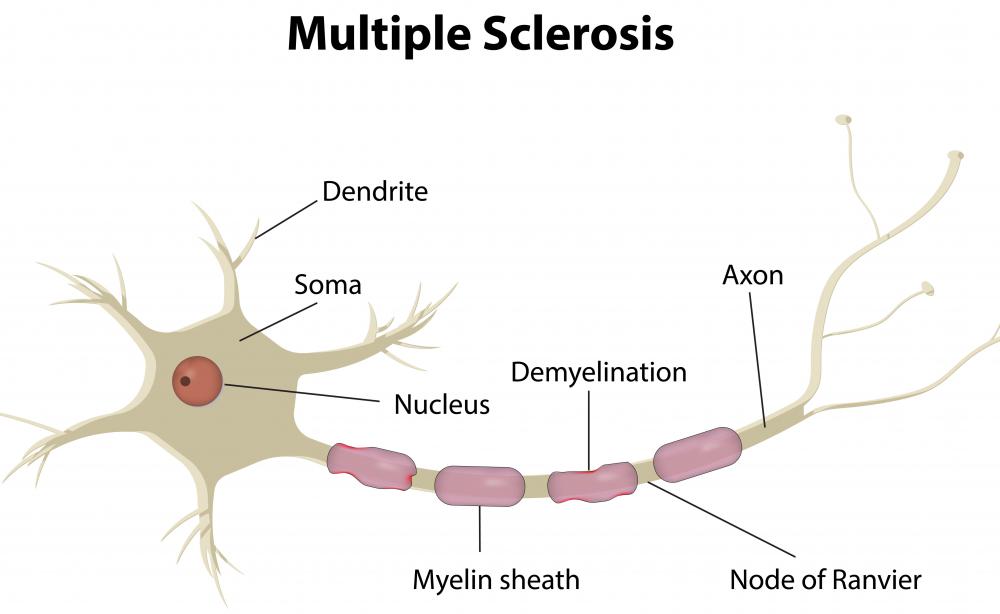
![Multiple sclerosis may be the cause of gliosis.]() By: joshyaMultiple sclerosis may be the cause of gliosis.
By: joshyaMultiple sclerosis may be the cause of gliosis.


Discussion Comments
It's important to note that astrogliosis is the model for the reaction to brain injury in mammals, but not all vertebrates. Teleost fish lack astrocytes, as far as known, and do not form scar tissue following brain injury. They are able to regenerate brain tissue and recover completely, even from spinal cord transection.
Post your comments