
At EasyTechJunkie, we're committed to delivering accurate, trustworthy information. Our expert-authored content is rigorously fact-checked and sourced from credible authorities. Discover how we uphold the highest standards in providing you with reliable knowledge.
What is Geofencing?
Geofencing is a term used primarily in the corporate world that refers to the practice of limiting mobile employees to a specific geographic location by tracking their whereabouts via the technology of a global positioning system (GPS). The idea is to make sure that a company’s mobile employees, or rather those that travel locally or drive company vehicles as part of their job, stay within the boundaries that the company deems productive. It is essentially another way for large corporations and businesses to monitor their employees’ actions on the clock.
Companies that have fleets of company vehicles available to employees are the most likely to employ this practice. Delivery drivers, service technicians, and outside sales representatives are examples of jobs where it may apply. In order for geofencing to work, the company’s vehicles must be fitted with a GPS tracking unit or the employees themselves must carry a wireless phone or other device equipped with GPS. Whenever a given person or vehicle goes somewhere out of limits, an alert is sent back to the company’s monitoring headquarters.

While companies may feel that geofencing prevents employees from wasting company time, it may offend some employees. More and more workers question the ever-increasing watchfulness of their boss, especially as companies continually put more and more emphasis on monitoring Internet and email use at work. Monitoring where employees travel is yet another concept that raises eyebrows. Some argue it’s an invasion of privacy, while still others believe it’s not a practice designed to single out loafers, but rather save the company money.
The technology and ease of use that fuels this idea became evident after the United State’s Federal Communications Commission’s Enhanced 911 service mandated that wireless phone carriers fit 95% of their devices with GPS chips by the end of 2005. Though GPS technology has been around since the 1970s, its availability and cost now make it that much easier to implement it on almost any level — from recreational to personal to business.
AS FEATURED ON:
AS FEATURED ON:









-
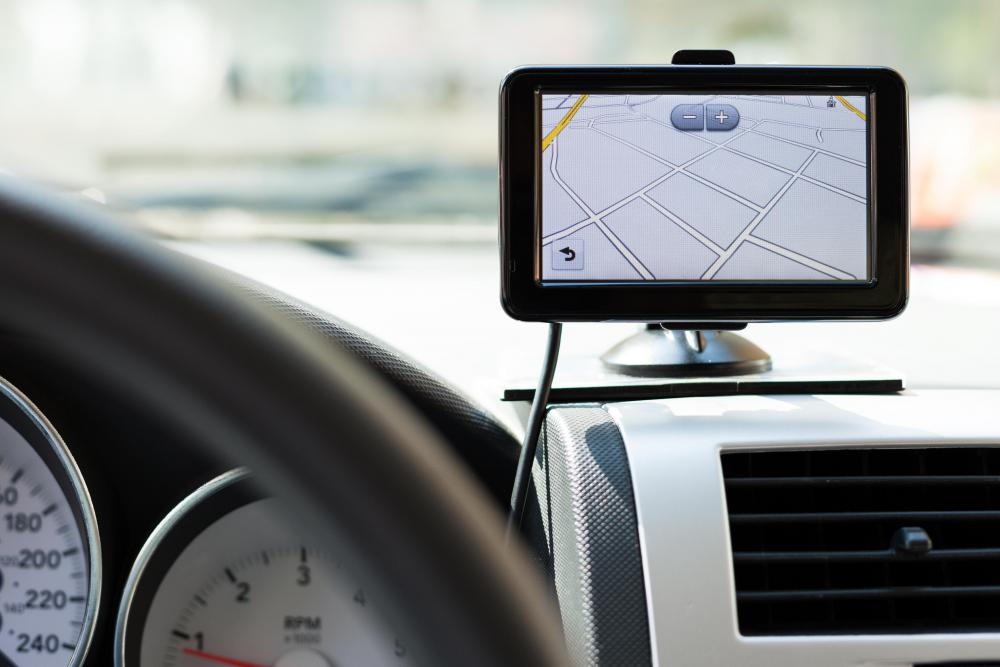
![Geofencing involves using GPS to track mobile employees' whereabouts.]() By: Igor MojzesGeofencing involves using GPS to track mobile employees' whereabouts.
By: Igor MojzesGeofencing involves using GPS to track mobile employees' whereabouts.
Discussion Comments
Just think about how safe the word would be if we could know at any given moment where everybody was and what they were doing. It would be even safer if we knew what they were thinking.
Anon239682 makes a good point regarding kidnapping. He will be relieved to hear that the kidnapping threat in most of the non-American world is similar to or less than that in the United States.
Keep in mind that most markets in the world are not the United States. In locations where an individual is being tracked for their safety, e.g., the threat of kidnapping is very real, a geofence can be used to raise alerts when that individual leaves an area where they otherwise should be.
sir i want a procedure for rectangular geofencing in gis...
What is especially interesting with geofencing is for users to real-time declare position in the event of problems. For example, a driver who must deliver goods in a specific time can for delays inform customers about its position with his mobile phone.
Post your comments