
At AllThingsNature, we're committed to delivering accurate, trustworthy information. Our expert-authored content is rigorously fact-checked and sourced from credible authorities. Discover how we uphold the highest standards in providing you with reliable knowledge.
What is Freezing Fog?
 Mary McMahon
Mary McMahon
Mary McMahon
Freezing fog consists of water droplets that freeze upon contact with objects they encounter, forming a layer of thin ice or rime. This happens because the water is supercooled: its temperature is below normal freezing point, but it has remained liquid. The phenomenon differs from ice fog, which is made up of tiny particles of ice. Many regions of the world can experience freezing fog, especially during the winter months, when the air temperature can drop below freezing, creating the conditions necessary to create supercooled water droplets.
How It Forms

Fog normally forms where there is cold air over a relatively warm, moist surface, such as a lake, wet ground or moist soil. Freezing fog forms when the air temperature is below freezing point — 32°F (0°C). Strange as it may seem, water does not always freeze at the same temperature at which ice melts. It will do so if it is in contact with something solid: this could be a surface or container. In the case of a suspended droplet, a “freezing nucleus” — usually a tiny ice crystal — is required, unless the air temperature is very low.

Between 32°F (0°C) and 5°F (-15°C) the suspended water droplets that make up fog, or a cloud, are normally in a supercooled state. They remain liquid because there is nothing for ice to crystallize around, but on touching anything solid, they will immediately freeze. Surfaces exposed to freezing fog therefore quickly become coated with ice.
A fog consisting of ice particles — “ice fog” or “frozen fog” — can form in temperatures below -30°F (-35°C). This is seldom seen outside the arctic and antarctic regions. Forecasts for ice fog outside these regions do happen, but they are quite rare, as the conditions needed for it to occur are not very common.

Freezing fog can occur in any part of the world where air temperatures can drop below freezing point. It is common on mountaintops, but can form at sea level if conditions are right. It is most likely to form at night, when heat is escaping from the atmosphere into space. This happens more easily when there is no cloud cover — clouds provide an insulating layer that tends to keep the heat in.
Water, soil and solid surfaces tend to retain heat longer, and in calm conditions, a layer of freezing air can build up over a warmer surface. If there is moisture present, it can evaporate, then condense into water droplets in the cold air above. If the temperature is low enough, the droplets will be cooled below freezing point.
Sometimes, freezing drizzle follows freezing fog. This has larger droplets of supercooled water which freeze on contact. Since the air temperature is usually below freezing, the ice deposits which form can remain, and may build up rapidly.
Hazards and Precautions
Freezing fog creates very hazardous driving conditions. In addition to the poor visibility associated with normal fog, a build-up of ice on vehicles may cause dangerous malfunctions. It is also likely that ice will be deposited on road surfaces, adding to the danger. Ice will tend to form on bridges first, as they are exposed to cold air from beneath as well as from above, and do not have the insulating effect of the ground below. In some areas, warning signs to this effect may be put up when these conditions are forecast.
The use of grit and salt may help prevent icing of roads, but accidents often occur through a combination of freezing fog and inappropriate driving. People are advised to avoid making automobile journeys in these conditions if possible, but if a journey must be made, it makes sense to curtail speed and maintain an adequate distance from the vehicle in front. Severe weather warnings may be issued if such conditions are expected, so it is advisable during the winter to check forecasts before setting out.
Freezing fog and drizzle can create problems with objects that freeze over and become nonfunctional because of the cold and ice. It has been known for power lines to collapse under the weight of ice deposited on them. It is also usually unpleasant to be outdoors in these weather conditions because of the cold and the formation of ice crusts on garments. It may be dangerous to remain outdoors for extended periods, especially with inadequate clothing. Other precautions include wrapping exposed pipes, if they are not already insulated, and covering vulnerable garden plants.
Frequently Asked Questions
What exactly is freezing fog?
Freezing fog is a weather phenomenon that occurs when the water droplets in fog become supercooled, remaining liquid even though temperatures are below the freezing point. When these droplets come into contact with surfaces like roads, trees, or bridges, they instantly freeze, forming a layer of ice known as rime. This can create hazardous conditions, especially on roadways.
How does freezing fog differ from regular fog?
Regular fog consists of tiny water droplets suspended in the air at or near the Earth's surface, reducing visibility. Freezing fog contains these water droplets in a supercooled state, which means they are below freezing temperature but still liquid. Upon contact with objects, these droplets immediately freeze, unlike in regular fog where no icing occurs.
What conditions are necessary for freezing fog to form?
Freezing fog typically forms under calm and cold conditions with high relative humidity. The temperature must be at or below the freezing point of water (0°C or 32°F). Clear skies at night can lead to rapid cooling of the surface, which, combined with moist air, creates the perfect environment for freezing fog to develop.
Is freezing fog a common weather event?
Freezing fog is less common than regular fog because it requires specific conditions to form—temperatures below freezing and high humidity. It is more likely to occur in regions with cold climates during the winter months. However, it can happen in various parts of the world, depending on local weather patterns and geographic features.
What are the dangers associated with freezing fog?
The primary danger of freezing fog is the formation of 'black ice' on roads, which is a thin, transparent layer of ice that is nearly invisible to drivers and can cause vehicles to lose traction. It also poses risks for aviation and can lead to the closure of airports due to icy runways and poor visibility.
Can freezing fog impact wildlife or vegetation?
Freezing fog can have an impact on wildlife and vegetation by coating plants, trees, and grasses with ice, which can lead to damage from the weight of the ice. For wildlife, it can reduce visibility and make foraging for food more difficult. However, many species are adapted to cope with such conditions in their native habitats.
Mary McMahon
Ever since she began contributing to the site several years ago, Mary has embraced the exciting challenge of being a AllThingsNature researcher and writer. Mary has a liberal arts degree from Goddard College and spends her free time reading, cooking, and exploring the great outdoors.
Learn more...
Mary McMahon
Ever since she began contributing to the site several years ago, Mary has embraced the exciting challenge of being a AllThingsNature researcher and writer. Mary has a liberal arts degree from Goddard College and spends her free time reading, cooking, and exploring the great outdoors.
Learn more...AS FEATURED ON:
AS FEATURED ON:









-
![Freezing fog can cause ice sheaths to appear on trees.]() By: Stihl024Freezing fog can cause ice sheaths to appear on trees.
By: Stihl024Freezing fog can cause ice sheaths to appear on trees. -
![Freezing fog creates very hazardous driving conditions.]() By: Tomasz ZajdaFreezing fog creates very hazardous driving conditions.
By: Tomasz ZajdaFreezing fog creates very hazardous driving conditions. -
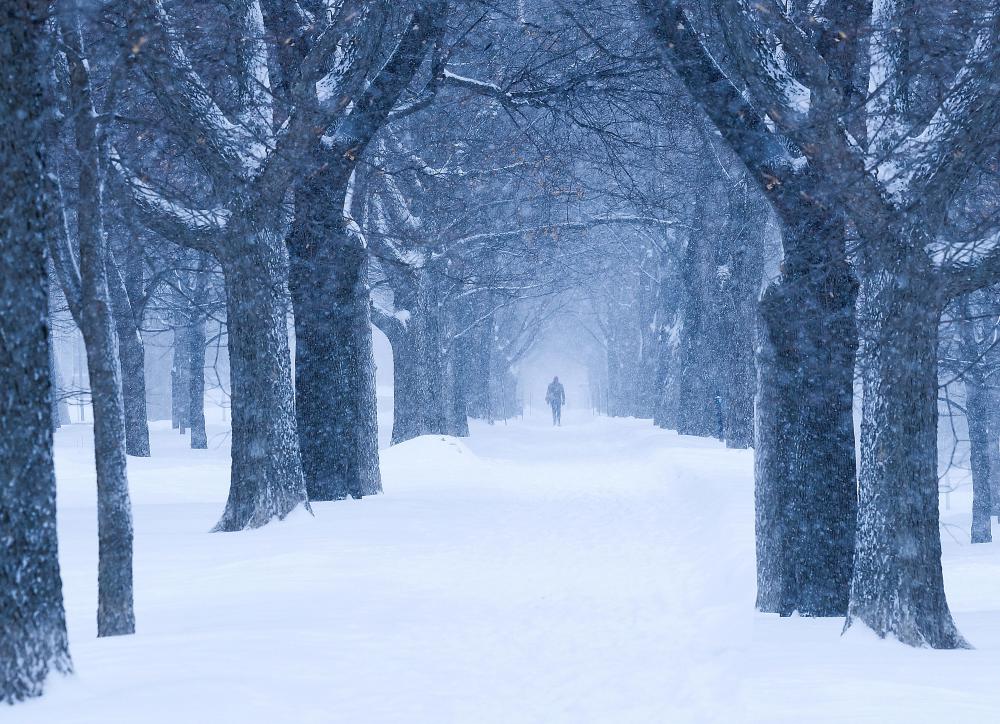
![Freezing fog is most common during the winter months.]() By: mario beauregardFreezing fog is most common during the winter months.
By: mario beauregardFreezing fog is most common during the winter months.


Discussion Comments
I deliver liquid oxygen for people that need a bit of help with their breathing. To pour the liquid oxygen into a smaller tank it must be vented. I once delivered liquid O2 during a freezing fog and produced my own snow storm. The colder O2 precipitated the fog into crystals for about a ten foot radius.
It's fun to run in freezing fog. It sticks to your mustache.
@mitchell14, the other risk of driving or other traveling in freezing fog is that it is harder to prevent than things like snow or freezing rain. Laying down salt or sand is not as helpful in this instance as in actual precipitation.
Freezing fog is even more dangerous than freezing rain, because it's less expected; while you know that if it rains when it's close to freezing, there will be ice, with freezing fog it's harder to tell that it has happened. Therefore, it is really important to watch for a weather alerts and to pay close attention if there is a freezing fog advisory, especially if you plan on traveling in those conditions.
Post your comments