
At SmartCapitalMind, we're committed to delivering accurate, trustworthy information. Our expert-authored content is rigorously fact-checked and sourced from credible authorities. Discover how we uphold the highest standards in providing you with reliable knowledge.
What is Forensic Accounting?
 Dana Hinders
Dana Hinders
Dana Hinders
Forensic accounting, sometimes referred to as investigative accounting, is a unique career field that combines accounting with information technology. A forensic accountant uses sophisticated computer programs to analyze financial data and find evidence that would be legally valid during a court proceeding.
Forensic accountants are often asked to review financial records for mergers and acquisitions. They may also serve as advisers to a corporation’s audit committee or work to resolve shareholder disputes within a company.

Objective verification is the primary goal of forensic accounting. For this reason, many accountants who specialize in forensics are asked to testify in court cases as expert witnesses for either the prosecution or the defense. They can work in both civil and criminal court cases. In a civil case, the accountant may be asked to calculate economic damages that occurred as the result of a breach of contract or provide insight into a case based on a claim of professional negligence. In a criminal case, a forensic accountant may be asked to present evidence of insurance fraud, identity theft, money laundering, embezzlement, price fixing, stock market manipulation, or other related offenses.

To be successful as a forensic accountant, you must be detail oriented, persistent, ambitious, and highly organized. Forensic accounting also requires a great deal of creativity, since you must often explain complex financial concepts to an audience that lacks basic accounting knowledge.
A forensic accountant typically has a bachelors or masters degree in accounting supplemented by additional courses in forensic accounting. However, as the field continues to grow in popularity, many colleges and universities are redesigning their accounting programs to provide additional education for students interested in forensic accounting careers. In fact, some schools are adding courses to help students specialize in insurance claims, fraud cases, or other specialized areas of accounting.

A forensic accountant may also be known as a Certified Public Accountant or a Certified Fraud examiner. A Certified Public Accountant has met his/her state’s licensing requirements and has successfully passed the Uniform Certified Public Accountant Examination. A Certified Fraud Examiner is a member of The Association of Certified Fraud Examiners and has completed this professional association’s rigorous certification requirements.
Experienced forensic accountants are in high demand throughout the world. Forensic accountants can own their own accounting firms or be employed by lawyers, insurance companies, banks, or large corporations. Police departments, courts, and governmental agencies also offer many career opportunities for forensic accountants.
Dana Hinders
Dana holds a B.A. in journalism and mass communication from the University of Iowa. She has loved being part of the SmartCapitalMind team ever since discovering the joys of freelance writing after her son was born. Dana also hones her writing skills by contributing articles to various blogs, as well as creating sales copy and content for e-courses.
Learn more...
Dana Hinders
Dana holds a B.A. in journalism and mass communication from the University of Iowa. She has loved being part of the SmartCapitalMind team ever since discovering the joys of freelance writing after her son was born. Dana also hones her writing skills by contributing articles to various blogs, as well as creating sales copy and content for e-courses.
Learn more...AS FEATURED ON:
AS FEATURED ON:









-
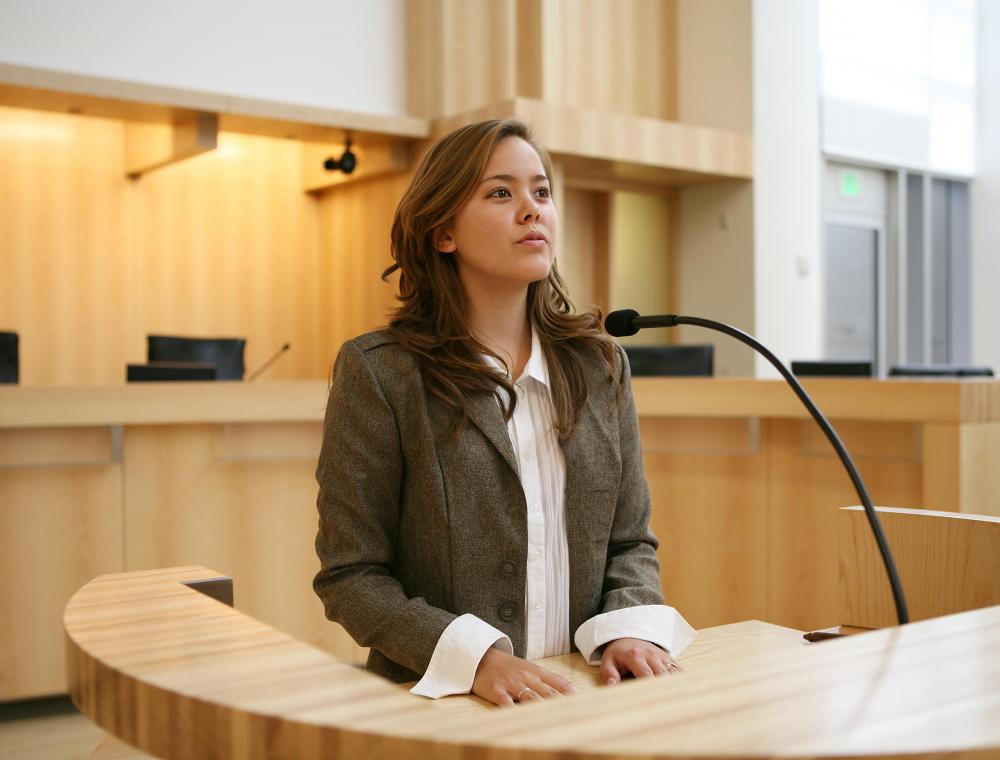
![Forensic accountants may be called upon as expert witnesses to testify in court.]() By: Stephen CoburnForensic accountants may be called upon as expert witnesses to testify in court.
By: Stephen CoburnForensic accountants may be called upon as expert witnesses to testify in court. -
![A forensic accountant might be asked to calculate economic damages after a crime has been committed.]() By: patpitchayaA forensic accountant might be asked to calculate economic damages after a crime has been committed.
By: patpitchayaA forensic accountant might be asked to calculate economic damages after a crime has been committed. -
![Forensic accountants need to have good communication skills because they meet with clients on a regular basis.]() By: NANForensic accountants need to have good communication skills because they meet with clients on a regular basis.
By: NANForensic accountants need to have good communication skills because they meet with clients on a regular basis.


Discussion Comments
What are the problems and prospects of forensic accounting in Nigeria?
I’d like to correct one misconception, since I’ve read a few posts here that imply forensic accounting only involves crime-busting detective work. It can certainly encompass that, but it also deals with prevention as well.
I have a friend who’s a forensic accountant and he advises local companies on fraud prevention. He shows them how to put in place internal controls that will minimize the possibility of fraud, and also conducts surprise audits himself.
He says small businesses lose on average $200,000 to fraud, but with the proper controls, those losses can be drastically cut or virtually eliminated. Most of the losses involve bogus check writing or fraudulent billing practices. I think just letting employees know they can be subject to random audits is enough to curtail any funny business.
@David09 - I wouldn’t even bother pursuing an MBA degree if you want to work for forensic accounting firms-it adds nothing to your credentials.
You should take a forensic accounting course with an accredited university. From what I understand these courses address issues like e-commerce, fraud, tax investigations and information systems-all topics very specific to the goals of a forensic accountant.
@SkyWhisperer - I am wondering if someone with an accounting degree and an interest in certified forensic accounting would also benefit by having an MBA degree? Do you think it would be a plus?
I know a guy who’s a forensic accountant in our area. Actually he is a Certified Fraud Examiner and he works with the casinos to examine their books and make sure everything is on the up and up.
I can certainly understand that there might be some possibility for fraud in the casino business. In general he loves the whole nature of auditing and has become a valuable team player working with the company’s own internal auditing team. From what I understand, the position pays very well too.
@Cupcake15 - I was looking at the forensic accounting training and I have to say that the forensic accounting programs really look interesting. I always thought that the field of accounting was so boring, but the forensic accounting courses do not seem that way.
It also must be a rewarding career because you do catch people that are trying to cheat the system or do illegal activities. In fact, I was reading that US companies lose an average of $995 billion dollars a year due to fraud related activity.
This is the reason why forensic accounting is in so much demand because companies will hire these specialty accountants to make sure that their bottom line is accurate and there is no fraud being perpetuated. In fact, a forensic accountant was the one that caught Al Capone in a tax evasion scheme. This really sounds like a lucrative and exciting career.
I think that going into the field of forensic accounting investigation must be so fascinating. It is almost like you are an undercover detective because you are looking through financial records to determine if there is an evidence of fraud.
I know that in order to get into the field of forensic accounting you have to have to be a CPA or certified public accountant and receive a forensic accounting certificate as a certified fraud examiner or a certified fraud accountant.
I was reading that the starting salaries for those in forensic accounting fraud ranges from $48,000 to $75,000 per year and salaries can go over $150,000 with several years experience. This is a really hot career field with a lot of demand.
Post your comments