
At DelightedCooking, we're committed to delivering accurate, trustworthy information. Our expert-authored content is rigorously fact-checked and sourced from credible authorities. Discover how we uphold the highest standards in providing you with reliable knowledge.
What is Food Coloring Made of?
 Tricia Christensen
Tricia Christensen
Tricia Christensen
Nailing down what, exactly, food coloring is made of is often very difficult because of how many options there are. A lot depends on what the coloring is used for &mdash: pigments available to home cooks are often different from those used by manufacturers, for instance, and colors are designed for baked goods and confections are often quite unlike those used for meats, packaged fruits, and so on. In general, though, all food colorings come from two broad sources. Naturally derived colors come from plants, animals, and other organic material. Chemical colors, on the other hand, are often coal or petroleum based, and tend to be mixed to perfection in labs using a lot of artificial processes.
Knowing the specifics of a given coloring’s history is inexact at best. Different countries have different labeling, naming, and identification requirements, which makes it hard to know how to classify certain coloring agents universally. Laws also tend to vary when it comes to what sorts of additives are “safe” to add to foods. Despite these roadblocks, a bit of research can often help uncover at least some basic information — and a few general rules can provide broad guidance.
Basic Presentation

Most food coloring comes packaged either as a powder or a liquid. Powders are typically a combination of coloring crystals and other preservatives that prevent caking and lengthen potency. These can be added directly to foods as they are being made, but usually require a bit of water to activate them. Liquid versions, on the other hand, already contain water in most cases, though they may also be made up of soluble oil. Both versions tend to be very concentrated, which means that cooks usually need to experiment with how much to add in order to get the right hue.
Natural Sources

At one point, all food colorings got their color from natural sources. “Natural” is a broad term, but it usually encompasses anything that is available in nature. Plants, particularly flowers and roots, are very common examples, as are insects, rocks, and certain soil components. The natural world remains a common source of many of today’s commercial colorings and dyes.

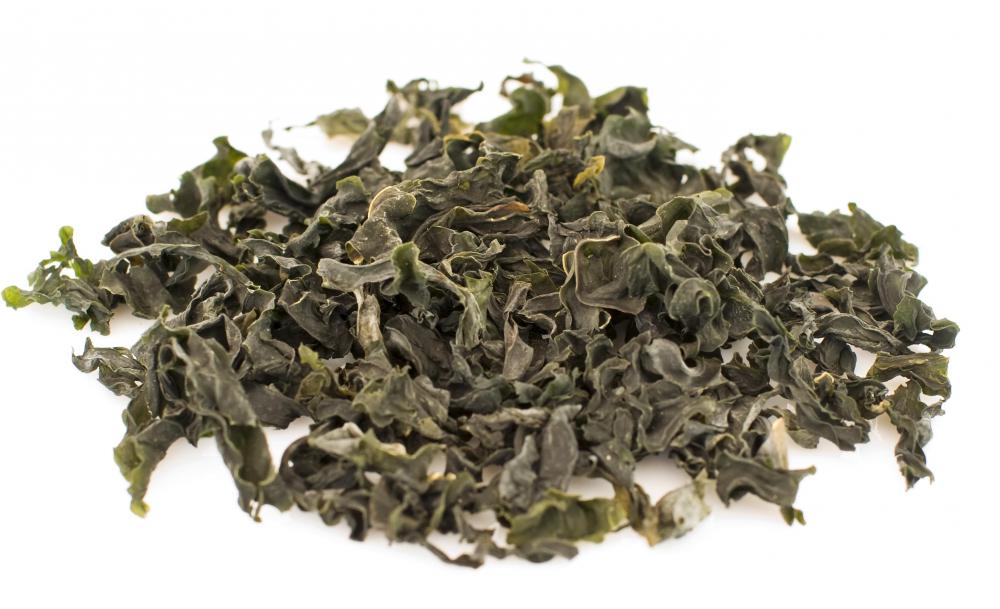
The vibrant seeds of the achiote plant are frequently used to make red coloring, for instance, though the juices of elderberries and beets are also popular choices. Pressed poppy leaves and saffron tendrils can be used to create an orange tint, and yellow often comes from the turmeric spice. Green is usually relatively easy to create, but some common sources are algae and seaweed. Extracts from the indigo plant and the butterfly pea will create a blue color. Browns, blacks, and other "compound" colors are usually made by blending different natural tints together.

One of the biggest problems with plant-based hues is that they often fade over time, and may not be colorfast. What looks bright and vibrant in the bowl may only show up very lightly when mixed with other ingredients. This has led many manufacturers to look for other, more potent natural sources, some of which come from the insect world. A number of scaled insects like beetles can be crushed to release carminic acid, which has a vibrant red color. Tropical bugs have also been used in creating purple shades.
Artificial and Chemical Derivatives

In many cases it is less expensive to create colors synthetically. A number of chemical reactions will release colored byproducts that can be used to tint food in a way that is more potent and longer lasting than natural compounds. The burning of coal tar is one of the easiest ways to create a spectrum of colors that can be manipulated based on temperature and burn time. Tartrazine and erythrosine, both petroleum byproducts, are similarly flexible, and form the base of many different color combinations.
Potency Based on Coloring Type

A lot of what a food coloring contains may also be dependent on its “type,” or basic classification. All pigments can be divided into “lakes” or “dyes.” Lake colors are not oil soluble, and typically tint by dispersion. These are most common in “batch” foods like mass-produced candies, cake mixes, and the coatings for pharmaceutical drugs. Dyes, in contrast, are typically what comes in the bottles of food coloring sold at grocery stores and other specialty markets for home cooks. Dyes are also most common in beverages and baked goods since they tend to dissolve in water. Manufactures typically choose a coloring source that is both efficient and appropriate to the type of product being made.
Health and Safety Concerns
Food safety experts have raised a lot of concerns about coloring agents, natural as well as chemical. Many of the biggest concerns relate to coal tar derivatives, which have been shown to cause asthma and other respiratory problems when consumed in large quantities. Other chemicals used to seal color potency have been linked to certain cancers, heart troubles, and behavioral problems, particularly in children — but again, most studies focus on extended exposure over a prolonged period of time. Researchers tend to agree that limited amounts don’t pose any serious threat, though a lot remains unknown. People prone to allergies or who have particularly sensitive systems often experience bad reactions even from very limited exposure.
Government Regulations
Most governments around the world limit the types of substances that can be used in food coloring intended for human consumption. Different countries have different labeling systems for colors, as well as different rules about allowed ingredients. This makes it hard to draw even basic generalizations about what can and cannot be included in food coloring. Regulatory bodies are usually open about their rules, though, and are generally willing to answer a range of consumer questions.
Tricia Christensen
Tricia has a Literature degree from Sonoma State University and has been a frequent DelightedCooking contributor for many years. She is especially passionate about reading and writing, although her other interests include medicine, art, film, history, politics, ethics, and religion. Tricia lives in Northern California and is currently working on her first novel.
Learn more...
Tricia Christensen
Tricia has a Literature degree from Sonoma State University and has been a frequent DelightedCooking contributor for many years. She is especially passionate about reading and writing, although her other interests include medicine, art, film, history, politics, ethics, and religion. Tricia lives in Northern California and is currently working on her first novel.
Learn more...AS FEATURED ON:
AS FEATURED ON:


-
![Green food coloring is often derived from seaweed.]() By: sahua dGreen food coloring is often derived from seaweed.
By: sahua dGreen food coloring is often derived from seaweed. -
![Achiote seeds can be used to shade orange food coloring.]() By: EagleAchiote seeds can be used to shade orange food coloring.
By: EagleAchiote seeds can be used to shade orange food coloring. -
![Beets often are used to make red food coloring.]() By: matesBeets often are used to make red food coloring.
By: matesBeets often are used to make red food coloring. -
![Food coloring is typically used for dyeing eggs and adding color to baked goods.]() By: Sean MFood coloring is typically used for dyeing eggs and adding color to baked goods.
By: Sean MFood coloring is typically used for dyeing eggs and adding color to baked goods. -
![Turmeric is used to make yellow food coloring.]() By: Photographee.euTurmeric is used to make yellow food coloring.
By: Photographee.euTurmeric is used to make yellow food coloring. -
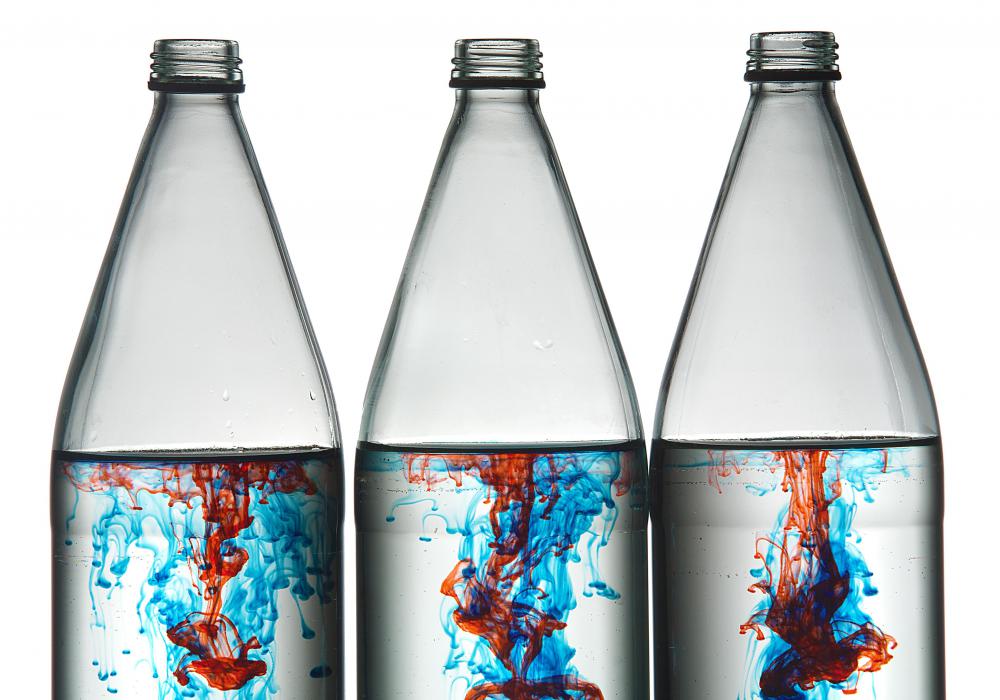
![Food dyes can be either natural or chemical.]() By: Gregory JohnstonFood dyes can be either natural or chemical.
By: Gregory JohnstonFood dyes can be either natural or chemical.


Discussion Comments
Are they made of grasshoppers?
@discographer: "Safe"? I doubt it. But decide for yourself if you want to ingest something that the state of California doesn't allow. If you you want to continue to drink it, awesome, great for you. But allow others to learn and decide for themselves if the risk is worth drinking a soda.
I've given up any soda with coloring. The brown coloring that goes into colas is a known carcinogen and the FDA knows this. Resent studies on this coloring shows that it can increase the odds of men developing prostate cancer by 40 percent, but the FDA turns a blind eye. Just because the FDA declares it to be safe doesn't mean it's safe. Not in this era where profit is put before human safety.
@burcidi-- I don't agree with you. FDA approved food coloring is safe and is made from safe ingredients. There are many foods that use only natural food colors as well. You can ensure this by buying natural and organic foods.
You can also make your own food coloring at home. You can use pomegranate juice for red, saffron for yellow, spinach juice for green and blueberries for blue. Natural food colors are usually made from extracts or dehydrated versions of these foods anyway.
Food coloring is just a marketing scheme. Manufacturers use them to make foods and drinks look better and give us an impression about what they might taste like. But it's such an unnecessary ingredient. Some people don't even know what the natural color of certain foods are because they have never seen it without food coloring in it.
What's so wrong if jello is clear or chips naturally yellow? Why are we uninterested in foods with bland colors when that's how they are in nature?
I actually don't blame manufacturers anymore. Until we as consumers change our perceptions about food, we will continue to fall for foods with unnecessary ingredients and preservatives that are costing us our health.
The only food coloring that doesn't freak me out is yellow food coloring. It's usually made from turmeric spice which is naturally very yellow and pigmented. Just a little bit can make everything turn yellow.
I'm okay with this coloring because I know it's naturally based. But any other food coloring scares me. I feel like I will get cancer from those.
Will food coloring affect your behavior after you have too much of it?
Does putting food coloring in ice affect the melting rate?
I still don't know what ingredients are in food dye. Does anyone know a site I can find that lists the ingredients?
What are the types of compounds of food dyes?
Unethical business practices of the food industry and the FDA is aware but it continues protecting the unscrupulous instead of protecting the consumers. The market receives high marks from the government. Lack of ethos, the government and the rotten food industry.
Red dye causes me to have insomnia and skin rashes. I can't get out a coherent sentence if i eat any hing with yellow dye. All the FD&C dyes do something bad to me. Keeps me from eating stuff I should not eat anyhow. It does make it hard to get to find medicine though. Should be banned.
I get terrible reactions from yellow dye in foods and medicine. At one point I was being checked as the symptoms were like those of MS. As consumers we need to get together and demand companies remove dye from foods. These dyes are causing sickness.
what is in orange food coloring?
i have a project based on food dye and what kind of chemical involved in it. i couldn't find any information about it. if you guys have any idea please hook me up with some info. Thanks!
Actually, I thought I was crazy but every time my children ingest red dye they get, for lack of a better word, hyper.
What's a lolly snake?
I think it's horrifying that the US isn't putting any restrictions on food colorings, what they put in there is disgusting. It's a sham!
My son ended up having severe zinc deficiency. The root cause was Tartrazine. We eliminated it from his diet and his zinc levels rose immediately.
Thank goodness. Others have had this same thing happen to their children as well! I'm not crazy. For close to five years, I've had to read labels to make sure my child does not ingest red dyes of any kind (no matter what the name). Unfortunately, many times the colors are misrepresented on the labels and we end up with behavioral problems as well.
I pray that the US will follow Europe's example and restrict dyes in foods!
Does the color of a lolly snake affect its physical strength?, Why?
How would you find out scientifically?
For more on an additive free diet, look into the Feingold diet. Yes, eliminating additives from my children's diet worked to correct behavior and sleep problems.
Post your comments