
At WiseGEEK, we're committed to delivering accurate, trustworthy information. Our expert-authored content is rigorously fact-checked and sourced from credible authorities. Discover how we uphold the highest standards in providing you with reliable knowledge.
What is Folic Acid?
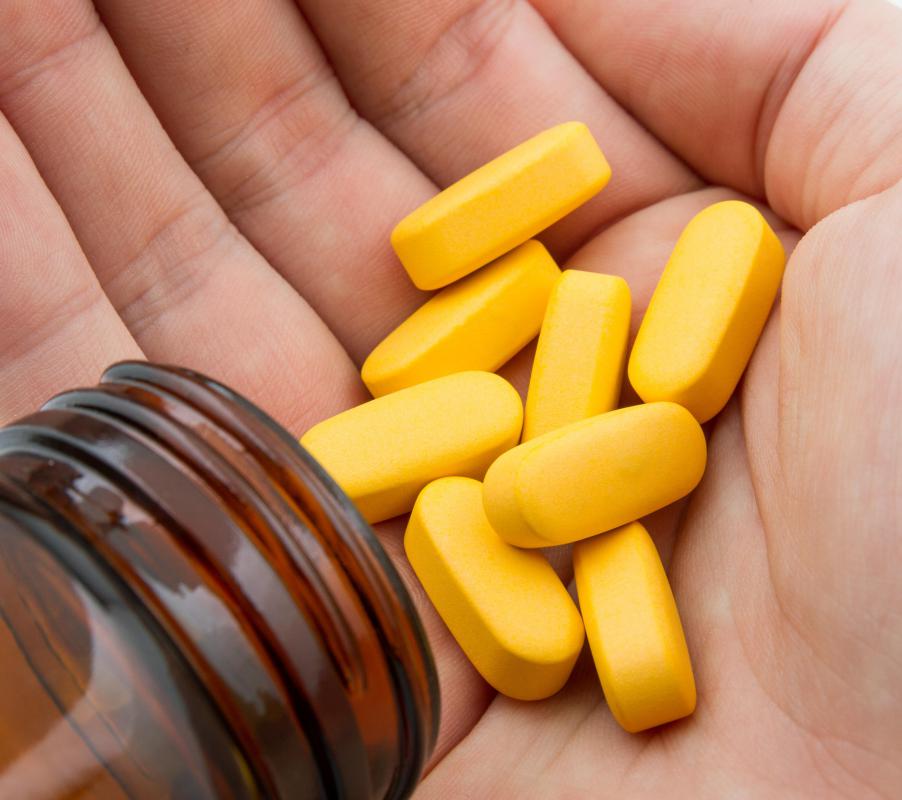
Folic acid is a form of vitamin B that helps the body stay healthy. It is the man-made version of folate, which supports the body's ability to produce red blood cells. Initially, it was used during the 1930s to treat anemia in pregnant women. The vitamin gets its name from the Latin word folium, which means "leaf," because the vitamin is found in leafy vegetables. The synthetic version is available as a supplement.
Everyone can benefit from taking folic acid, but it is especially important for women of child bearing age. The vitamin can help prevent abnormalities in a developing baby's spine, which can lead to spina bifida. It can also reduce the likelihood of anencephaly, a condition in which the brain doesn't develop.

Women who plan on becoming pregnant should start taking supplements that include this vitamin at least three months before conception, since it is most important during the first few weeks of pregnancy. Those who are already pregnant should begin taking it as soon as they find out about their condition. According to the U.S. Department of Health & Human Services (HHS), pregnant women need 600 mcg daily.
Folic acid is even recommended for women who are not planning on getting pregnant, because nearly half of all pregnancies are unplanned. HHS suggests that these women take a 400 mcg dose every day. Breastfeeding mothers need 500 mcg.

This B vitamin offers other health benefits. It is good for the blood, and can prevent a person from becoming anemic. Preliminary studies suggest that it may also prevent cancer, and researchers have found a possible link between low levels of folic acid and the occurrence of colorectal cancer. Early data also suggests this supplement may help prevent Alzheimer's disease.

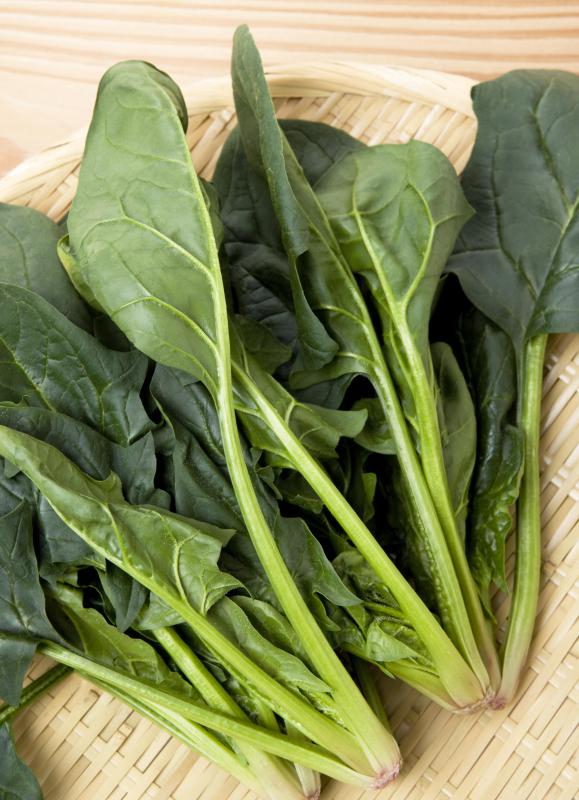
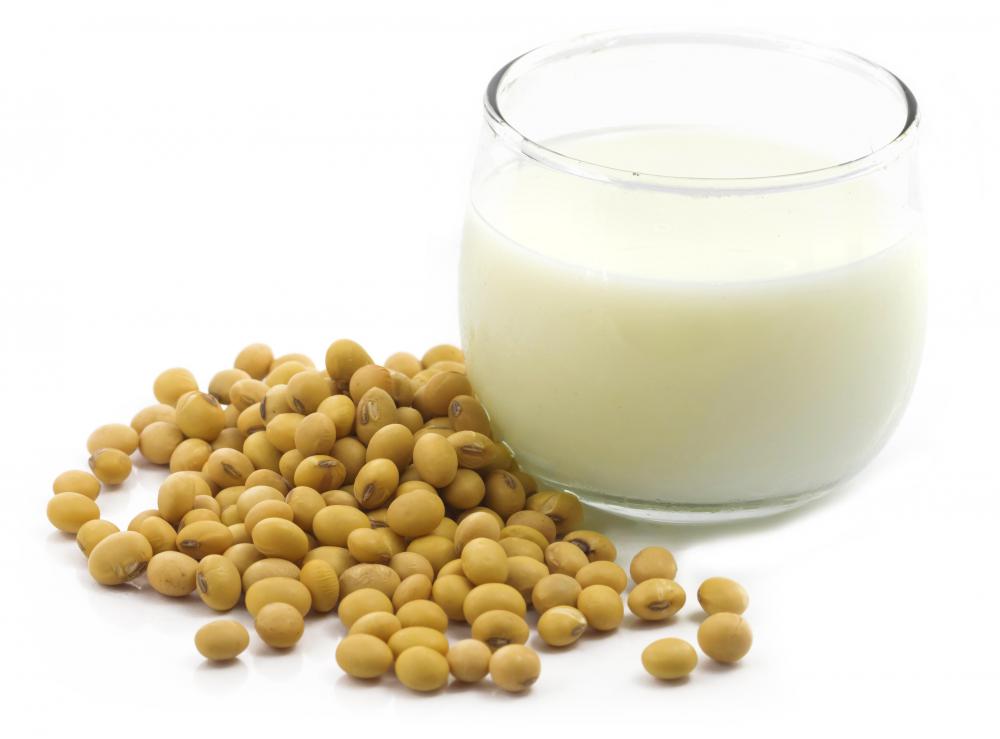
It is important for women to take supplements to be sure that they are getting the daily recommended amount of folic acid. They can get added benefits by eating foods to get pure folate as well. The vitamin is naturally found in fruits, green leafy vegetables, soymilk, peanuts, and beans.
Women can also get folic acid by eating certain fortified foods, and it is regularly added to many commercial flours, breads, and cereals. These foods can be identified by reading the nutrition labels. Due to all of the nutritional benefits that it offers, women can still find value in continuing to take vitamin supplements after their child bearing years are over.
AS FEATURED ON:
AS FEATURED ON:









-
![Leafy green vegetables are a good source of folic acid.]() By: moonriseLeafy green vegetables are a good source of folic acid.
By: moonriseLeafy green vegetables are a good source of folic acid. -
![Soymilk, which contains folate.]() By: Win NondakowitSoymilk, which contains folate.
By: Win NondakowitSoymilk, which contains folate. -
![Women who plan on becoming pregnant should take supplements that include folic acid.]() By: compuinfotoWomen who plan on becoming pregnant should take supplements that include folic acid.
By: compuinfotoWomen who plan on becoming pregnant should take supplements that include folic acid. -
![Legumes contain folic acid.]() By: Stefano NeriLegumes contain folic acid.
By: Stefano NeriLegumes contain folic acid. -
![Folic acid is commonly taken my pregnant women to help the body stay healthy prior to and during pregnancy.]() By: LanaKFolic acid is commonly taken my pregnant women to help the body stay healthy prior to and during pregnancy.
By: LanaKFolic acid is commonly taken my pregnant women to help the body stay healthy prior to and during pregnancy. -
![Folate supplements are water-soluble.]() By: milosducatiFolate supplements are water-soluble.
By: milosducatiFolate supplements are water-soluble. -
![Whereas folic acid is a manmade supplement, folate occurs naturally in spinach and numerous other foods.]() By: travelbookWhereas folic acid is a manmade supplement, folate occurs naturally in spinach and numerous other foods.
By: travelbookWhereas folic acid is a manmade supplement, folate occurs naturally in spinach and numerous other foods. -
![Women considering becoming pregnant are advised to take folic acid supplements to reduce the risk of birth defects.]() By: Rohit SethWomen considering becoming pregnant are advised to take folic acid supplements to reduce the risk of birth defects.
By: Rohit SethWomen considering becoming pregnant are advised to take folic acid supplements to reduce the risk of birth defects.





Discussion Comments
Really good information. However, you should also include the importance of this drug for RA patients.
I'm actually taking folic acid 5mg. I've been taking this November 2012 when I had my first check up with my OB. I'm wondering whether it is fine to take any time of the day. I sometimes take it in the morning, sometimes in the afternoon and sometimes in the evening. Please help. Does it matter at all? By the way, I'm eight weeks and five days pregnant now. Thanks.
@JessicaLynn - That sounds like a good idea. I might do the same thing.
Anyway, I know first hand that folic acid (or lack thereof) can have a huge effect on babies. I knew someone who didn't realize she was pregnant til she was about four months along. So obviously she was carrying on normally and doing all the stuff she usually did. Which unfortunately didn't include taking a folic acid supplement.
Her baby ended up having some problems directly related to the lack of folic acid. The baby had spina bifida, and ended up having surgery fairly soon after he was born. The baby is doing OK now, because he had one of the less severe kinds. But the whole incident was still pretty scary for my friend!
Very interesting. I had no idea that folic acid had any health benefits outside of pregnancy. I do already eat a lot of leafy green vegetables, though. I also take a vitamin B supplement on a regular basis. I find that it helps with my allergies a lot.
I'm not sure if my vitamin B supplement contains folic acid, but I'm going to look. If not I think I'm going to start taking it. I'm not planning on getting pregnant any time soon, but the health benefits sound really great. Especially possible Alzheimer's prevention!
I found out I had a folic acid deficiency and it took awhile for the doctor to figure out what it was.
My symptoms were vague and could have been a number of different things. I had headaches, was not hungry and felt tired and week. At first I thought it was an iron deficiency, but blood work showed I was low on folate.
I added a B vitamin supplement to my diet that contained folic acid and a lot of the other B vitamins.
I have not had any kids yet, so am glad to know this information before I get pregnant.
I have always taken a multi-vitamin that contains folic acid but when I was pregnant learned that I needed more than what that was providing.
Taking folic acid when pregnant is very important, and most of the pre-natal vitamins have the recommended amount in them.
It sounds like any women who could possibly get pregnant should be taking this no matter what. I would much rather be taking it before I got pregnant than worry about not having enough after I learned I was pregnant.
For me it is a lot easier to get the folic acid I need by taking a supplement. I don't think I eat enough foods that contain high enough amounts of this vitamin to rely on that alone.
I also like the extra energy that the B vitamins give me and can tell a difference if I don't take them.
@Mutsy -For me, I'd rather eat a healthy diet that has a variety of fruits and vegetables along with lean meats. I never have a problem with my energy level and I think it is because I eat a healthy balanced diet and exercise daily.
I don’t even take a multivitamin much less take a folic acid vitamin. I also read that whole grain cereals also are a good source of folic acid, so you don’t have to rely on vegetables to get your vitamins in. There are other foods.
I remember that I took folic acid supplements for about six months before I got pregnant the first time and I really felt better. The folic acid vitamin gave me a little bit more energy because I was a little lethargic before.
Once I got pregnant the doctor had me take prenatal vitamins which also have a lot of folic acid. I didn’t really have a problem with my first pregnancy but with my second I developed anemia and had to take additional folic acid vitamins because I was really starting to feel drained.
I could not stand the site of any kind of leafy green vegetables and was really picky about other foods that had folic acid so my only choice was the supplement.
oh thank you. i needed this for homework. thanks a bunch.
Post your comments