
At DelightedCooking, we're committed to delivering accurate, trustworthy information. Our expert-authored content is rigorously fact-checked and sourced from credible authorities. Discover how we uphold the highest standards in providing you with reliable knowledge.
What is Figgy Pudding?
 Michael Pollick
Michael Pollick
Michael Pollick
It's amazing what a brief mention in one Victorian-era Christmas carol can do for an obscure little dessert called figgy pudding. Every year, thousands of people around the world become curious about the dessert mentioned in the secular English carol "We Wish You a Merry Christmas." Apparently, the party-goers mentioned in the lyrics refuse to leave until they get some of this pudding from their host. This must be some seriously good pudding.
In actuality, figgy pudding is more of a cake than a pudding. There have been recipes for it since the 15th century, although its popularity as a Christmas dessert probably reached its peak during the late 19th century. Several factors have significantly hampered the wholesale expansion of the figgy pudding industry, including an interminably long cooking time, an exotic ingredients list and a cringe-inducing dependency on saturated fats for texture.

There are numerous recipes for this pudding, from a traditional steamed version similar to modern bread pudding to a pastry-covered blend of figs, dates, fruits and spices. Nearly all recipes call for three or four hours of steaming. This is accomplished by placing a metal bowl with the pudding mixture into a larger bowl partially filled with boiling water. The indirect heat generated by the boiling water cooks the dessert evenly and slowly. This is equivalent to using a bain marie water bath for individual ramekins filled with batter.

The most traditional figgy pudding recipe is very similar to a carrot cake base blended with a custard. Chopped figs are added for flavoring and texture, along with chopped dates or apples when available. The spices are similar to carrot or spice cake: cinnamon, allspice and nutmeg are commonly used. Heavy cream, eggs, sugar and milk help to create the custard. For additional flavoring, many traditional recipes also call for liqueurs such as cognac or rum. Non-alcoholic extracts can also be used.

Some fig pudding recipes call for a loaf of fig-infused bread to be crumbled into the mixture, while others suggest standard breadcrumbs. As if this weren't enough, the most faithful recipes also call for the addition of an animal fat called suet. Suet is a form of fat found near an animal's kidneys. Pure butter and shortening can be substituted if suet is not available locally. All of these ingredients are mixed together in a metal bowl or pudding mold and placed in a larger pot for steaming over a fire.

Only three or four hours later, those house-squatting carolers demanding their figgy pudding can finally be appeased. Steaming was a very popular cooking method before the days of regulated heating. Even if the source of the heat were inconsistent, the food itself would still cook fairly evenly. Even so, the unveiling of a pudding was often a defining moment for the cook. The dessert would be either a solid success or a soggy mess. Charles Dickens hints at this moment-of-truth during the Cratchit's dinner in his novel, A Christmas Carol.
Michael Pollick
A regular DelightedCooking contributor, Michael enjoys doing research in order to satisfy his wide-ranging curiosity about a variety of arcane topics. Before becoming a professional writer, Michael worked as an English tutor, poet, voice-over artist, and DJ.
Learn more...
Michael Pollick
A regular DelightedCooking contributor, Michael enjoys doing research in order to satisfy his wide-ranging curiosity about a variety of arcane topics. Before becoming a professional writer, Michael worked as an English tutor, poet, voice-over artist, and DJ.
Learn more...AS FEATURED ON:
AS FEATURED ON:


-
![Figgy pudding decorated with holly.]() By: Springfield GalleryFiggy pudding decorated with holly.
By: Springfield GalleryFiggy pudding decorated with holly. -
![Apples are often included in figgy pudding.]() By: xiangdong LiApples are often included in figgy pudding.
By: xiangdong LiApples are often included in figgy pudding. -
![Many traditional figgy pudding recipes call for cognac or another spirit.]() By: romaneauMany traditional figgy pudding recipes call for cognac or another spirit.
By: romaneauMany traditional figgy pudding recipes call for cognac or another spirit. -
![Cinnamon is typically used to season figgy pudding.]() By: NatikaCinnamon is typically used to season figgy pudding.
By: NatikaCinnamon is typically used to season figgy pudding. -
![Figgy pudding is commonly spiced with nutmeg.]() By: Thomas FrancoisFiggy pudding is commonly spiced with nutmeg.
By: Thomas FrancoisFiggy pudding is commonly spiced with nutmeg. -
![Dates may be included in figgy pudding.]() By: DionisveraDates may be included in figgy pudding.
By: DionisveraDates may be included in figgy pudding. -
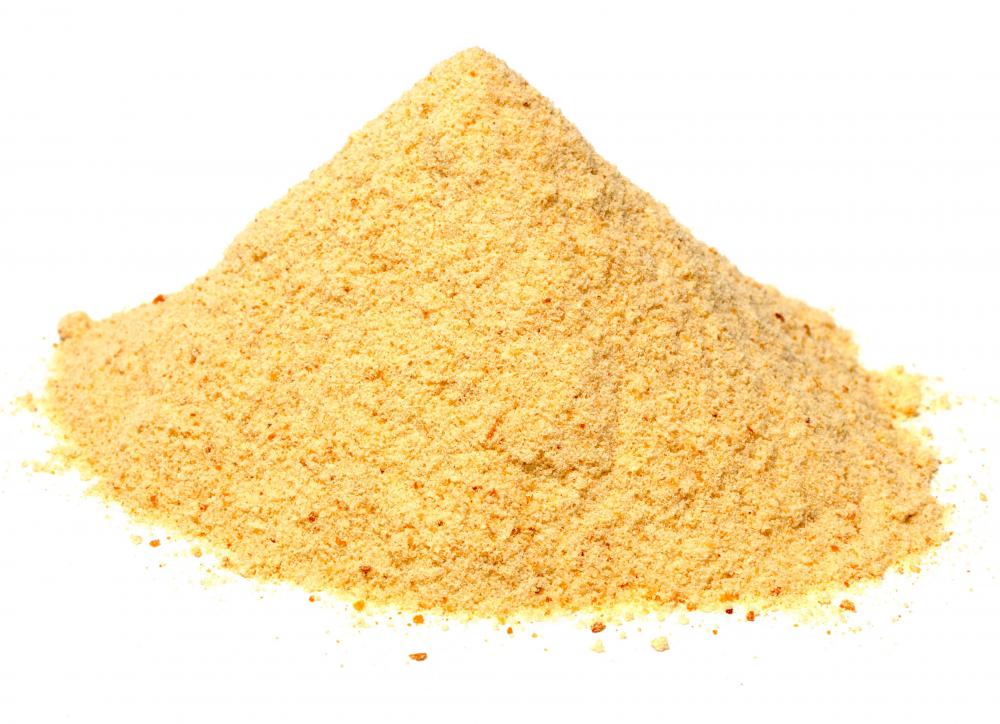
![Breadcrumbs are used as an ingredient in some recipes for figgy pudding.]() By: VidadyBreadcrumbs are used as an ingredient in some recipes for figgy pudding.
By: VidadyBreadcrumbs are used as an ingredient in some recipes for figgy pudding.


Discussion Comments
My Grandmother used to make plum pudding for every Christmas dinner when I was a young child. It came to the table in all its flaming glory! Since it is extremely sweet, a very small portion was enough. And, as if the pudding itself wasn't sweet enough, it was served with warm hard sauce: brown sugar, flour and rum or brandy.
After Grandma died, my Mom and I searched and searched for the recipe. Not until I looked in her household journal did I find it, listed under "Mother's Plum Pudding." The family emigrated from England when Grandma was five years old, and I wanted to continue the tradition. So now my daughter, her two girls, and my son and his daughter all have a copy of the recipe.
Great-grandma's ingredients include dried bread crumbs, flour, baking powder, salt, butter, grated orange rind, mincemeat (instead of suet), molasses and eggs. Steamed for three hours. Absolutely delicious!
Pudding in America is a particular type of dessert. In Britain, it's not necessarily so.
I made this for the first time this year, since I was curious to try it, love figs and am not keen on traditional Christmas pudding. I used dried figs soaked overnight in Amaretto, so it smelled heavenly. It turned out a bit fatty but quite light. I'll make it again and try to use less butter, I think. It's very rich so you don't need much. Oh and pudding isn't slang for dessert; it's a type of dessert.
Our American family has now had figgy pudding with cream for several Christmases with our new English relatives (daughter married a Brit) and today our daughter served a purchased figgy pudding for Christmas dinner.
We have all learned to enjoy it and it seems to be taking on as a tradition with us all. There is little difference between the purchased and the one homemade by the English mother-in-law. If you like fruitcake you should also like figgy pudding.
I felt curiosity about it. The Christmas song sounds like a big messy pudding, but it must be really chewy and with lots of tiny seeds -- something rather unusual for a Dominican lady. We love cakes but this would be a nice, unusual idea to try.
I've had and served figgy pudding many times. Wow. These were made in little ramekins with flaming brandy poured (a teaspoonful) over the top. Construction-wise, it's akin to carrot cake or spice cake. I've found dried figs in standard grocery chains in round plastic boxes - they are great for toddlers to teethe on (naturally sweet, high in Vitamin C, not crumbly).
I am English and have never had figgy pudding, but contrary to what some of you think, I reckon it would be delicious. Although I would be tempted to make a sticky toffee pudding instead and use figs instead of dates and tell my children that that is figgy pudding instead. Steaming stuff is a right pain. If you can access the BBC website in america there are some lovely xmas recipes on it.
My family had a tradition of serving a Christmas pudding that was called suet pudding that sounds, I now realize, very like Figgy pudding. It was the most delicious desert that we all couldn't wait to have. Instead of figs, my grandmother put in raisins. She probably couldn't find figs down on the farm in Iowa.
"Pudding" is old English slang meaning dessert. Many old English after-dinner coffee cakes are referred to as pudds or puddings.
Definitely use dried figs in the recipe. All christmas pudding recipes are based on dried fruit (England was not the place to find fresh fruit in the pre mass import and refrigeration days).
i have never tried it. sounds good.
It's an easier and almost identical consistency when you mix up a batch of bread pudding and throw in dried figs that you'd watered down and warmed to soften for a few seconds til it's soft and added in to the pudding. Cook all in a bain marie in the oven. cuts the time of cooking by two-thirds!
This sounds horrific. Even the English wouldn't want some! Give me pumpkin pie any day.
A real recipe would be nice.
William Woys Weaver, in his The Christmas Cook, c 1990, Harper Perennial, suggests that mid-19th century American cooks who could not afford imported figs from Italy or Spain used "tomato figs": tomatoes cooked in brown sugar, then sun dried.
yum!! where can you get some good, fresh figs this time of year? and should you use dried or fresh figs?
Post your comments