
At DelightedCooking, we're committed to delivering accurate, trustworthy information. Our expert-authored content is rigorously fact-checked and sourced from credible authorities. Discover how we uphold the highest standards in providing you with reliable knowledge.
What is Fennel?
 Mary Elizabeth
Mary Elizabeth
Mary Elizabeth
Fennel, also called common fennel or bronze fennel, is a plant (Foeniculum vulgare) that yields both a seed-like fruit and the leafy growth used as an herb. The variety Foeniculum vulgare var. azoricum, known as Florence fennel, finocchio, or sweet anise, has a bulb with celery-like stalks, which are eaten as a vegetable. The vegetable is often confused with the vegetable part of the anise plant, and its "seed" may be confused with aniseed. This plant is in the same family, Apiaceae, as anise, dill, cilantro, caraway, and cumin, and the flavor is similar to anise.
History
The Roman historian Pliny recommended this plant as an aid for eyesight. It was on Charlemagne's list of herbs, and Florence fennel was Thomas Jefferson's favorite vegetable.
Description

Like a number of the other herbs in its family, common fennel is a tall plant, often reaching a height of 5 ft. (1.5 m), and topped with the characteristic feathery leaves. Florence fennel, while sharing the feathery leaves, attains a height of about 2 ft. (60 cm). The flowers are yellow.
Gardening
Common fennel is a sun-loving perennial, while Florence fennel is an annual grown from seed which prefers cooler weather. Since these plants can damage other plants grown with them, it should be planted in its own bed.
Food and Other Uses

The herb is a key flavoring in Italian sausage, baked goods including zuccherini or Italian wedding cookies, soup, and fish dishes. Sometimes found in mirepoix and herbes de Provence, fennel may also be used in curry and Chinese five spice powder. The vegetable can be prepared with pork, veal, or fish; appear raw in salads; or be used in stuffing and sauces. Fennel liqueur is called Finocchietto.
Preservation
Fennel leaves and fruit can both be dried, and the leaves can also be frozen. To harvest the fruit, the dead flower heads should be gathered and stored in closed paper bags in a cool dry place until they are needed. The vegetable is best used fresh.
Mary Elizabeth
Mary Elizabeth is passionate about reading, writing, and research, and has a penchant for correcting misinformation on the Internet. In addition to contributing articles to DelightedCooking about art, literature, and music, Mary Elizabeth is a teacher, composer, and author. She has a B.A. from the University of Chicago’s writing program and an M.A. from the University of Vermont, and she has written books, study guides, and teacher materials on language and literature, as well as music composition content for Sibelius Software.
Learn more...
Mary Elizabeth
Mary Elizabeth is passionate about reading, writing, and research, and has a penchant for correcting misinformation on the Internet. In addition to contributing articles to DelightedCooking about art, literature, and music, Mary Elizabeth is a teacher, composer, and author. She has a B.A. from the University of Chicago’s writing program and an M.A. from the University of Vermont, and she has written books, study guides, and teacher materials on language and literature, as well as music composition content for Sibelius Software.
Learn more...AS FEATURED ON:
AS FEATURED ON:


-
![Trimmed fennel bulb.]() By: JessmineTrimmed fennel bulb.
By: JessmineTrimmed fennel bulb. -
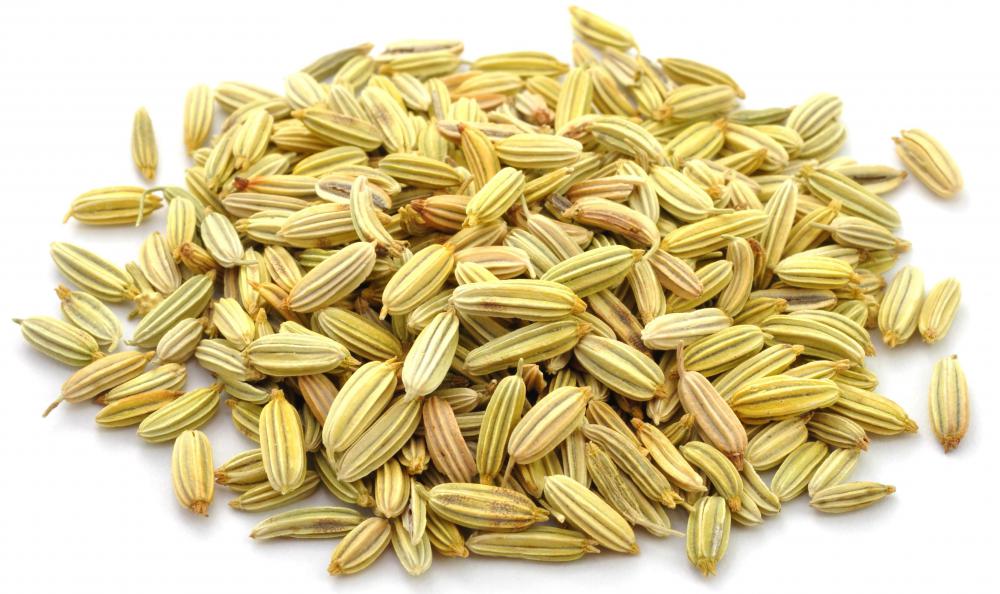
![Dried fennel seeds.]() By: photocrewDried fennel seeds.
By: photocrewDried fennel seeds. -
![Fennel has been used for thousands of years to help improve eyesight.]() By: Mikhail MalyuginFennel has been used for thousands of years to help improve eyesight.
By: Mikhail MalyuginFennel has been used for thousands of years to help improve eyesight. -
![Some seasonal markets stock fennel and other veggies that are grown in the vicinity.]() By: BoggySome seasonal markets stock fennel and other veggies that are grown in the vicinity.
By: BoggySome seasonal markets stock fennel and other veggies that are grown in the vicinity.


Discussion Comments
@SarahSon - I had never thought about using fennel essential oil. I have used it in cooking for a long time, but have never used it for any therapeutic purposes.
I think fennel really brings out the taste and flavor of many foods. It does have a distinct taste, so a little bit can go a long ways. Using it in soup is probably the way I use it most often.
Adding fennel to tomato soup, along with some onion and garlic really adds a special flavor. Some people like to eat it fresh, but I don't care so much for it this way.
I have seen it cut up on a relish tray, and it has a crunch like celery, but tastes more like licorice. If I ate it more often, I might acquire a taste for it, but I love using it when I am cooking.
Like most herbs, there are many different uses for fennel. I like to use therapeutic essential oils for some home remedies, and use fennel for a couple different things.
It isn't my favorite smelling oil, but it works well for what I am using it for. To me it has an earthy smell that smells like licorice or anise.
I apply this oil around my eyes to help with puffy eyes. If I have not had a good night of sleep, I have those puffy eyes in the morning, and this helps reduce the puffiness.
This is also a good oil to use for PMS symptoms. I apply a few drops on my abdomen, and it helps with cramping and keeping my hormones in balance.
@seag47 – Unfortunately, fennel doesn't do well in clay or in shade. It sounds like you may be stuck buying it from the grocery store.
I have grown fennel before, and it needs full sun in order to develop to its full potential. Also, it doesn't like for the ground to be very moist. It's important not to water it too much.
I live in an area with mild summers, so I can grow fennel easily. I just have to grow it separate from my caraway, because that is one of the plants that will not do well next to fennel.
I would like to try to grow some fennel in my garden, but I don't know much about the conditions that this plant would need to grow. My yard is pretty shady, so many types of plants don't do well here.
Also, the soil here has a lot of clay in it. Is that bad for growing fennel, or would it do okay in this type of dirt?
I ate some fennel stalks in a salad at my friend's house, and I really liked the flavor. They remind me of celery, but they also have a slight cabbage flavor to them, along with something else I can't quite pinpoint. I would eat them all the time if I could grow them myself.
@cloudel – I think that fennel works so well at treating your IBS because it has the ability to lessen the severity of cramps. This is why I take it during my menstrual cycle.
I don't like the taste of licorice, so I avoid the tea. Instead, I take a fennel supplement. I only take it for one week once a month, because that is really the only time I need it.
I used to have such severe menstrual cramps that I would have to miss work and stay in bed. The fennel supplement has helped lessen the pain so much that I can go about my regular routine during that week. I still feel cranky and a little bad, but the debilitating cramps are gone.
I have a lot of problems with gas and stomach pains, and fennel tea is good at treating this. My doctor diagnosed me with irritable bowel syndrome a few years ago, but the medications I was taking for that didn't eliminate my symptoms. I went to a health food store in search of a natural remedy.
The lady who worked there told me that fennel tea is known for relieving painful gas and indigestion. She also told me that it was caffeine free, which was good news to me. I try to avoid caffeine, because it makes me very jittery.
The fennel tea tastes a lot like licorice candy, and it also reminds me of root beer without the carbonation. It is a shocking taste at first sip, but after awhile, it becomes addictive.
i have a juicing recipe and it calls for 1/2 bulb of fennel. i have never heard of this so was looking to see what it is.
It could be that the poster was thinking in terms of a homeopathic use.
Creepyola, or not? We think not.
that's a creepy question.
Hello i would like to know if it is safe to use on human and animal skin?
Post your comments