
At DelightedCooking, we're committed to delivering accurate, trustworthy information. Our expert-authored content is rigorously fact-checked and sourced from credible authorities. Discover how we uphold the highest standards in providing you with reliable knowledge.
What is Farro?
 Niki Foster
Niki Foster
Niki Foster
Farro is a type of wheat that was among the first plants to be domesticated in the Middle East. It is low yielding and has been largely replaced over the centuries by other crops, but it remains as a relict species in mountainous areas of Europe and Asia. The plant grows in wild and cultivated varieties, and it is still a popular food in some areas of the world, notably Italy.
There is some confusion about the difference between farro, emmer, and spelt. According to the United States Department of Agriculture's Germplasm Resources Information Network (GRIN), farro is listed as a common name for Triticum aestivum L. subsp. spelta, or spelt, and Triticum turgidum L. subsp. dicoccon, also called emmer wheat. It has been suggested that the name was used in different parts of Italy to describe different types of wheat, leading to this confusion. When cooking, however, it is important to note that farro and spelt may not be interchangeable in all recipes, so it is important to use the grain that is called for.

Farro grows wild in the Fertile Crescent area of the Middle East. The seeds self-propagate by digging into the soil with their awns, spiky filaments that can also be seen on the heads of emmer wheat. The awns expand and contract in reaction to changes in humidity, causing the seeds to burrow into the soil and grow. The plant grows well even in poor soils and is resistant to fungus.

The earliest evidence of the domesticated crop was found at a site carbon dated around 7700 BCE, near Damascus in modern-day Syria. Wild plants were found at an archaeological site carbon dated around 17,000 BCE, in modern-day Israel. Emmer wheat was especially valued in ancient Egypt, where it was the staple crop. References to the plant appear in ancient Hebrew, Greek, and Latin sources. It later became an important crop in northeastern Europe, beginning around the 4th century BCE.

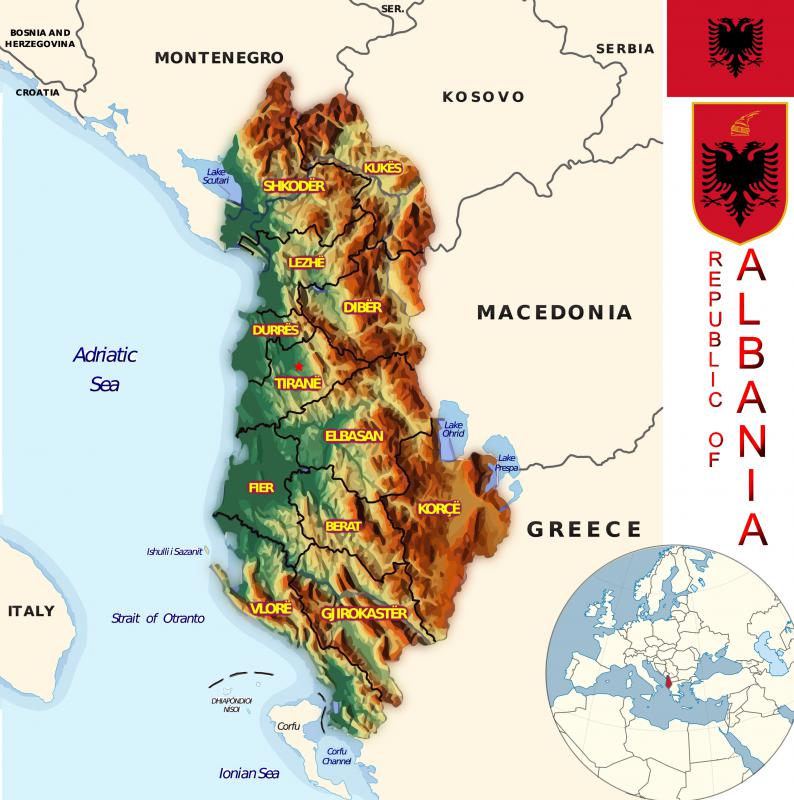
Though farro is no longer grown much around the world, Italy is an exception. That grown in Italy is popular beyond the country's borders, especially in European health food and specialty stores. It's also grown today in Albania, Morocco, Spain, Turkey, Switzerland, and the Carpathian mountains on the border of the Czech and Slovak republics, though not to the extent that it is grown in Tuscany.

In Italy, farro is often eaten as whole grains in soup. It's also available as a pasta, though this form is not as popular; it is mainly considered a health food. In Switzerland, the grain is used to make bread, as it was in ancient Egypt. It is also sometimes used as animal feed.
Niki Foster
In addition to her role as a DelightedCooking editor, Niki enjoys educating herself about interesting and unusual topics in order to get ideas for her own articles. She is a graduate of UCLA, where she majored in Linguistics and Anthropology.
Learn more...
Niki Foster
In addition to her role as a DelightedCooking editor, Niki enjoys educating herself about interesting and unusual topics in order to get ideas for her own articles. She is a graduate of UCLA, where she majored in Linguistics and Anthropology.
Learn more...AS FEATURED ON:
AS FEATURED ON:


-
![Farro grains.]() By: al62Farro grains.
By: al62Farro grains. -
![Farro grows wild in parts of the Middle East.]() By: TRITOOTHFarro grows wild in parts of the Middle East.
By: TRITOOTHFarro grows wild in parts of the Middle East. -
![Farro is grown in Switzerland, where it is used to make bread.]() By: pavalenaFarro is grown in Switzerland, where it is used to make bread.
By: pavalenaFarro is grown in Switzerland, where it is used to make bread. -
![Farro is a type of wheat, and can be used to make flour.]() By: Studio GiFarro is a type of wheat, and can be used to make flour.
By: Studio GiFarro is a type of wheat, and can be used to make flour. -
![Albania grows a significant amount of farro.]() By: juan35mmAlbania grows a significant amount of farro.
By: juan35mmAlbania grows a significant amount of farro.


Discussion Comments
Not all wheat has high gluten, actually. A recent article about a baker in San Francisco reports that if you use certain soft wheats, particularly Turkish wheat, they are much lower in gluten. If you then ferment them with sourdough starter, the bacteria will eat up the gluten over time.
The SF baker ferments his extra long (a month in a refrigerator) before baking his loaves, and they test out under 12 parts per million, which means they qualify as gluten-free! Many gluten-allergic people are buying every loaf he makes because they can eat it without any problem, and it's yummy (presuming you like sourdough).
Unfortunately, commercially grown wheat is hard and ultra-high in gluten. It was chosen for reliability and high yield, but produces a bread completely unlike that which our ancestors ate. Hence the many allergies and sensitivities? So commercial flours are very high in gluten.
Are farro and kasha the same thing?
@anon132388: I agree with anon153632. Quinoa, I think, is a good replacement grain for many purposes. I am a Type 2 diabetic, and rice sends my blood sugar into orbit. However, I can eat a moderate serving of quinoa, with few ill effects. This is really helpful when I want Indian food or something that traditionally is served with rice. It's becoming easier to find, too.
anon37765: Could you please explain in plain english exactly what you are trying to say?
anon132388: I would try quinoa. it's not like rice or farro, it's more like a seed, but it has protein and is not in the wheat family.
I just bought my first farro ever. I appreciate anon37765's overview. It was very helpful.
Most importantly, for people who have gluten sensitivity, which of these grains would be acceptable, if any? It seems they are all forms of wheat, which we know has high gluten. Thank you.
I appreciate Anon37765's very thorough explanation, in practical terms:
what is the cooking difference between emmer and farro? what is the nutritional difference?
And to the person asking if farro is a good whole grain, healthier choice, it's delicious! Hot or cold, it's wonderful.
If someone is looking for a healthier choice, a whole grain, would farro be a good choice?
@anon37765: Delighted to hear you expand on the appropriate current taxonomy.
Helluva funny, as well as informative. Glad you took the time!
So there you have it! This would just have to be the last word on the subject. Many thanks!
im sitting here with a bag of farro pasta in my roman kitchen. indgredients: "farina integrale di farro (triticum dicoccum)."
so farro can be emmer.
Seems like rather than endlessly debating whether the term "farro" should be used for emmer or spelt, writers should just use "emmer" or "spelt." Most people just want to know which one to use in a recipe. And for the history buffs among us, which was the grain used by the ancient Egyptians and later the Romans.
Farro, an ancient wheat grain, has become quite popular these days among ingredient-driven chefs and cooks. With this new found interest a lot of misinformation has also come along. I’m not sure when it began, but possibly as a result of a misinformed article written by Heidi Julavits in a New York Times Sunday magazine piece from November 2008. Julavits made a classic mistake often made by food writers in relying on morphological characteristics in trying to understand wheat taxonomy as has her source popular food science writer Harold McGee. Modern germ plasm research has superseded morphological characteristics as a means of taxonomic identification for a variety of reasons and studies using DNA-based molecular markers such as random amplified polymorphic DNA markers (RAPD), simple sequence repeats (SSRs), and amplified fragment length polymorphisms (AFLPs) are needed to settle these types of questions. Wheat taxonomy is quite complex and one must make a distinction between dipolid, tetrploid and hexaploid wheats, then between hulled and naked grain and finally between wild and domesticated. Julavits' article, partially titled “farro is not spelt” is based on morphological distinctions of the most amateur kind. The reason McGee made a mistake too, calling "farro the Italian word for emmer wheat" (which it is not, although you will find Italians using it to refer to any ancient wheat be it spelt or emmer), is because he too was considering morphological characteristics as opposed to looking at hexaploid and tetraploid wheats. Here is what all this is:
Emmer wheat is domesticated hulled grain wheat of the tetraploid group with 28 chromosomes represented by three subspecies whose Latin binomials are Triticum turgidum L. subsp. diococcum (syn. T. diococcum Shrank); T. ispahanicum Heslot; and T. turgidum L. subsp. paleocolchicum.
Farro, the Italian word, is spelt wheat, a domesticated hulled grain wheat of the hexaploid group with 42 chromosomes whose Latin binomial is Triticum aestivum L. subsp. spelta (syn. T. spelta L.)
Ergo, farro is spelt wheat not emmer wheat as claimed by Julavits and McGee.
But let me add more. Many food writers are quite insistent that farro is emmer. They may claim that Italian farmers are known to claim farro is emmer. But what an Italian farmer claims don't make it so. It's true that in the common language (of Italian) farro is a word used for emmer. Italian cytogenetic researchers though don't make this mistake. The GRIN Taxonomy for Plants which provides nomenclature for accessions of the National Plant Germplasm System, of the U.S. ARS is rather clear about this: Farro is not T. dicoccum but T. aestivum L. subsp. spelta. Incidentally, in modern taxonomy T. diococcum has been superseded by T. turgidum L. subsp. diococcum.
Post your comments