
At DelightedCooking, we're committed to delivering accurate, trustworthy information. Our expert-authored content is rigorously fact-checked and sourced from credible authorities. Discover how we uphold the highest standards in providing you with reliable knowledge.
What is Extra Virgin Coconut Oil?
Unlike with olive oil, the standards for distinguishing quality distinctions in coconut oil are not governed by any fixed guidelines at present. Because of this, there is no actual category of "extra virgin coconut oil" that can be defined by a specific group of criteria. This term is generally used as a marketing strategy to emphasize purity or quality. In fact, both "virgin" and "extra virgin coconut oil" are likely to be the same in composition.
Rather than the many subcategories that distinguish between grades of olive oil, coconut oil can be divided into two primary classes: virgin and refined.

Virgin Coconut Oil
Virgin coconut oil is made from the meat of fresh coconuts. There are a few different methods used to extract the oil from the coconut meat. In the wet-milling method, the fresh coconut meat is pressed, and the liquid that is released, called coconut milk, is then separated into coconut water and coconut oil.
This separation process may be carried by a variety of means, including mechanical separation by centrifuge, spinning the two liquids apart, or by subjecting the coconut milk to a extremes of temperature, fermentation, or even enzymatic activity.

Wet-milling may also be carried out by a process called direct micro-expelling (DME), in which the oil is cold-pressed from the fresh coconut meat within an hour of opening the nut. The DME method is considered by many to represent the gold standard of coconut oil production, as it produces oil that remains raw and unrefined, is not hydrogenated, and is free from impurities. Alternatively, fresh coconut meat may quick-dried to remove the water, and the oil is then extruded from the flesh by pressing.

Refined Coconut Oil
Refined coconut oil is considered to be inferior to virgin oil. It is made from copra, or coconut meat dried by smoking, kiln drying, or sun drying. This is not the same as coconut meat that is quick-dried to produce virgin coconut oil. The copra used to produce refined oil is often subjected to unsanitary conditions and is therefore unfit for human consumption until it has undergone a purification—or refining—process.

Coconut oil that has undergone the refining process is labeled "RBD" coconut oil, or "refined, bleached, and deodorized." RBD coconut oil is often hydrogenated and is sometimes obtained by use of chemical solvents. Hydrogenated oil contains trans-fatty acids, diminishing the health benefits that would otherwise be obtained from coconut oil.
Uses of Coconut Oil
Hydrogenated coconut oils can be found in processed foods such as snack cakes and coffee creamers. Because of the current awareness of the negative effects of trans-fatty acids on human health, coconut oil has gotten a bad reputation. But emerging research seems to indicate that consumption of virgin coconut oil—also referred to as "extra virgin coconut oil" by some producers, especially when the DME method is employed—may have some health-supportive benefits.
Virgin coconut oil contains a relatively high percentage of medium-chain fatty acids such as lauric acid, believed by some supporters to have antiviral and metabolism-supporting effects. Coconut oil marketed for its health-and-wellness properties may typically be labeled as extra virgin coconut oil.
Coconut oil may be used as a culinary oil for both cooking and nutritional purposes, as a moisturizer for the skin, and as a conditioner for the hair.
AS FEATURED ON:
AS FEATURED ON:


-
![Coconut oil is a versatile product, smoothing skin and hair.]() By: yo-Coconut oil is a versatile product, smoothing skin and hair.
By: yo-Coconut oil is a versatile product, smoothing skin and hair. -
![Coconut oil is extracted from the meat of a coconut.]() By: matesCoconut oil is extracted from the meat of a coconut.
By: matesCoconut oil is extracted from the meat of a coconut. -
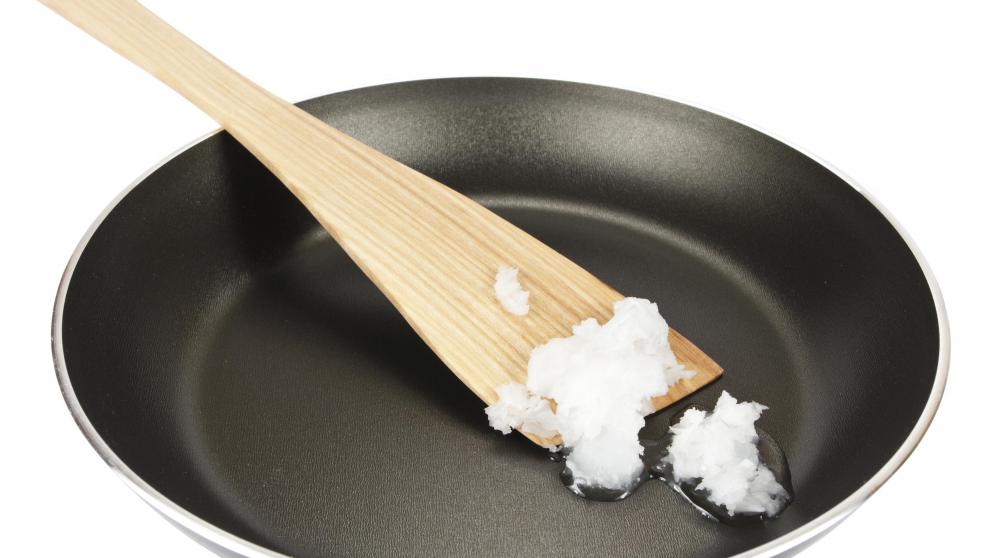
![Coconut oil can be purchased either refined or unrefined, though refined is best for high-heat cooking.]() By: jurgajurgaCoconut oil can be purchased either refined or unrefined, though refined is best for high-heat cooking.
By: jurgajurgaCoconut oil can be purchased either refined or unrefined, though refined is best for high-heat cooking. -
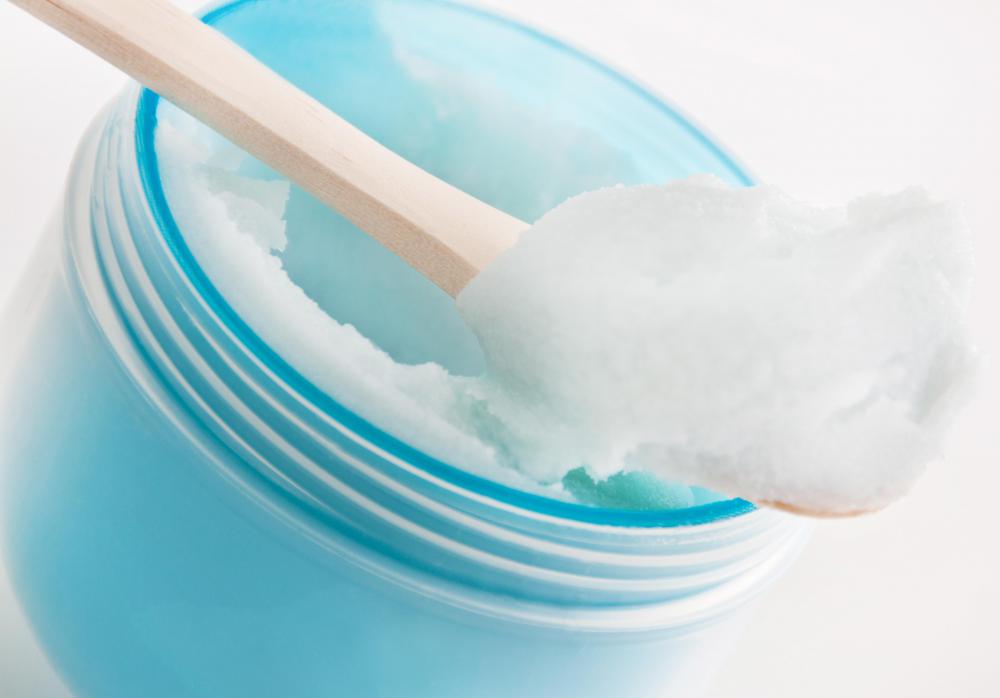
![Extra virgin coconut oil is used in homemade moisturizers for the skin and hair.]() By: PhotoSGExtra virgin coconut oil is used in homemade moisturizers for the skin and hair.
By: PhotoSGExtra virgin coconut oil is used in homemade moisturizers for the skin and hair.


Discussion Comments
I believe the food and drug administration was too quick to put a bad rap on this oil. It happened if you remember when our youth pop first started to have over weight issues. they did some quick test and... Did they look anywhere else besides the movie popcorn oil?
Thanks for the info. it really helped me.
Thanks for this info. i have been using MeritVCO extra virgin coconut oil. it's excellent for skin care.
any chance of coconut oil treating dry eyes?
is there any procedure to separate lauric acid from virgin coconut oil.
Post your comments