
At AboutMechanics, we're committed to delivering accurate, trustworthy information. Our expert-authored content is rigorously fact-checked and sourced from credible authorities. Discover how we uphold the highest standards in providing you with reliable knowledge.
What is Etching?
Etching is a printmaking process that dates back 500 years. It involves sheets of metal, usually made of copper or zinc, and acid used to etch the print onto the metal. The artist can use complicated methods to create different effects, but always relies on acid to create an image on the plate. The more complicated the image, the more time consuming and expensive it will be.
To begin an etching, an artist must first coat a blank copper plate with wax. Using a steel needle, she draws her intended picture through the wax and onto the metal. The metal is then submerged into a bath of acid and left for about two hours. The acid will eat away at the copper that has been exposed by the needle to leave grooves, marks, and textures in the metal.

The plate is then taken out of the acid bath and the wax is cleaned off, leaving a shiny, copper plate with the image etched onto it. This can be repeated again and again by rewaxing the plate. By rewaxing, the artist can add layers or more complicated images onto the original drawing, then put it back into the acid bath once she is happy with the image she has.
The next stage of the process is to apply printing ink into the lines of the plate. Once the plate is wiped again with a stiff cloth, it will leave the ink in the lines and grooves. The inked plate is then placed in a hand-printing press with two heavy rollers, and damp paper is placed on top of the plate and squeezed through the rollers using great pressure.
When the paper is carefully peeled off, the image will be printed onto it. People can always tell a genuine etching because the edges of the plate will leave an indentation on the paper. If an artist wants to make another print, she simply puts more ink onto the plate, wipes it off, and then puts it back through the rollers with another piece of paper. The end result is the simplest form of etching.
There are more complicated ways to create more intricate etchings by using a number of different plates and colors. There is also a process to add different tones to the image that involves adding resin dust to the plate and heating it. The result looks like fine sandpaper, and the artist simply varnishes the plate wherever she doesn't want this texture. When she puts it in the acid bath, the acid will eat away at the resin dust to give a texture that holds the ink. The longer the plate is left it in the acid, the darker the tones will be.
AS FEATURED ON:
AS FEATURED ON:









-
![Steel needles are used to lay down a design during the etching process.]() By: Africa StudioSteel needles are used to lay down a design during the etching process.
By: Africa StudioSteel needles are used to lay down a design during the etching process. -
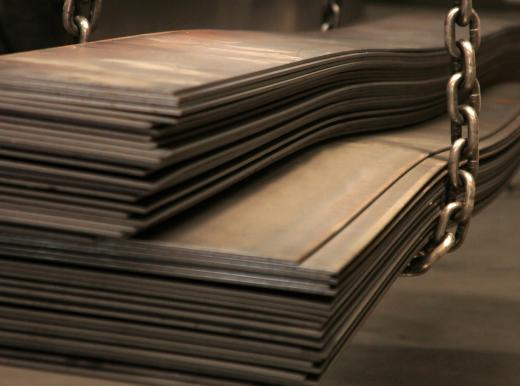
![Etching can be used to artistically cut sheets of metal.]() By: KybeleEtching can be used to artistically cut sheets of metal.
By: KybeleEtching can be used to artistically cut sheets of metal.


Discussion Comments
just wanted to tell y'all that etching can be done through a zinc plate also! You need a etching press, hard ground, nitric acid, needle, printing ink and and some other things too! When you take the print through the etching press, you get the design on the paper.
P.S - this post was amazing! Thanks.
What is the simplest and cheapest method of creating the etching effect?
This is amazing, but are there other kinds of etching though? Because I went to the art gallery and the etchings there seemed created differently from this. I'm rather confused.
I have been doing etching with nital 5 percent for stainless steel and low carbon steel for time two minutes.
In microscope. Micro structure of steel can not see. What is the solution of my problem?
well we have been doing mini projects in art and we did a giorgio morandi etching sort of thing but we just used pen and paper. what is that called?
very nice.
Finally, I understood what is etching, thank you very much, good explanation.
What is the purpose of etching?
Can anyone give me a brief idea about 'reactive ion etching'?
which chemicals are used in etching of stainless steel?
how can you etch onto paper then?
i think that copper etching is amazing, I've been doing it at school and it makes me feel shocked and amazed, thanks whoever created this
Hi. An excellent explanation on etching. Thank you.
David.
Why did etching fall out of favor in the 1920's?
Post your comments