
At AllThingsNature, we're committed to delivering accurate, trustworthy information. Our expert-authored content is rigorously fact-checked and sourced from credible authorities. Discover how we uphold the highest standards in providing you with reliable knowledge.
What is Erosion?
 Mary McMahon
Mary McMahon
Mary McMahon
Erosion refers to the gradual transport of materials around the Earth's surface. Since it always travels in a down-slope direction, it can result in the wearing away of natural features. Erosion is one of the most important processes shaping the Earth's surface. In fact, if the Earth was tectonically stagnant, these forces would eventually smooth out the entire surface of the Earth, creating a global ocean.
Many people think of poor land use practices when they visualize erosion, since some startling images of problems caused by deforestation and overgrazing have been well circulated. However, it is also a natural process, and an important one, since it moves nutrients around and shapes hospitable places on earth for plants and animals alike. The process is paired with deposition, the buildup of rocks and sediment in new configurations.

Several different processes are involved in natural erosion. Weathering, transportation, and dissolution are three of the most common, although it can also be caused through abrasion and corrosion. Wind, water, gravity, and ice move the solids on the Earth's surface around in constantly changing patterns. Some of the most dramatic examples have been caused by ice, as it moves somewhat like a fluid but it also packs considerable destructive power as it expands and contracts. The massive fjords of Norway, for example, represent a form of glacial erosion.

Many people have noticed that water is also a powerful erosive force, especially during times of heavy rain when rivers may turn brown with silts and sediments. Erosion into rivers has been greatly accelerated by human activity, which loosens the topsoil around rivers, making it vulnerable to run off. The nutrient-rich topsoil ends up being carried out to sea, where it ultimately settles across the continental shelf and continental rise to feed various sea creatures.

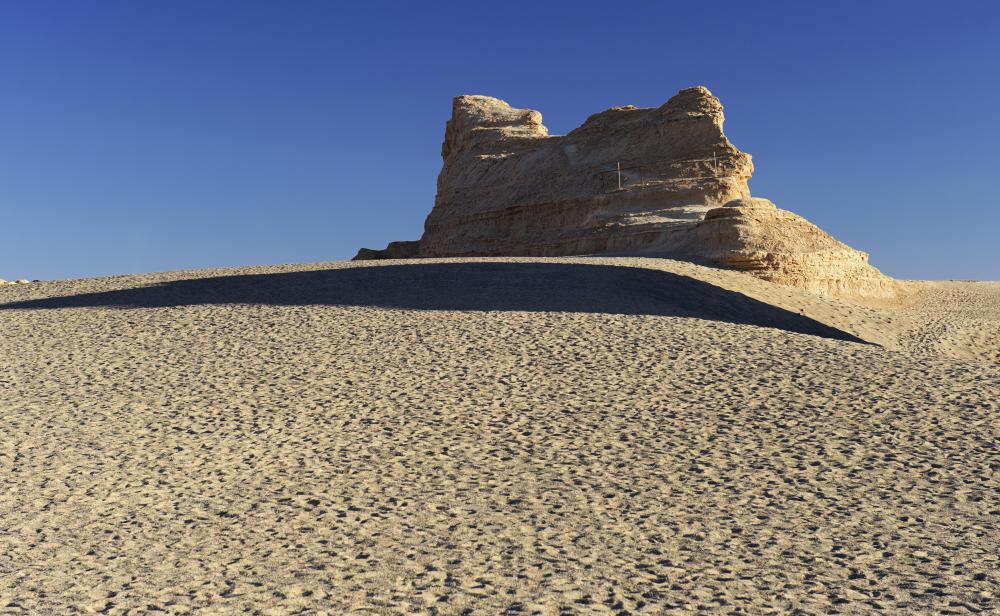
Wind and gravity can also be formidable, especially when combined with water. As was seen during the Dust Bowl of the 1930s, wind is perfectly capable of transporting large amounts of material; many of the world's sand dunes were created through wind transportation. Gravity is also constantly at work, pulling solids downslope and slowly rearranging the environment. Rock and mudslides are excellent examples caused by gravity.

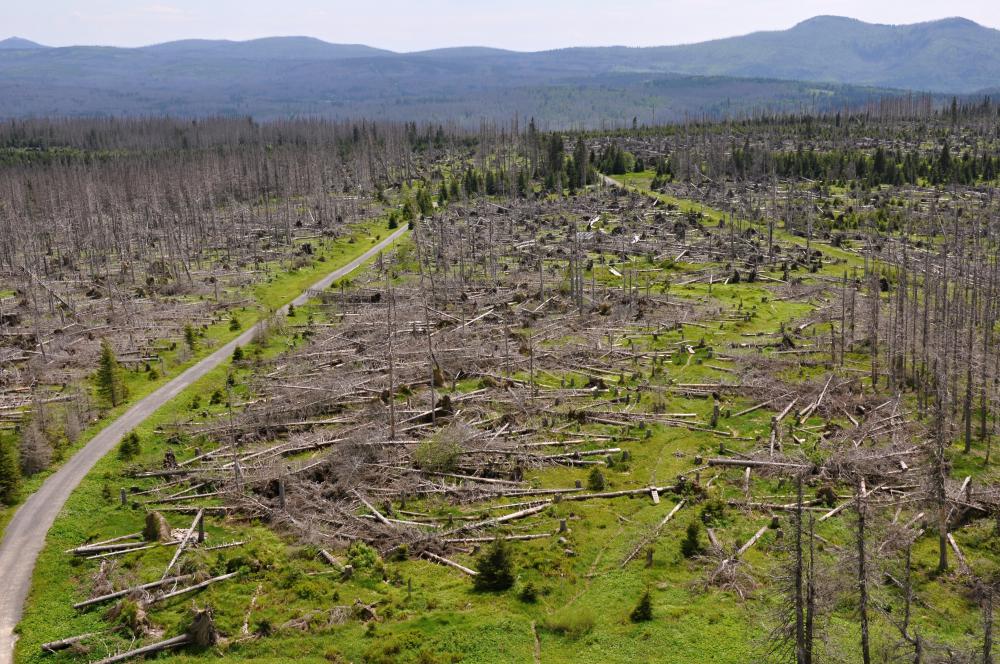
When land is eroded at a slow and natural pace, it can be a good thing. The displaced solids reform in new areas as the landscape gradually changes, and fresh habitat emerges for new flora and fauna. When erosion is extreme, however, it can be destructive. Humans are often responsible for extreme cases, which can carry away most of the topsoil, leaving a layer of unusable dirt and rock behind. Human-caused erosion can also result in large cliffs and gullies that disrupt the landscape.
Frequently Asked Questions
What is erosion and how does it occur?

Erosion is the process by which natural forces like water, wind, ice, or gravity wear away and transport soil, rock, or dissolved material from one location to another. It occurs over time as these elements break down earth materials and move them, often leading to changes in the landscape such as the formation of valleys and coastlines.
What are the main types of erosion?
There are four main types of erosion: water erosion, wind erosion, ice (glacial) erosion, and gravity erosion. Water erosion is caused by rainfall and runoff, shaping valleys and riverbanks. Wind erosion can strip away topsoil, especially in arid regions. Ice erosion occurs as glaciers move, carving out landforms like U-shaped valleys. Gravity erosion includes landslides and rockfalls.
What are the effects of erosion on the environment?
Erosion can have significant environmental impacts, including loss of fertile topsoil, reduced agricultural productivity, sedimentation of waterways, destruction of habitat, and increased risk of natural disasters like landslides. According to the USDA, soil erosion can lead to a loss of up to 2.5 billion tons of topsoil each year in the United States alone.
How do human activities contribute to erosion?
Human activities such as deforestation, overgrazing, urbanization, and poor land management practices can accelerate erosion. For example, removing vegetation exposes soil to the elements, while construction and mining can disrupt the land's natural state, increasing the rate of erosion significantly compared to natural processes.
What are some methods used to prevent or control erosion?
To prevent or control erosion, methods such as planting vegetation, using mulch or erosion control blankets, constructing terraces on slopes, and building retaining walls are employed. Additionally, sustainable agricultural practices like no-till farming help maintain soil structure and reduce erosion. These techniques work by stabilizing the soil and absorbing the energy of erosive forces.
Can erosion have positive effects on the environment?
While often seen as destructive, erosion also plays a natural role in shaping landscapes and creating diverse ecosystems. For instance, erosion can form new habitats like deltas, which are rich in biodiversity. It also recycles nutrients as materials are broken down and moved, contributing to soil formation in other areas, thus supporting plant growth and ecological succession.
Mary McMahon
Ever since she began contributing to the site several years ago, Mary has embraced the exciting challenge of being a AllThingsNature researcher and writer. Mary has a liberal arts degree from Goddard College and spends her free time reading, cooking, and exploring the great outdoors.
Learn more...
Mary McMahon
Ever since she began contributing to the site several years ago, Mary has embraced the exciting challenge of being a AllThingsNature researcher and writer. Mary has a liberal arts degree from Goddard College and spends her free time reading, cooking, and exploring the great outdoors.
Learn more...AS FEATURED ON:
AS FEATURED ON:









-
![Slow and natural erosion can create new habitats for flora.]() By: Vitaly KrivosheevSlow and natural erosion can create new habitats for flora.
By: Vitaly KrivosheevSlow and natural erosion can create new habitats for flora. -
![Deforestation can cause erosion.]() By: ondrej83Deforestation can cause erosion.
By: ondrej83Deforestation can cause erosion. -
![Sand dunes are often created by wind transportation.]() By: Paul LemkeSand dunes are often created by wind transportation.
By: Paul LemkeSand dunes are often created by wind transportation. -
![Wind erosion shapes rocks into crests and ridges, forming yardangs.]() By: Jack.QWind erosion shapes rocks into crests and ridges, forming yardangs.
By: Jack.QWind erosion shapes rocks into crests and ridges, forming yardangs. -
![Some sea stacks form after sea cliffs erode over time.]()
Some sea stacks form after sea cliffs erode over time.



Discussion Comments
Many people may not realize it, but all sedimentary rock is the result of erosion and weathering. As the author pointed out sediment created by erosion tends to move down slope, creating a layers of sediment that are perpendicular to the force of gravity. If you ever travel through the Southwestern United States, this effect of erosion can be seen firsthand. This is why the layers in the red rocks of Sedona are all horizontal.
You may be asking yourself how this is true when there is sedimentary rock that is not horizontal. The truth is sedimentary rock may form diagonal layers, but only because some destructive force caused this to happen well after the sedimentary rock was formed. If you ever see that there is an outcropping of rock strata that is at an angle to the horizon, you will know that the seismic or volcanic event that caused this is younger in geologic time than the layers of rock strata that make up the outcropping.
It should be noted that the expansion and contraction of ice is a cause of weathering while the landscape changes caused to the lithosphere by moving glaciers is considered erosion. While the two processes may be simultaneous, they are still very different things. Erosion involves the movement of regolith by fluids (It should be noted that in erosion, wind acts as a fluid), or mass wasting. Weathering, on the other hand, is stationary, and caused by mechanical or chemical reactions.
Some of the most destructive erosion is that caused by mass wasting. Mass wasting is dependent on the structural integrity of the rock and sediment, and can be caused by excessive rain, seismic activity, and volcanic activity. These landslides can be destructive by themselves or can cause even more destructive events like Tsunamis.
Post your comments