
At MyLawQuestions, we're committed to delivering accurate, trustworthy information. Our expert-authored content is rigorously fact-checked and sourced from credible authorities. Discover how we uphold the highest standards in providing you with reliable knowledge.
What is Entrapment?
 Michael Pollick
Michael Pollick
Michael Pollick
Legally speaking, entrapment occurs when a police officer or other government agent deceives a person into committing a crime that he or she had no intention of committing. In many jurisdictions, if a court determines that the charges against the defendant are based on entrapment, he or she cannot be convicted of the crime. Therefore, criminal defense lawyers might claim police or governmental entrapment as part of their strategy. The laws against this type of behavior by police or government agents are intended to prevent law enforcement agencies from coercing a citizen into committing a crime, then arresting him or her for the act.
Entrapment charges often stem from vice crimes, such as those that involve drugs, gambling or prostitution. Law enforcement agencies typically have the legal right for their officers to pose as drug dealers, prostitutes, gambling bookmakers or other professional criminals. Contrary to popular belief, in many jurisdictions, these undercover agents are not obligated to reveal their true identities or legal affiliation when asked. It also is generally not considered police entrapment if an undercover officer presents a supply of drugs to a potential buyer, for example. The buyer of those drugs commits a crime as soon as the deal has been made, not during the initial contact with the undercover officer.

Law enforcement officers must be aware of their limitations during a sting operation to avoid later accusations of entrapment. An undercover officer working as a prostitute, for example, generally cannot initiate a conversation that leads to the customer's solicitation offer. A defendant arrested for solicitation of a prostitute could claim that the undercover officer was flirtatious or made physical contact before identifying himself or herself as a prostitute. An argument could be made that the solicitation was based on the officer's behavior, not on the defendant's prior intent to commit a crime.

Claims of entrapment can be notoriously difficult to prove. Some successful claims against law enforcement agencies have centered around the idea of a virtue test. Police typically cannot select random citizens to participate in organized sting operations in hopes of generating an arrest. There must be some compelling evidence that a specific individual has a propensity for committing such a crime.

Another reason why entrapment is difficult to prove in court is the criminal history of the defendant. If the prosecution can demonstrate a previous history of similar crimes, then it becomes extremely difficult to prove entrapment. Merely providing an opportunity to commit a crime is not considered entrapment.
This is why police stings that involve Internet sex crimes have often been successful. Defendants might claim that adult police officers posing as underage chat room participants engage in entrapment, for instance. The reality, however, often is that an undercover agent merely provided an opportunity for the suspect to initiate an illegal conversations.

There have been many successful entrapment defenses mounted throughout the years, including some that involved high-level government stings. The operation itself might become criminal in nature, or an overzealous agent might use coercive techniques to pressure someone into committing a crime. Many instances of possible entrapment have become high-profile cases.
Michael Pollick
A regular MyLawQuestions contributor, Michael enjoys doing research in order to satisfy his wide-ranging curiosity about a variety of arcane topics. Before becoming a professional writer, Michael worked as an English tutor, poet, voice-over artist, and DJ.
Learn more...
Michael Pollick
A regular MyLawQuestions contributor, Michael enjoys doing research in order to satisfy his wide-ranging curiosity about a variety of arcane topics. Before becoming a professional writer, Michael worked as an English tutor, poet, voice-over artist, and DJ.
Learn more...AS FEATURED ON:
AS FEATURED ON:


-
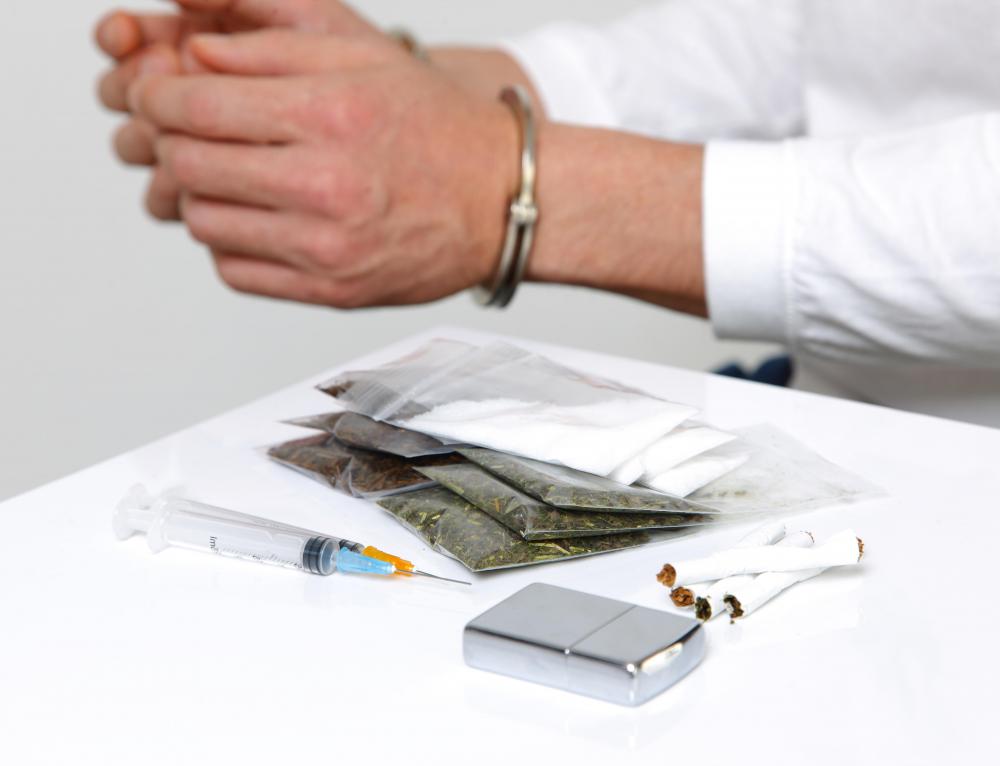
![Entrapment usually involves uncover police officers in drug deal crimes.]() By: jedi-masterEntrapment usually involves uncover police officers in drug deal crimes.
By: jedi-masterEntrapment usually involves uncover police officers in drug deal crimes. -
![Entrapment charges often stem from vice crimes, such as prostitution.]() By: Anatoly TiplyashinEntrapment charges often stem from vice crimes, such as prostitution.
By: Anatoly TiplyashinEntrapment charges often stem from vice crimes, such as prostitution. -
![A police officer posing as a prostitute must be careful to avoid entrapping a potential suspect who would otherwise never seek a sex worker.]() By: BorreliaA police officer posing as a prostitute must be careful to avoid entrapping a potential suspect who would otherwise never seek a sex worker.
By: BorreliaA police officer posing as a prostitute must be careful to avoid entrapping a potential suspect who would otherwise never seek a sex worker. -
![Law enforcement officers may be accused of entrapment if they ask leading questions while interrogating a suspect.]() By: donserhioLaw enforcement officers may be accused of entrapment if they ask leading questions while interrogating a suspect.
By: donserhioLaw enforcement officers may be accused of entrapment if they ask leading questions while interrogating a suspect. -
![The goal of organized sting operations is to generate arrests of people who have a propensity to commit crime.]() By: ivanfffThe goal of organized sting operations is to generate arrests of people who have a propensity to commit crime.
By: ivanfffThe goal of organized sting operations is to generate arrests of people who have a propensity to commit crime.



Discussion Comments
I was arrested in a Craigslist sting. I was on CL looking for women when I responded to an ad. At first we were emailing and texting and then the person I was communicating said they were 15. I told them to stop communication with them and they said ok; however, they sent more emails to coerce me back into communication. When I received a copy of my discovery the emails used by the officer were missing. I have since found them. Do I have a case or is what the officer did legal?
A friend of mine had an issue at Grand Canyon where someone was stealing from him and he made the mistake of getting upset at the wrong guy and he was retreating from the person when he was telling the other person that the other person was "going to jail" and surprise, guess who almost ended up in jail instead? He had to pay a fine but is now banned from the area for life and can no longer work for that company either and I know this person very well, he is an outstanding citizen and a strong Christian. Someone was indeed stealing from him (he discovered who was stealing from him later) and I suspect that someone was trying to "apply pressure" to make him explode in order to "run him off" from the location. It was a clever set up, Wait, you think that is rich, it gets better! (worse for him) he lands in Florida and is almost immediately fired from his job because he was "set up" by a foreign national that was working there. Thankfully for him, he was not terminated but was offered a similar job for less pay. He suspects that he is being stalked and has provided proof of it as well.
He might go to the FBI with the evidence but he is worried that the FBI is too corrupt to even trust. He might litigate instead, if he can ID the people who have been stalking him.
Last Thanksgiving, my 14 year old daughter was home for a couple of hours while I went out to a friend's house to talk because I was laid off for a second time last year and my mom (grandmother) suddenly died of an aggressive stomach cancer back home and I didn't make it in time to tell her goodbye.
Anyhow, we had a schizophrenic neighbor call the police while I was at my friend's house, claiming I was beating my daughter. The police went to my house and saw I was obviously not home, but had my daughter contact me to tell me to come home. I told her I wasn't in a position to come home at that point in time. The police stayed at my house with my daughter blowing my phone up to tell me they are not leaving until I come home. They left my daughter under the impression that they just wanted to make sure I made it home to be with her. I didn't know that I could tell them to go away, and I was concerned by the fact they had her calling every five minutes for a couple of hours to tell me they were not leaving until I came home. I didn't want to go. My friends were saying like it sounded like I didn't have a choice.
Upon arriving home, I walked toward my condo and an officer parked in the extended parking lot behind tall bushes eventually motioned to me to come in his direction and talk to him. Of course, I wanted to know what the heck was going on so I walked toward him. We talked for 15 to 20 minutes and he asked where I was coming from. I said from a home 10 minutes away and he responded that it was farther away than that. He was upset because he waited for hours for me to come home, but I responded nicely and said, "Sir, I beg to differ. It is literally 10 minutes away." I know this and I wasn't rude about it either. He then asked me to do a Breathalyzer and I refused. Because of that I was arrested. What do you think?
Under the pretense of sting operations police departments, sheriff's departments, state police and the FBI are taking over apartments that surround their target and they stage crimes using doubles and they record crimes committed by officers dressed as their target on photogenic photos and also use fuzzy video surveillance in order to frame their targets for crimes and to build cases against their targets.
They may also poison their target by entering targets home when the targets are away out of their apartment and police will poison their target's coffee pot reservoir and will do this knowing it will be the target who makes the pot of coffee and then gets poisoned!
Police cover up the poisonings by interfering with the target getting help at the hospital, police will confront the targets doctor in the hallway at the hospital and will repeatedly label their target a "bad guy" until the doctor gets the hint to not help the patient and not perform a toxicology test!
Can an undercover police office have sexual intercourse with a suspect?
What I find disturbing is there is a free adult chat line to connect with other adults looking for talk and meet up in your local area. I have heard and increasing amount of complaints about innocent people being harassed by homophobic undercover PO's.
Suppose a guy sends a message to a Craigslist Casual Encounters ad and gets a reply from a woman offering certain amounts of time for certain values of 'donations'. Should the guy be concerned that it is a sting?
Is it considered entrapment for a policeman to pose as an underage person posing as an adult on an adult only dating site (18+) then engage in explicit written communication only?
What if you place an ad on a dating site looking for a no strings attached (friends with benefits) relationship and seeking a girl under 25 years old and then an underage girl replies to your ad? She says she's very interested, then after a few messages tells you she's underage and wants to continue talking. You say that's okay and keep talking. You mention things like dinner or a movie, etc., but never mention anything sexual.
So then she starts pushing you to describe something sexual that you would do with her. You say you're not comfortable talking about that with someone her age and she continues to push and push. If this person turns out to be from a watchdog group or law enforcement, would this be entrapment?
I was at a club and I bought two pills from an undercover cop, and then another uncover cop asked me to buy five pills for him after we had a chat for 30 minutes. I thought I was mates with him and thought he was a cool dude. He gave me $150 and asked if I could get him five pills. I said sure, and gave him my phone as a gesture of good faith, not knowing he was undercover. I then proceeded to buy the five pills off the other undercover cop and gave them to the undercover cop who asked me to buy five, but they did not charge me with anything! Should I be worried?
Is it entrapment when you're in a bar, after pitching in to smoke some green, when an undercover cop calls you over and remorsefully tells you that police are now using illegal wide net entrapment tactics to bleed the people for operating capital.
You fairly loudly protest the injustice of the travesty, having had no inclination to even consider such things.
He then shows you his badge and demands you stay silent, since there's nothing you can do without proof.
@anon309688: No, it's not entrapment. The police officer isn't forcing or enticing a driver to do anything. He or she just knows it's a fertile ground for finding people driving under the influence. The officer doesn't stop people who come to a complete stop and signal properly -- only those who don't.
Is it entrapment if you're in a bar and a police officer is across the road waiting for someone to get in to their vehicle so they can stop them for not making a complete stop and no signal, then get you for DUI?
@anon306652: No, from a law enforcement point of view, an undercover officer offering drugs for sale to a potential buyer isn't entrapment. Re-read the definition. Entrapment is enticing someone into committing an illegal act, who wouldn't have done it otherwise. If someone offered me drugs, I'd call 911. I have no intention of buying them. Trying to force me to buy the drugs, with a threat of bodily harm, say, and then busting me would be entrapment. Just offering them isn't.
Now that's out of the way, in case you didn't, I suggest you read the post I replied to in order to put my reply in context. It's obvious I meant that I would stand up for myself when necessary. Considering the tone of the previous post, I don't think mine was out of line.
@amypollick: "Try it and get your hide nailed to the wall." You *seem* like a peaceful person.
The article said: "It is not considered police entrapment if an undercover officer presents a supply of drugs..."
This hypothetical situation is absolutely entrapment!
Selling drugs is a crime. Offering drugs for sale is a crime!
How it is that you can possibly imagine purchasing sex is illegal while offering sex for sale 'would' be legal escapes me.
Unless, you are perfectly content with allowing the police to employ any illegal tactic they wish, in which case, why shouldn't they simply entrap? Sigh.
If two people are driving in a car and they get pulled over and the police search the car and find 20 grams of cocaine, who will go to jail -- the owner of the vehicle or both? (Chicago, Ill.)
I was camping, or should I say homeless, during the last week of my last finals. I was in the woods after a verbal altercation that I adamantly tried to defuse. I had been drinking, but not a lot, as I was still coherent enough to attempt to defuse the situation.
I left for a short period of time to avoid any more trouble and returned an hour later to find that the cops were at the location and I continued driving past, as probably anyone would do. I returned an hour after that to pack up my tent and clean up the area. My girlfriend was with me, keeping me company through the hard time I was having.
Suddenly I hear my friend's voice calling for me, telling me that the cops are here and he wanted to talk to me. My heart sank, since I didn't have my keys on me. But in order for me to get out of the woods, I had to climb up a huge, steep, gravel embankment since I was far out and hidden in the woods behind some train tracks. When I got to the gravel lot where my car was parked, all of my friends were there, including the one who called my name. He then proceeded to pull out two 40 oz beers out of my car that I did not place there. One of them was in the front seat with the seal broken, and the other was an empty one under the seat. I would never be so stupid to leave two open containers in my car. I even told him that I didn't know how they got there. A feeble attempt, I know.
The officer gave me a field sobriety test, which I passed, and he breathalyzed me. He did not show me the results, but said, "Well, it looks like I don't have enough to get you on a DUI.” He then searched my vehicle (was allowed because he found the open containers) and did not find anything. I even waived my rights and showed him the trunk. He found nothing, but proceeded to charge me with public drunkenness and disorderly conduct. Is this entrapment?
I was far back in the woods, having no intentions of driving because I saw the officers and feared arrest. He drew me out. Or does the fact that he told my friend to ask me himself waive the entrapment issue? I'm almost finished with school, I don't have the money for these fines, and I don't want this on my record. Please, I need your help. I aced my finals by the way, regardless.
What if the police see an adult personal ad and answer it, then tell you to meet them in an area that you state you're unfamiliar with that turns out to be in a school zone?
If someone commits a sexual act on a webcam with someone pretending to be an adult, is that a crime?
@anon270408: I think you have "entrapment" confused with "corruption."
So women's rights are a bad thing? You need a little educating. I rarely shop at Wal-Mart to start with, and I certainly don't buy lingerie on sale there, hoping I'll have sex with someone, stupid or not.
I'm not about to "beg" my husband to buy something. I work. It's my salary and I'll spend it as I see fit. Naturally, for a big purchase, we talk about it, but that's just how two people who respect each other conduct a healthy relationship.
My father was very much a masculine man, but he didn't treat my mother, or me, or my sister like second-class citizens and no one else is going to, either. Try it and get your hide nailed to the wall.
I daresay if women ran things, the world would be a much more peaceful place, governments would pay their bills on time and in full, and would stay within their budgets.
Entrapment is a means for government personnel (or in some countries called public servants) to create opportunities for their own merit (nothing to deal with patriotism), so as to receive some medals and most importantly, promotion and pay increase, and of cause media exposure for their "heroic fame".
Some possible examples:
Sending a hooker to a political rival, take photos and announce it in the public media, accusing him/her on moral grounds.
ISPs ordering their young programmers to steal information on your computers and threaten to expose you if you don't cooperate with them.
Taxation: This was originally a good source of income for government to help develop a nation, but has since become an ATM machine for most government personnel. It's easy money and there's even a law to enforce it. If you forget to file on April 15, you are trapped.
Women's rights: Good for the industrialists. In the past, women had to beg their hubbies or fathers to buy something. Today's, women will storm to Walmart when there is a big sale to buy their lingerie, in the hope some stupid guys have sex with them. Women's rights only benefits a few women, such as Hillary Clinton.
I put a post online for dating for dollars, but how can I be sure someone I meet isn't a cop? Can a cop in north carolina send pictures of their private parts online? I always ask for one, and sometimes a guy makes every excuse in the book not to send one, wondering if that shows they're a cop.
Anyone saying cops need to be dirty to do their job is full of crap. You can do your job abiding by every single law there is. I guess some people have to break the laws, just like the dumb drug dealers.
At my school we ride school buses to parties off campus. Is it legal for cops to follow the buses and arrest people for underage drinking as they get off the bus?
Every day the police department and the police officers engage in illegal activities. If the police were policed like the citizens of this country are every day, there would be no police department.
How much is a speeding ticket or being in violation of driving distracted from wireless devices in your state? All along cops drive around talking on radios, getting on the laptop all police cars have, speeding to nowhere. This has to stop.
A big reason we get tickets is because the police don't think we can be distracted and drive but they can? In Ohio, police can give you a ticket for speeding even if they don't have a radar gun, they call it being trained. Why not train us to drive fast too and talk on our phones while we drive around, or even get on our laptop, because we were trained to.
I call bullcrap on the driving laws in this country. The seatbelt law is supposed to keep us safe from who? The cops from pulling us over.
Why does the FBI get away with entrapment?
An undercover officer working as a prostitute, for example, cannot initiate a conversation leading to the customer's solicitation offer.
So, when posting an ad to the internet, or replying, who is initiating contact? The one posting, or the one picking up the phone and calling?
@anon200085: See my post, no. 62. You knew you were underage and had the option of saying "no thank you" when offered the beer. So, no, it wasn't entrapment. From what you said, the guys didn't try to force you to take the beer, and you were too afraid not to, or something along those lines. They offered it, you took it.
The harassment is another issue. If they were threatening you and you felt they were a threat to your personal safety, you might have a case.
I'd forget about the entrapment charge, though. They got you fair and square on the underage drinking.
I was at a country concert with a few of my friends when guys called us over and then gave us beer. We were all underaged but we were not giving off "party vibes" or making it seem like we were the type of girls who would do that.
Shortly after, the cops came, but before they approached us we got rid of the beers so they wouldn't see them in our hands. The cops only asked our ages and issued tickets without asking if we had been drinking.
One of the girls, however, managed to not get questioned by the cops, but one of the guys pulled her aside and informed her that they were all undercover cops and it was all a set up. Then every time after we passed those guys, they would yell at us and harass us. Is there any way we could fight the tickets and say it was entrapment?
@anon192750: Nope, sorry. You always had the option of saying no thanks and going to another pub, or going home. The law does not much concern itself with social mores. That is, the law doesn't care whether leaving would offend someone or not, unless you were in fear of your life, which is another issue altogether.
And, even if you felt like you *had* to accept the drinks, you could have still called a cab or walked somewhere to sober up so you could drive safely. There are always options.
Entrapment is when an officer of the law entices someone into doing something illegal that person would normally never have done.
so does this mean if i was at a pub being bought drinks i didn't want but drank them so as not to offend the buyer, then being arrested for drink driving counts as entrapment?
Does saying, "Do you want to be arrested and spend the night in jail" constitute impersonation of a police officer. Please read this because it can.
It happened to my husband. An off duty officer was in road rage to him and my husband made this remark when the officer opened the door my husband was in to grab the ignition keys and the officer belted him in the chest. After that incident he was followed to where he was going and this off duty officer called for backup and arrested my husband and charged him with this Class 4 felony when nothing went on nor down. Time to report cops who take their job to a higher level of incriminating an innocent person.
Yes you can be coerced into breaking the law by law enforcement officials. They try to cover their butts so they set up the stings.
is entrapment when someone calls you to buy drugs and offers you money and drugs to do so?
A police officer can pull you over again if they had pulled you over and you didn't have a license within a reasonable amount of time. Reasonable meaning within a month or so, no set time really.
To make a charge into a conviction though, they would have to state why they pulled you over. Always remember a police officer can *charge* you for whatever they want, but a charge doesn't mean anything unless you have a *conviction.* Don't make a big deal about getting pulled over or even charged with anything.
A police officer does not have to say they are a police officer. This is a safety issue. Pretend they are doing a sting operation and they are in a house full of drug addicts with guns. They should not have to admit they are a police officer, because they will likely be shot and killed instantly.
Entrapment basically means: the officer pushed you into breaking the law. If you had no intent to buy drugs, call a hit on someone, or what have you before the encounter with the police officer, you would not have those intents after the encounter. So, if a police officer offers you drugs and you refuse, and continues to press the issue until you take the drugs, that would be entrapment.
Basically, if a police officer harasses you to break the law, you can get out of any offenses they may press on you.
can a police officer pull someone over for no reason after he or she left your house and tell them we are bad people and drug dealers, which we are not. And can they harass every one who comes and goes?
If i see an internet post for prostitution. I call and speak and decide the rate. But after that, no contact, i don't go and drop the entire idea. am i still under possibility of an arrest?
is it entrapment when a friend continuously calls you for shrooms and you tell him to leave you alone yet he keeps persistently calling until you give in and he's working for the police in an undercover sting?
Is it legal for cops to mess with your headlights so they don't work, then pick you up and check you for dui and no seat belt? it is going on in marshall minn. i have fixed my lights six times and when i can see my pickup nothing happens so i know it's not a short. I drove my pickup 400 miles and nothing happens. can i sue them for doing this? it endangers my life with no dim lights at night.
I was taken into custody for walking after curfew. While sitting in the cop car, the cop asked me when I started smoking. I told him that I didn't smoke and he pulled out tobacco and began to roll his own cigarette. I was scared and I barely paid attention to him but I heard him say into the radio "he's not getting excited." Were they trying to entrap me?
The police have been following me around for over a year. They have told all the friends i use to have that I am a drug dealer, the last job i had they told my co-workers i was gay. I have talked to a lawyer but he does not believe me. Without anyone i know wanting to get involved what can i do?
here is something really screwed up. i live in oklahoma. the cops are so bad here and the court systems that they let drug dealers/makers and dui's get away with crap all the time. they will continue to arrest them and set them up on payment arrangements with a deferred sentence and no probation.
i got picked up the other day for two traffic tickets from six years ago and one misdemeanor bogus check from six years ago (might i add, i knew nothing about the bogus check, and had forgotten about the traffic tickets).
i was taken to jail and after five hours i had to pay the full amount for the traffic tickets and i have to go back to court next month for the bogus check.
After speaking with the da i was told that i have to have the full amount for this charge paid before the court date and he is recommending a six-month suspended sentence (which goes on my record) and six months probation which means i have to pay 40.00 a month for this.
this is the craziest thing i have ever heard of. there was a man in court the first time i went who had at least eight charges of misdemeanor crimes and a lot of traffic tickets and they are setting him up on payments and that is it. and this man has been in trouble with the law his whole life with a criminal record 15 miles long.
i guess if i was a druggie or a drunk i would not have to worry about anything.
Is it entrapment when a police officer uses someone's phone. pretending to be the owner of phone. He calls, asking for "help." Thinking it a distress call for a ride, I go to Wal-Mart, where he said he was to pick him up and get swooped by cops. One says is my voice familiar? That was me on the phone.
They search my car after I say no. Gave me a sobriety test when I clearly say no too, and do anyway. and as seen on video pass, then get arrested for dui and was released after refusing a breathalyzer. but still charged with dui. I would not have ever left my house if not for the call.
is it legal for law enforcement to park a car with high price stuff and leave the car open, to catch people breaking in it.
can an undercover police officer in the uk go to a other country like spain and import drugs as part of a sting back into the uk? is that entrapment?
Does a police officer require a search warrant to go into one's car if it is parked on the road, hen at a park festival?
Anon59104: Sorry, but it wasn't entrapment. A police officer can run a plate anytime he or she wants to, and can go by your house (as long as he stays on the street) to see what's going on. Your boyfriend was driving over the legal limit. He got caught.
Entrapment is when an officer entices someone to do something illegal that they would not have done otherwise. The police officer didn't insist your boyfriend have a few drinks and then get behind the wheel. He just waited on him. Sort of like a speed trap. Tell him to pay the fine, do the community service and thank God he didn't have a wreck on the way home. Oh--and always have a designated driver. That way, you don't have to worry.
can a police office in the state of pennsylvania go into a bar parking lot at night and get the license plates off your cars and trucks, run them then go to your house and wait for you to come home? Wait until you are getting out of your truck and want to do a breath test? No one was behind us when we pulled up our driveway and then there they were? it is a straight way -- no cars coming in either direction.
My boyfriend blew a .081 and was arrested. we called our friends that we were out to dinner with so they could go get him out. They went to the station and they asked to see his drivers licensing in order for them to pick him up.
The officer in the back said, "Oh you were at the scene. We just ran your ID an hour ago?" They were not with us. They live in the opposite direction. Anyone have any thoughts on this one?
Is it legal for a highway patrol officer to be parked on the shoulder of a highway and completely shut down, not showing any visible light at any time of the night?
I know this to be true, but to prove it would be extremely difficult.
Proving this may start with those who have experienced this. With certain questions, such as. Is it possible that before your troubles began, had you do anything that would show leadership ability? Had you made statements over the telephone that were of a negative nature about the government? Had you attended college? Were you fired from your last job without any reason?
Do you remember anyone bumping you from behind, and excusing himself for bumping you?
I would believe that you are familiar with Operation Chaos, started in 1967.
A version of this has never stopped. In this operation, African Americans, and others are covertly microchipped, or unwittingly microchipped. By this I mean an undercover operative walks up behind the individual and bumps him in the buttocks, actually jabs a needle into the person's butt, and inserts a extremely small microchip --an RFID.
This allows remote identification of the microchipped individual, tracking and even altering of the reality that this person experiences.
Street theater is constantly performed as the person goes about his daily affairs.
In this manner the individual can be steered into an entrapment scheme.
I would have to estimate that a very large percentage of drug offenders who are incarcerated were covertly microchipped before they began their drug offenses.
Is it legal for a cop to tell you to get in your vehicle and leave town, knowing I was drinking because it was a bar scene fight is the reason he told me to leave town. Then when I drove off, he pulled me over down the road and arrested me for DUI.
is it legal for an undercover to come to your house for a massage and strip naked, touch you and you touch him, and bust you for prostitution, even if sex were never discussed?
i see everyone here must watch cop shows. a lot of entrapment on there. a lot of police brutality. always said you can't take a person in uniform and put them on tv and expect them to act normally. every one of these shows need to be taken off the air.
Entrapment sucks. Talk about our freedom being taken. If a pig poses as a drug dealer and you go up to him to buy something, then you both should be arrested. Why is it illegal for me to want to buy drugs, but legal for them to sell them? This country just gets more screwed up by the day. A few more years until I retire and I'm gone.
Wow, after reading a lot of these posts, I have come to realize there is some pretty messed up stuff going on -- in the public and in the police departments! I'm not sure who is the problem here, the people or the government? Seems like both are at fault with this mess. People need to get their heads on straight. Try praying to God a little and don't lie so much.
Is it entrapment when an alleged "victim" of a crime calls one the defendant's family members stating they feel bad about what happened and wants to get a statement notarized that says she was under the influence and was not raped as she had told police. Then asks for money to get the statement notarized because she didn't have the money? The charges are tampering with a witness and bribery.
I was arrested in a sting op. two undercover officers went to my shop and offered me stolen plasma TV's. I said no the first and second time, but they insisted too much. they even dropped the price of those televisions to $100 each. I couldn't resist, and as soon as I gave them the money, eight patrols stopped by and arrested me for theft, buying stolen merchandise. My question is that these televisions were not stolen, as a matter of fact. A store gave them to the police for the sting. do they have to prove that in fact I was buying "stolen" televisions?
is it entrapment if a friend calls and asks someone to get pot for friends of theirs and the friends happen to be under cover?
If a bookmaker is getting under 16s to go in to bookmakers and place bets then suspending staff that have accepted the bet believing the customer is over 18, would that be considered entrapment?
Is it entrapment if a corrections officer who also works as a pizza delivery person comes on your property to deliver pizza and sees something illegal, and then discloses the information to the law enforcement agents, who then proceed with a bust of the property?
I am doing a homework assignment for a business law class. My question is regarding pedophilia and entrapment. If police set up a sting operation to investigate if the suspect is staying innocent, after being released from prison with no complaints or incidents following his release, is this entrapment?
Police officers in this case along with the FBI set up a mailer that advertised child pornography, which was set to be a fictitious circular. After the 17th issue to his home address, he subscribed, sent in his check and was arrested for solicitation of pornographic materials. His lawyer argued entrapment. Is this a legal argument in this case?
Is it entrapment when the traffic cops are directing mass crowds out of a parking lot regardless of the red lights and then less than 100 yards away pull over and ticket 10 more cars for turning right on red at the next intersection? Just doesn't seem right. Oh and yeah, we were coming out of church on sunday morning.
tell me what is the chance of this case being prosecuted to make this as short as possible my son was getting text messages one night 16 to be exact from this guy he knew from his pass he kept ignoring them until him and 2 of his friends drove to the next town to meet up with guy the guy wanted to buy pot he gave my son 800 dollars and the three of them drove off the police task force pounced on them right away, hence no drugs were found not even a seed but my son and his two friends were charged with 2 counts of theft and conspiring to commit theft, what is their defense besides stupidity entrapment, reward for not selling drugs, if this was not a police sting operation there wouldnt have been a case, the person trying to buy drugs isn't going to police to report the guy took my money and didn't give me drugs
In order to use entrapment as a legal excuse, law enforcement must have coerced you into committing a criminal act. Acts such as buying alcohol for a minor or speeding are strict liability offenses, meaning that there is no excuse for committing the offense. In these instances, the entrapment excuse for committing a criminal act may not be used.
is it entrapment if a undercover cop get you to sell them drugs more then once without arresting you the first time you did it? and can you be charged with trafficking cc with out being caught with it or money used by the undercover cop?
and i was driving my sister car can i be pulled over for a warrant if the car is not registered under my name?
A co-worker working as a mutual clerk at a major thoroughbred track got too much money for the tickets that were bought. We were busy and he didn't realize this until the customer (sent out to test the clerks from the office) reported that fact to the mutual manager. Co-worker got suspended even though NJ racing commission states that when a customer leaves the window its assumes that all tickets and money are correct. Is this entrapment or not?
Coming from Europe, I wonder, why US courts ignore human rights issues in entrapment cases. For, international courts did set very high standards about the admissibility of intrusive police methods. For instance, in February 2008 the Grand Chamber of the European Court of Human Rights ruled in the case of Ramanauskas v. Lituvia, that the government must prove the absence of entrapment. (The case involved a bribery, that was finally accepted, after it was declined twice.)
Moreover, there is the question of proportionality: Police uses an intrusive method to explore the sexual life of consenting adults, while the original purpose of this method was the fight of organized mafia crime, not petty crimes.
What can be said in a discussion with a supposed prostitute to avoid being arrested for solicitation if she turns out to be a cop? How can you know you are dealing with a police officer and not a hooker?
I was coerced and entrapped at an adult bookstore after a undercover officer asked me "Let me see it, " several times. I was coerced into this..can I be let go without charge? --anonymous.
If a person mistakenly pulls over in a red bus zone and then tries to re-enter traffic because they realize they are in a redzone... then a police officer cuts the person off when the person is trying to pull out then has another police officer pull up behind the car so the car can not leave.. then gives a ticket for parking in a redzone, even though the car was never off, no one ever left the car, the car was just stopped a moment then attempting to re-enter traffic and get out of redzone.. would that be considered entrapment? The driver got a $250 ticket for parking in a red / bus zone but the only time they were actually parked with car off is when the police forced them to park so they could ticket the person.
if police officer forces keys in a person, who they know is drunk and forces them to drive by verbally, threatening the person to leave his home and the person is pulled over by another law enforcement and arrested a few minutes later by officers of the same county, and knowingly knows the person is drunk. is that consider to be entrapment? i need too know?
Is it legal for a Highway Patrol officer to be parked in the emergency lane of the freeway completely shut down, not showing any visible light at approx. 1 in the morning? Is it then legal for him to stop someone and give them a ticket? Also, is it legal for him to make you roll up your windows when he has already pulled you over?
What constitutes an "illegal conversation"?
I need some advice! Tonight I got set up in a sting operation. I was going to 711 to buy some feminine products and a kid walks up to me and asks if I could buy him a 6 pack. It was dark out so I couldn't really see his face so I asked if he was the cops. He laughed and said "no, I just don't have my ID and the lady won't sell to me. I'm 20 years old." I said I understood and bought the poor soul some beer. I walked out asked the guy to go around the corner, he said no, grabbed the beer, gave me ten bucks and took off. Five cops rolled on me, put me in cuffs and arrested me. Just to give you some background I'm five foot nothin, blonde, and petite. Why do five cops think it's necessary to put me in cuffs and treat me like [that]? I so don't need this right now; trying to get into nursing school in the fall and applying for jobs this summer.
For the last post, no that is not a case of entrapment. Your friend still purchased cocaine, with the intent to sell it later that night. The best thing to do in that situation would have been to say "no, im not getting you an illegal substance"
Would this be entrapment: This guy I know was asked to get some cocaine for someone, when he got it he was recorded selling it to the guy under direction of the Drug strike force. This guy does not sell cocaine and does not have any prior of this charge he only got it for the guy because they had known each other for a while and where friends.
justme - Profiling is an Art of Policing and is not illegal in most states. Besides, illegal profiling; that of prioritizing past offenses to encounter a suspect multiple times, is done daily by good police departments. The difference is, you won't find public record of it, so you can't prove it.
Anonymous (prostitution) - You would be breaking the law if you sexually engage with one.
Anonymous (bar) - Entrapment? Seriously...Probable Cause allows the officer to pull you over if he sees something conspicuous (stumbling, etc.). If he put a gun to your head outside the bar and forced you to drive drunk, that could be entrapment.
DJCamper - Doubtful. They are still only providing you with the opportunity.
I'm NOT a police officer, nor am I an attorney. However, I have had many dealings with the law through my father, a long-term officer, and have helped the PD here locally with certain operations. Therefore, this is NOT legal advice.
if a police officer feels you filed a false police report, then continues to go to the person's residence, and says to another person or that person, "the prosecutor sent me to ask more questions," and says he lied, he used entrampment, on that person he feels committed a crime, is that considered legal, and how so?
I was arrested in a sting operation.
I told the undercover officer I was HIV positive. He told me if I was not interested in him I could be with his partner but not to tell him that I'm positive.
Could this be considered entrapment?
Can a cop park outside of a bar and wait to pull over the first person to walk out? Is that considered entrapment?
what is the difference between being accused of entrapment and being the one entrapped? and since it is a defense, then there has to be a crime done by the defendant before he/she can claim entrapment, right?
If your are approached by a man that is trying to sell you drugs and you clearly ask him if he is law enforcement can he say no and it will be OK. I always thought that they could try to avoid the question but they couldn't just out right deny being an officer.
What can be said in a discussion with a known prostitute to avoid being arrested for solicitation?
How can you know you are dealing with a police officer and not a hooker?
Wouldn't that be considered profiling?
Is it legal for a police officer to pull you over because he knows your car or who you are because of a past encounter? example, He pulled you over once and you did not have a driver lic. And now every time he sees your car he pulls it over.
Post your comments