
At TheHealthBoard, we're committed to delivering accurate, trustworthy information. Our expert-authored content is rigorously fact-checked and sourced from credible authorities. Discover how we uphold the highest standards in providing you with reliable knowledge.
What Is Emotional Isolation?
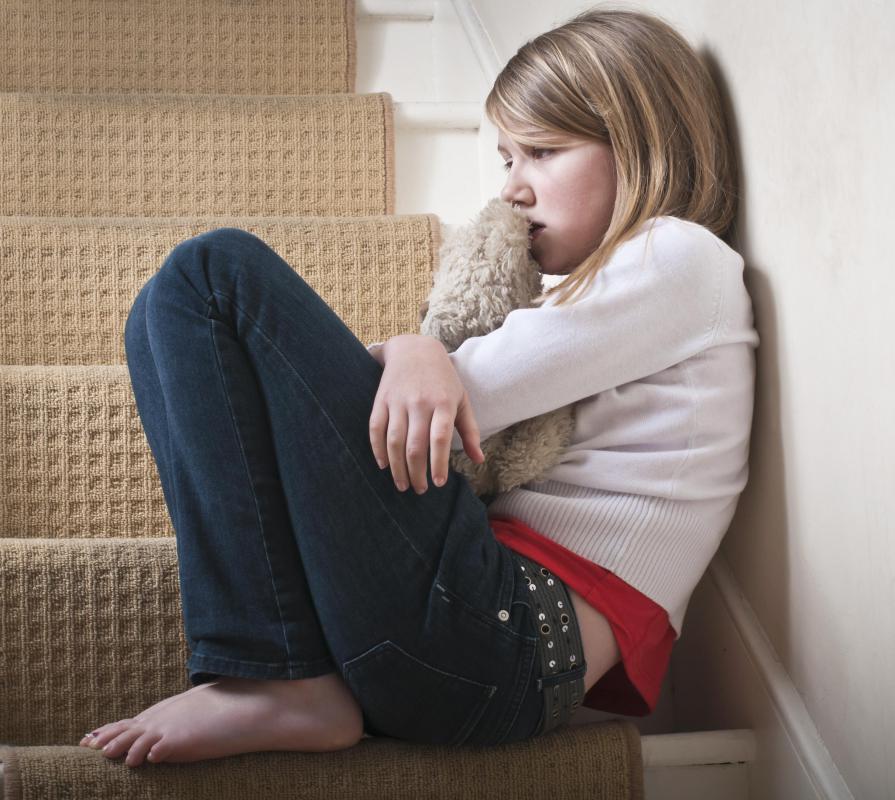
Emotional isolation is a state in which an individual is mentally distanced from other people. A person with this condition may appear numb and constantly seem to be pulling away from others. In addition to a lack of mental connection, emotionally isolated people tend to show little interest in the feelings of others as well.
Many people suffering from this kind of isolation have strong social networks, but lack a significant bond with their friends. While they can build superficial friendships, they are often not able to confide in many people. People who are isolated emotionally usually feel lonely and unable to relate to others. This condition has historically been most common among men.

This condition is often preceded by or coincides with depression, anxiety, and feelings of inadequacy. It can be difficult to end the cycle of bad feelings associated with emotional isolation as any of these conditions can increase the symptoms of the others. The most common treatment is therapy that deals with the causes of the bad feelings that lead to the isolation.

Several other conditions can lead to isolation, even though the individual may wish to form connections with others. This can include agoraphobia, social anxiety, and some cases of narcissism. In these cases, individuals often become frustrated because they feel blocked from forming emotional bonds.
There are other conditions leading to emotional isolation in which the individual may not wish to forge mental bonds with others. This can include autism and schizoid personality. In some cases, narcissists may also distance themselves emotionally, due to feelings of superiority. These cases can be more complex, as an individual may not feel the need to change.

Many people who experience emotional isolation are unable to keep friends due to insensitive or self-centered behavior. In several cases, an inaccurate view of self can prevent an isolated person from understanding what causes these friendships to end. Talk therapy can help to unravel some of these mysteries.
Emotional isolation is often confused with social isolation, though they are two distinct conditions. A person who tends to be physically distant from others is socially isolated. People with this condition typically spend a lot of time alone, sometimes for several days in a row, and may not have very many friends. The mental state of a person who is isolated emotionally is different, but may eventually lead to social isolation. It is common for an individual to experience both conditions simultaneously.
AS FEATURED ON:
AS FEATURED ON:


-
![Emotionally isolated people may show little interest in the feelings of others.]() By: BlueSkyImagesEmotionally isolated people may show little interest in the feelings of others.
By: BlueSkyImagesEmotionally isolated people may show little interest in the feelings of others. -
![Emotionally isolated individuals often have no difficulty establishing superficial relationships.]() By: tomas del amoEmotionally isolated individuals often have no difficulty establishing superficial relationships.
By: tomas del amoEmotionally isolated individuals often have no difficulty establishing superficial relationships. -
![Social anxiety may lead to emotional isolation.]() By: FlemishDreamsSocial anxiety may lead to emotional isolation.
By: FlemishDreamsSocial anxiety may lead to emotional isolation. -
![Self-centered behavior may cause an individual to experience emotional isolation.]() By: Minerva StudioSelf-centered behavior may cause an individual to experience emotional isolation.
By: Minerva StudioSelf-centered behavior may cause an individual to experience emotional isolation. -
![A person suffering from emotional isolation might distance herself from others.]() By: MartinanA person suffering from emotional isolation might distance herself from others.
By: MartinanA person suffering from emotional isolation might distance herself from others. -
![Talk therapy might help a person understand why he has trouble maintaining friendships.]() By: RobTalk therapy might help a person understand why he has trouble maintaining friendships.
By: RobTalk therapy might help a person understand why he has trouble maintaining friendships. -
![Becoming mentally distant from people is a form of emotional isolation.]() By: ivanikovaBecoming mentally distant from people is a form of emotional isolation.
By: ivanikovaBecoming mentally distant from people is a form of emotional isolation. -
![People who limit their interactions to online chatting may not feel the same level of emotional fulfillment as someone interacting with people face to face.]() By: asifePeople who limit their interactions to online chatting may not feel the same level of emotional fulfillment as someone interacting with people face to face.
By: asifePeople who limit their interactions to online chatting may not feel the same level of emotional fulfillment as someone interacting with people face to face. -
![A person might feel emotionally isolated following a break-up.]() By: Eric SimardA person might feel emotionally isolated following a break-up.
By: Eric SimardA person might feel emotionally isolated following a break-up. -
![Children can feel emotional isolation if they don't spend enough time with their parents.]() By: fasphotographicChildren can feel emotional isolation if they don't spend enough time with their parents.
By: fasphotographicChildren can feel emotional isolation if they don't spend enough time with their parents. -
![Spending more time with close friends can help combat feelings of emotional isolation.]() By: dmitrimarutaSpending more time with close friends can help combat feelings of emotional isolation.
By: dmitrimarutaSpending more time with close friends can help combat feelings of emotional isolation.









Discussion Comments
I'm doing a health presentation/ research paper on emotional isolation and this helps me a lot to understand the strict difference between emotional isolation and just isolation overall, because other websites would say social isolation is the same thing but it's pretty much different. Overall, you give great information and more in-depth details to back up that information. This brief article helped me a lot in my project. Keep up the knowledge.
Well I don't know if this could help anybody but I hope it does.
Over the course of my own spiritual development, my attitude about my social situation has changed. The social problems (lack of social skills, emotional bonding, friends, etc) may still exist but I talk about these openly with other people. I feel kind of funny how I have these conditions and how I'm socially isolated, so I talk about with other people how socially isolated I am and how few friends I have, and how I desire human connections and love.
There are moments of openness and closeness so I just keep practicing with my meditation, lucid dreaming, qi gong, Tai chi and whatnot.
And that, seag47 is exactly what I did, as well. The only thing I regret now is all the people I hurt because of my condition. Had I known I was going to end like this, I'd have isolated myself sooner.
Today, two years later, I was thinking how to change my life but this reminded me why I'm fine this way. People like us who can't truly care (are just logical) for others and are self-centered don't have a place in society, therefore I'm just waiting for my death and maybe I should just stop caring about how I feel as well, since I can't care for others and that frustrates me.
@Broken311: Forget your therapist. She/he stinks.
There's a reason why we usually feel this way. It could be a childhood experience, or might even be the way you are at a natural state and there is nothing wrong with that.
What you need to see is that pain, humiliation and feeling isolated in front of others is your body trying to tell you something about yourself -- that you fear ideas and make them bigger than they are when really, at the end of the day, we are all human beings. We are all the same. Some just hide things better than others. Some are fake about their emotions and people like you are honest with themselves.
What you have is a gift rather than a curse. I think all you need to do is try things out, try to meet new people, try to find others who fit your personality. Of course, no one is going to be perfect to you, but you should try to accept people for being different just so that they can accept you for being different as well. The effort needs to come from you, and 30 years old or 3 years old, that's just a number.
Woman, you need to change this, and you can and will. Expand your comfort zone. There's nothing out there that is powerful enough to stop you. The world is a jungle, but we are animals, and we are fit for our environment. If you isolate yourself, you stop yourself from living, from interacting with progress and you're only making it more difficult.
I've been there; we all have. But you have to fight it and get out there. I made an account just to get this message out there, but for all of you who feel this way, who feel like others are a threat and all that jazz, you need to realize that you are no different than others. They are just as afraid of it as you are, but confront others, speak to others and try and don't stop trying. I promise you, this gets fixed no matter what. It works for anybody. You are no different.
@seag47: I am the exact same way. At family gatherings, dinner outings or type of social event, I get anxious and start over analyzing. I stay completely quiet and get made fun of, which makes me very uncomfortable.
I have been isolating myself for years in fear of getting hurt or humiliated. It's my comfort zone and where I feel at ease. I don't have any friends except for one, but I feel as though I'm losing her little by little. I have a boyfriend who doesn't seem to understand my situation and thinks I'm OK and just to speak my mind, which I can't because I'm worrying and over analyzing everything that is said and done. As much as I care for him, I know in the end, it won't last.
I'm scared that my daughter will turn out to be like me. I'm very over protective of her and worry what others might say or think of her. I'm currently getting help by seeing a therapist and it doesn't seem to be working. I still come home and isolate and stay quiet from the world.
According to her, I'm making the choice of isolating from the world, but she has no idea why I do it. I don't know what to do. I would like to change but I honestly think it's a little to late since I've been this way for 30 years. Sometimes I hate it but then again, it's my security and I'm safe.
@chivebasil: Well said.
I honestly don't think this phenomenon is an 'issue,' rather, that our culture projects onto individuals that if they aren't overly emotional there is something wrong with them, which in turn, probably can make it into an issue, which then causes depression.
I say this behavior comes from high testosterone that makes someone's brain less relationship oriented and more object oriented. I've been emotionally isolated my whole life, and the 'problem' for me was to understand that I need to activate myself to do things.
Our culture is heavily affected by marxism, which in turn favors 'social'/'collective' behavior, even if people aren't as wired for relationships as our cultural view on people say they are.
I feel very distanced from others often and end up getting myself hurt. I feel that no one can empathize with me, so I prefer to stay alone rather than being with people. I find it very difficult to talk with them, even to my close friends, and because of this, I have been losing out on relationships. I have been like this for quite a long time now which has left me depressed. Help me please.
It is very odd that this article describes emotional isolation as "mental distancing". Emotions are not equal to the mental realm at all.
I find this article quite interesting, but I must say that my research on what my condition might be has left me rather puzzled. I have wonderful parents who care for me a lot, and I have had several good friendships in my life. Though I moved a lot during my life, my general impression is that the great majority of people in the world are friendly and nice. I have always been strange and an outsider, but have still always been kind of accepted. Anyway, there always were people who really cared for me.
And still, in the past year I realized how none of my relationships has ever been really close -- at least never from my side. I could move to a different country tomorrow and never see anyone I know ever again and I would be all right. I know they would miss me, but no matter what, I couldn't care and wouldn't miss them. I have never been in love (and I'm 21), and looking at other people's lives I thought to myself: this cannot be normal.
Reading through articles like this, I guess it really isn't, but I'm left puzzled because I am not autistic (bit up the autistic scale perhaps, but never enough for a diagnosis), schizoid, narcissistic, nor have I been emotionally deprived as a child. I simply don't attach. Although I've given it tries. I like people, but my relationship with them is never something special or outstanding -- not for me.
So I'm wondering whether this inability to bond might be almost solely based on genetics? I don't really remember how I felt about this when I was a child, but I do think that I wasn't that much bothered about hurting others or looking at pain or touching dead animals. But as a teenager (when I was most desperate about being "normal" and pushed myself to socialize more than I felt comfortable with), I really emotionally overreacted about touching mere dead beetles or only listening about people being hurt. I have been able to scale it down again to a more normal level since then. It makes me wonder whether my emotional reaction might be only learned. Anyway, this research hasn't really left me any wiser. It seems that I don't fit any description. Well, nothing new to me.
I feel very distanced from others often and end up getting hurt. I feel that no one can empathize and prefer to stay alone than being with people. I find it very difficult to talk to even close friends because of which I have been losing out on relationships. I have been like this for quite a long time now which has let me depressed.
The paragraph on social isolation versus emotional isolation really helped me understand my brother more!
It seems that you are always going to understand people more and more over time, but I find this is especially true for me and my family members who have mental illnesses.
For example, my brother has been diagnosed with schizophrenia for twelve years now and I remember when I was younger and did not understand his condition; and I would beg him to come to family holidays because it was terribly sad not to have him there.
And I would have to say; it also made you feel guilty for being a "good enough" family member to have what it takes to make him feel comfortable enough to come.
As I became older and understood his disorder, I found I understood why he does or does not want to come to family functions. I understand that just like anybody else he has good days and bad days.
It is just when he has bad days, his expression of handling a bad day is isolation versus being around others to feel better and that makes sense. It makes sense that not everyone deals with their bad days the same way.
But especially for someone who exhibits social isolation behavior commonly, it makes even more sense.
So I think in learning this I will be able to further better my relationship with my brother.
My sister suffers from emotional isolation and it is impossible to get her to open up to the rest of the family even when we try our best. Sometimes I think that some people are not programmed to be responsive to others.
Does anyone know what kind of therapy is best for those with emotional isolation issues?
We would really like to get my sister some help. We feel like her life is just going by here as all she does is spend time by herself in her room.
She is on medication for depression already, but I think she needs a lot more help than that.
Emotional isolation is really quite tragic, especially when you find yourself in a relationship with someone who has difficulty connecting with other people. For myself I had to really stay committed to helping the one I love get past his emotional isolation.
I think that individuals who have true emotional isolation need solid therapy and someone who really loves them to make any progress. It may be painful, but some people are worth sticking around to help.
I now have wonderful husband I wouldn't have if I had given up too easily. Sometimes the best things are worth working for.
I think that there is a fine line between people who are emotionally isolated and people who are simply private. In fact, I tend to think that we live in an overly emotional culture that encourages us to fall in love at first site, cry over spilled milk, get exuberantly happy about new TV shows and tragically sad at the news of a celebrity breakup. Frankly, we are asked to feel a lot of things that it is probably not appropriate to feel.
I know that emotional isolation is real. I had a good friend who suffered from it for years and I think it contributed to his eventual suicide. But I don't think it is as common as often claimed and I think we often pathologize behavior that only seems abnormal in a culture that has its priorities out of line. People should be allowed to keep their feeling to themselves. Life is not a big group therapy meeting.
I had a boyfriend who was emotionally isolated. He liked being around me, but when it came to discussing feelings, he seemed to have none.
He also seemed uninterested in my emotions. Whenever I told him about how my best friend hurt me, he offered no support. He didn’t understand why I was upset, and he told me that things like that just don’t bother him.
In fact, it seemed that nothing affected him. I eventually broke up with him because of his lack of emotion, and even that didn’t seem to bother him. He took it way too easily.
I have often wondered if my brother suffers from emotional isolation. He has few friends, he has never had a girlfriend, he barely keeps in contact with myself or our parents and he works a job that keeps him away from people. He seems to be intentionally living a life that keeps him alone most of the time.
I don't know what happened. As a kid he was outgoing and very funny. You would even call him the life of the party. But once he hit his teenage years he became sullen and quiet and never really came out of it. He is now 26 and acts the same way he did when he was 14.
I don't know what to do for him. He won't let me get close so I can't really get him any help. My parents are exasperated too. We all love him and we only want him to be happy but he always pulls away so quickly when we bring up the subject. I am hoping that the loneliness eventually gets to him and that he seeks out some help on his own.
@OeKc05 - I was just like you for many years. The problem was that I never felt good enough about myself to present myself to others, so I remained emotionally and socially isolated.
Once I went away to college, I decided I had lived this way long enough. I forced myself to go to gatherings as a sort of exposure therapy. I made myself talk to people, no matter how uncomfortable it was.
The first dozen times or so, I shook and got red-faced. I plowed through regardless, and I ended up overcoming my fear and my obstacle to forming relationships.
The way I motivated myself to talk to that first person voluntarily was by telling myself that I had a lot to offer. I had a great personality, and though I might be different from the pack, that’s what made me interesting.
I suffer from social anxiety. I really would like to have a close friend, but I can never get out and meet new people because of my condition.
Every time that I try to go to a social event, I perspire heavily and shake a lot. I appear very strange to people, and that makes them draw away from me.
My sister took me to her office party once, and I ended up standing in a corner, having a panic attack. I had to call a cab home.
I know I need mental help, but I’m too nervous to talk to a counselor. He would be a new person, and I’m terrible at meeting new people.
I became both emotionally and socially isolated after years of trying to forge solid friendships. I got so frustrated with the betrayal and hurt that ensued. I think I tried too hard to be close with people who were trying to distance themselves from me.
A wall came up in my heart, and I started blocking people out. Sure, I was lonely and depressed, but putting up a barrier between myself and others for protection seemed to be the best option. I would rather be a little down than heartbroken.
I also avoided parties and get-togethers of all kinds. I stopped going out with my friends, because they had injured me in the past.
Now, any new friendships I make are superficial. I have acquaintances that I sometimes go places with, but there’s no obligation to call each other or make plans very often.
Post your comments