
At WiseGEEK, we're committed to delivering accurate, trustworthy information. Our expert-authored content is rigorously fact-checked and sourced from credible authorities. Discover how we uphold the highest standards in providing you with reliable knowledge.
What is Emancipation?
Emancipation is a concept that describes freedom from some sort of controlling, and usually oppressive, authority or ideology. Some of the most well known examples happened on a very large scale and involved the freedom of many thousands of people at once. The formal end to slavery in the United States is a common example, as is the liberation of Jews from concentration camps at the end of the Second World War and their subsequent re-acceptance by European society. People are emancipated on a much smaller scale almost every day, though. A number of international relief organizations work to end human trafficking, for instance, which is a modern form of slavery that usually centers around domestic or sexual bondage. The term can also be applied to minor children who use the courts and the force of the law to declare themselves independent of their parents for both financial and decision-making purposes.
Broad Ideas of Freedom

From a definitional standpoint, ideas of emancipation can be quite broad and far-reaching. They can basically apply to any sort of liberation, whether physical or ideological. As such, it could be appropriate in many settings to say that someone has been “emancipated” from the oppressive ideas of a workplace, for instance, or to say that a discreet group like novelists during a certain period were emancipated from the overarching and usually patriarchal societal norms of the day. In both of these examples, there’s an argument that the term is only powerful because of what it conjures about true physical human liberation. This is where the concept is at its most powerful, as well as where it has the most historical significance.
During the US Civil War

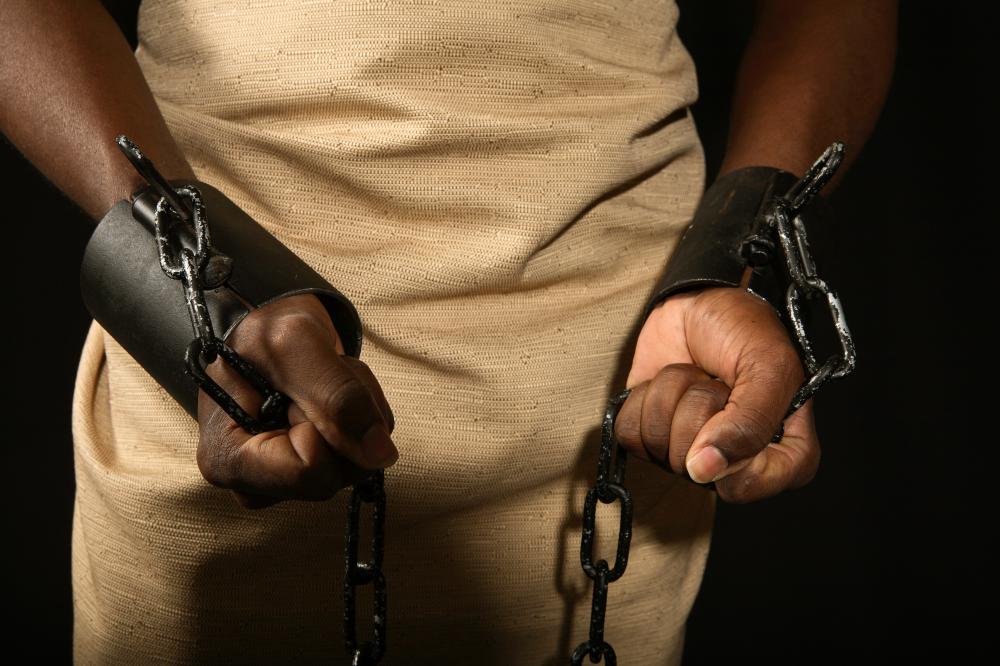
Perhaps one of the most frequently cited examples is the freedom given to African-American slaves during the US Civil War. In a document known as the Emancipation Proclamation, issued on 1 January 1863, President Abraham Lincoln decreed African-American slaves in the Confederate states to be free. Lincoln, through the additional executive power he gained during the Civil War, decided upon this course of action for many different reasons, but many scholars think that one of the primary drivers was that he himself was personally opposed to slavery. At the end of the war, Lincoln worked to ensure that freedom of African Americans was written into the constitution, which it was, as the 13th Amendment.

Other reasons behind the decree were strategic. The proclamation decreased the number of people available to serve in the Confederate Army, since most freed slaves escaped to the North for a better life. Furthermore, Britain and France, which were staunchly opposed to the system of slavery in the United States, became more powerful allies to the Union, or norther, states — and it was the Union army that ultimately won the war.
During the Holocaust

Another example of emancipation is that of the Jews in Europe during the 19th century. Rules were enacted at the close of the Second World War to end discrimination against Jews and declare them to be citizens equal to Christian Europeans. Before they were emancipated, Jews were not allowed to vote and required to distinguish themselves from Christians by wearing yellow badges representing a Star of David. Men were required to wear a judehut, a yellow hat in the shape of a cone. On estimate, millions of Jews and their supporters were imprisoned in concentration camps by the Nazis during the height of the war, and many died there. Those who survived typically found, in liberated Europe, that they were able to participate in civil society and practice their religion freely.
Modern Human Trafficking

While the above are clearly defined historical examples, the importance of giving self-determination to those who are oppressed and tyrannized continues today. Humanitarian work to end human trafficking is one example. A number of aid organizations around the world, to include the United Nations, have set up processes through which they are able to identify, liberate, and usually also rehabilitate people who have been victims of human trafficking. This practice typically centers on young girls in developing countries, and involves their trade and abuse as domestic servants and, often, sex workers.
Dissolving the Parent-Child Bond
Children in many countries can also be formally emancipated from their parents, which is a legal process that is usually reserved for situations where a child’s parents are abusive or otherwise unable to provide for the child and where the child has the means and the desire to provide for him or herself independently. This sort of emancipation is a legal proceeding that basically enables the child to act as his or her own free agent.
In most countries children are considered more or less independent actors once they turn 18; this sort of process almost always deals with younger teens. The paperwork and documents issued by the court in these sorts of proceedings typically allow the emancipated child to do things like rent an apartment or sign liability waivers without parental consent, and effectively serve to sever any legal obligations the parents owe the child. In almost all cases this sort of action has to be initiated by the child, though; parents can’t simply decide to unload or turn loose turbulent teenagers.
AS FEATURED ON:
AS FEATURED ON:









-
![Jewish emancipation took place in Europe in the 19th century.]() By: Jan S.Jewish emancipation took place in Europe in the 19th century.
By: Jan S.Jewish emancipation took place in Europe in the 19th century. -
![The United Nations continues to work for the emancipation of those subjected to human trafficking.]() By: Rafael Ben-AriThe United Nations continues to work for the emancipation of those subjected to human trafficking.
By: Rafael Ben-AriThe United Nations continues to work for the emancipation of those subjected to human trafficking. -
![The freeing of slaves in America is an example of emancipation.]() By: iMAGINEThe freeing of slaves in America is an example of emancipation.
By: iMAGINEThe freeing of slaves in America is an example of emancipation. -
![Abraham Lincoln was responsible for the Emancipation Proclamation.]() By: olavsAbraham Lincoln was responsible for the Emancipation Proclamation.
By: olavsAbraham Lincoln was responsible for the Emancipation Proclamation. -
![The Emancipation Proclamation became part of the Constitution as the 13th Amendment.]() By: Stephanie FreyThe Emancipation Proclamation became part of the Constitution as the 13th Amendment.
By: Stephanie FreyThe Emancipation Proclamation became part of the Constitution as the 13th Amendment.




Discussion Comments
Q: When will we see the emancipation of the Western Christian people, who have lived in slavery for 2000 years?
In Great Britain, in 2010, we are denied the right to be regarded as the "Indigenous People". This is despite the fact that our heritage is over 15,000 years old. The politically correct Establishment that denies us our birth right are very happy to acknowledge that the Inuit; American Indian; Aboriginal and Maori are the Indigenous People of their nations, and so they should.
But, the British people pre-date all of these races, yet we are marginalised in our own country. And those who speak out are denigrated and demonized, as racists or generally evil people.
The reality is that we are merely patriots and our forefathers sacrificed everything to keep our nation free. Yet, despite winning World War II, along with our allies, we are now held under the yoke of slavery, by those very same people who financed their puppets Adolph Hitler and Vladimir Lenin.
Please take note of what is happening in Britain, because if it can happen here, it can happen anywhere! God bless.
Post your comments