
At TheHealthBoard, we're committed to delivering accurate, trustworthy information. Our expert-authored content is rigorously fact-checked and sourced from credible authorities. Discover how we uphold the highest standards in providing you with reliable knowledge.
What is Electrophysiology?
Electrophysiology is the study of the way electricity interacts with the body's cells and tissues. The field primarily focuses on the electrical rhythms of the heart, also known as cardiac electrophysiology, though electrophysiologists also direct their attention on the electrical impulses that the nerves transport. On the microscopic scale, some electrophysiologists study the activity of ions and proteins in cells. In practice however, most of electrophysiology concerns itself with correcting heart disorders such as arrhythmias and certain types of tachycardia.
When the body's processes function properly, electricity will flow among the cells via the heart in a standard and regular way. When that process is disrupted, however, the body will experience an arrhythmia — an irregular heartbeat. To determine the source of the electrical disturbance in order to prevent it from happening again, a variety of tests may be taken. Those tests are collectively known as an electrophsiology study (EPS).

One of the less invasive tests, because it is not surgical, is radio ablation. It involves an electrode catheter that is inserted into a vein and directed to the heart. Once that is done, the heart's electrical impulses can be closely monitored and the area or areas of the heart that are malfunctioning can be identified. This is one of the distinctive tests that comprise an electrophysiology study, as opposed to a simpler procedure.

Electrocardiograms (EKGs or ECGs) may also be used to identify the cause of an arrhythmia. It's less ideal however because it offers little insight about the nature of an arrhythmia unless the arrhythmia happens during the test, which it rarely does. An electrophysiology study that involves an EKG then, will actually provoke an arrhythmia.
An EEG (electroencephalogram) is another type of electrophysiological test. This test is is taken to measure the electrical functioning of the brain. In this test, electrodes are placed on the head and connected to a computer which records the electrical activity in the brain.
AS FEATURED ON:
AS FEATURED ON:


-
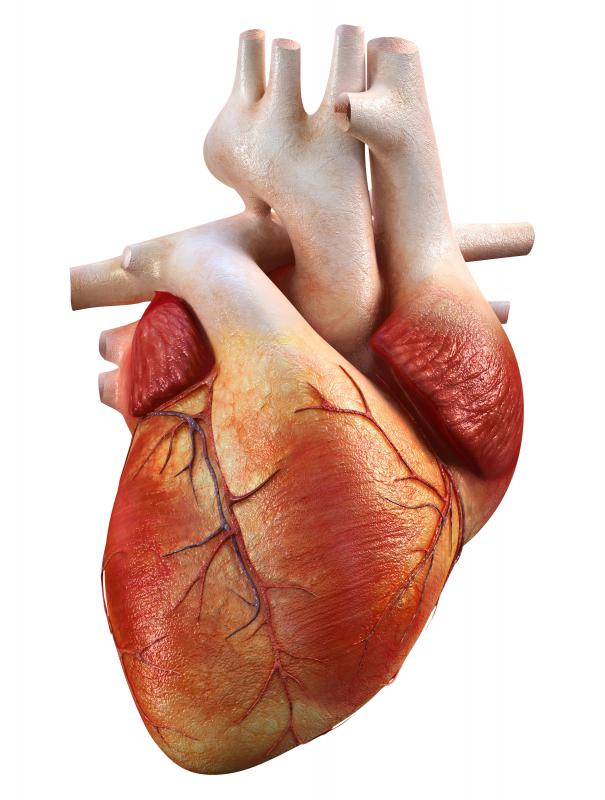
![The heart has electrical rhythms.]() By: adimasThe heart has electrical rhythms.
By: adimasThe heart has electrical rhythms. -
![Electrocardiograms may be used to identify the cause of an arrhythmia.]() By: nyulElectrocardiograms may be used to identify the cause of an arrhythmia.
By: nyulElectrocardiograms may be used to identify the cause of an arrhythmia. -
![An EEG (electroencephalogram) is another type of electrophysiological test used to measure the electrical functioning of the brain.]() By: TobilanderAn EEG (electroencephalogram) is another type of electrophysiological test used to measure the electrical functioning of the brain.
By: TobilanderAn EEG (electroencephalogram) is another type of electrophysiological test used to measure the electrical functioning of the brain.


Discussion Comments
how helpful is minimally invasive surgery for a person with stroke?
Post your comments