
At DelightedCooking, we're committed to delivering accurate, trustworthy information. Our expert-authored content is rigorously fact-checked and sourced from credible authorities. Discover how we uphold the highest standards in providing you with reliable knowledge.
What is Dulce De Leche?
Dulce de leche, which translates literally from the Spanish as “sweet of milk,” is a food product similar in taste, texture, and consistency to a thick caramel sauce, and it is made essentially of cooked milk and sugar. It is ubiquitous in many South American and Central American countries and is made from a basic combination of milk and sugar, with alterations in cooking processes and ingredients that give it different textures and slight variations in color and taste. This sauce is used primarily as a spread for toast or as a filling for pastries, although it is also eaten as a dessert on its own, as a filling for crepes and cake rolls, as fondue or dip for fruit and cake pieces, and in a solid form as a candy.
Argentina is arguably one of biggest producers of dulce de leche, exporting several tons each year. Uruguay is another major exporter. The international market for this product has expanded in recent years, particularly in the United States, where the introduction of Haagen-Dazs’s enormously popular ice cream flavor in 1998 is credited with introducing the flavor to the taste buds of the general public. Since then, the flavor of has found its way into cookies, milkshakes, chocolate candies, and ice cream toppings. Currently, Russia, Israel, the United States, and the European Union are among the largest importers of from Argentina and Uruguay.

In other countries, dulce de leche is known by different names, and the color ranges from pale ivory to intense brown. There is some diversity of flavor, as well. In Mexico, it is called cajeta, and it is made with a combination of goat’s milk and cow’s milk, sometimes flavored with a cinnamon stick during cooking. In Colombia and Venezuela, it is known as arequipe, and it is considered a “milk pudding.” Chile’s manjar and Peru’s manjar blanco are paler forms of this sweet, and the flavor, lacking the characteristic caramelization of the Argentinian version, is somewhat more subtle. The Bolivian version of manjar blanco is more substantial, featuring the addition of ground rice, or rice flour, as a thickening agent. The French enjoy confiture de lait, or “milk jam.” Any of these may be flavored with the addition of cinnamon, rum, chocolate, or vanilla, particularly when used as filling for pastries, cakes, or crepes.

Although there are myriad brands available for purchase in jars or tubs, the sauce is not complicated to make, though it does require a great deal of patience. There are several methods, all of which require simmering the milk or milks with sugar and flavorings, if desired, over a source of heat for a significant amount of time. The recipes all involve stirring so the mixture doesn’t burn, until the desired level of caramelization has taken place. Three of the most popular methods include the stovetop, the slow cooker, and the canned condensed milk methods.

For the stovetop method, a cook would scald 1 quart (about 1 liter) whole milk in a heavy-bottomed saucepan. She should then add 2 cups (400 g) sugar, 1 teaspoon (4.6 g) baking soda, and 1 teaspoon (5 ml) vanilla extract, if desired. The mix is cooked over medium heat, stirring, until it caramelizes — it will take at least an hour. It can be stored in a covered container in the refrigerator.

For home cooks, the far more popular, if somewhat dangerous, method involves placing an unopened 14-ounce (425 ml) can (or cans) of sweetened condensed milk in a saucepan and then filling the saucepan with enough water to cover the cans. The cans are then gently simmered for three hours, adding water to the pot periodically to ensure that the cans remain underwater the entire time. Cans must be allowed to cool completely before opening. Most companies that manufacture sweetened condense milk specifically tell customers not to make the sauce this way, because of the danger that the cans could explode.
Note: Subjecting a sealed can to this kind of procedure carries with it obvious risks; those who wish to use canned condensed milk but do not like the thought of a possibly explosive kitchen incident may use a can opener to poke two small holes in the top of each can, set the cans in an empty saucepan, then fill the pan with water to within 0.25 inch (0.6 cm) of the tops of the cans. They should be simmered for six hours, adding water as needed to maintain the water level, and then cooled completely. The cans can then be opened and the top layer of milk spooned off, and the resulting dulce de leche should be much the same as with the other methods.
AS FEATURED ON:
AS FEATURED ON:


-
![Vanilla extract is a key ingredient in dulce de leche, which is similar to a caramel sauce.]() By: HD ConnellyVanilla extract is a key ingredient in dulce de leche, which is similar to a caramel sauce.
By: HD ConnellyVanilla extract is a key ingredient in dulce de leche, which is similar to a caramel sauce. -
![Sometimes cajeta is flavored with a cinammon stick during cooking.]() By: Volodymyr KrasyukSometimes cajeta is flavored with a cinammon stick during cooking.
By: Volodymyr KrasyukSometimes cajeta is flavored with a cinammon stick during cooking. -
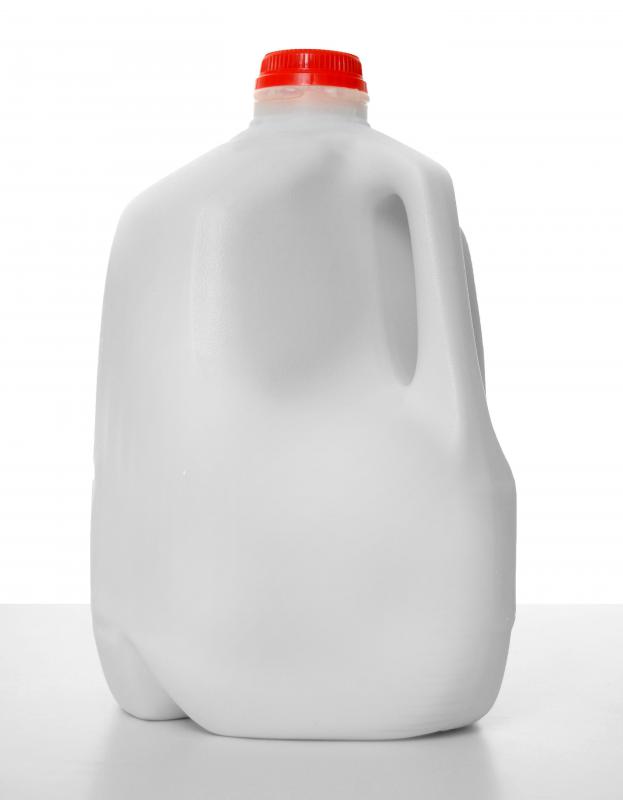
![Milk is used to make dulce de leche.]() By: vlorzorMilk is used to make dulce de leche.
By: vlorzorMilk is used to make dulce de leche. -
![Dulce de leche can be made using sweetened, condensed milk.]() By: efiredDulce de leche can be made using sweetened, condensed milk.
By: efiredDulce de leche can be made using sweetened, condensed milk.



Discussion Comments
One can of sweetened condensed milk, 45 min in a pressure cooker, cool, open, enjoy.
Is dulce de leche cream the same thing as Eagle Brand Condensed Milk? grannie
It must be the best flavor of ice cream, at least for me. It comes in light version too, for those watching calories and fat intake.
Light version of all ice creams must contain half the fat or less, and two thirds of the calories or less, of the regular, full fat version. Those are the federal standards that manufacturers have to adhere to.
Post your comments