
At TheHealthBoard, we're committed to delivering accurate, trustworthy information. Our expert-authored content is rigorously fact-checked and sourced from credible authorities. Discover how we uphold the highest standards in providing you with reliable knowledge.
What is Dry Drowning?
 Michael Pollick
Michael Pollick
Michael Pollick
Dry drowning is a medical emergency where a patient is unable to pull oxygen out of the air as a result of fluid on the lungs. The patient will die if not treated as a result of the oxygen deprivation and medical intervention is required quickly for people in this situation. It is important to be aware that water is not necessarily involved in cases of dry drowning. Fluids build up in the lungs due to physiological processes and the patient drowns in his or her own fluids, not water from an external source.
Some causes of dry drowning include trauma to the chest or diaphragm that makes it impossible for the lungs to inflate to get oxygen, paralysis in the chest, inhalation of gases that displace oxygen, and laryngospasm, where the larynx snaps shut and will not reopen. Around 15% of drowning deaths are attributed to dry drowning.

In all of these cases, the patient is not getting oxygen, but the blood continues to circulate, and some changes take place in the vasculature around the lungs as the body tries to compensate for the limited gas exchange. Fluids start to leak out of the blood vessels and into the lungs, leading to pulmonary edema. The lungs fill with fluid, making it impossible for gas exchange to take place even if oxygen does reach the lungs, and the patient dies of cardiac arrest.

Patients who are experiencing dry drowning can have variable symptoms, depending on the cause. Common signs are gasping for breath, feeling unable to breathe, and developing lightheadedness. Treatment requires determining what is interfering with the gas exchange in the lungs and addressing it. This is not always possible in time to save the victim.

This term is also used to describe some documented cases where people jump into extremely cold water and experience a cardiac arrest. When they are autopsied, there is no water in the lungs, and the cause of the drowning is not actually interference with the ability to absorb oxygen, but shock to the heart that causes it to stop. People can reduce their risks of such incidents by acclimating themselves slowly to cold water and avoiding very cold water if they have a history of heart problems.

There is some confusion between dry drowning and a different type of medical crises known as secondary drowning. In secondary drowning, someone swims, incurs trauma to the lungs, and sickens and dies several hours later. The patient drowns on dry land, leading some people to call it "dry drowning," but the drowning is the result of inhaling water that damages the lungs.
Michael Pollick
A regular TheHealthBoard contributor, Michael enjoys doing research in order to satisfy his wide-ranging curiosity about a variety of arcane topics. Before becoming a professional writer, Michael worked as an English tutor, poet, voice-over artist, and DJ.
Learn more...
Michael Pollick
A regular TheHealthBoard contributor, Michael enjoys doing research in order to satisfy his wide-ranging curiosity about a variety of arcane topics. Before becoming a professional writer, Michael worked as an English tutor, poet, voice-over artist, and DJ.
Learn more...AS FEATURED ON:
AS FEATURED ON:


-
![The human respiratory system, showing the trachea, bronchioles, and lungs.]() By: Alexandr MitiucThe human respiratory system, showing the trachea, bronchioles, and lungs.
By: Alexandr MitiucThe human respiratory system, showing the trachea, bronchioles, and lungs. -
![Laryngospasm, where the larynx shuts and does not open, can cause dry drowning.]() By: Alila Medical MediaLaryngospasm, where the larynx shuts and does not open, can cause dry drowning.
By: Alila Medical MediaLaryngospasm, where the larynx shuts and does not open, can cause dry drowning. -
![Pulmonary edema refers to a medical condition characterized by the build up of fluid around the lungs.]() By: Alila Medical MediaPulmonary edema refers to a medical condition characterized by the build up of fluid around the lungs.
By: Alila Medical MediaPulmonary edema refers to a medical condition characterized by the build up of fluid around the lungs. -
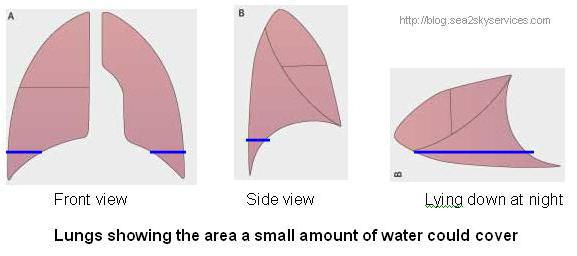
![Secondary drowning, which can involve a small amount of water in the lungs, is sometimes confused with dry drowning.]()
Secondary drowning, which can involve a small amount of water in the lungs, is sometimes confused with dry drowning.


Discussion Comments
@snowywinter: No, aspiration is different than dry drowning. The term aspiration actually means “to draw in or out using a sucking motion”. Medically speaking, to aspirate can mean breathing in a foreign object. Also, if a person vomits and it gets into their lungs, it is called aspiration and can cause serious airway compromise.
Is dry drowning the same thing as aspirating?
Post your comments