
At BeautyAnswered, we're committed to delivering accurate, trustworthy information. Our expert-authored content is rigorously fact-checked and sourced from credible authorities. Discover how we uphold the highest standards in providing you with reliable knowledge.
What is Dimethicone?
Dimethicone, also known as polydimethylsiloxane (PDMS), is a silicone oil with distinctive properties that make it a useful ingredient in many skin and hair care products. It has many industrial applications as well, and is even an additive in some foods. People widely use products containing the compound, and generally report few adverse effects, although some individuals do have sensitivities to it.
Use in Personal Care Products

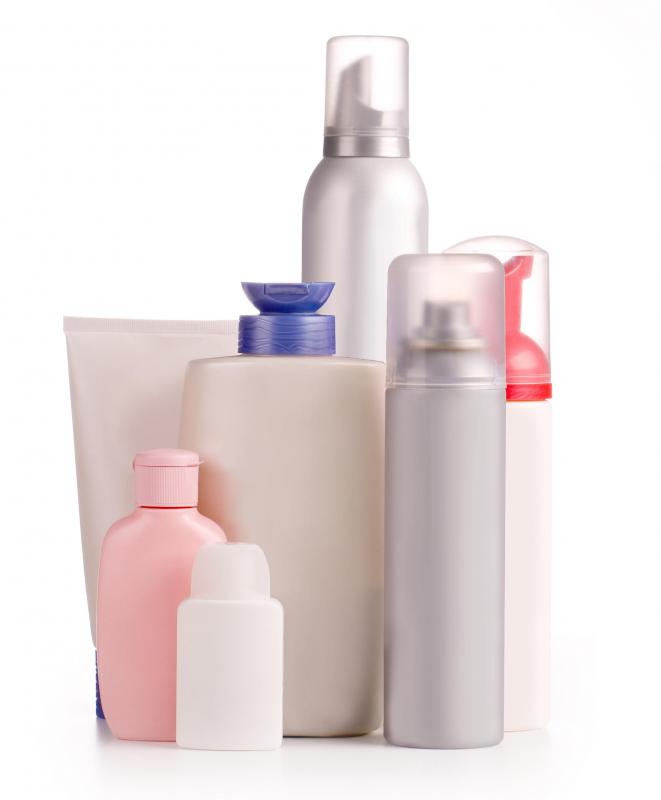
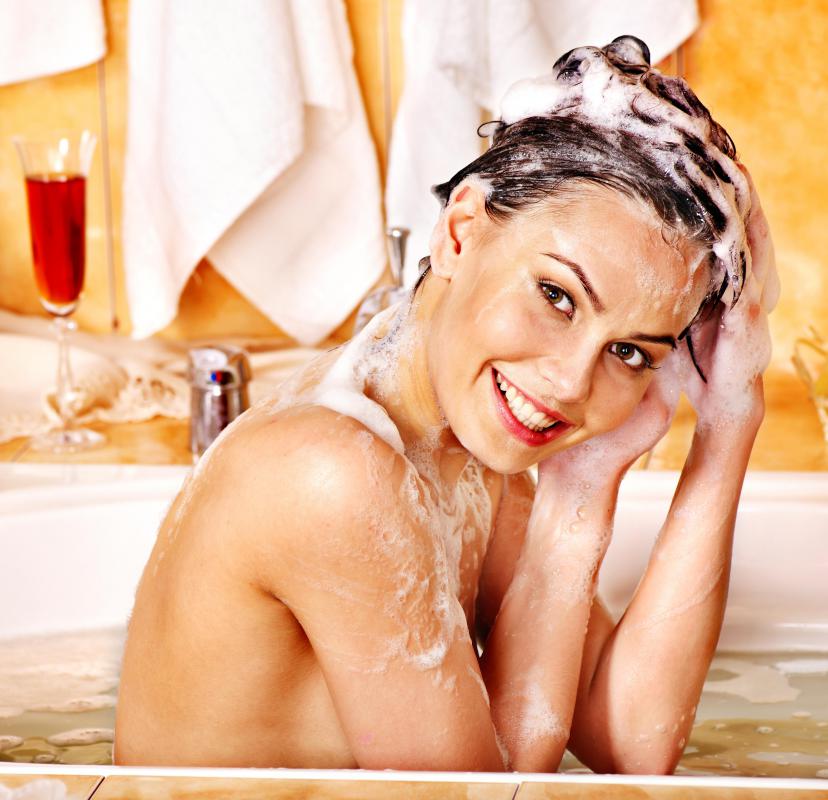
Products such as hair conditioners and shampoos frequently contain dimethicone to facilitate the combing of tangled hair, as well as to give hair a brighter shine. It forms a slick lubricating coat around each strand of hair so that a comb will move through the hair with less resistance. Likewise, it acts as a skin protectant and emollient, appearing as an ingredient in many over-the-counter moisturizing lotions and skin creams, as well as in some makeup products. Even diaper rash creams for babies often add this chemical to soothe the irritated skin.
Safety

The U.S. Food and Drug Administration (FDA) has approved adding PDMS to products such as those listed above, and decades of consumer use have shown it to be largely safe. One area that has raised concern is the use of the substance as a filling for breast implants. For years, PDMS silicone implants were the standard, but recent medical concerns have caused a gradual shift to implants filled with saline.

Expectant and breast-feeding mothers are advised to consult a physician before using any product that contains dimethicone. It is possible for a consumer to find out if dimethicone, or one of its variants, is present in a particular product by reviewing the list of ingredients. Names such as Amodimethicone, Stearoxy Dimethicone and Behenoxy Dimethicone indicate the use of polymers based on this manmade substance.
Side Effects

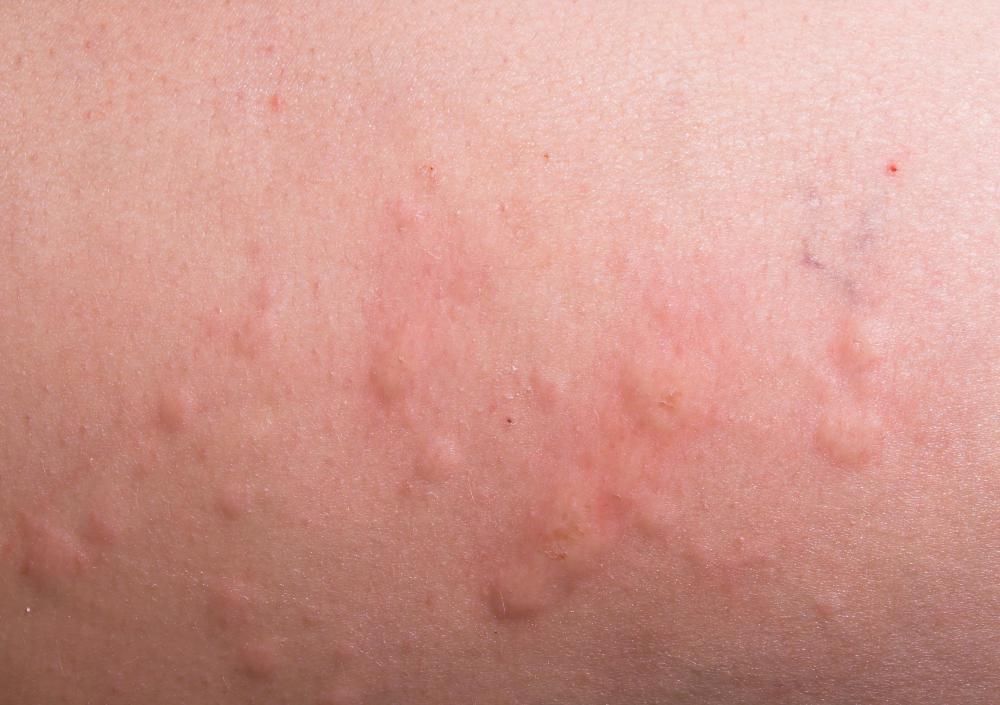
Some side effects have been reported from the use of PMDS products; they include mild itching and stinging or burning sensations. Allergic reactions such as hives, sudden respiratory problems, and swelling in any part of the mouth or face represent can also happen. Users of dimethicone creams may be surprised to find that the product can actually worsen dryness in some individuals. This is not necessarily a sign of ineffectiveness, but may instead indicate an allergic reaction that should not be ignored.

Should such symptoms appear, doctors recommend immediately discontinuing use of the product. Seeking medical attention is a good idea if the reaction becomes severe, or does not improve quickly. A pharmacist can be another good resource for guidance regarding side effects.
Other Uses
Dimethicone is widely used in non-cosmetic products as well. Because of its corrosion-inhibiting properties, it is a popular additive in industrial lubricants. Makers of processed foods use the compound to prevent caking and foaming. It is also the primary ingredient in the world-famous toy known as Silly Putty®.
Composition
Silicon dioxide, commonly referred to as silicon or silica, is a naturally occurring element in the earth. Chemists have successfully combined silica with oxygen, hydrogen, and carbon. These chemical compounds, which may also include additional elements, are known as silicone polymers, or simply silicones. A polymer is a large molecule that is composed of units of smaller molecules that are repeated in a molecular chain. Not all silicones are identical; they differ depending on how the manufacturer mixes and fuses the elements together. To avoid confusion, remember that "silicone" is a product derived from "silicon."
Physical Characteristics
PMDS is unusual in that it tends to share some of the properties of both a solid and a liquid. Chemists refer to this quality as viscoelastic. At room temperature, a solid mass of the material will at first feel and act very much like rubber. If left on a solid surface over several hours, however, it will eventually ooze outward to cover the whole area. A person can then peal it off to reveal a perfect mold of the object. This semi-solid state is partly what makes the substance so versatile.
AS FEATURED ON:
AS FEATURED ON:


-
![Hair products containing dimethicone.]() By: kornienkoHair products containing dimethicone.
By: kornienkoHair products containing dimethicone. -
![Women who are breast-feeding should talk to their doctor before using any product containing dimethicone.]() By: Valeriy VelikovWomen who are breast-feeding should talk to their doctor before using any product containing dimethicone.
By: Valeriy VelikovWomen who are breast-feeding should talk to their doctor before using any product containing dimethicone. -
![Some individuals may experience hives as part of an allergic reaction to dimethicone.]() By: Rob ByronSome individuals may experience hives as part of an allergic reaction to dimethicone.
By: Rob ByronSome individuals may experience hives as part of an allergic reaction to dimethicone. -
![Some shampoos and conditioners contain dimethicone.]() By: Gennadiy PoznyakovSome shampoos and conditioners contain dimethicone.
By: Gennadiy PoznyakovSome shampoos and conditioners contain dimethicone. -
![A pharmacist can provide information about possible side effects of dimethicone.]() By: DeklofenakA pharmacist can provide information about possible side effects of dimethicone.
By: DeklofenakA pharmacist can provide information about possible side effects of dimethicone.


Discussion Comments
@post No19: I also have used the Neutrogena Norwegian Formula Anti-Itch Moisturizer and I was also wondering why the ingredient Dimethicone was left out. I also purchased one from E-Bay. As I read further on the label, I found that this ingredient is listed under the Non-Medicated ingredients. Maybe the regulations are different in Canada than in the U.S.?
My mom has used Neutrogena Norwegian Formula Soothing Relief Anti-Itch Moisturizer for several years with great success. It's "medicinal" ingredients listed were Dimethicone (1 percent), Lidocaine Hydrochloride (2 percent), and Camphor (0.1 percent).
Earlier this month, I was able to obtain it again from an eBay seller, whose stock apparently comes from Canada (the bottle indicates Johnson and Johnson Inc. Montreal, and the text is in French and English, although it also indicates Made/Fabrique aux U.S.A.). Dimethicone is not listed amongst the ingredients. I wonder why Dimethicone was removed?
I use "Heel Tastic" for dry cracked heels and its main ingredient is Dimethicone. I cannot believe how smooth my heels feel now after just a week of putting it on and cotton socks on top so not to rub off on flooring. It does the job and no more trying all sorts of creams! The only problem is the product has been discontinued. I have looked everywhere for it. I will keep looking! It's the best roll-on stick ever!
I used cloths (wipes) containing dimethicone after a hysterectomy and found it irritated the area.
Silicone, I'm learning, has a more rubber/plastic quality. So it makes sense to stay away from it. So does silica/silicon, being a naturally occurring element, serve as a much better ingredient for hair and skin? And does it have side effects to be aware of?
Is it dangerous in any sort of way?
I read the label on my Tropicana pomegranate-blueberry juice and this was totally on the ingredients list.
I had problems with mystery skin infections while using products with dimethicone. Now I use ivory and no problems. I suspect that the soap would coat my skin with this silicone oil and that no matter how much I washed it would only deposit more dimethicone thereby suffocating the skin and promoting infection.
Okay, to clarify a few things, dimethicone (also known as PDMS, polydimethylsiloxane, and silicone) is a siloxane polymer with properties which vary, depending on polymer chain length and the degree of cross-linking between chains, so the polymer can be a viscous fluid, a wax, an elastomer (i.e. something elastic), or even a solid resin. It is also non toxic. For these reasons it has been used in shampoos/conditioners (and many other cosmetic products), "silly putty", breast implants, waterproof sealants, and lubricants.
When used in a shampoo/conditioner, it gives hair a "glossy" appearance (though excessive overuse can give hair a greasy look and feel).
We purchased Dermisil. Both my husband and I have horrid problems -- skin on our legs itch. I scratch my legs at night (in my sleep) not even knowing I do so. But, the product works.
Granted, it contains petroleum additives, same as baby oil. But no more itching.
We use it sparingly, of course. Going to read more info on the product. But for now, in winter in Michigan, we will keep using it.
How can cortisone be an ingredient in dimethicone when dimethicone is a base ingredient itself? Cortisone could be combined with dimethicone to make a cream or ointment, but dimethicone is a base ingredien, just as sugar is a base ingredient of candy.
It would seem to be a relative of a steroid, but from all indications is not one. Not prednisone or prednisolone or hydrocortisone for sure (all of which are of the steroid family). I saw it in a bottle of lotion I have and wondered if it were a steroid and went reading about it. From all indications, it is closely related to silicone, which has been used in other areas including plastic surgery.
cortisone is a steroid! I'd be seriously concerned if it was present in dimethicone! it reduces immunity, can cause renal damage in children as well as a host of other problems. one to avoid in all but worst case scenarios.
There are also sprays that are applied after styling to give hair shine. I think some of these products contain dimethicone as well.
I have used several different hair products over the years that contained dimethicone. These were mainly anti-frizz serums. When applied to damp hair and then the hair is styled (blow dried, curled, flat ironed), it helps give the hair a very smooth appearance.
anon87310 - No, I do not think cortisone is an ingredient in dimethicone, but you should check with a pharmacist to be sure.
I would like to know if cortisone is an ingredient in dimethicone?
Post your comments