
At DelightedCooking, we're committed to delivering accurate, trustworthy information. Our expert-authored content is rigorously fact-checked and sourced from credible authorities. Discover how we uphold the highest standards in providing you with reliable knowledge.
What is Dill?
 Mary Elizabeth
Mary Elizabeth
Mary Elizabeth
An herb is a plant whose leaves, seeds, or flowers are used for flavoring food or in medicine. Other uses of herbs include cosmetics, dyes, and perfumes. The name derives from the Latin herba, meaning "green crops." Dill is a plant (Anethum graveolens), that yields both a seed-like fruit referred to as dill seed or dill and leafy growth called dill weed. The plant is in the same family, Apiaceae, as anise, fennel, cilantro, caraway, and cumin.
History
The Greek physician Hippocrates, known for the Hippocratic Oath, recorded a recipe for a dill mouthwash. It is mentioned in Charlemagne's list of herbs, and he served tea using it.
Description

Like a number of the other herbs in its family, dill is a tall plant, often reaching a height of 3 feet (about 1 m), and topped with the characteristic feathery leaves. Some strains have been developed to be shorter, to resist bolting, or to maximize seed production. Flowers range from white to yellow.
Gardening
Dill is a sun-loving, hardy annual that is grown from seed. It will reseed itself if the seeds are not harvested. The plant has a taproot like coriander, and mature plants shouldn't be transplanted. Succession planting assures that dill weed is available all season, even as the earlier plantings bolt.
Food and Other Uses

Dill is well known as the prime flavoring ingredient in cucumber pickles and other pickled vegetables, but it is also popular for flavoring vinegars. It is an ingredient in many Scandinavian and German fish and seafood dishes and sauces, including gravlax, and is used in soups with a variety of origins, including borscht. Dill is used as a garnish in the Baltic states, in breads, and in dips and salad dressings, including those used for potato salad.
Preservation

The most popular way to preserve dill is by using it in pickles. The leaves can also be frozen for several months, a preferable method to drying it. To harvest the fruit, the dead flower heads can be gathered and shaken into a bag, or — to make sure seeds are not lost — the seed heads can first be wrapped in cheesecloth, netting, or pantyhose and the cloth used to collect the seeds. Seeds should be dried in a cool, dry place.
Mary Elizabeth
Mary Elizabeth is passionate about reading, writing, and research, and has a penchant for correcting misinformation on the Internet. In addition to contributing articles to DelightedCooking about art, literature, and music, Mary Elizabeth is a teacher, composer, and author. She has a B.A. from the University of Chicago’s writing program and an M.A. from the University of Vermont, and she has written books, study guides, and teacher materials on language and literature, as well as music composition content for Sibelius Software.
Learn more...
Mary Elizabeth
Mary Elizabeth is passionate about reading, writing, and research, and has a penchant for correcting misinformation on the Internet. In addition to contributing articles to DelightedCooking about art, literature, and music, Mary Elizabeth is a teacher, composer, and author. She has a B.A. from the University of Chicago’s writing program and an M.A. from the University of Vermont, and she has written books, study guides, and teacher materials on language and literature, as well as music composition content for Sibelius Software.
Learn more...AS FEATURED ON:
AS FEATURED ON:


-
![The dill plant.]() By: ViktorThe dill plant.
By: ViktorThe dill plant. -
![Cucumbers can be pickled with brine or vinegar and dill weed to make dill pickles.]() By: Natalya KorolevskayaCucumbers can be pickled with brine or vinegar and dill weed to make dill pickles.
By: Natalya KorolevskayaCucumbers can be pickled with brine or vinegar and dill weed to make dill pickles. -
![Dill seed.]() By: Andrey StarostinDill seed.
By: Andrey StarostinDill seed. -
![Dill is used in borscht.]() By: cook_inspireDill is used in borscht.
By: cook_inspireDill is used in borscht. -
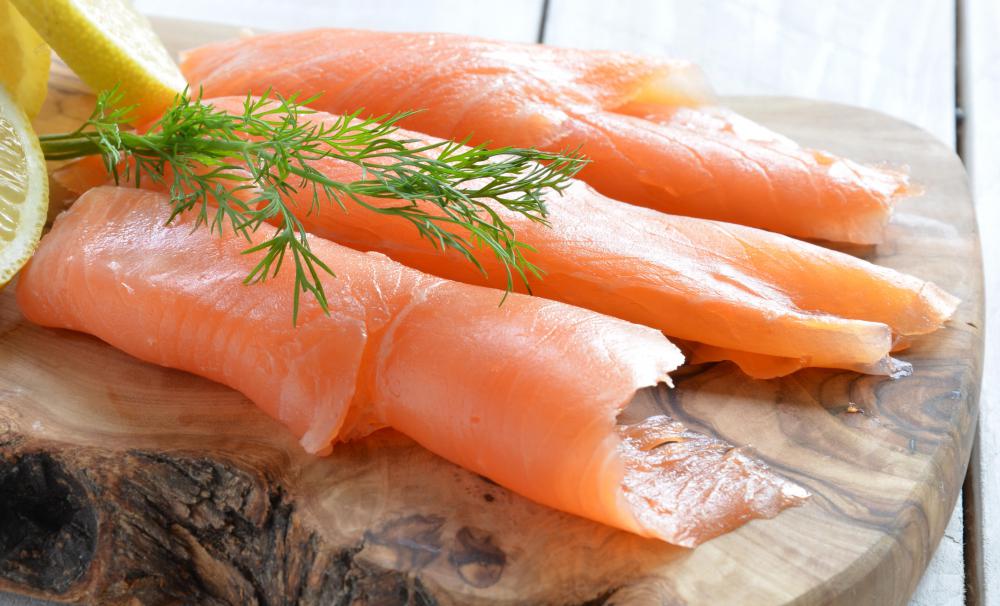
![Dill is used in the making of gravlax, a Scandinavian smoked salmon.]() By: PhotoEdDill is used in the making of gravlax, a Scandinavian smoked salmon.
By: PhotoEdDill is used in the making of gravlax, a Scandinavian smoked salmon.


Discussion Comments
All of the above.. The seeds are typically the most pungent and flavorful. They are often called for and used in dips. The frilly leaves are next in flavor and are typically what you get when you buy dried dill. The stalks themselves are also flavorful and are often used with canning of dill pickles. Hope this answers your query. --Jake
You can eat dill fresh or dried, seed or weed. Works in soups, salads, casseroles, salad dressing. Dill is mostly used for canning pickles. Helped Mom when I was a little girl. Process is long but worth it. Don't recommend for dessert.
If a recipe calls for "dill weed," then it means the plant itself (not the seed). If a recipe calls for "dill seed," it will specifically say "seed."
The "short dark green slivers" you describe are the dried dill and not the seed.
You can buy dill weed and dill seed off the spice rack at your grocery store -- or grow your own! Easy to grow and easy to dry and the seeds are easy to harvest. I hope this helps.
Anon2169 - If you're growing dill - and see the whole plant - you'll know that it's the top part - the little green bud like top - the stem is narrow and then blooms at the top to about 5" diameter that top part - is the part that is used. It's wonderful in home canning of pickles - just pull off the whole top and place it in the jar. Yum!
you can eat the whole seed. I've eaten it many times. I like its hot taste and middle part.
I don't particularly care for the taste of dill, however, the health benefits of dill should not be ignored. Among other benefits, nutrients in dill help protect the body against some carcinogens.
I think that if a recipe calls for dry dill, generally, then it's probably safe to use dill weed rather than dill seed.
if a recipe calls for dry dill, what exactly am i supposed to use? i have dill weed, is that the same or is it dill seed?
You can eat whatever part you want. Dill leaves (those tiny green slivers) are great seasoning, especially on fresh fish, while dill seeds are also common seasonings in things like salad dressings. Yum!
All i wanted to know was what is the part you eat? No one seems to be able to tell me. The dill i buy is short dark green slivers. Do i eat the seeds? Help.
Post your comments