
At BeautyAnswered, we're committed to delivering accurate, trustworthy information. Our expert-authored content is rigorously fact-checked and sourced from credible authorities. Discover how we uphold the highest standards in providing you with reliable knowledge.
What is Diazolidinyl Urea?
Cosmetics and beauty products need the addition of preservatives to increase their shelf life and to keep them from spoiling. It is very easy for bacteria and other microbial organisms to take root in these products, and using such infected products can lead to a variety of health issues. To help ward off the dangerous pathogens and keep beauty products as pristine as possible, a chemical known as diazolidinyl urea is commonly used as a preservative in cosmetics.
Aside from being a very effective antimicrobial preservative, diazolidinyl urea is known to be a formaldehyde releaser. It is formed when a combination of formaldehyde and allatoin is heated in a sodium hydroxide solution, and, when dit is dissolved in a water-based solution, it releases formaldehyde, which can be a problem.

The U.S. Environmental Protection Agency has classed formaldehyde as a probable human carcinogen, which means that prolonged contact with this chemical may heighten the risk of cancer. Since diazolidinyl urea, as mentioned, is a formaldehyde releaser, there have been some obvious questions and concerns about its widespread use in skin care products, shampoos, conditioners, bubble bath, baby wipes, household detergents and disinfectants. The risk of getting cancer from the regular use of beauty and personal care products containing this substance, however, appears to be minimal.

The Food and Drug Administration agency, which, in the United States, regulates the safety of cosmetic products, has, in consultation with the Cosmetic Ingredient Review board, deemed cosmetics and beauty products containing diazolidinyl urea to be reasonably safe. This is based on the results of several experiments that were carried out to test the effects of the chemical. The caveat is that only a small amount of diazolidinyl urea, only about 0.5%, should be used in the beauty products, in order to ensure that the level of the formaldehyde released does not exceed the prescribed 0.2% level limit. In such small quantities, the formaldehyde releaser is not expected to have any adverse effect on human health.

Some people, however, may experience allergic reactions from contact with diazolidinyl urea. Milder symptoms may include an itching or a burning sensation in the skin, while more aggravated symptoms may include scaling, blistering, and flaking of the skin. As with all skin care products, it is advisable to do a small skin patch test to ascertain if the product is suitable for a particular type of skin.
AS FEATURED ON:
AS FEATURED ON:


-
![Household detergents may contain diazolidinyl urea.]() By: DPimboroughHousehold detergents may contain diazolidinyl urea.
By: DPimboroughHousehold detergents may contain diazolidinyl urea. -
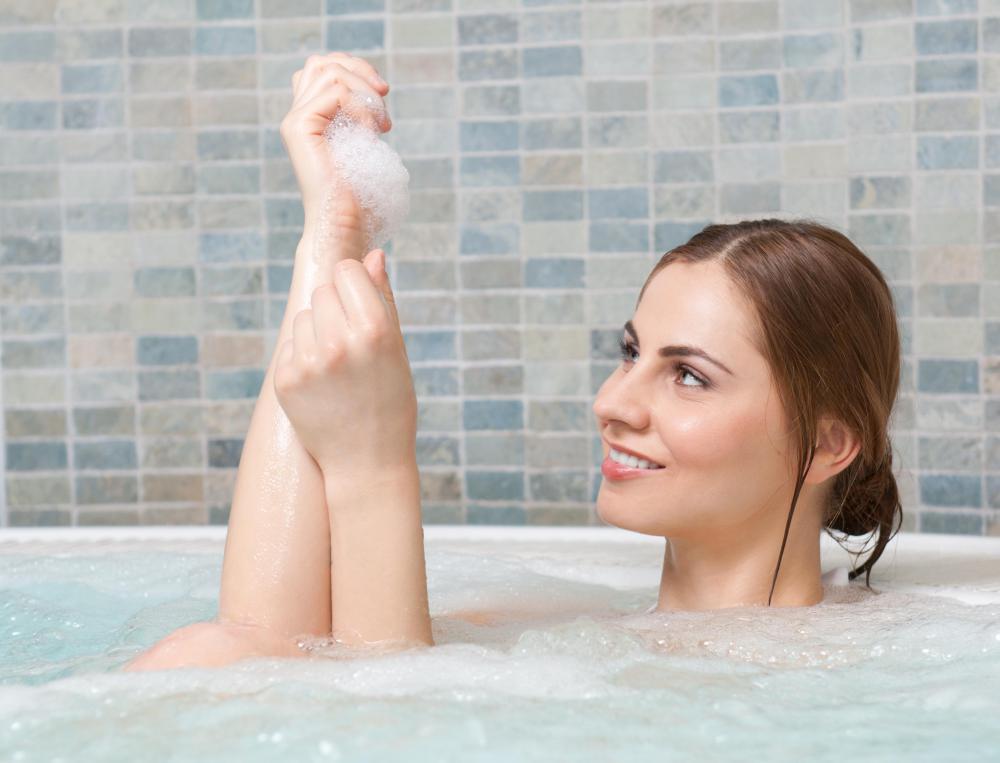
![Bath products like bubble foam may contain diazolidinyl urea.]() By: RidoBath products like bubble foam may contain diazolidinyl urea.
By: RidoBath products like bubble foam may contain diazolidinyl urea. -
![In the United States, the Food and Drug Administration (FDA) has deemed diazolidinyl urea to be a "reasonably safe" additive to cosmetics products.]() By: arminaIn the United States, the Food and Drug Administration (FDA) has deemed diazolidinyl urea to be a "reasonably safe" additive to cosmetics products.
By: arminaIn the United States, the Food and Drug Administration (FDA) has deemed diazolidinyl urea to be a "reasonably safe" additive to cosmetics products. -
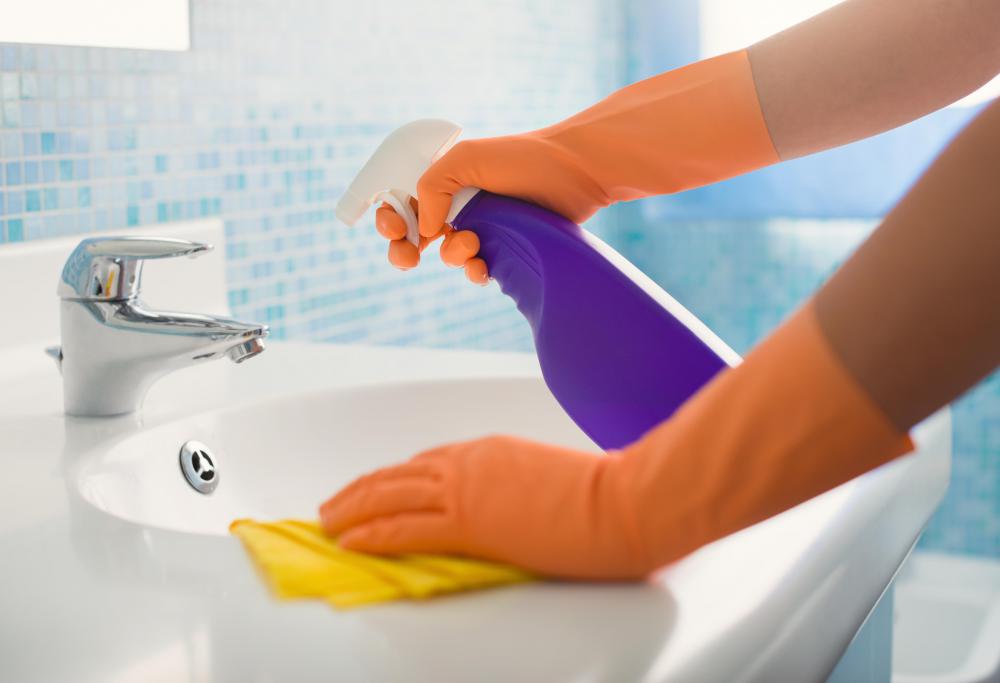
![Some cleaning products and disinfectants list diazolidinyl urea as an ingredient.]() By: diego cervoSome cleaning products and disinfectants list diazolidinyl urea as an ingredient.
By: diego cervoSome cleaning products and disinfectants list diazolidinyl urea as an ingredient. -
![Diazolidinyl urea may be found in shampoos and conditioners.]() By: Piotr MarcinskiDiazolidinyl urea may be found in shampoos and conditioners.
By: Piotr MarcinskiDiazolidinyl urea may be found in shampoos and conditioners.



Discussion Comments
It is probably a good thing that the Food and Drug Administration agency monitors this because it is something most people don't even consider a possible bacteria growth medium.
Post your comments