
At TheHealthBoard, we're committed to delivering accurate, trustworthy information. Our expert-authored content is rigorously fact-checked and sourced from credible authorities. Discover how we uphold the highest standards in providing you with reliable knowledge.
What is Diagnostic Imaging?
 Mary McMahon
Mary McMahon
Mary McMahon
Diagnostic imaging is a form of medical imaging that is performed with the intention of diagnosing disease, in contrast with medical imaging conducted to monitor the progress of a disease, or to guide a medical procedure. Many people undergo this type of imaging at some point in their lives; an X-ray to confirm a broken limb, for example, is a diagnostic test. The goal is to gather more information about the specifics of the patient's condition, hopefully reaching a conclusion about what condition the patient has and how it might be treated.
There are a number of different types of diagnostic imaging, each of which can be used for a variety of conditions. Some are minimally invasive, requiring only that the patient hold still. Others are more invasive, involving the swallowing of various substances or the use of imaging devices internally. In all cases, when an imaging study is ordered to diagnose a problem, the procedure is usually explained to the patient so that he or she knows what to expect.

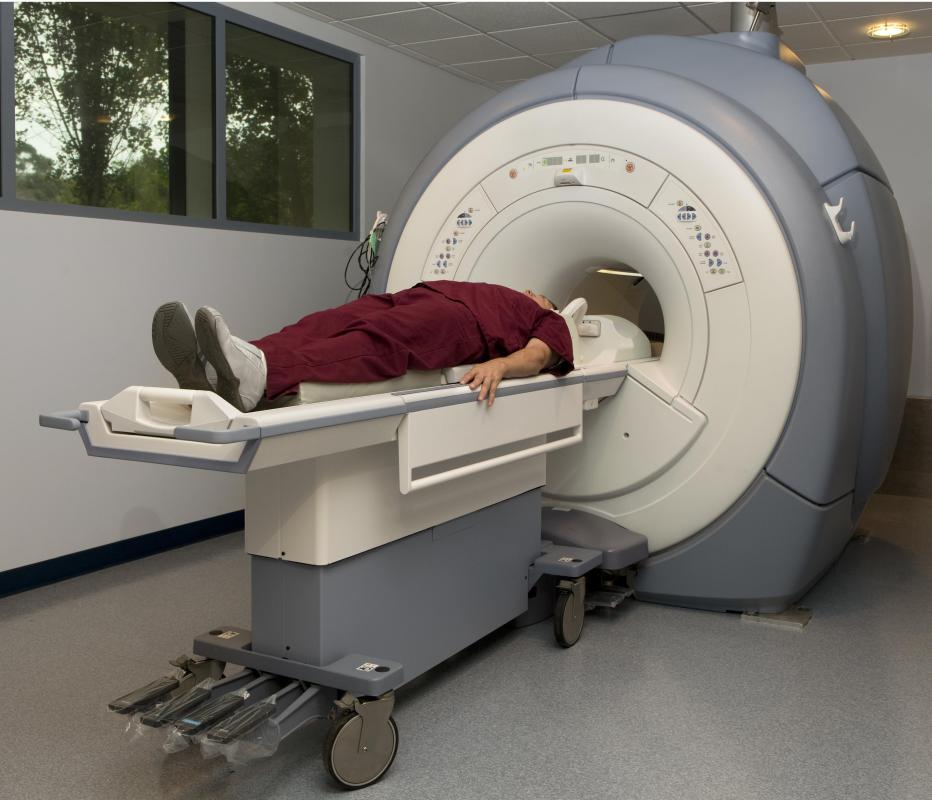
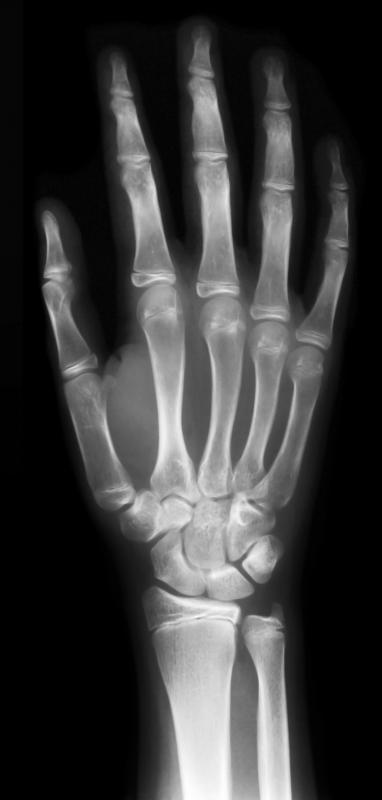
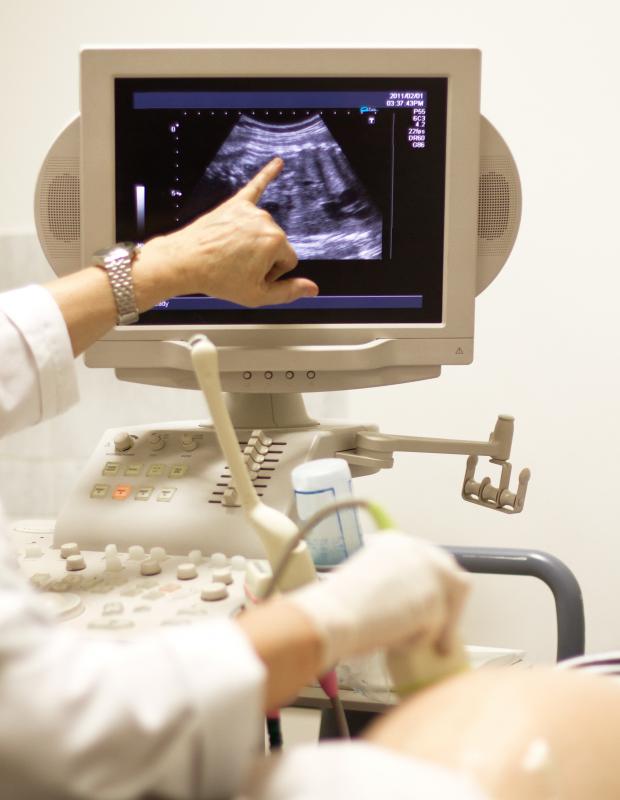
Some examples of minimally invasive studies include ultrasound, in which the body is bombarded with high frequency sound waves to create a picture of the inside, and magnetic resonance imaging (MRI), in which the internal structures of the body are visualized with the use of large magnetic field. The body can also be bombarded with X-rays to generate an image that can be recorded on special film.

In some cases, patients may be asked to swallow a substance like barium, which makes the digestive tract more visible on an x-ray, or to submit to an injection of a radioactive isotope for a procedure like a positron emission tomography (PET) scan, in which the radiation emitted by the isotope can be used to track its progress through the body. Cameras and transducers may also be introduced to the body through the esophagus or intestinal tract.

A wide variety of medical fields rely on diagnostic imaging to get a picture of the inside of the body without actually opening the body up. Imaging studies can reveal things like tumors, circulatory problems, and broken bones, allowing medical professionals to use this information in the development of a treatment plan. The imaging is often combined with bloodwork, urinalysis, and other diagnostic techniques that provide more information about the patient's condition. This minimally invasive form of diagnosis is typically much better for patients than exploratory surgery, which is the only other way to see what's going on inside the body.
Mary McMahon
Ever since she began contributing to the site several years ago, Mary has embraced the exciting challenge of being a TheHealthBoard researcher and writer. Mary has a liberal arts degree from Goddard College and spends her free time reading, cooking, and exploring the great outdoors.
Learn more...
Mary McMahon
Ever since she began contributing to the site several years ago, Mary has embraced the exciting challenge of being a TheHealthBoard researcher and writer. Mary has a liberal arts degree from Goddard College and spends her free time reading, cooking, and exploring the great outdoors.
Learn more...AS FEATURED ON:
AS FEATURED ON:


-
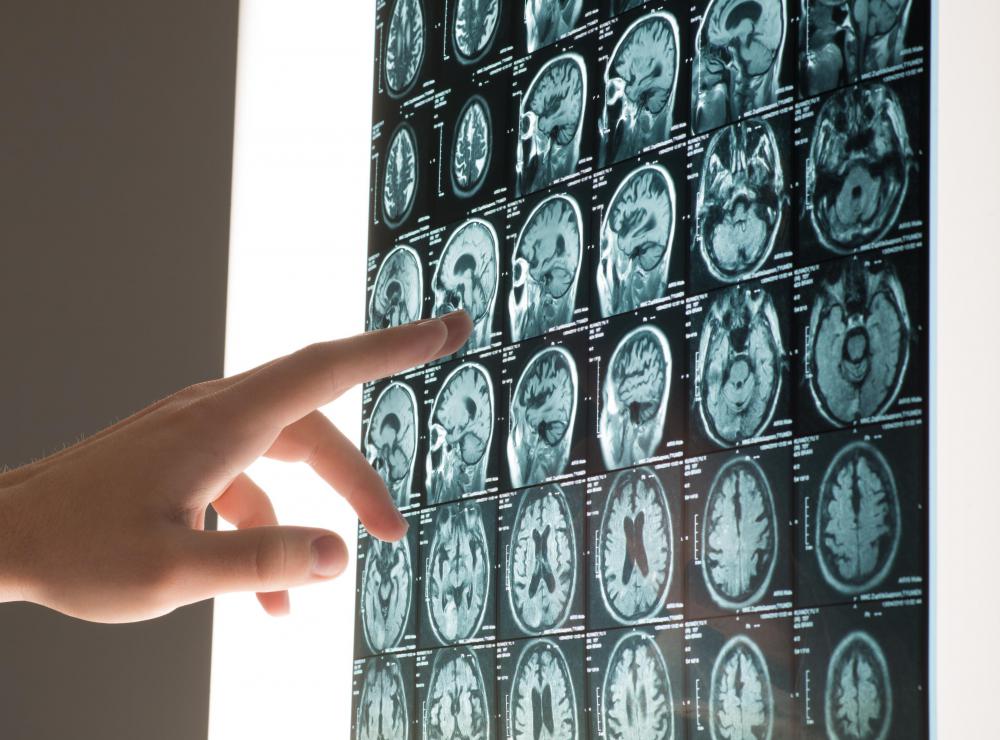
![An image of the brain taken with an MRI scanner, a type of diagnostic imaging equipment.]() By: Marcin SadlowskiAn image of the brain taken with an MRI scanner, a type of diagnostic imaging equipment.
By: Marcin SadlowskiAn image of the brain taken with an MRI scanner, a type of diagnostic imaging equipment. -
![A person about to get an MRI, a type of diagnostic imaging.]() By: James SteidlA person about to get an MRI, a type of diagnostic imaging.
By: James SteidlA person about to get an MRI, a type of diagnostic imaging. -
![An X-ray, a type of diagnostic imaging.]()
An X-ray, a type of diagnostic imaging. -
![Ultrasounds are often offered to pregnant women.]() By: Konstantin LiUltrasounds are often offered to pregnant women.
By: Konstantin LiUltrasounds are often offered to pregnant women. -
![An MRI machine uses a magnetic field and radio waves to create pictures of internal organs and bone structures.]() By: Monkey BusinessAn MRI machine uses a magnetic field and radio waves to create pictures of internal organs and bone structures.
By: Monkey BusinessAn MRI machine uses a magnetic field and radio waves to create pictures of internal organs and bone structures. -
![Diagnostic imaging is focused in diagnosing a disease, rather than monitoring progress.]() By: adam121Diagnostic imaging is focused in diagnosing a disease, rather than monitoring progress.
By: adam121Diagnostic imaging is focused in diagnosing a disease, rather than monitoring progress. -
![Injuries or abnormalities can often be diagnosed through MRI scans.]() By: EPSTOCKInjuries or abnormalities can often be diagnosed through MRI scans.
By: EPSTOCKInjuries or abnormalities can often be diagnosed through MRI scans. -
![Urinalysis can provide more information about a patient's condition.]() By: Paul MarcusUrinalysis can provide more information about a patient's condition.
By: Paul MarcusUrinalysis can provide more information about a patient's condition.




Discussion Comments
I've received care at from the UCSF diagnostic imaging services and was impressed by how comprehensive it was. In addition to conventional X-ray and CT scans, they provide advanced MRI, PET and other techniques to assure optimum diagnosis and treatment.
Post your comments