
At DelightedCooking, we're committed to delivering accurate, trustworthy information. Our expert-authored content is rigorously fact-checked and sourced from credible authorities. Discover how we uphold the highest standards in providing you with reliable knowledge.
What is Demerara Sugar?
 Mary McMahon
Mary McMahon
Mary McMahon
Demerara sugar is a type of unrefined sugar with a large grain and a pale to golden yellow color. It is suitable for a number of cooking and baking projects, and tends to be very popular as a sweetener for tea and coffee. Many grocers stock demerara sugar along with other specialty sugars, often in small packages for consumers who simply want to experiment with it. It is also ubiquitous in coffee houses, often in single serving packets along with other sweeteners.
The sugar is named after a once-colonized area in the now-independent country of Guyana, which first began producing and selling the sugar in large volume. The bulk of demerara production now takes place on the island of Mauritius, but the name appears to have endured. It is extracted primarily from sugar cane, rather than sugar beets, and tends to be more expensive than refined sugars as a result. The minimal processing gives demerara sugar a unique flavor and texture.

To make demerara sugar, sugar producers press sugar cane and steam the juice of the first pressing to form thick cane syrup. The cane syrup is allowed to dehydrate, leaving behind large golden brown crystals of sugar. Demerara sugar is not refined, so it has a rich, creamy, molasses-like flavor which enhances baked goods. The large grains also remain crunchy through cooking, which makes demerara sugar a great choice of sprinkled topping on scones and similar dishes which might otherwise have a uniform texture.

Another version of the sugar, known as London demerara, is actually refined sugar with added molasses, rather than raw sugar. London demerara retains the crunchy, big grain of demerara sugar, but the flavor tends to be less complex, and it is not always safe for vegetarians, since bone meal is sometimes used in the refining process.
Although demerara makes an excellent textural addition to recipes, it should not substitute for certain sugars. Recipes which call for confectioner's or caster sugar should not be made with demerara, since the sugar will have a negative impact on the end texture. In addition, the sugar will discolor meringues and other pale, fine foods, and it tends not to make terribly good caramels. If a more molasses-like flavor is desired in baked goods without the crunch of demerara sugar, pure molasses can always be added to a recipe, as long as cooks remember to cut down on the sugar so that the dish will not be too sweet.
Mary McMahon
Ever since she began contributing to the site several years ago, Mary has embraced the exciting challenge of being a DelightedCooking researcher and writer. Mary has a liberal arts degree from Goddard College and spends her free time reading, cooking, and exploring the great outdoors.
Learn more...
Mary McMahon
Ever since she began contributing to the site several years ago, Mary has embraced the exciting challenge of being a DelightedCooking researcher and writer. Mary has a liberal arts degree from Goddard College and spends her free time reading, cooking, and exploring the great outdoors.
Learn more...AS FEATURED ON:
AS FEATURED ON:


-
![Demerara sugar has a pale- to golden-yellow coloring.]() By: Springfield GalleryDemerara sugar has a pale- to golden-yellow coloring.
By: Springfield GalleryDemerara sugar has a pale- to golden-yellow coloring. -
![Demerara sugar is extracted primarily from sugar cane.]()
Demerara sugar is extracted primarily from sugar cane. -
![Using demerara sugar in pale foods like meringues can discolor them.]() By: nanjanUsing demerara sugar in pale foods like meringues can discolor them.
By: nanjanUsing demerara sugar in pale foods like meringues can discolor them. -
![Most coffee houses offer demerara sugar as an option for sweetening coffee.]() By: volffMost coffee houses offer demerara sugar as an option for sweetening coffee.
By: volffMost coffee houses offer demerara sugar as an option for sweetening coffee. -
![Because demerara sugar is unrefined, it has a molasses-like flavor that can enhance cookies and other baked goods.]() By: al62Because demerara sugar is unrefined, it has a molasses-like flavor that can enhance cookies and other baked goods.
By: al62Because demerara sugar is unrefined, it has a molasses-like flavor that can enhance cookies and other baked goods. -
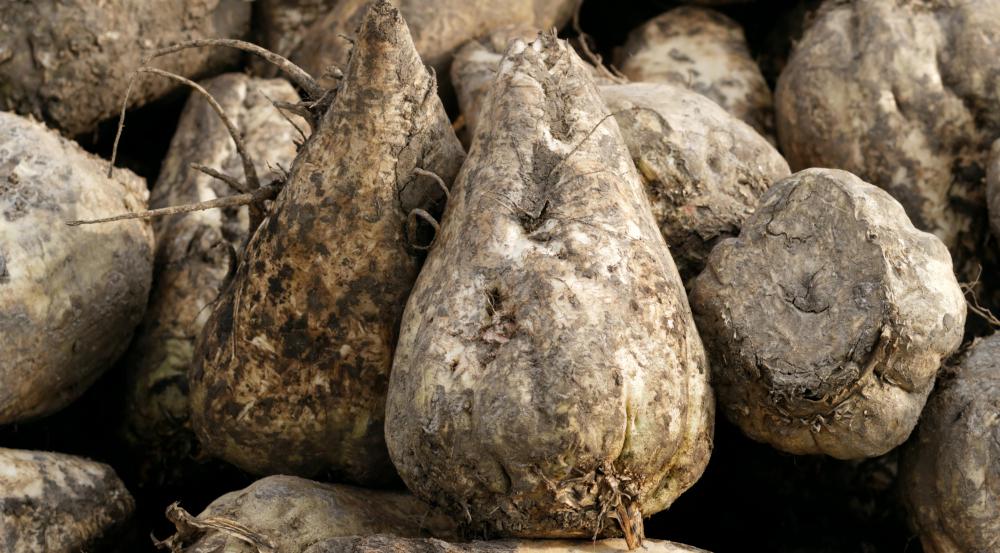
![Fresh sugar beets are whitish roots that look slightly similar to turnips.]() By: alukardsFresh sugar beets are whitish roots that look slightly similar to turnips.
By: alukardsFresh sugar beets are whitish roots that look slightly similar to turnips.


Discussion Comments
Demerara sugar is also a popular ingredient in beers. Especially home brewers like to experiment with demerara sugar instead of white cane sugar or beet sugar because they are interchangeable.
My brother adds demerara to his Belgian beer to give it a darker color and a slight flavor. It turns out really good. I think it is usually added to dark ales as well.
What's the calorie content of demerara sugar? Is this sugar healthier than honey?
I've been using this sugar when I buy coffee from coffeehouses. I thought that it was just a kind of brown sugar, I had no idea what the proper name was.
I agree that demerara sugar has a molasses like flavor. Interestingly enough, it also tastes very natural. It's sweet, but not as sweet as table sugar. So it doesn't overwhelm the flavor of the drink or food it is added to.
I need to buy demerara sugar for the house because I really enjoy having it in my coffee.
@lamaestra – It does make a great icing sugar. To me, it gives a much more satisfying crunch on top of sugar cookies than refined sugar does.
When I'm eating a cookie that doesn't have much flavor and is more impressive in looks than in taste, demerara sugar on top gives it extra appeal. I love the crunchy texture of the grains and the subtle molasses flavor. It livens up an otherwise dull tasting cookie.
I was a bit skeptical when my husband told me I should try demerara sugar in my coffee. I had been using white sugar for years, and I didn't see any reason to switch.
However, he bought a container of this sugar and forced me to try it. I must say that I prefer this flavor a lot over that of granulated sugar. It adds something extra to the taste of my coffee.
I've also begun using it to sweeten peppermint tea. I just feel better about using something that hasn't been over-processed.
@StarJo – You can use light brown sugar instead. The flavor is almost the same as that of demerara sugar, though it isn't quite as good for you.
Light brown sugar is just bleached sugar with molasses added back into it. So, the manufacturers robbed the sugar of its color and then gave it back in another form.
Light brown sugar and demerara sugar both taste great in chocolate chip cookie recipes. I have come to associate the flavor of these cookies with demerara sugar, since its what I use most often.
What can I use as a demerara sugar substitute? I have a recipe that calls for it, but I can't find any for sale at grocery stores in my area.
Honey does well sweetening foods, but the flavor definitely changes. It should there fore be noted that it should be added to the recipe name as honeyed.
Re: calories: if you are concerned about calories, honey is a less calorie-dense way to sweeten than sugar. One tablespoon of honey has the same calories as 1 teaspoon of sugar. It is also less refined and hence more natural than any sugar.
Knowing that refined, bleached sugar is missing the enzymes and other components needed for proper digestion, demerara sounds like the best bet for healthy nutrition in sweetened foods. And being natural, it sounds far superior to "sugar substitutes" that are responsible for the epidemic of disease such as obesity and diabetes. So stay away from lab-created poisons like aspartame, sucralose, corn syrup, and the like. I'd trust this sugar over any other kind, yet like anything else in life, use in moderation.
what is the caloric content of demerara? Is it the same as table sugar?
Is it OK for people with diabetes to consume this kind of sugar?
Can this sugar be replaced with another type of sugar if it is hard to find?
can demerara sugar be used for jams and marmalade making.
This sugar - although not as versatile as other sugars - is really beautiful for a garnish on cookies or pies, and can even be dyed to make a pretty fun looking colored sugar. Very popular with children!
Post your comments