
At WiseGEEK, we're committed to delivering accurate, trustworthy information. Our expert-authored content is rigorously fact-checked and sourced from credible authorities. Discover how we uphold the highest standards in providing you with reliable knowledge.
What is CrèMe PâTissièRe?
 Tricia Christensen
Tricia Christensen
Tricia Christensen
Crème pâtissière, perhaps known better in English speaking countries as pastry cream, is a rich egg custard that provides the filling for a variety of pastries. People may find this filling substituted for whipping cream in cream puffs or eclairs, or it may fill the center of a cake. Though the traditional version is vanilla flavored, there are various Internet and cookbook recipes for chocolate, rum, lemon, or coffee variants.
Pastry cream is sometimes confused with Bavarian cream, and the recipes are similar. The main difference is that most Bavarian cream recipes tend to add gelatin, producing slightly firmer custard. Crème pâtissière tends to be more like whipping cream — though depending upon the recipe, it may also be firm. Instead of using gelatin, is usually gets its thickness from either flour or cornstarch. Cornstarch typically produces thicker custard.

The basic ingredients of this custard are flour (or cornstarch), milk, eggs, sugar, and flavorings. The ingredients, save the eggs, are cooked over low heat until they thicken slightly. A longer cooking time can make a thicker sauce, but cooks have to be very careful not to burn the pastry cream. Some cookbooks recommend making the cream over a double boiler to better control the heat. Once the ingredients are cooked, the eggs are added, one at a time, and beaten vigorously.

Adding the eggs is a process that requires care because, if the chef doesn’t beat them in thoroughly, she can end up scrambling the egg over the hot custard, leaving small lumps in the cream. The eggs do need to be added while the mixture is still hot, otherwise they will remain uncooked, providing an easy path to food poisoning if you use unpasteurized eggs.

Once the cook have incorporated the eggs into the crème pâtissière, the mixture is chilled. When still warm, however, it can be used as a hot custard sauce over fruit, brownies, or a simple cake. Most often, it is used chilled in various pastries. Because of the ingredients in this filling, any dessert made with it should be kept refrigerated. It’s fine to bring out these desserts to serve them, but leftovers should not be left out. Since the cream contains a large amount of milk, it can spoil easily.

Chefs can use their imagination when adding crème pâtissière to recipes. They can pipe it into doughnuts or cupcakes, serve it alone with fruit, or use it in various luscious pastries like napoleons. One version of pastry cream is rum custard, which is often used in Italian dishes. One pastry that many people are able to find in Italian-American bakeries is the fedora, a chocolate cake soaked in rum, and layered with rum cream; cooks can use artificial rum to make this dessert if they don’t consume alcohol. The Italians may also flavor pastry cream with Marsala wine, which adds a very interesting and unusual taste to the custard, and resembles a thick zabaione.
Tricia Christensen
Tricia has a Literature degree from Sonoma State University and has been a frequent WiseGEEK contributor for many years. She is especially passionate about reading and writing, although her other interests include medicine, art, film, history, politics, ethics, and religion. Tricia lives in Northern California and is currently working on her first novel.
Learn more...
Tricia Christensen
Tricia has a Literature degree from Sonoma State University and has been a frequent WiseGEEK contributor for many years. She is especially passionate about reading and writing, although her other interests include medicine, art, film, history, politics, ethics, and religion. Tricia lives in Northern California and is currently working on her first novel.
Learn more...AS FEATURED ON:
AS FEATURED ON:









-
![Crème pâtissière is a delicious addition to various types of pastries.]() By: lagomynaCrème pâtissière is a delicious addition to various types of pastries.
By: lagomynaCrème pâtissière is a delicious addition to various types of pastries. -
![Chocolate eclairs may be filled with vanilla pastry cream.]() By: David SmithChocolate eclairs may be filled with vanilla pastry cream.
By: David SmithChocolate eclairs may be filled with vanilla pastry cream. -
![Doughnuts filled with crème pâtissière.]()
Doughnuts filled with crème pâtissière. -
![Cornstarch, which can be used to thicken creme patissiere.]() By: vadim yerofeyevCornstarch, which can be used to thicken creme patissiere.
By: vadim yerofeyevCornstarch, which can be used to thicken creme patissiere. -
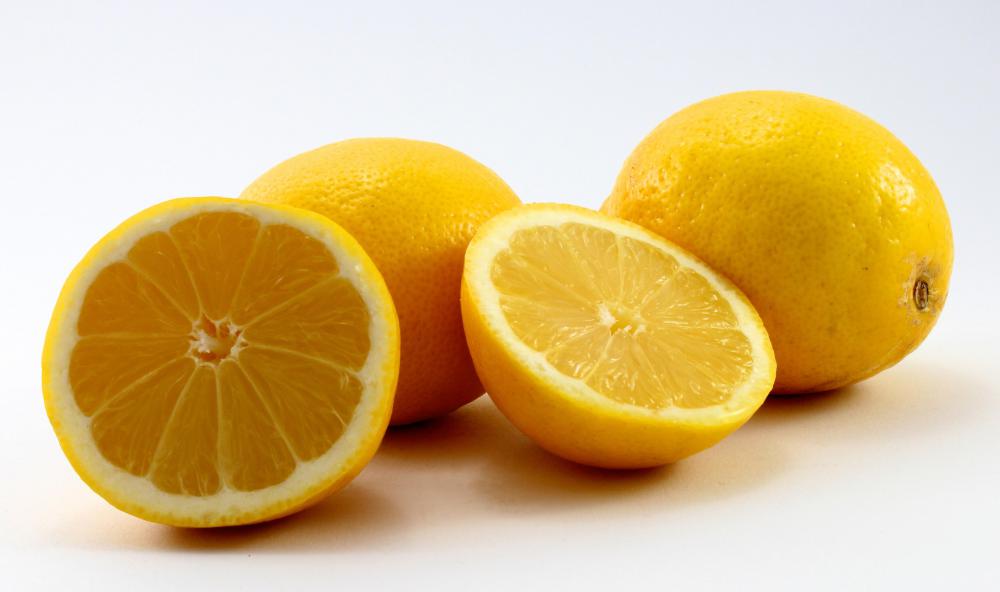
![Lemons, which can be used to flavor creme patissiere.]() By: Britta LaserLemons, which can be used to flavor creme patissiere.
By: Britta LaserLemons, which can be used to flavor creme patissiere. -
![Eggs are a main ingredient found in creme patissiere.]() By: andriigorulkoEggs are a main ingredient found in creme patissiere.
By: andriigorulkoEggs are a main ingredient found in creme patissiere.



Discussion Comments
Even though it takes some time and effort, I love making my own pastry cream. I am known for my chocolate cupcakes filled with strawberry flavored pastry cream. I am expected to bring these to just about any family gathering we have.
I always make a few extra to keep at home, because no matter how many I take somewhere, I never come home with any leftover.
When I make the pastry cream, I divide it into sections for different flavorings. I keep some cream plain, but also like to make chocolate and strawberry flavors. Most people love any kind of pastry or cake that has a cream filled center.
When I make my pastry cream I will make a double batch and freeze any that I have leftover. This way I have some on hand when I am ready to make more cupcakes.
I don't usually have a hard time passing up a plain doughnut, but I have a weakness for eclairs. My favorite are those that are filled with a vanilla pastry cream and have chocolate frosting on top. I think just about any pastry tastes a lot better when it has some kind of cream filling in the middle.
I am not much of a cook, so reading through the instructions on how to make this sounds too complicated for me. I would rather just eat what someone else has already made.
About the only time of year I eat cream puffs are at holiday parties. I love those little puffs that you can just pop into your mouth. Once you get to the pastry cream in the center, they just melt in your mouth.
It is probably a good thing this is the only time of year I eat them. There is no way I can stop at just one. I could easily fill my whole plate with them, but figure I better leave some for other guests to enjoy too.
@anon80521 -- I agree with you about using a double boiler. Whenever I make creme patissiere I have always used this method, and have never had any problems. Making this delicious cream can sometimes be a challenge, and I know many people struggle when trying to make it the first few times. Once you get it down though, it isn't hard, it just takes a little bit of time.
No, no, no! You *must* use a double boiler!
Honestly as a student at the Le Cordon Bleu, i was taught by several chefs that it is critical to use a double boiler (bain marie) just to be *safe*. Sure it takes a good amount of time, but you would have a higher chance of screwing it up by *not* utilizing it, therefore possibly having the result of scrambled eggs. :)
Really a decent article but there is one thing...
Whenever we make these types of custard the eggs and sugar are combined first...sugar added slowly till mixture is pale yellow and forms a ribbon.
The hot milk mixture is then added bit by bit to the eggs, NOT the other way around! This minimizes cooking of the egg. We still sieve the mixture though as the first pour inevitably forms some curd. Done this way you don't have to screw around with a double boiler.
Cheers!
Chez Sean
Post your comments