
At DelightedCooking, we're committed to delivering accurate, trustworthy information. Our expert-authored content is rigorously fact-checked and sourced from credible authorities. Discover how we uphold the highest standards in providing you with reliable knowledge.
What is Couscous?
Couscous is a coarsely ground semolina pasta that is a dietary staple in North African countries. It is also widely used in Middle Eastern countries and has become popular in American dishes. It is made of semolina, flour, salt, and water. Similar to rice in shape, color, and texture, it is used in many dishes as rice would be. One grain is similar in size to a grain of sugar.
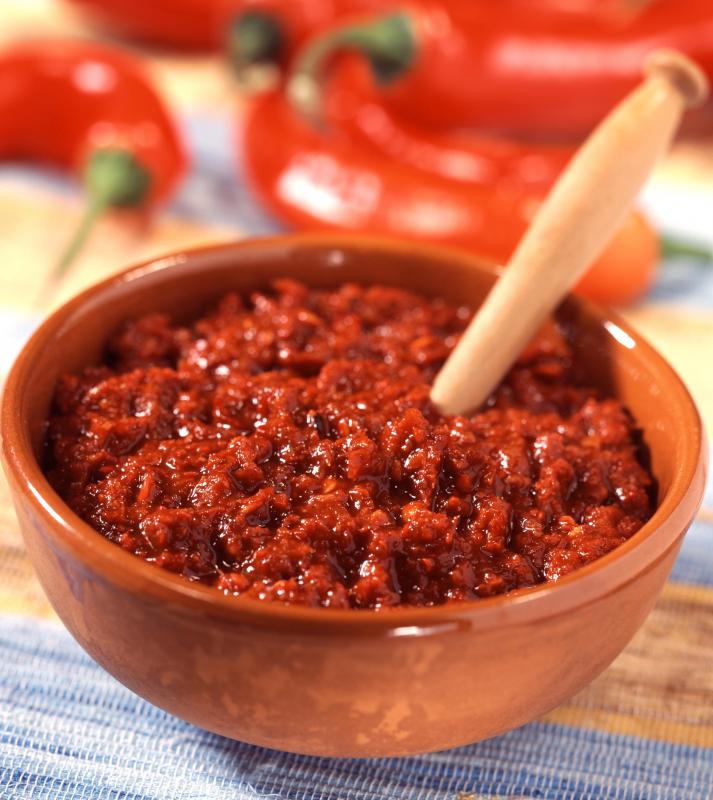
Popular in Algeria, Libya, Morocco and Tunisia, couscous is most often served with meat — mostly chicken, lamb or mutton — and vegetables. Each country seasons it differently. Moroccans use saffron, which creates a yellow colored dish, and might top a dish with fish and a sauce of raisins and onions. Algerians add tomatoes to it and Tunisians create a spicy dish with harissa sauce, a hot pepper sauce.

Couscous is available in a dried, pre-steamed version in many grocery stores. To prepare this type, cooks can pour boiling water or broth over the pasta and then seal the bowl with plastic wrap. After a few minutes, the grain swells and can be fluffed with a fork. When correctly prepared, it has a tender, moist taste and a light, fluffy texture. It is faster to prepare than most types of rice.

In many countries, traditional couscous must be steamed, often in a steamer basket called a kiskis or couscousiera, over a stew of meat and vegetables. It is often served over salmon or chicken dishes. When sweetened with almonds, cinnamon and sugar, or with fruit, it can be a dessert. Another dish combines the pasta and buttermilk for a cold soup.
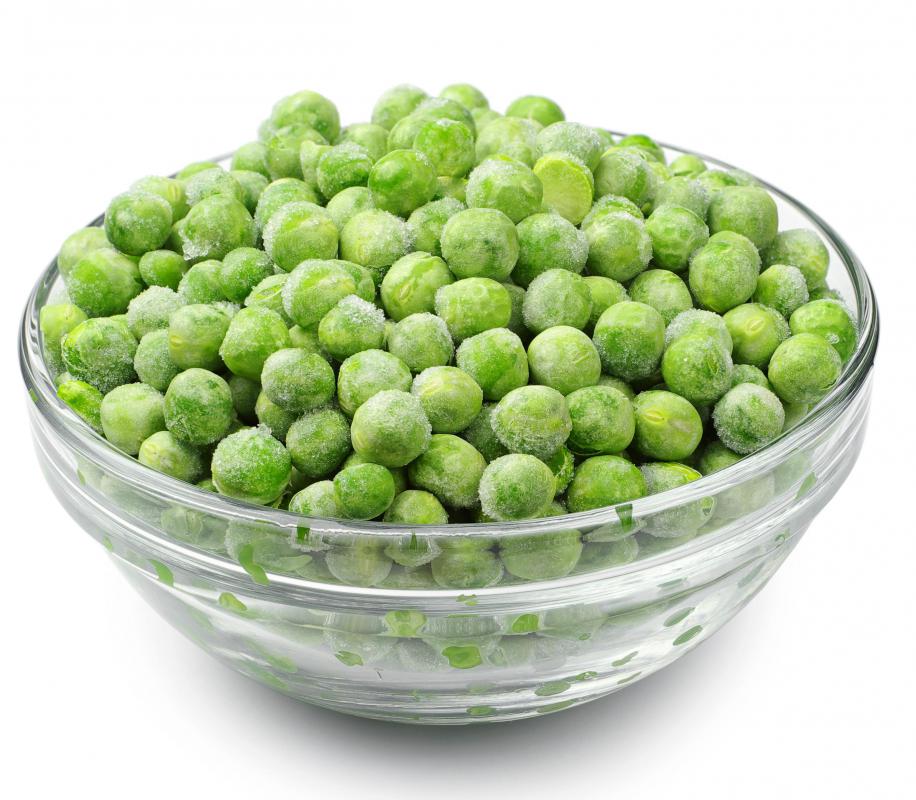
Combined with beans or peas, couscous makes a salad. Salad versions include vegetable salads, chicken or tuna salads, and southwestern salads. The name is also used to refer to many dishes that are prepared from grains or wheat.

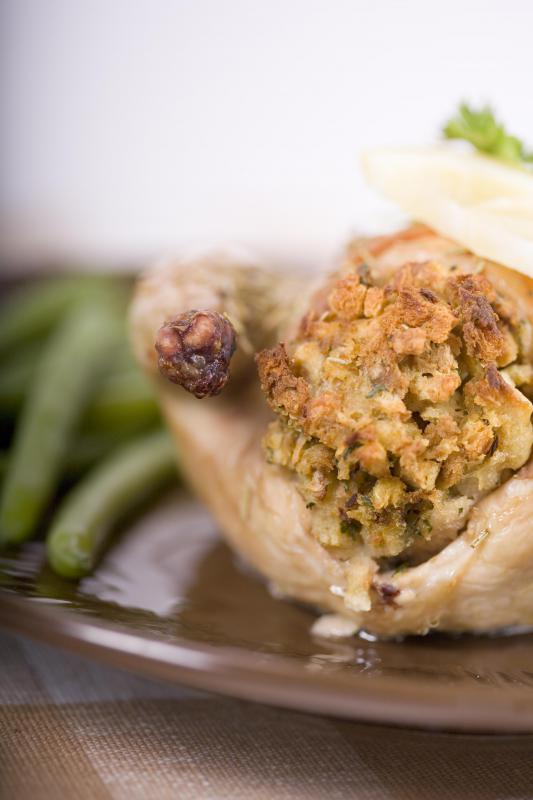
A French side dish combines brie cheese, couscous, onion, garlic, olive oil and butter. Another common dish combines the pasta with mint and lemon. A stuffing can be made using it with raisins and pistachios. Israeli couscous is cooked like pasta and is smaller in size than a pea. The Lebanese version takes longer to cook; it is soaked in hot water for 30-45 minutes.

Couscous is a low-fat, complex carbohydrate, meaning it does not produce rapid spikes in blood sugar. It is often referred to as a grain, but is actually pasta. Like grains, such as rice, it tends to take on the flavor of whatever sauce or other ingredients it is prepared with.
AS FEATURED ON:
AS FEATURED ON:


-
![The Middle Eastern grain couscous.]() By: Comugnero SilvanaThe Middle Eastern grain couscous.
By: Comugnero SilvanaThe Middle Eastern grain couscous. -
![Harissa is a spicy pepper paste.]() By: Food-picturesHarissa is a spicy pepper paste.
By: Food-picturesHarissa is a spicy pepper paste. -
![Couscous stuffing may accompany Cornish game hens.]() By: stockstudiosCouscous stuffing may accompany Cornish game hens.
By: stockstudiosCouscous stuffing may accompany Cornish game hens. -
![Peas can be combined with couscous to make a tasty salad.]() By: SasajoPeas can be combined with couscous to make a tasty salad.
By: SasajoPeas can be combined with couscous to make a tasty salad. -
![Fresh, chopped mint may be an ingredient in couscous.]() By: margo555Fresh, chopped mint may be an ingredient in couscous.
By: margo555Fresh, chopped mint may be an ingredient in couscous. -
![Made of semolina, flour, salt and water, coucous is used in many dishes as rice would be.]() By: m.u.ozmenMade of semolina, flour, salt and water, coucous is used in many dishes as rice would be.
By: m.u.ozmenMade of semolina, flour, salt and water, coucous is used in many dishes as rice would be. -
![Couscous is often served over salmon.]() By: SunnySCouscous is often served over salmon.
By: SunnySCouscous is often served over salmon. -
![Couscous may be sweetened with almonds, cinnamon, sugar, and fruit to make a dessert.]() By: seagull_lCouscous may be sweetened with almonds, cinnamon, sugar, and fruit to make a dessert.
By: seagull_lCouscous may be sweetened with almonds, cinnamon, sugar, and fruit to make a dessert.



Discussion Comments
My partner and I tried this couscous today, and even if many people are now enjoying eating it, we didn't like at all. Would definitely not consider it as tasty or enjoyable.
@anon148295: You would eat couscous with anything you'd eat rice with. It can be eaten by itself, but unless you spice it up nicely, it would be bland that way. So the short answer is, sure, you can eat it with meat, fish, chicken, whatever.
I was given packs of couscous by my sister and this is the first time I'll try it. We don't have it here in our country, so can anybody tell me if it's to be eaten (after its cooked) as is or can we eat it with meat or fish?
do you treat couscous the same as rice after it's cooked and put in fridge? does it have the same type of bacteria? --bscd
Don't get the boxed, flavored kind in the G-store because of the sodium content.
I like it best with chunks of tomatoes, spinach, a little butter and some Frank's Red Hot sauce. Throw a small teaspoon of butter in there and stir it up!
I literally shovel it into my mouth and you're right, there is no "spike". Just all good things.
If you know how to prepare couscous, it is a very delicious meal to have! Even better when it's whole wheat couscous!
I don't like couscous. I have tried many different recipes around the world, but cannot get taste buds for this.
my friend has couscous for lunch and it's all soggy. is it meant to be like that?
I was only familiar with Moroccan type couscous (tiny, somewhat harder roughly shaped pasta that looks like bulgur wheat) until recently. One of my favorite restaurants makes an olive stuffed chicken breast with couscous dish. The first time I ordered it I was disappointed and kept saying, "this is not couscous!" so I finally looked it up and what they were serving at the restaurant is Israeli Couscous, commonly called "pearl couscous" which is the pea-sized, slick, round smooth pasta. It looks very different from Moroccan couscous and has a completely different texture. Just thought I would clear that up for anyone else out there who may be confused by the different types.
Is Couscous considered a low Glycemic food?
is it under the rice family or pasta family?
I had no idea that there were different types of couscous (sometimes spelled kuskus or alternatively called maftoul) based on where the couscous came from -- Algerian couscous, Libyan couscous, Tunisian couscous. But sure enough, the kind I bought at at the store says Moroccan couscous. Still, it looks just like any other couscous I've seen. My couscous also says it's made from durum wheat, which apparently has a high protein content.
Post your comments