
At TheHealthBoard, we're committed to delivering accurate, trustworthy information. Our expert-authored content is rigorously fact-checked and sourced from credible authorities. Discover how we uphold the highest standards in providing you with reliable knowledge.
What is Conscious Sedation?
 Mary McMahon
Mary McMahon
Mary McMahon
Conscious sedation is a type of sedation in which the individual can respond to verbal directions, but he or she feels little to no pain and has an altered level of consciousness. It is used for medical procedures in which it is necessary for the patient to be responsive, for minor procedures that do not require the use of general anesthesia, and for procedures involving patients who cannot cooperate with care providers. Like any form of anesthesia and sedation, there are some risks to this form, but it is significantly less dangerous than general anesthesia.
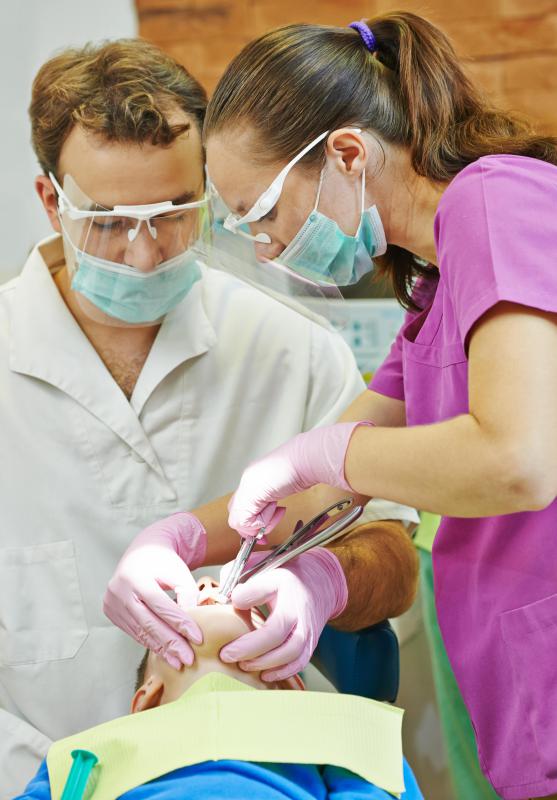
Some common procedures in which conscious sedation might be used include biopsies and minor surgeries, along with dental procedures. This form of dentistry is offered to young children who may have trouble following directions from the dentist and the staff, and to adults who experience significant anxiety about dental appointments. Some offices actively advertise sedation as an option to appeal to patients who dread visits to the dentist.

Patients are carefully reviewed before being selected as candidates for conscious sedation, and the healthcare professional also goes over the risks, advantages, and alternatives with the patient. Once the decision to use it is made, the patient is given sedatives that cause him or her to relax, along with painkillers that are designed to eliminate pain from the procedure. During the period of conscious sedation, an anesthesiologist or certified nurse anesthesiologist monitors the patient at all times, looking at heart rate, breathing, and dissolved oxygen levels in the blood, so that adverse reactions can be quickly identified and addressed.

In some cases, patients are also given drugs that are supposed to help them forget the procedure. Medical procedures can be traumatizing, and these drugs are designed to reduce bad memories that could cause nightmares, panic attacks, and other unpleasant symptoms. After the procedure is over, the patient is taken into recovery and monitored until he or she is fully alert. It usually takes around 48 hours to fully recover from this form of sedation, during which the patient should not drive, make critical decisions, or engage in tasks that require a high level of concentration or fine motor skills.

There are some side effects associated with conscious sedation. Patients can feel nauseous, sometimes vomiting when they wake up, and headaches and a sense of being hung over are common. It is important for patients to drink lots of fluids during recovery and to report any lingering side effects to a medical professional.
In the medical community, there is some debate over conscious sedation. There are concerns that this technique is sometimes used in cases where it is inappropriate, and the drugs must be used very carefully to ensure that the patient is sedated but not unconscious. Organizations like the American Academy of Pediatrics have specific guidelines that they recommend to their members, relying on data from studies and reports from medical experts to establish the safest techniques.
Mary McMahon
Ever since she began contributing to the site several years ago, Mary has embraced the exciting challenge of being a TheHealthBoard researcher and writer. Mary has a liberal arts degree from Goddard College and spends her free time reading, cooking, and exploring the great outdoors.
Learn more...
Mary McMahon
Ever since she began contributing to the site several years ago, Mary has embraced the exciting challenge of being a TheHealthBoard researcher and writer. Mary has a liberal arts degree from Goddard College and spends her free time reading, cooking, and exploring the great outdoors.
Learn more...AS FEATURED ON:
AS FEATURED ON:


-
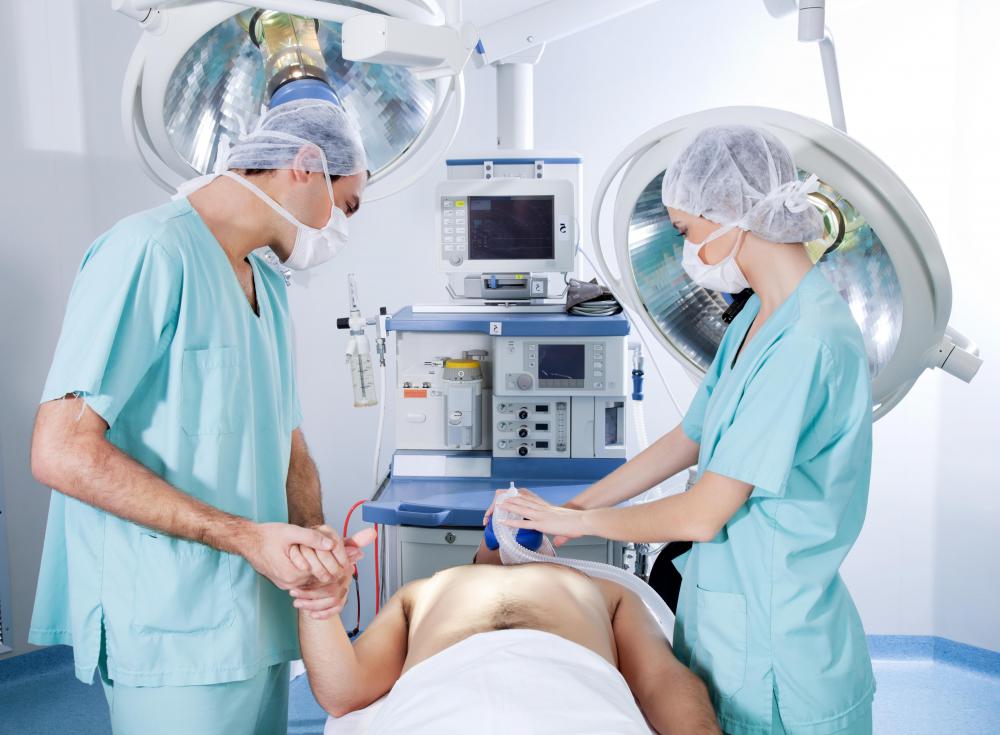
![Conscious sedation may be used for minor surgeries.]() By: Tyler OlsonConscious sedation may be used for minor surgeries.
By: Tyler OlsonConscious sedation may be used for minor surgeries. -
![Conscious sedation may be used when performing dental procedures on children.]() By: KadmyConscious sedation may be used when performing dental procedures on children.
By: KadmyConscious sedation may be used when performing dental procedures on children. -
![Individuals may experience nausea and headaches following conscious sedation.]() By: Tyler OlsonIndividuals may experience nausea and headaches following conscious sedation.
By: Tyler OlsonIndividuals may experience nausea and headaches following conscious sedation. -
![Individuals should drink plenty of fluids following conscious sedation.]() By: emde71Individuals should drink plenty of fluids following conscious sedation.
By: emde71Individuals should drink plenty of fluids following conscious sedation. -
![Conscious sedation is used for procedures where general anesthesia is not necessary.]() By: evok20Conscious sedation is used for procedures where general anesthesia is not necessary.
By: evok20Conscious sedation is used for procedures where general anesthesia is not necessary.


Discussion Comments
I had conscious sedation when I had my wisdom teeth out. I was awake but very woozy. The procedure was not painful, but it was (!) noisy; the dental surgeon was using a dental drill and I couldn't
figure out why. (I also had a local anesthetic).
Many years later I had conscious sedation plus again a local
anesthetic for a lipoma removal. I slept for a few minutes then
woke up. I felt some mild discomfort-- the procedure --I could feel
enough to know what the surgeon was doing; he made a small
incision and was dissecting the lipoma inside and pulling the
pieces out through the incision--was somewhat annoying but
not unbearable. I asked him if that was what he was doing and
he answered yes.
I am constantly amazed at the CRNA's lobby quoting the specious, "me too, I'm a CRNA, so I'm a nurse, but I have 20 months of additional nursing school so that "allows" me to administer anesthesia." Sorry, not by a long shot. If you want safe anesthesia, insist on an anesthesiologist's care. Nurses are great in support roles, but you don't want a CRNA on your case when anything goes wrong. Sorry, it's my 30-plus years of experience speaking.
And Medicare used a huge sample size of statistically significant studies to confirm that there was zero or no difference with outcomes when comparing CRNAs to physician anesthesiologists. That is why 18, and soon to be more, of these states have decided to allow CRNAs to be autonomous.
Again, an average physician is better equipped for the job; however, both do a great job. As an older physician, I have come to realize that a "team approach" is best. No need to quarrel over two different routes of training.
Stick to a good solid practice and what is best for patients and things (outcomes, money etc.) will always come. I became a physician to help people and advance myself. Not to quarrel with CRNAs. I perform my job well and have always had many opportunities to provide care and make a great income. I worked with dumb physicians and dumb CRNAs and obviously the reverse. I continually work to be the best I can be and help the field of anesthesia.
There are zero evidenced based studies to show that CRNAs are less safe than an anesthesiologist. Support has been given to 40 of the 50 states to allow CRNAs to practice independently or with "collaboration." Consequently, 18 of these states allow CRNAs to practice totally autonomously. Also, CRNAs provide the majority of sedation in the United States and have a proven record of being safe and board certified by their accreditation (AANA). CRNAs have been native to anesthesia, providing the first documented anesthesia before anesthesiologists.
I was a CRNA, and am now an anesthesiologist. I just want to make sure that CRNAs get their accolades. Both anesthesia providers are well trained. And there is no argument that an average physician is better trained than an average CRNA. However, both provide great care especially, when working together. I would trust a good CRNA.
I reported for an important (bleeding) outpatient colonoscopy and was promised an anesthesiologist not a nurse for the sedation. Upon arrival I was expected to accept a CRNA (sorry, CRNAs are only nurses -- a far cry from a physician anesthesiologist. What a joke).
I canceled and will never go back to a facility that puts my life in the hands of a nurse. CRNAs are anxious to say that they are not nurses, but that's all they are.
Well, I was feeling better about my upcoming procedure because my doctor is letting me use conscious sedation instead of general anesthesia, so I felt much safer. After reading this, I'm afraid again! Ugh!
Anesthesia should be performed by an anesthesiologist (MD) not by a CRNA (nurse). Many hospitals and surgery centers are pushing a dangerous anesthesia care team idea (many nurses/crna partly supervised by one (or no) anesthesiologist. This is not safe.
Most insurance plans pay the same for an anesthesiologist as they so for a crna/nurse. Which is safer: an anesthesiologist MD with medical training or a nurse/crna with two years of nurse/anesthetist school?
Don't get bullied into accepting a crna when you can insist on an anesthesiologist for the same price. Write on the consent: Dr. X will be performing my case personally without supervising other cases.
Conscious sedation can unexpectedly become general anesthesia in the blink of an eye. When performed by an anesthesiologist it's safe.
Anesthesia/sedation administered by anyone except an anesthesiologist is dangerous and can be lethal (even if the patient survives poorly administered anesthesia they might suffer significant mental impairment). This why you don't want a CRNA,dentist, podiatrist administering your anesthetic or supervising a nurse-anesthetist. You need an anesthesiologist to be safe.
Conscious sedation, like any medical procedure, has its risks. I refuse procedures where they try to save money and use a less educated CRN anesthetist. Rich people and VPs like Cheney get the very best, while they keep pushing nurse practitioners and less educated medical personnel on us.
If nurses want to practice like doctors, they should go to medical school. Your ego should not jeopardize my health. There is no way that 22 months of training can substitute for a minimum of 12 years.
My mother is a nurse, I have friends who are nurses and they agree with me.
I have had many conscious sedation procedures and I have feel asleep and woke up in the recovery room. I had a Colonoscopy, Two toe surgeries, an anal biopsy and once the Versed and Propal get into you vein, you are not aware of anything. Conscious sedation is the way to go. However, don't be afraid to speak up to make sure you get enough of it.
what about conscious sedation when having nose fracture repaired or otherwise known as septoplasty?
IV sedation is safe when administered by an anesthesiologist; risky or dangerous when administered by a nurse (and this includes CRNAs who only have 22 months or so of nurse anesthetist training). MD = safe, nurse = crapshoot. You bet your life.
My recent colonoscopy was supposed to be done with an anesthesiologist present and they only had a CRNA (nurse). I canceled. my life and health are too important. Yes, I an a physician and my wife is an advance practice nurse, so please don't think that I dislike nurses.
My husband and I just had a colonoscopy under conscious sedation and it was the easiest thing we've ever done. Don't put this procedure off if you are 50 or over - it's nothing to be afraid of.
I was very aware of the procedure but it felt very non invasive. I wish I had known how simple it was - I wouldn't have dreaded it so much. It was a piece of cake - don't be afraid of it if you need to have one. Simple, easy, no big deal.
I have to say that there are exceptions to conscious sedation. I have had it done several times and though there were times where I didn't remember or feel anything there were times that I did.
I just had an in office spinal tap, where I felt everything and despite the pain I let her stick me three times, and then she still didn't get the spinal fluid. She said she would make sure I was asleep the next time they tried and then I found out they want to do the conscious sedation.
Due to the pain I went through already and the times I could feel everything and remember it under conscious sedation, I guess I will just have to pass. Each time it is different and some procedures are worth it and some aren't. Just make sure you let the Dr. know where you are at if you feel pain I guess, if you are conscious enough to be able to communicate it effectively. I was in pain during my last time but I couldn't get the words out.
I had conscious sedation (meperidine and midazolam) for a colonoscopy. I was awake and conscious the whole time, and in a great deal of pain. I remember everything about the procedure. Was I not sedated sufficiently? I'm kind of young and this was my first time (hopefully last).
I wish the doctor had told me it could hurt like that. You should discuss things with the doctor beforehand and ask what to do if you feel pain or feel "awake." I was given no information other than assurance that I shouldn't remember anything. Well, I do.
I just had my surgery three days ago. I can't remember anything after the anesthesiologist came to the room and put the IV. I don't even remember how I got out of the clinic.
My mom was with me and she says that I was conscious but I really can't remember anything. All I have is the pain that I feel now but I'm happy I don't remember anything. I think it's pretty cool!
I was under conscious sedation for the removal of my wisdom teeth. I remember the surgery pretty well, but I was unable to think clearly. I could hear the dental equipment but I remember thinking that it was construction workers out in the street with a jackhammer.
I hate medical procedures and will soon be having conscious sedation for a colonoscopy. I have had two scary experiences in the past, one at age nine when I woke up in an OR during a procedure. the other was with arthroscopic surgery on my knee. they gave me too much and I had no feeling from the neck down. the idea of any sedation scares me to death.
I totally recommend conscious sedation. I have had it twice now for tooth removal, and don't remember a thing about the procedure.
Well with sedation, you are in a more relaxed state, and you should be able to maintain verbal contact at all time. If you don't want to be conscious, then you better ask for a general anesthetic.
I've had conscious sedation before as i hate dentist appointments and i can tell you it feels exactly the same as general anesthesia where you count to five and then you're gone, you wake up not remembering a thing, but according to my girlfriend i was opening my mouth when asked to and i was talking as if i were awake.
Very well recommended.
I'm having fillings under conscious sedation because i am very, very, very much terrified of dentists. but i only just found it that i will be awake. If I'm conscious, how the hell am i under sedation? please help, I'm really nervous.
I take exception to your casual reference to "less dangerous than general anesthesia." Holy crap, man! The public is fearful enough as it is! Competent general anesthesia in the right hands (like mine) is not "dangerous." There are always inherent risks, but to combine "dangerous" and "anesthesia" in the same sentence serves no one!
thanks for listening.
Post your comments