
At WiseGEEK, we're committed to delivering accurate, trustworthy information. Our expert-authored content is rigorously fact-checked and sourced from credible authorities. Discover how we uphold the highest standards in providing you with reliable knowledge.
What is Comedogenic?
 Tricia Christensen
Tricia Christensen
Tricia Christensen
The term "comedogenic" is almost always paired with the term "noncomedogenic." This pair of words is used to discuss the degree to which a substance may block the pores. Blocked pores can result in an increase of acne in certain people, and for this reason, people may look for ingredients in skin treatments that are noncomedogenic and less likely to occlude the pores. Those who don’t have acne can usually safely pick products that may occasionally block the pores.
Often, products are categorized by how much the pores get covered by the product. Something that is only likely to block the pores 10 to 20% of the time, or, in other words, partially create pore blockage, which might be thought of as mildly comedogenic. On the other hand, something that tends to always cover the pores and result in total blockage might be thought of as a severe comedogen.

There are a large number of ingredients that may block the pores to at least some degree. A comprehensive list might be hard to obtain, but some ingredients that have the tendency to be severely comedogenic include oil of wheat germ, most forms of lanolin, coconut oil, linseed oil, cocoa and coconut butters, and sodium lauryl sulfate. Materials that will only cause partial blockage include avocado, almond, castor, peanut and a variety of other oils. Some forms of wax occlude pores, and other ingredients that might block pores are talc, zinc oxide, vitamin A, some types of vitamin E, and polyethylene glycol.

With the number of ingredients that might block pores, any reasonable person could feel dismayed in attempting to avoid them, but this isn’t always necessary. People who don’t regularly suffer from acne might be just fine using any of these products.
The order of ingredients can tell people a lot about how much of a comedogen is in a product. If the last ingredient on a list of ingredients can block pores, this means that the ingredient is present in the lowest percentage of all ingredients in a product. Of course, it is also possible for products to contain more than one such product.

For those people who need to strictly avoid these ingredients, most cosmetics and other skincare treatments will usually labeled as noncomedogenic if they don't include pore-blocking ingredients. Looking for the noncomedogenic label is a way of avoiding skin products that might result in more skin breakouts.
Tricia Christensen
Tricia has a Literature degree from Sonoma State University and has been a frequent WiseGEEK contributor for many years. She is especially passionate about reading and writing, although her other interests include medicine, art, film, history, politics, ethics, and religion. Tricia lives in Northern California and is currently working on her first novel.
Learn more...
Tricia Christensen
Tricia has a Literature degree from Sonoma State University and has been a frequent WiseGEEK contributor for many years. She is especially passionate about reading and writing, although her other interests include medicine, art, film, history, politics, ethics, and religion. Tricia lives in Northern California and is currently working on her first novel.
Learn more...AS FEATURED ON:
AS FEATURED ON:









-
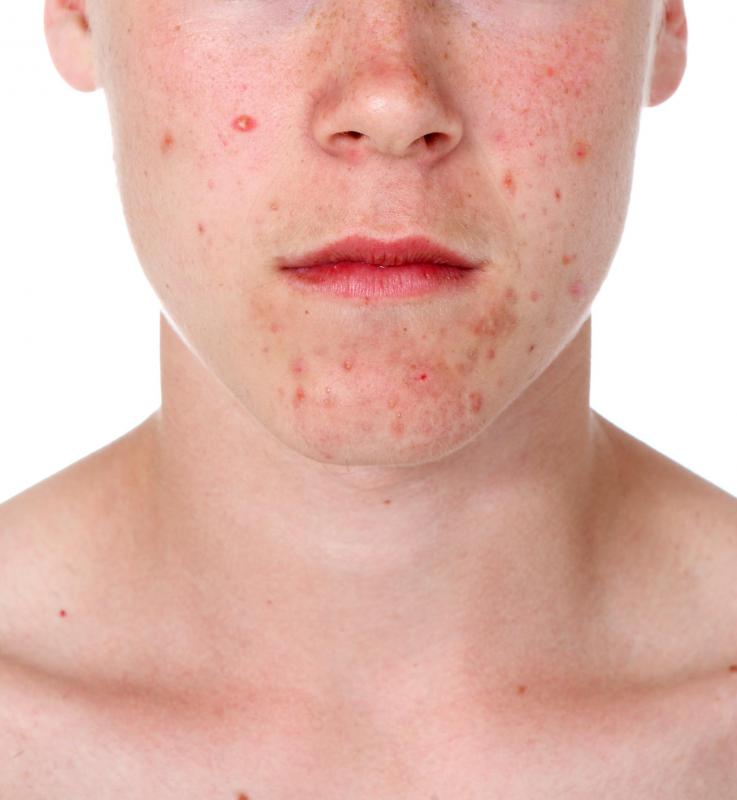
![Comedogenic products block pores and can exacerbate acne problems.]() By: soupstockComedogenic products block pores and can exacerbate acne problems.
By: soupstockComedogenic products block pores and can exacerbate acne problems. -
![A noncomedogenic moisturizer.]() By: picsfiveA noncomedogenic moisturizer.
By: picsfiveA noncomedogenic moisturizer. -
![Linseed oil is comedogenic.]() By: spline_xLinseed oil is comedogenic.
By: spline_xLinseed oil is comedogenic. -
![Some non-comedogenic makeup products contain kaolin clay and other ingredients that won't clog pores.]() By: arminaSome non-comedogenic makeup products contain kaolin clay and other ingredients that won't clog pores.
By: arminaSome non-comedogenic makeup products contain kaolin clay and other ingredients that won't clog pores. -
![Avocado oil can cause partial blockage of the pores.]() By: Giuseppe PorzaniAvocado oil can cause partial blockage of the pores.
By: Giuseppe PorzaniAvocado oil can cause partial blockage of the pores.


Discussion Comments
I used to use a comedogenic eyeshadow and eyeliner, but I had to stop after they caused my pores to clog up. The eyeliner made little white bumps appear all along the edges of my eyelids, and I started getting little red pimples on my upper lids from the eyeshadow.
I didn't know what comedogenic was back when I bought this stuff. I just picked it out because the shade was intensely bright and pretty. Now I know never to use comedogenic products on my skin again, particularly on my eyes.
Clogged pores have never caused problems for me, and I'm glad. I have enough trouble finding the perfect makeup as it is, and I would hate to have the added restriction of shopping only for non-comedogenic makeup.
Once I find something that works, I stick with it until the company stops manufacturing it. I am pretty picky about my makeup, so it is good to have a large range of options.
I think that most cosmetics nowadays are non-comedogenic, anyway. I never seek it out, but I have noticed this distinction on several labels.
@shell4life – There are plenty of good foundations on the market that are non-comedogenic. However, you have to do a little extra research into their ingredients.
Some types of makeup will say that they are non-comedogenic without listing the degree to which they are so. It helps to look for certain types of good oils in their ingredient lists. There are oils that will not clog pores and can safely be used in makeup.
Aloe vera extract is soothing to your skin and non-comedogenic. So are tea tree oil and jojoba oil. These will make the foundation able to hydrate your skin without sticking in your pores and causing acne.
I had bad acne as a teenager, so I had to pay close attention to what type of makeup I put on my skin. I still have scars from it, so I still need a full coverage makeup to hide them.
I have acne prone skin, so I have always had to use non-comedogenic foundation. It seems that the kinds I have chosen have never provided much coverage and have worn off by the end of the day.
Are all full coverage foundations comedogenic? It would seem that they would have to be thick to cover flaws, and the thicker they are, the more likely they are to clog pores.
Am I stuck using light coverage makeup forever, or are there any non-comedogenic foundations out there that offer good coverage?
Post your comments